Loading...
Dong Zhuo vs Julius Caesar
Julius Caesar leads by 32.8 pts · 2 figures compared
…
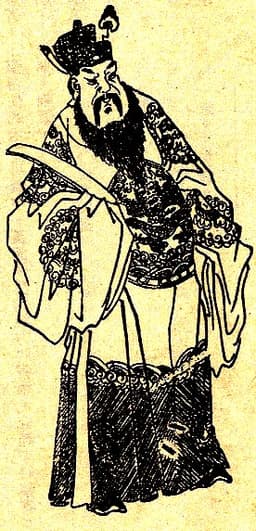
Dong Zhuo
General · Ancient
50.0Total

Julius Caesar
General · Ancient
82.8Total
Basic Information
Born
138
-100
Died
192
-44
Era
Ancient
Ancient
Nationality
China
Roman Republic
Occupation
General
General
Civilization
Eastern
Western
Score Comparison
Military (10%)
67.5
88.0
Political (20%)
35.0
78.0
Influence (20%)
49.4
85.0
Legacy (20%)
44.2
82.0
Leadership (15%)
57.1
80.0
Strategy (15%)
60.0
85.0
TOTAL
50.0
82.8
Dong Zhuo — Complete Timeline
189 AD
Dong Zhuo's Entry into LuoyangPolitical Action
After the death of Emperor Ling, Dong Zhuo marched his army into the capital Luoyang, ostensibly to support the He family. He deposed the young Emperor Liu Bian and installed his brother Liu Xie (Emperor Xian), seizing control of the imperial government.
CoupPower SeizureImperial Control
Impact: nationaldestructive
190 AD
Burning of LuoyangOther◆ Major
Facing a coalition of eastern warlords, Dong Zhuo ordered the evacuation and systematic destruction of Luoyang. The city was burned, its palaces and libraries destroyed, and the population forcibly relocated to Chang'an. This act devastated the Han capital.
DestructionCapital BurnedWar Crime
Impact: nationaldestructive
192 AD
Dong Zhuo's AssassinationPolitical Action◆ Major
Dong Zhuo was assassinated in a plot orchestrated by his trusted subordinate L
AssassinationPower ShiftConspiracy
Impact: national
Julius Caesar — Complete Timeline
58 BC
Gallic WarsWar◆ Major
Caesar, as proconsul of Gaul, launched a series of campaigns that conquered all of Gaul (modern France, Belgium, and parts of Switzerland). He fought numerous battles, including against the Helvetii, the Belgae, and the Gallic chieftain Vercingetorix. The wars brought immense wealth and a loyal army to Caesar.
Gallic WarsConquestRoman Expansion
Impact: regional
49 BC
Crossing the RubiconPolitical Action◆ Major
Caesar led Legio XIII across the Rubicon River into Italy, defying the Roman Senate's order to disband his army. This act triggered a civil war against Pompey and the Optimates, ultimately leading to Caesar's dictatorship and the end of the Roman Republic.
Roman Civil WarEnd of RepublicPower Struggle
Impact: global
48 BC
Battle of PharsalusWar◆ Major
Caesar's outnumbered army defeated the larger forces of Pompey the Great at Pharsalus in Greece. Caesar's tactical use of a reserve line to counter Pompey's cavalry charge proved decisive. Pompey fled to Egypt, where he was assassinated, leaving Caesar as the undisputed master of the Roman world.
Roman Civil WarBattleDecisive Victory
Impact: regional
44 BC
Appointment as Dictator for LifePolitical Action◆ Major
The Roman Senate appointed Caesar dictator perpetuo (dictator for life), granting him unprecedented personal power. This move concentrated military, legislative, and judicial authority in one person, effectively ending the Roman Republic's traditional system of checks and balances and alarming many senators.
DictatorshipEnd of RepublicPower Consolidation
Impact: regionaldestructive
Assassination on the Ides of MarchPolitical Action◆ Major
A group of Roman senators, led by Marcus Junius Brutus and Gaius Cassius Longinus, stabbed Caesar to death at a meeting of the Senate in the Theatre of Pompey. The assassination was intended to restore the Republic, but instead triggered another civil war that led to the rise of the Roman Empire.
AssassinationRoman PoliticsEnd of Republic
Impact: globaldestructive
Expert Analysis
dong-zhuo-vs-julius-caesar
# The General Who Crossed the Rubicon and the Warlord Who Burned Luoyang
On a cold January morning in 49 BCE, Julius Caesar stood at the banks of the Rubicon River in northern Italy, contemplating an act that would shatter centuries of Roman law. Across the continent and three centuries later, in 190 CE, Dong Zhuo ordered the torching of Luoyang, the magnificent capital of the Han Dynasty, reducing centuries of civilization to ash. Both men were generals who seized power in times of crisis. One would become the father of an empire that lasted a millennium; the other would be remembered as a cautionary tale of ambition without vision.
Origins
Julius Caesar was born into the patrician Julian clan in 100 BCE, a family claiming descent from the goddess Venus, yet one that had fallen from political prominence. His childhood unfolded during the twilight of the Roman Republic, an era of civil wars, slave revolts, and senatorial corruption that had already claimed the lives of reformers like the Gracchi brothers. Caesar's aunt had married Gaius Marius, the populist general who had transformed the Roman army, while his father died suddenly when Caesar was just sixteen. This volatile mix of noble lineage, personal tragedy, and political violence forged a young man who understood that survival required both brilliance and ruthlessness.
Dong Zhuo was born in 138 CE in a very different world—the Eastern Han Dynasty, already decaying from within. He came from a family of minor military officials in the northwest frontier region of Liangzhou, where the constant threat of barbarian incursions bred tough, pragmatic soldiers. Unlike Caesar's aristocratic pedigree, Dong Zhuo's rise depended entirely on his physical prowess and battlefield courage. He was known for his ability to ride with both hands free, shooting arrows with deadly accuracy, and for his immense strength that allowed him to carry two bows at once. The Han court, weakened by eunuch intrigues and peasant rebellions like the Yellow Turban uprising, needed such men—yet never fully trusted them.
Rise to Power
Caesar's path to power was a masterclass in strategic patience and calculated risk. He served as a military tribune, then quaestor in Spain, where he reportedly wept before a statue of Alexander the Great, lamenting that at the same age, Alexander had conquered the world while Caesar had done nothing. He forged alliances with the wealthy Crassus and the popular Pompey, forming the First Triumvirate in 60 BCE. His consulship in 59 BCE was marked by controversial land reforms and the ruthless marginalization of his senatorial opponents. Then came Gaul—eight years of brutal warfare from 58 to 50 BCE that saw Caesar conquer a territory larger than Italy itself, amass a veteran army loyal to him alone, and write commentaries that still serve as military textbooks.
Dong Zhuo's rise was more chaotic and opportunistic. When the Yellow Turban Rebellion erupted in 184 CE, the Han court desperately needed military commanders. Dong Zhuo was appointed to suppress the rebels, but his campaigns were only moderately successful, and he was repeatedly demoted for insubordination. His great opportunity came in 189 CE with the death of Emperor Ling. The capital Luoyang was torn between the eunuch faction controlling the palace and the aristocratic He family. When the He family summoned Dong Zhuo to bring his army to support them, they expected a tool—instead, they got a conqueror. Dong Zhuo marched into Luoyang with his battle-hardened frontier troops, deposed the young emperor, installed a puppet ruler, and declared himself Chancellor.
Leadership & Governance
Caesar governed through a combination of clemency and reform. As dictator, he pardoned many former enemies, extended Roman citizenship to Gauls and Spaniards, reformed the calendar, launched massive public works, and centralized tax collection. His military genius lay in speed and adaptability—his siege of Alesia in 52 BCE against Vercingetorix remains a masterpiece of field fortification. Yet his political wisdom was undermined by his contempt for the old senatorial elite. When he accepted the title "dictator for life" in 44 BCE and placed his image on coins while living gods were worshipped, he crossed a line that the Republic could not accept.
Dong Zhuo's governance was catastrophic. Rather than building alliances, he terrorized the capital. His troops looted Luoyang freely, and when a coalition of eastern warlords formed against him in 190 CE, he ordered the systematic destruction of the city—burning palaces, libraries, and temples, forcing the population to march westward to his new capital Chang'an. Thousands died on the journey. He debased the currency, executed critics, and indulged in grotesque displays of cruelty. His strategic thinking was limited to short-term survival, and his political score of 37.9 reflects a man who understood only brute force.
Triumph & Tragedy
Caesar's greatest triumph was his victory in the civil war that followed the crossing of the Rubicon. He defeated Pompey at Pharsalus in 48 BCE, crushed the remnants of the senatorial forces in Africa and Spain, and returned to Rome as undisputed master of the Mediterranean world. His tragedy was that he could not stop the clock—on the Ides of March, 44 BCE, sixty senators stabbed him to death in the Senate chamber, fearing he would abolish the Republic forever. "Et tu, Brute?" he is said to have whispered.
Dong Zhuo's triumph was brief and hollow—the seizure of Luoyang itself. His tragedy came in 192 CE. His own adopted son, the warrior Lü Bu, had grown close to a serving girl in Dong Zhuo's household. Fearing discovery of their affair, Lü Bu was persuaded by the minister Wang Yun to turn against his master. Dong Zhuo was lured into a trap at the palace gates, where Lü Bu personally ran him through with a spear. The warlord's body was left to rot in the streets, and his clan was exterminated.
Character & Destiny
Caesar was driven by an insatiable ambition that he masked with charm and calculation. He understood that power in Rome required not just military force but legitimacy, patronage, and narrative control. His writings, his reforms, his clemency—all were tools to reshape the Republic into a monarchy without admitting it. Yet his fatal flaw was the same as his genius: he believed he alone could save Rome, and he was probably right, but that belief made him blind to the hatred he inspired.
Dong Zhuo lacked any such vision. He was a product of the brutal frontier, where power meant immediate submission and weakness meant death. He saw the Han court not as an institution to reform but as a carcass to devour. His cruelty was not strategic terror but uncontrolled rage. Where Caesar calculated, Dong Zhuo reacted. Where Caesar built, Dong Zhuo destroyed. The difference in their total scores—83.3 versus 55.3—reflects not just talent but a fundamental gap in understanding what leadership requires.
Legacy
Caesar's legacy is written into the DNA of Western civilization. The title "Caesar" became synonymous with emperor—Kaiser in German, Tsar in Russian. His calendar, with the month of July named in his honor, still governs our lives. His military tactics are studied at Sandhurst and West Point. The Roman Empire he founded would endure for another five centuries in the West and a thousand years in the East.
Dong Zhuo's legacy is far different. In Chinese history, he is remembered as the archetypal villain—the man whose destruction of Luoyang and the imperial library system cost humanity countless texts from the Hundred Schools of Thought. The Three Kingdoms period that followed his death brought centuries of warfare, but also created the epic tales that still define Chinese cultural memory. Dong Zhuo appears in the *Romance of the Three Kingdoms* as a grotesque tyrant, a warning of what happens when military power is divorced from moral legitimacy.
Conclusion
Standing at the Rubicon, Caesar knew that crossing meant civil war. He crossed anyway because he believed he could rebuild something greater from the ruins. Dong Zhuo, standing in Luoyang's burning streets, saw only the satisfaction of destruction. Both men were products of their times—Caesar of a Republic that had outgrown its institutions, Dong Zhuo of a dynasty that had rotted from within. But their choices reveal something timeless: that power without purpose is merely destruction, and that the difference between a founder and a destroyer is not always talent, but vision. Caesar gave the world an empire; Dong Zhuo gave it only ashes.
Rankings
🥇
Julius CaesarLeader
Mil: 88.0Pol: 78.0Inf: 85.0
82.8
🥈
Dong Zhuo
Mil: 67.5Pol: 35.0Inf: 49.4
50.0
+32.8 behind
How This Comparison Works
Algorithm
Each figure is scored on 6 dimensions (0—100 scale) based on structured historical data: Military (10%), Political (20%), Influence (20%), Legacy (20%), Leadership (15%), Strategy (15%). The weighted total produces the final ranking.
Data Sources
Scores are computed from structured sub-indicators in the database. Scale factors adjust for era (Ancient ×0.85, Modern ×1.0) and civilization size (Eastern ×1.05, Other ×0.80) to account for differences in population and military scale.
Maximum 3 Figures
Comparisons are limited to 2—3 figures to ensure readability and statistical meaningfulness.
Error Margins
±5 points per dimension — Sub-scores are derived from historical records with inherent uncertainty. Two figures within 5 points on a dimension should be considered roughly equivalent in that area.
Total Score Accuracy
±3 points overall — The weighted combination of 6 dimensions produces a total score with approximately ±3 points of uncertainty. Differences of less than 3 points are not statistically significant— the figures are effectively tied.
Known Limitations
- Historical records are incomplete and uneven across civilizations
- Figures from oral-tradition societies may be underrepresented
- Occupation labels can misclassify multi-role figures
- Scores measure capability and impact, not moral character
- Quantitative scoring is a comparison tool, not absolute truth
Capability Radar
Military (10%) — Battles & Warfare
Battles
55
95
Win Rate
50
92
Expansion
35
97
Political (20%) — Governance & Reform
Reform
5
90
Diplomacy
20
85
Economy
15
82
Influence (20%) — Cultural & Global Reach
Cultural
20
88
Global
25
94
Legacy (20%) — Historical Impact
Historical
45
95
Longevity
30
96
Leadership (15%) — Power & Stability
Tenure
30
75
Stability
5
60
Strategy (15%) — Tactics & Innovation
Strategy
40
94
Tactics
45
96
Reform
10
88
Similar Comparisons
Comments & Discussion
RubiconReaper6/17/2026
Caesar’s crossing was a calculated gamble by a military genius; Dong Zhuo’s burning of Luoyang was arson by a thug. Caesar read the room—he knew Rome’s institutions were fragile but salvageable. Dong Zhuo torched centuries of Han civilization and called it strategy. One man built an empire; the other just left ashes. Historians who equate them are confusing ambition with incompetence.
灰烬学者6/17/2026
董卓烧洛阳不是政治声明,是自保式的泄愤——他根本守不住这座城。反观恺撒,过卢比孔河前就布好了大局:用高卢的财富收买元老,用老兵军团震慑对手。董卓烧城只是加速了自己的灭亡,恺撒的赌注却铸就了罗马帝国的根基。把这两个人放一起比,已经是抬举董卓了。
SkepticalToga6/17/2026
The comparison cherry-picks dramatic acts but ignores track records. Caesar authored the *Commentaries*, governed Gaul for a decade, and reformed the calendar. Dong Zhuo’s greatest achievement was getting assassinated by his own bodyguard. Calling them “parallels” confuses a tactical river crossing with a pyromaniac’s tantrum. One changed history through design; the other through destruction. That’s not symmetry—it’s a category error.
史海钩沉6/17/2026
说两人都是“乱世枭雄”的人,大概只看了标题。董卓进京时,洛阳还有朝堂、有制度、有皇帝——他把它们全砸了。恺撒过河时,罗马的共和国已经奄奄一息,他只是给了最后一推。一个毁掉的是文明实体,一个终结的是政治僵尸。本质完全不同。真要比,董卓该对标的是喀提林,不是恺撒。