Loading...
Donald Trump vs Julius Caesar
Julius Caesar leads by 33.4 pts · 2 figures compared
…
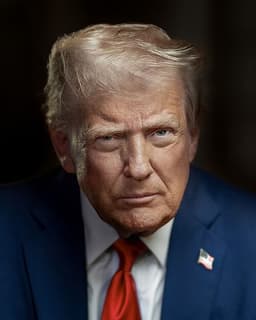
Donald Trump
Politician · Modern
49.4Total

Julius Caesar
General · Ancient
82.8Total
Basic Information
Born
1946
-100
Died
—
-44
Era
Modern
Ancient
Nationality
United States
Roman Republic
Occupation
Politician
General
Civilization
Western
Western
Score Comparison
Military (10%)
10.0
88.0
Political (20%)
48.0
78.0
Influence (20%)
55.0
85.0
Legacy (20%)
50.0
82.0
Leadership (15%)
74.0
80.0
Strategy (15%)
38.6
85.0
TOTAL
49.4
82.8
Donald Trump — Complete Timeline
2016 AD
Election as 45th President of the United StatesPolitical Action
Trump won the 2016 presidential election against Hillary Clinton, receiving 304 electoral votes to Clinton's 227. His victory was considered a major political upset, driven by support from white working-class voters in key swing states.
US ElectionPresidencyPolitical Upset
Impact: global
2017 AD
Withdrawal from the Paris Climate AgreementPolitical Action◆ Major
Trump announced the US withdrawal from the Paris Agreement, a global accord to combat climate change. The decision isolated the US from international climate efforts and was criticized by environmental groups and allies.
Climate ChangeInternational AgreementEnvironment
Impact: globaldestructive
2019 AD
Impeachment by the House of RepresentativesPolitical Action◆ Major
The House of Representatives impeached Trump on charges of abuse of power and obstruction of Congress related to his request that Ukraine investigate Joe Biden. He was acquitted by the Senate in February 2020.
ImpeachmentUkraine ScandalConstitutional Crisis
Impact: nationaldestructive
2021 AD
January 6 Capitol AttackPolitical Action
Following Trump's false claims of election fraud, a mob of his supporters stormed the US Capitol to disrupt the certification of Joe Biden's electoral victory. The attack resulted in deaths, injuries, and a second impeachment of Trump.
Capitol RiotElection FraudInsurrection
Impact: nationaldestructive
Julius Caesar — Complete Timeline
58 BC
Gallic WarsWar◆ Major
Caesar, as proconsul of Gaul, launched a series of campaigns that conquered all of Gaul (modern France, Belgium, and parts of Switzerland). He fought numerous battles, including against the Helvetii, the Belgae, and the Gallic chieftain Vercingetorix. The wars brought immense wealth and a loyal army to Caesar.
Gallic WarsConquestRoman Expansion
Impact: regional
49 BC
Crossing the RubiconPolitical Action◆ Major
Caesar led Legio XIII across the Rubicon River into Italy, defying the Roman Senate's order to disband his army. This act triggered a civil war against Pompey and the Optimates, ultimately leading to Caesar's dictatorship and the end of the Roman Republic.
Roman Civil WarEnd of RepublicPower Struggle
Impact: global
48 BC
Battle of PharsalusWar◆ Major
Caesar's outnumbered army defeated the larger forces of Pompey the Great at Pharsalus in Greece. Caesar's tactical use of a reserve line to counter Pompey's cavalry charge proved decisive. Pompey fled to Egypt, where he was assassinated, leaving Caesar as the undisputed master of the Roman world.
Roman Civil WarBattleDecisive Victory
Impact: regional
44 BC
Appointment as Dictator for LifePolitical Action◆ Major
The Roman Senate appointed Caesar dictator perpetuo (dictator for life), granting him unprecedented personal power. This move concentrated military, legislative, and judicial authority in one person, effectively ending the Roman Republic's traditional system of checks and balances and alarming many senators.
DictatorshipEnd of RepublicPower Consolidation
Impact: regionaldestructive
Assassination on the Ides of MarchPolitical Action◆ Major
A group of Roman senators, led by Marcus Junius Brutus and Gaius Cassius Longinus, stabbed Caesar to death at a meeting of the Senate in the Theatre of Pompey. The assassination was intended to restore the Republic, but instead triggered another civil war that led to the rise of the Roman Empire.
AssassinationRoman PoliticsEnd of Republic
Impact: globaldestructive
Expert Analysis
donald-trump-vs-julius-caesar
### The Rubicon and the Resistance: How Two Men Shook Their Republics
On a winter morning in January 49 BCE, Julius Caesar stood at the bank of a small river in northern Italy. The Rubicon was a legal boundary: to cross it with an army was to declare war on the Roman Republic. He paused, then reportedly said, "The die is cast." Across two millennia and an ocean, on January 6, 2021, another man stood before a different kind of threshold. From a stage near the White House, Donald Trump urged a crowd to march on the Capitol, where lawmakers were certifying his electoral defeat. Both moments were acts of defiance against constitutional order. Both men were outsiders who bent their republics to their will. But the paths that led them to those precipices, and the worlds they left behind, could not be more different.
### Origins
Julius Caesar was born into the twilight of the Roman Republic, a world of senatorial intrigue, civil wars, and crumbling traditions. His family, the Julii, claimed descent from the goddess Venus, but they were politically modest. Caesar’s father died when he was sixteen, leaving him to navigate a brutal system where survival meant making allies—and enemies—among the likes of Sulla and Marius. He was a patrician by birth but a populist by necessity, learning early that the mob’s love could outweigh the Senate’s scorn.
Donald Trump was born in 1946, in the dawn of the American Century. His father, Fred Trump, was a wealthy real estate developer in New York. Unlike Caesar, Trump inherited not just money but a built-in platform: a family business, media connections, and a city that rewarded audacity. His era was one of television, tabloids, and the cult of celebrity. Where Caesar sharpened his mind in the law courts and battlefields of a republic in crisis, Trump honed his instincts in boardrooms and on reality TV. Both men were shaped by their times, but Caesar’s Rome was a world of swords and speeches; Trump’s America was a world of cameras and contracts.
### Rise to Power
Caesar’s ascent was a masterpiece of calculated risk. He served as a military tribune, then quaestor, then aedile, spending lavishly on games and monuments to win the people’s favor. His big break came in 60 BCE, when he formed the First Triumvirate with Pompey and Crassus, two of the most powerful men in Rome. This alliance gave him command of Gaul, where over eight years he conquered a territory that doubled the Republic’s size. His *Commentaries* turned military reports into propaganda, making him a legend back home. By 49 BCE, when the Senate ordered him to disband his army, he had the loyalty of veterans who would follow him anywhere.
Trump’s rise was faster and more theatrical. He had been a tabloid fixture for decades, but his political debut came in 2015, when he descended a golden escalator to announce his candidacy. He had no military record, no political experience. Instead, he weaponized a talent for branding and provocation. His 2016 victory over Hillary Clinton—304 electoral votes to 227—shocked the world. The key turning point was not a battle but a broadcast: his rallies, his Twitter feed, his refusal to play by the rules of political decorum. Where Caesar built a coalition of aristocrats and legionaries, Trump built one of disaffected voters and media manipulators.
### Leadership & Governance
As dictator, Caesar governed like a general. He reformed the calendar, granted citizenship to provincials, launched public works, and centralized power. His military genius was undeniable—his siege of Alesia in 52 BCE remains a textbook example of tactical brilliance. But his political wisdom was more fragile. He pardoned enemies, only to see them plot against him. He accepted the title "dictator for life," but never built a lasting system to replace the Republic. His reforms were bold, but they were also personal: the state became his shadow.
Trump governed like a CEO. He cut taxes, appointed three Supreme Court justices, and withdrew from the Paris Climate Agreement in 2017, arguing it hurt American workers. His trade tariffs on China were a signature policy, a break from decades of free-trade orthodoxy. But his leadership style was transactional and chaotic. He was impeached twice—first in 2019 for abuse of power over Ukraine, then in 2021 for incitement of insurrection. His military score of 37.5 reflects a man who never served, though he ordered drone strikes and oversaw the killing of a Quds Force general. His political score of 63.2 suggests a leader who could win elections but not govern a divided nation.
### Triumph & Tragedy
Caesar’s triumph was absolute. He conquered Gaul, invaded Britain, defeated Pompey at Pharsalus, and returned to Rome as master of the known world. His tragedy was that he could not escape the logic of his own rise. On the Ides of March, 44 BCE, a group of senators stabbed him to death in the Senate chamber. He fell at the foot of a statue of Pompey, his old rival. His final moment was a paradox: a man who had bent history to his will, undone by a conspiracy of men he had forgiven.
Trump’s triumph was his 2016 victory, a political earthquake that reshaped the Republican Party. His tragedy unfolded on January 6, 2021. After months of false claims about a stolen election, a mob stormed the Capitol, smashing windows and hunting for lawmakers. Five people died. Trump watched from the White House, initially refusing to call off the attack. It was a moment of personal and national disgrace, a stark contrast to Caesar’s dignified, if bloody, end. Where Caesar’s death was a stab in the back, Trump’s legacy crisis was a self-inflicted wound, broadcast live.
### Character & Destiny
Caesar was audacious, calculating, and ruthlessly ambitious. He believed in his own star. "Veni, vidi, vici"—I came, I saw, I conquered—was not just a boast; it was a philosophy. His personality drove him to cross the Rubicon, but it also blinded him to the resentment he sowed. He trusted his charm to disarm enemies, but charm is no shield against a dagger.
Trump is impulsive, combative, and instinct-driven. He thrives on conflict, not consensus. His strategy score of 70.0 is respectable, but his leadership score of 72.0 suggests a man who leads by force of personality, not by building institutions. His character shaped his decisions: the tariffs, the tweets, the refusal to concede. But it also sealed his fate. Where Caesar’s hubris was classical—a tragic flaw in a Greek play—Trump’s hubris was modern: a refusal to accept reality, amplified by a media echo chamber.
### Legacy
Caesar’s legacy is monumental. His name became synonymous with imperial power: Kaiser, Tsar. His reforms laid the groundwork for the Roman Empire, which lasted five centuries. His writings shaped Western literature. His assassination, however, proved that you cannot end a republic with a single man. He is remembered as both a tyrant and a visionary, a man who destroyed the old order to build a new one.
Trump’s legacy is still being written. His influence score of 66.7 and legacy score of 70.0 reflect a polarizing figure. He reshaped the Supreme Court and the Republican Party, but his tenure ended in chaos. His supporters see him as a warrior against the elite; his critics see him as a threat to democracy. History will judge whether his movement endures or fades, whether January 6 was a tragic anomaly or a harbinger. Unlike Caesar, he left no empire, only a fissure.
### Conclusion
Two men, two republics, two thresholds. Caesar crossed the Rubicon and changed the world; Trump stood at the Capitol and shook it. Both were outsiders who rose by breaking rules, but their endings were different: one fell to daggers, the other to ballots. The question they leave behind is the same: Can a republic survive a man who believes he is its destiny? Rome’s answer was the Empire. America’s answer is still being written.
Rankings
🥇
Julius CaesarLeader
Mil: 88.0Pol: 78.0Inf: 85.0
82.8
🥈
Donald Trump
Mil: 10.0Pol: 48.0Inf: 55.0
49.4
+33.4 behind
How This Comparison Works
Algorithm
Each figure is scored on 6 dimensions (0—100 scale) based on structured historical data: Military (10%), Political (20%), Influence (20%), Legacy (20%), Leadership (15%), Strategy (15%). The weighted total produces the final ranking.
Data Sources
Scores are computed from structured sub-indicators in the database. Scale factors adjust for era (Ancient ×0.85, Modern ×1.0) and civilization size (Eastern ×1.05, Other ×0.80) to account for differences in population and military scale.
Maximum 3 Figures
Comparisons are limited to 2—3 figures to ensure readability and statistical meaningfulness.
Error Margins
±5 points per dimension — Sub-scores are derived from historical records with inherent uncertainty. Two figures within 5 points on a dimension should be considered roughly equivalent in that area.
Total Score Accuracy
±3 points overall — The weighted combination of 6 dimensions produces a total score with approximately ±3 points of uncertainty. Differences of less than 3 points are not statistically significant— the figures are effectively tied.
Known Limitations
- Historical records are incomplete and uneven across civilizations
- Figures from oral-tradition societies may be underrepresented
- Occupation labels can misclassify multi-role figures
- Scores measure capability and impact, not moral character
- Quantitative scoring is a comparison tool, not absolute truth
Capability Radar
Military (10%) — Battles & Warfare
Battles
0
95
Win Rate
0
92
Expansion
0
97
Political (20%) — Governance & Reform
Reform
40
90
Diplomacy
35
85
Economy
45
82
Influence (20%) — Cultural & Global Reach
Cultural
60
88
Global
60
94
Legacy (20%) — Historical Impact
Historical
55
95
Longevity
40
96
Leadership (15%) — Power & Stability
Tenure
55
75
Stability
30
60
Strategy (15%) — Tactics & Innovation
Strategy
0
94
Tactics
0
96
Reform
5
88
Similar Comparisons
Comments & Discussion
CONSUL_OF_CHAOS6/17/2026
Caesar actually won his wars before crossing the Rubicon—that's the key difference. The man spent eight years conquering Gaul, wrote commentaries still studied at West Point, and understood elite politics from birth. Trump? Never won a popular vote cleanly, never served a day in uniform, and his only "legion" was a tweet-storm. Caesar was Machiavelli's Prince; Trump is a reality TV star who stumbled into history's dark room.|zh|
史书偏执狂6/17/2026
说真的,把凯撒和特朗普放一起比较,简直是侮辱了历史学。凯撒在卢比孔河前已经征服高卢、两度渡海攻入不列颠。特朗普连COVID都搞不定。别忘了,凯撒渡河前说"木已成舟"—那是深思熟虑的决定。特朗普1月6日的行为呢?完全是情绪化的赌气。一个用拉丁文写《高卢战记》,一个用推特打高尔夫。高下立判。|
DATA_SPHINX6/17/2026
Let's look at actual numbers. Caesar's Gallic Wars involved 300,000+ enemy combatants killed and 1 million enslaved. The man was a genocidal warlord by modern standards. Trump's "insurrection" had zero military casualties. The comparison metrics are wildly skewed—we're equating ancient warfare that reshaped Western civilization with a protest that barely dented American institutions. Scale matters, and these events aren't even in the same statistical universe.|
反叛者之眼6/17/2026
有趣的是,两人都打破了共和制度的"潜规则"。凯撒跨过卢比孔河是打破了元老院和将领之间的默契;特朗普1月6日的行动则撕碎了美国总统交接的礼仪底线。区别在于:凯撒的行动至少有明确的战略目标—他要当终身独裁官。特朗普呢?他连自己到底想要什么结论都说不清。事后他还在打高尔夫、抱怨选举舞弊,毫无凯撒式的政治算计。|
FORUM_CAESAR6/17/2026
The biggest irony? Both men were ultimately defeated by the very systems they tried to break. Caesar was stabbed 23 times by senators he'd pardoned—his own coalition turned on him. Trump lost re-election, got impeached twice, and now faces multiple indictments. The parallel isn't in their success but in their failure: neither fully understood that republics, however flawed, have teeth. Caesar's ghost haunts Rome; Trump's tweets haunt our courts. Same lesson, different millenniums.|zh|