Loading...
Dmitry Peskov vs Robert Borden
Robert Borden leads by 12.8 pts · 2 figures compared
…
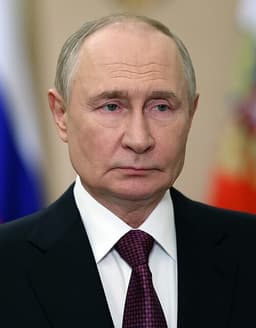
Dmitry Peskov
Politician · Modern
44.9Total
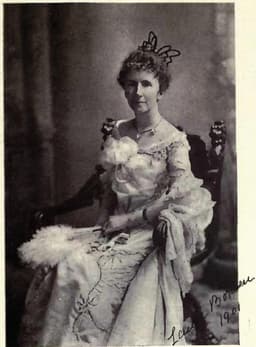
Robert Borden
Politician · Modern
57.7Total
Basic Information
Born
1967
1854
Died
—
1937
Era
Modern
Modern
Nationality
Russia
Canada
Occupation
Politician
Politician
Civilization
Western
Western
Score Comparison
Military (10%)
50.0
36.7
Political (20%)
35.1
72.0
Influence (20%)
51.8
56.4
Legacy (20%)
38.3
49.2
Leadership (15%)
53.2
72.0
Strategy (15%)
41.0
60.0
TOTAL
44.9
57.7
Dmitry Peskov — Complete Timeline
1999 AD
Appointed Deputy Press Secretary of the PresidentPolitical Action
Peskov was appointed Deputy Press Secretary for President Boris Yeltsin in 1999, later serving under Putin. He worked under Press Secretary Alexei Gromov before taking over the role.
Presidential AdministrationMedia
Impact: national
2000 AD
Appointed Press Secretary of the President of RussiaPolitical Action◆ Major
Dmitry Peskov was appointed Press Secretary for President Vladimir Putin in 2000, serving as the official spokesperson. He has been the primary conduit for Kremlin communications, handling media relations and public statements.
Presidential AdministrationMedia
Impact: national
2012 AD
Served as Deputy Chief of the Presidential AdministrationPolitical Action◆ Major
Peskov was appointed Deputy Chief of the Presidential Administration in 2012, while retaining his role as Press Secretary. He gained broader responsibilities in managing Kremlin communications and policy coordination.
Presidential AdministrationLeadership
Impact: national
2014 AD
Managed communication during the annexation of CrimeaPolitical Action◆ Major
Peskov was the Kremlin's chief spokesperson during the annexation of Crimea in 2014, presenting the Russian government's narrative. He denied Russian military involvement initially, later acknowledging it, and defended the annexation as a legitimate act.
CrimeaMedia
Impact: global
Robert Borden — Complete Timeline
1911 AD
Became Prime Minister of CanadaPolitical Action◆ Major
Borden became the eighth Prime Minister of Canada, leading a Conservative government. His victory was largely due to opposition to Laurier's reciprocity agreement with the United States.
Government FormationElectionConservatism
Impact: national
1914 AD
Led Canada through World War IWar◆ Major
Borden led Canada's war effort during World War I. He committed over 600,000 troops to the conflict, expanded the military, and managed the domestic war economy. The war deeply divided Canada along linguistic lines.
World War IMilitaryWar Effort
Impact: global
1917 AD
Introduced conscription in CanadaPolitical Action◆ Major
Borden's government passed the Military Service Act, introducing conscription for overseas service. The policy was deeply unpopular in Quebec and led to the Conscription Crisis of 1917, which exacerbated French-English tensions.
ConscriptionCrisisQuebec
Impact: nationaldestructive
1919 AD
Secured Canada's signature on the Treaty of VersaillesPolitical Action
Borden insisted that Canada sign the Treaty of Versailles as an independent nation, separate from Britain. This marked a significant step in Canada's evolution from a colony to a sovereign state, gaining a separate seat in the League of Nations.
TreatySovereigntyLeague of Nations
Impact: globalconstructive
Expert Analysis
Origins
Dmitry Peskov was born in 1967 in Moscow, Russia, into a diplomatic family. His father served as a Soviet diplomat, which exposed Peskov to international affairs from an early age. He studied at the Moscow State Institute of International Relations (MGIMO), graduating in 1989 with a degree in Oriental Studies. His early career included work at the Soviet Embassy in Turkey and later in the Russian Foreign Ministry.
Robert Borden was born in 1854 in Grand Pré, Nova Scotia, Canada, to a farming family. He studied at the University of Toronto but left without graduating due to financial constraints. He later studied law and was called to the bar in 1878. Borden practiced law in Halifax, becoming a prominent corporate lawyer before entering politics.
Rise to Power
Peskov's rise began in the late 1990s when he joined the presidential administration under Boris Yeltsin. He served as Deputy Press Secretary in 1999, working under Alexei Gromov. When Vladimir Putin became president in 2000, Peskov was appointed Press Secretary, a position he held for over two decades. His proximity to Putin gave him influence, but he remained a spokesperson rather than a decision-maker. His role expanded in 2012 when he became Deputy Chief of the Presidential Administration.
Borden entered politics in 1896, winning a seat in the House of Commons as a Conservative. He became leader of the Conservative Party in 1901 and served as Leader of the Opposition. In the 1911 federal election, Borden defeated Prime Minister Wilfrid Laurier on the issue of reciprocity with the United States, becoming Prime Minister on October 10, 1911. His victory marked a shift in Canadian trade policy.
Leadership & Governance
Peskov's leadership is defined by his role as a mouthpiece for the Kremlin. He manages the flow of information, controls press conferences, and shapes the public narrative for Putin's policies. His governance style is reactive and defensive, often denying or spinning controversial events. For example, during the 2014 annexation of Crimea, Peskov denied any Russian military involvement, a claim later contradicted by evidence. He has a political score of 35.1, reflecting limited independent authority.
Borden's governance was proactive and transformative. He led Canada through World War I, expanding the military from 3,000 to over 600,000 troops. He introduced the War Measures Act in 1914, giving the government sweeping powers. In 1917, he implemented conscription via the Military Service Act, a decision that deeply divided the country, especially in Quebec. Borden also pushed for Canada's independent signature on the Treaty of Versailles in 1919, asserting Canadian autonomy within the British Empire. His political score of 72.0 reflects his effective leadership during a crisis.
Triumph & Tragedy
Peskov's greatest success is his longevity and loyalty to Putin, surviving multiple political shifts. He has maintained a consistent public image and effectively communicated Kremlin policy. His greatest failure is the erosion of credibility: his denials of Russian involvement in Ukraine and other conflicts have been widely discredited, damaging Russia's international reputation. His influence score of 51.8 reflects his role as a key communicator, but his legacy score of 38.3 indicates limited lasting impact.
Borden's greatest triumph is securing Canada's independent role in the Treaty of Versailles, a milestone in Canadian sovereignty. He also successfully mobilized Canada's war effort, contributing to the Allied victory. His greatest tragedy is the conscription crisis, which alienated French Canadians and led to the 1917 election that split the country along linguistic lines. The policy caused riots and deepened divisions. His leadership score of 72.0 and strategy score of 60.0 reflect his effectiveness, but the conscription crisis remains a blemish.
Character & Destiny
Peskov is known for his calm demeanor and precision in language, but also for his evasiveness. He rarely deviates from the Kremlin line, suggesting a cautious and disciplined character. His destiny is tied to Putin's: as long as Putin remains in power, Peskov retains influence. However, his lack of independent authority means his fate is entirely dependent on his patron.
Borden was known for his determination and pragmatism. He was not a charismatic speaker but was respected for his integrity and hard work. His decision to introduce conscription, despite knowing its unpopularity, reflected his commitment to winning the war. His character shaped his destiny: he pushed for Canadian independence but at the cost of national unity. Historians assess him as a steady leader who modernized Canada's role in the world.
Legacy
Peskov's legacy is largely ephemeral. He is known as the face of Kremlin propaganda, but his individual impact is minimal. He has not shaped policy or left institutional changes. His legacy score of 38.3 reflects this transience.
Borden's legacy is substantial. He established Canada's right to an independent foreign policy, a principle that endured. He also expanded the federal government's role in wartime, setting precedents for future crises. His decision to conscript troops remains controversial, but his contributions to Canada's autonomy are widely recognized. His legacy score of 49.2 is higher than Peskov's.
Conclusion
Robert Borden had a greater impact than Dmitry Peskov. Borden led a nation through a world war, shaped its foreign policy, and left a lasting legacy of independence. His total score of 57.7 far exceeds Peskov's 44.9. While Peskov has been a skilled communicator, his role is derivative and his influence temporary. Borden's decisions altered Canada's trajectory; Peskov's words have not altered Russia's. The data supports this: Borden scored higher in political (72.0 vs 35.1), leadership (72.0 vs 53.2), and legacy (49.2 vs 38.3). In the contest of historical significance, Borden is the clear victor.
Rankings
🥇
Robert BordenLeader
Mil: 36.7Pol: 72.0Inf: 56.4
57.7
🥈
Dmitry Peskov
Mil: 50.0Pol: 35.1Inf: 51.8
44.9
+12.8 behind
How This Comparison Works
Algorithm
Each figure is scored on 6 dimensions (0—100 scale) based on structured historical data: Military (10%), Political (20%), Influence (20%), Legacy (20%), Leadership (15%), Strategy (15%). The weighted total produces the final ranking.
Data Sources
Scores are computed from structured sub-indicators in the database. Scale factors adjust for era (Ancient ×0.85, Modern ×1.0) and civilization size (Eastern ×1.05, Other ×0.80) to account for differences in population and military scale.
Maximum 3 Figures
Comparisons are limited to 2—3 figures to ensure readability and statistical meaningfulness.
Error Margins
±5 points per dimension — Sub-scores are derived from historical records with inherent uncertainty. Two figures within 5 points on a dimension should be considered roughly equivalent in that area.
Total Score Accuracy
±3 points overall — The weighted combination of 6 dimensions produces a total score with approximately ±3 points of uncertainty. Differences of less than 3 points are not statistically significant— the figures are effectively tied.
Known Limitations
- Historical records are incomplete and uneven across civilizations
- Figures from oral-tradition societies may be underrepresented
- Occupation labels can misclassify multi-role figures
- Scores measure capability and impact, not moral character
- Quantitative scoring is a comparison tool, not absolute truth
Capability Radar
Military (10%) — Battles & Warfare
Battles
27
48
Win Rate
33
47
Expansion
34
56
Political (20%) — Governance & Reform
Reform
10
60
Diplomacy
55
70
Economy
10
55
Influence (20%) — Cultural & Global Reach
Cultural
10
30
Global
40
50
Legacy (20%) — Historical Impact
Historical
20
55
Longevity
10
40
Leadership (15%) — Power & Stability
Tenure
70
65
Stability
30
60
Strategy (15%) — Tactics & Innovation
Strategy
37
57
Tactics
40
58
Reform
42
64
Similar Comparisons
Comments & Discussion
No comments yet. Be the first to share your thoughts!