Loading...
Djedkare Isesi vs King Munmu
King Munmu leads by 10.7 pts · 2 figures compared
…
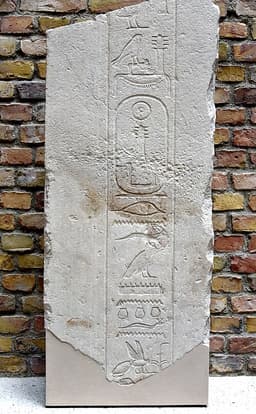
Djedkare Isesi
Emperor · Ancient
53.8Total

King Munmu
Emperor · Ancient
64.5Total
Basic Information
Born
-2390
-626
Died
-2360
—
Era
Ancient
Ancient
Nationality
Old Kingdom Egypt
Korea
Occupation
Emperor
Emperor
Civilization
Middle Eastern
Eastern
Score Comparison
Military (10%)
10.2
76.0
Political (20%)
65.0
70.0
Influence (20%)
58.0
58.3
Legacy (20%)
49.2
52.0
Leadership (15%)
78.0
85.0
Strategy (15%)
45.0
61.2
TOTAL
53.8
64.5
Djedkare Isesi — Complete Timeline
2390 BC
Administrative reforms and decentralizationReform◆ Major
Djedkare Isesi implemented significant administrative reforms that decentralized the Egyptian state. He reduced the power of the central bureaucracy and granted more autonomy to provincial officials (nomarchs), a shift that would have long-term consequences for the Old Kingdom.
AdministrationDecentralizationReform
Impact: national
Construction of the Pyramid of Djedkare at SaqqaraCultural◆ Major
Djedkare built his pyramid at Saqqara, moving the royal necropolis away from Abusir. The pyramid, originally about 52 meters high, is now ruined. Its substructure contained a burial chamber with a granite sarcophagus and fragments of the Pyramid Texts.
ArchitecturePyramidSaqqara
Impact: nationalconstructive
Long reign and prosperityPolitical Action◆ Major
Djedkare Isesi reigned for approximately 30 years, a period of relative peace and prosperity. His reign saw the continuation of trade with Byblos and Punt, and the development of the Memphite necropolis. He was later deified as a patron of scribes.
Long ReignProsperityTrade
Impact: nationalconstructive
Expedition to the Wadi HammamatPolitical Action
Djedkare sent an expedition to the Wadi Hammamat in the Eastern Desert to quarry stone for his pyramid and statues. The expedition is recorded in inscriptions at the site, detailing the number of men and the resources involved.
QuarryingExpeditionWadi Hammamat
Impact: regionalconstructive
King Munmu — Complete Timeline
660 AD
Battle of HwangsanbeolWar◆ Major
Silla forces under King Munmu (then Prince) allied with Tang China to defeat the Baekje army at Hwangsanbeol. This victory led to the fall of the Baekje kingdom, a key step toward unification.
Three Kingdoms PeriodSilla-Tang AllianceBaekje Conquest
Impact: regional
668 AD
Battle of Salsu RiverWar◆ Major
Silla forces under King Munmu, in coordination with Tang China, defeated the Goguryeo army at the Salsu River. This victory resulted in the fall of Goguryeo, completing the unification of the Three Kingdoms under Silla.
Three Kingdoms PeriodSilla-Tang AllianceGoguryeo Conquest
Impact: regional
670 AD
Silla-Tang WarWar◆ Major
After the fall of Goguryeo, Tang China attempted to establish control over the Korean peninsula. King Munmu led Silla forces in a war against Tang, successfully expelling Chinese forces and securing Silla's dominance over the unified territory.
Silla-Tang WarUnificationIndependence
Impact: regional
676 AD
Establishment of the Unified Silla KingdomPolitical Action
King Munmu formally established the Unified Silla Kingdom after expelling Tang forces. This marked the first time the Korean peninsula was unified under a single indigenous ruler, creating a period of peace and cultural flourishing.
UnificationSilla DynastyKorean History
Impact: regionalconstructive
Expert Analysis
Origins
Djedkare Isesi was a pharaoh of the Fifth Dynasty of Egypt, reigning from approximately 2414 to 2375 BCE. He was likely the son of his predecessor, Menkauhor Kaiu. Little is known of his early life, but he succeeded to the throne at a time when the Old Kingdom was at its height. His reign is noted for administrative reforms and a shift in royal burial practices.
King Munmu, born as Prince Beopmin in 626 CE, was the 30th king of the Silla Kingdom in Korea. He was the son of King Muyeol and Queen Munmyeong. From a young age, he was groomed for leadership and participated in military campaigns. His background was shaped by the Three Kingdoms period, a time of constant conflict between Silla, Baekje, and Goguryeo.
Rise to Power
Djedkare Isesi ascended the throne after the death of Menkauhor. His rise was peaceful, as part of the dynastic succession. He assumed power over a centralized state with a powerful bureaucracy. His reign focused on maintaining stability and prosperity through administrative changes.
King Munmu rose to power as a military leader. He was appointed as a general and later became king in 661 CE after his father's death. His key turning point was the alliance with Tang China to conquer Baekje and Goguryeo. He played a crucial role in the Battle of Hwangsanbeol (660 CE) and the Battle of Salsu River (668 CE), which led to the fall of those kingdoms. After their defeat, he faced the Silla-Tang War (668-676 CE) to expel Chinese forces and unify the peninsula.
Leadership & Governance
Djedkare Isesi was an administrative reformer. He decentralized the government by delegating power to regional officials, reducing the influence of the central bureaucracy. This improved efficiency but also sowed seeds for future fragmentation. He also moved the royal necropolis to Saqqara, breaking tradition. His leadership score is 78.0, reflecting his effective governance.
King Munmu was a military and political leader. He forged alliances, commanded armies, and negotiated peace. After unification, he established the Unified Silla Kingdom, integrating the former states under one rule. He implemented a centralized government and promoted Buddhism. His leadership score is 85.0, indicating strong command and strategic vision.
Triumph & Tragedy
Djedkare Isesi's greatest success was his long reign of about 30 years, marked by peace and prosperity. His administrative reforms improved governance and trade, as seen in expeditions to Wadi Hammamat. However, his decentralization weakened central authority, contributing to the decline of the Old Kingdom after his death. His pyramid at Saqqara, now ruined, reflects his modest building program.
King Munmu's triumph was the unification of the Korean Peninsula. He defeated Tang forces in the Silla-Tang War, securing independence. His tragedy was the destruction and loss of life during the wars. Additionally, the unification was not complete, as the northern territories remained contested. He died in 681 CE, leaving a unified but fragile kingdom.
Character & Destiny
Djedkare Isesi was pragmatic and reform-minded. He prioritized administrative efficiency over monumental construction. His character shaped a stable reign but also initiated changes that led to the end of the Fifth Dynasty. Historians view him as a capable ruler who maintained order.
King Munmu was determined and strategic. He was willing to ally with a foreign power (Tang) to achieve his goals, then turn against them when necessary. His character drove him to complete unification, but his reliance on military force created enemies. He is remembered as a unifier, but his policies required constant vigilance.
Legacy
Djedkare Isesi's administrative reforms influenced later Egyptian governance, though his decentralization is seen as a precursor to the First Intermediate Period. His pyramid and inscriptions provide archaeological data. His legacy score is 49.2.
King Munmu's legacy is profound: he unified Korea for the first time, establishing a foundation for later Korean states. The Unified Silla period saw cultural and economic flourishing. He is revered in Korean history. His legacy score is 52.0.
Conclusion
King Munmu had a greater impact due to his unification of Korea, a transformative achievement that shaped the peninsula's history. Djedkare Isesi's reforms were important but less enduring. Munmu's military (76.0) and political (70.0) scores exceed Isesi's (10.2 and 65.0), and his total score of 64.5 surpasses Isesi's 53.8. While Isesi maintained stability, Munmu created a new political order.
Rankings
🥇
King MunmuLeader
Mil: 76.0Pol: 70.0Inf: 58.3
64.5
🥈
Djedkare Isesi
Mil: 10.2Pol: 65.0Inf: 58.0
53.8
+10.7 behind
How This Comparison Works
Algorithm
Each figure is scored on 6 dimensions (0—100 scale) based on structured historical data: Military (10%), Political (20%), Influence (20%), Legacy (20%), Leadership (15%), Strategy (15%). The weighted total produces the final ranking.
Data Sources
Scores are computed from structured sub-indicators in the database. Scale factors adjust for era (Ancient ×0.85, Modern ×1.0) and civilization size (Eastern ×1.05, Other ×0.80) to account for differences in population and military scale.
Maximum 3 Figures
Comparisons are limited to 2—3 figures to ensure readability and statistical meaningfulness.
Error Margins
±5 points per dimension — Sub-scores are derived from historical records with inherent uncertainty. Two figures within 5 points on a dimension should be considered roughly equivalent in that area.
Total Score Accuracy
±3 points overall — The weighted combination of 6 dimensions produces a total score with approximately ±3 points of uncertainty. Differences of less than 3 points are not statistically significant— the figures are effectively tied.
Known Limitations
- Historical records are incomplete and uneven across civilizations
- Figures from oral-tradition societies may be underrepresented
- Occupation labels can misclassify multi-role figures
- Scores measure capability and impact, not moral character
- Quantitative scoring is a comparison tool, not absolute truth
Capability Radar
Military (10%) — Battles & Warfare
Battles
5
70
Win Rate
5
75
Expansion
5
85
Political (20%) — Governance & Reform
Reform
75
75
Diplomacy
60
80
Economy
70
65
Influence (20%) — Cultural & Global Reach
Cultural
50
65
Global
40
55
Legacy (20%) — Historical Impact
Historical
55
75
Longevity
50
70
Leadership (15%) — Power & Stability
Tenure
70
70
Stability
75
70
Strategy (15%) — Tactics & Innovation
Strategy
5
80
Tactics
5
65
Reform
5
60
Similar Comparisons
Comments & Discussion
No comments yet. Be the first to share your thoughts!