Loading...
Djedkare Isesi vs Julius Caesar
Julius Caesar leads by 29.0 pts · 2 figures compared
…
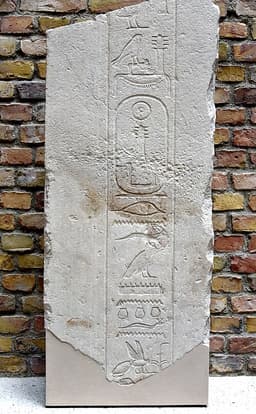
Djedkare Isesi
Emperor · Ancient
53.8Total

Julius Caesar
General · Ancient
82.8Total
Basic Information
Born
-2390
-100
Died
-2360
-44
Era
Ancient
Ancient
Nationality
Old Kingdom Egypt
Roman Republic
Occupation
Emperor
General
Civilization
Middle Eastern
Western
Score Comparison
Military (10%)
10.2
88.0
Political (20%)
65.0
78.0
Influence (20%)
58.0
85.0
Legacy (20%)
49.2
82.0
Leadership (15%)
78.0
80.0
Strategy (15%)
45.0
85.0
TOTAL
53.8
82.8
Djedkare Isesi — Complete Timeline
2390 BC
Administrative reforms and decentralizationReform◆ Major
Djedkare Isesi implemented significant administrative reforms that decentralized the Egyptian state. He reduced the power of the central bureaucracy and granted more autonomy to provincial officials (nomarchs), a shift that would have long-term consequences for the Old Kingdom.
AdministrationDecentralizationReform
Impact: national
Construction of the Pyramid of Djedkare at SaqqaraCultural◆ Major
Djedkare built his pyramid at Saqqara, moving the royal necropolis away from Abusir. The pyramid, originally about 52 meters high, is now ruined. Its substructure contained a burial chamber with a granite sarcophagus and fragments of the Pyramid Texts.
ArchitecturePyramidSaqqara
Impact: nationalconstructive
Long reign and prosperityPolitical Action◆ Major
Djedkare Isesi reigned for approximately 30 years, a period of relative peace and prosperity. His reign saw the continuation of trade with Byblos and Punt, and the development of the Memphite necropolis. He was later deified as a patron of scribes.
Long ReignProsperityTrade
Impact: nationalconstructive
Expedition to the Wadi HammamatPolitical Action
Djedkare sent an expedition to the Wadi Hammamat in the Eastern Desert to quarry stone for his pyramid and statues. The expedition is recorded in inscriptions at the site, detailing the number of men and the resources involved.
QuarryingExpeditionWadi Hammamat
Impact: regionalconstructive
Julius Caesar — Complete Timeline
58 BC
Gallic WarsWar◆ Major
Caesar, as proconsul of Gaul, launched a series of campaigns that conquered all of Gaul (modern France, Belgium, and parts of Switzerland). He fought numerous battles, including against the Helvetii, the Belgae, and the Gallic chieftain Vercingetorix. The wars brought immense wealth and a loyal army to Caesar.
Gallic WarsConquestRoman Expansion
Impact: regional
49 BC
Crossing the RubiconPolitical Action◆ Major
Caesar led Legio XIII across the Rubicon River into Italy, defying the Roman Senate's order to disband his army. This act triggered a civil war against Pompey and the Optimates, ultimately leading to Caesar's dictatorship and the end of the Roman Republic.
Roman Civil WarEnd of RepublicPower Struggle
Impact: global
48 BC
Battle of PharsalusWar◆ Major
Caesar's outnumbered army defeated the larger forces of Pompey the Great at Pharsalus in Greece. Caesar's tactical use of a reserve line to counter Pompey's cavalry charge proved decisive. Pompey fled to Egypt, where he was assassinated, leaving Caesar as the undisputed master of the Roman world.
Roman Civil WarBattleDecisive Victory
Impact: regional
44 BC
Appointment as Dictator for LifePolitical Action◆ Major
The Roman Senate appointed Caesar dictator perpetuo (dictator for life), granting him unprecedented personal power. This move concentrated military, legislative, and judicial authority in one person, effectively ending the Roman Republic's traditional system of checks and balances and alarming many senators.
DictatorshipEnd of RepublicPower Consolidation
Impact: regionaldestructive
Assassination on the Ides of MarchPolitical Action◆ Major
A group of Roman senators, led by Marcus Junius Brutus and Gaius Cassius Longinus, stabbed Caesar to death at a meeting of the Senate in the Theatre of Pompey. The assassination was intended to restore the Republic, but instead triggered another civil war that led to the rise of the Roman Empire.
AssassinationRoman PoliticsEnd of Republic
Impact: globaldestructive
Expert Analysis
Origins
Djedkare Isesi was born around the 25th century BCE, likely into the royal family of the Fifth Dynasty of Egypt. Little is known of his early life, but he ascended the throne after his predecessor, Menkauhor Kaiu. He reigned for approximately 30 years, a period of relative peace and prosperity. His family background is obscure, but he was the father of several daughters, including princesses Khekeretnebty and Meret-Isesi. His education would have been that of a prince, focusing on administration, religion, and the responsibilities of kingship.
Julius Caesar was born on July 12, 100 BCE, into the patrician Julian clan in Rome. His early life was marked by political turmoil; his uncle Marius was a populist leader, and Caesar himself was targeted by Sulla's proscriptions. He fled Rome and served in the military in Asia and Cilicia. He studied rhetoric in Rhodes under Apollonius Molon. His early career included service as a priest of Jupiter and military tribune, but his path to power was shaped by his ambition and political acumen.
Rise to Power
Djedkare Isesi came to power as the pharaoh of Egypt, likely through hereditary succession. His reign saw the continuation of the Fifth Dynasty's administrative reforms. He reduced the power of the central bureaucracy and decentralized authority, empowering provincial officials. This shift was gradual but marked a significant change in governance. He also moved the royal necropolis from Abusir to Saqqara, building his pyramid there. His rise was not marked by dramatic military conquests but by steady administrative consolidation.
Julius Caesar rose to prominence through military and political maneuvering. He served as quaestor in Hispania, aedile, and pontifex maximus. In 59 BCE, he was elected consul and formed the First Triumvirate with Pompey and Crassus. As proconsul of Gaul from 58 BCE, he launched the Gallic Wars, conquering all of Gaul by 51 BCE. His victories, especially at Alesia (52 BCE), made him immensely popular with his legions. In 49 BCE, he crossed the Rubicon, triggering civil war. He defeated Pompey at Pharsalus in 48 BCE and was appointed dictator for life in 44 BCE.
Leadership & Governance
Djedkare Isesi's leadership style was administrative and decentralized. He delegated authority to provincial governors and reduced the influence of the central palace. His governance emphasized efficiency and stability. He reformed the tax system and promoted trade, as evidenced by expeditions to Byblos and Punt. His building projects, including his pyramid at Saqqara, were modest compared to earlier pharaohs, reflecting a focus on governance over monumental construction. He scored 75.0 in leadership and 63.4 in political metrics.
Julius Caesar's leadership was autocratic and transformative. As dictator, he centralized power and enacted reforms: he restructured the calendar (Julian calendar), initiated land reforms for veterans, and extended citizenship to Gauls. He reduced debt and launched public works. His governance was efficient but undermined the Republic. He scored 82.0 in leadership and 78.0 in political metrics. His military score of 88.0 and strategy of 88.0 reflect his tactical genius.
Triumph & Tragedy
Djedkare Isesi's greatest success was his long reign of stability and administrative reform, which strengthened the Egyptian state for decades. His expedition to Wadi Hammamat yielded stone for his monuments. However, his pyramid at Saqqara is now ruined, and his name is less known than earlier pharaohs. His legacy was overshadowed by later rulers, and his decentralization may have contributed to the eventual decline of the Old Kingdom.
Julius Caesar's triumphs include the conquest of Gaul, which brought immense wealth and territory to Rome, and his victory in the civil war. He reformed the Roman state and laid the foundation for the Empire. His tragedy was his assassination on the Ides of March 44 BCE, a direct result of his accumulation of power. His dictatorship ended the Republic, leading to centuries of imperial rule. His legacy is immense, but his death plunged Rome into further civil war.
Character & Destiny
Djedkare Isesi appears to have been a pragmatic and cautious ruler, focused on administration rather than glory. His longevity in a stable reign suggests diplomatic skill and adaptability. His character likely favored order and continuity, which shaped his destiny as a consolidator rather than a conqueror. Historians note his reforms as ahead of their time, but his obscurity indicates he lacked charisma compared to other pharaohs.
Julius Caesar was ambitious, charismatic, and ruthless. He took risks, like crossing the Rubicon, and was a skilled orator and writer. His character drove him to seek personal power, which led to his assassination. His destiny was to transform Rome, but his methods sowed the seeds of his downfall. He scored 85.0 in influence, reflecting his lasting impact on Western history.
Legacy
Djedkare Isesi's legacy is primarily administrative. His decentralization influenced later Egyptian governance. His pyramid and inscriptions provide archaeological insights. However, his impact is limited to Egyptology and ancient history. He scored 65.6 in legacy and 73.8 in influence, but his total score of 64.4 places him below many other rulers.
Julius Caesar's legacy is profound: he changed the course of Roman history, ended the Republic, and set the stage for the Roman Empire. His name became synonymous with power, and his reforms lasted for centuries. He scored 82.0 in legacy and 85.0 in influence, with a total of 83.3. His life has been studied and mythologized for two millennia.
Conclusion
While Djedkare Isesi was an effective administrator who maintained stability in Egypt, his impact was regional and temporary. Julius Caesar, with a total score of 83.3 versus Djedkare's 64.4, had a far greater impact on world history. Caesar's military conquests, political reforms, and personal ambition reshaped the Mediterranean world and laid the foundations for modern Western civilization. Djedkare's reign was competent but lacked the transformative force of Caesar's actions. Therefore, Julius Caesar had greater historical impact.
Rankings
🥇
Julius CaesarLeader
Mil: 88.0Pol: 78.0Inf: 85.0
82.8
🥈
Djedkare Isesi
Mil: 10.2Pol: 65.0Inf: 58.0
53.8
+29.0 behind
How This Comparison Works
Algorithm
Each figure is scored on 6 dimensions (0—100 scale) based on structured historical data: Military (10%), Political (20%), Influence (20%), Legacy (20%), Leadership (15%), Strategy (15%). The weighted total produces the final ranking.
Data Sources
Scores are computed from structured sub-indicators in the database. Scale factors adjust for era (Ancient ×0.85, Modern ×1.0) and civilization size (Eastern ×1.05, Other ×0.80) to account for differences in population and military scale.
Maximum 3 Figures
Comparisons are limited to 2—3 figures to ensure readability and statistical meaningfulness.
Error Margins
±5 points per dimension — Sub-scores are derived from historical records with inherent uncertainty. Two figures within 5 points on a dimension should be considered roughly equivalent in that area.
Total Score Accuracy
±3 points overall — The weighted combination of 6 dimensions produces a total score with approximately ±3 points of uncertainty. Differences of less than 3 points are not statistically significant— the figures are effectively tied.
Known Limitations
- Historical records are incomplete and uneven across civilizations
- Figures from oral-tradition societies may be underrepresented
- Occupation labels can misclassify multi-role figures
- Scores measure capability and impact, not moral character
- Quantitative scoring is a comparison tool, not absolute truth
Capability Radar
Military (10%) — Battles & Warfare
Battles
5
95
Win Rate
5
92
Expansion
5
97
Political (20%) — Governance & Reform
Reform
75
90
Diplomacy
60
85
Economy
70
82
Influence (20%) — Cultural & Global Reach
Cultural
50
88
Global
40
94
Legacy (20%) — Historical Impact
Historical
55
95
Longevity
50
96
Leadership (15%) — Power & Stability
Tenure
70
75
Stability
75
60
Strategy (15%) — Tactics & Innovation
Strategy
5
94
Tactics
5
96
Reform
5
88
Similar Comparisons
Comments & Discussion
No comments yet. Be the first to share your thoughts!