Loading...
This comparison has not been analyzed yet.
One-time AI generation (~1 minute). Scores and timeline are already available below.
Diocletian vs Kujula Kadphises
Diocletian leads by 14.4 pts · 2 figures compared
…
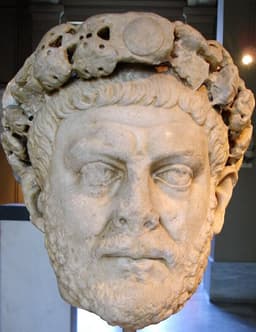
Diocletian
Emperor · Ancient
69.6Total
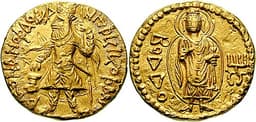
Kujula Kadphises
Emperor · Ancient
55.2Total
Basic Information
Born
244
20
Died
311
80
Era
Ancient
Ancient
Nationality
Roman Empire
Kushan Empire
Occupation
Emperor
Emperor
Civilization
Western
Indian
Score Comparison
Military (10%)
65.0
52.5
Political (20%)
82.0
68.0
Influence (20%)
72.0
55.7
Legacy (20%)
55.0
50.0
Leadership (15%)
82.0
48.8
Strategy (15%)
67.2
60.0
TOTAL
69.6
55.2
Diocletian — Complete Timeline
293 AD
Establishment of the TetrarchyReform
Diocletian created the Tetrarchy, dividing the Roman Empire into four administrative regions ruled by two senior emperors (Augusti) and two junior emperors (Caesares). This system aimed to improve governance and defense, and stabilize imperial succession.
TetrarchyReformAdministration
Impact: globalconstructive
Administrative Reorganization of the EmpireReform◆ Major
Diocletian reorganized the Roman provinces into smaller units (dioceses) grouped into four prefectures, separating civilian and military authority. This reform improved tax collection and administration, but also increased bureaucracy.
AdministrationReformProvinces
Impact: globalconstructive
301 AD
Economic Reforms (Edict on Maximum Prices)Reform◆ Major
Diocletian issued the Edict on Maximum Prices, setting price ceilings on over 1,000 goods and services to combat inflation. The edict was largely ineffective and led to black markets, but demonstrated the state's attempt to control the economy.
Economic ReformPrice ControlsInflation
Impact: global
303 AD
Diocletianic Persecution of ChristiansPolitical Action◆ Major
Diocletian issued a series of edicts ordering the persecution of Christians throughout the Roman Empire. Churches were destroyed, scriptures burned, and Christians were executed or forced to sacrifice to Roman gods. This was the last and most severe state-sponsored persecution.
PersecutionChristianityReligion
Impact: globaldestructive
305 AD
Abdication of DiocletianPolitical Action
Diocletian voluntarily abdicated the throne, retiring to his palace in Split (modern Croatia). He forced his co-emperor Maximian to do the same, setting a precedent for orderly succession, though the Tetrarchy soon collapsed after his departure.
AbdicationRetirementTetrarchy
Impact: global
Kujula Kadphises — Complete Timeline
30 AD
Unification of the Yuezhi TribesPolitical Action◆ Major
Kujula Kadphises united the five Yuezhi tribes of Bactria into a single confederation. This unification laid the foundation for the Kushan Empire, which would become a major power in Central Asia and India.
UnificationYuezhiKushan Empire
Impact: regionalconstructive
40 AD
Issuance of First Kushan CoinsCultural
Kujula Kadphises issued the first Kushan coins, imitating Roman and Greek designs. These coins featured his portrait and the title 'Kushan' in Greek script, establishing a numismatic tradition for the empire.
CoinageNumismaticsKushan
Impact: regionalconstructive
50 AD
Conquest of the Kabul ValleyWar◆ Major
Kujula Kadphises led Kushan forces to conquer the Kabul Valley from the Indo-Parthians. This expanded Kushan territory into the Indian subcontinent and established control over key trade routes.
ConquestKabul ValleyExpansion
Impact: regional
This comparison has not been analyzed yet.
One-time AI generation (~1 minute). Scores and timeline are already available below.
Rankings
🥇
DiocletianLeader
Mil: 65.0Pol: 82.0Inf: 72.0
69.6
🥈
Kujula Kadphises
Mil: 52.5Pol: 68.0Inf: 55.7
55.2
+14.4 behind
How This Comparison Works
Algorithm
Each figure is scored on 6 dimensions (0—100 scale) based on structured historical data: Military (10%), Political (20%), Influence (20%), Legacy (20%), Leadership (15%), Strategy (15%). The weighted total produces the final ranking.
Data Sources
Scores are computed from structured sub-indicators in the database. Scale factors adjust for era (Ancient ×0.85, Modern ×1.0) and civilization size (Eastern ×1.05, Other ×0.80) to account for differences in population and military scale.
Maximum 3 Figures
Comparisons are limited to 2—3 figures to ensure readability and statistical meaningfulness.
Error Margins
±5 points per dimension — Sub-scores are derived from historical records with inherent uncertainty. Two figures within 5 points on a dimension should be considered roughly equivalent in that area.
Total Score Accuracy
±3 points overall — The weighted combination of 6 dimensions produces a total score with approximately ±3 points of uncertainty. Differences of less than 3 points are not statistically significant— the figures are effectively tied.
Known Limitations
- Historical records are incomplete and uneven across civilizations
- Figures from oral-tradition societies may be underrepresented
- Occupation labels can misclassify multi-role figures
- Scores measure capability and impact, not moral character
- Quantitative scoring is a comparison tool, not absolute truth
Capability Radar
Military (10%) — Battles & Warfare
Battles
65
45
Win Rate
70
50
Expansion
50
60
Political (20%) — Governance & Reform
Reform
95
40
Diplomacy
80
50
Economy
75
45
Influence (20%) — Cultural & Global Reach
Cultural
60
50
Global
75
45
Legacy (20%) — Historical Impact
Historical
85
55
Longevity
70
60
Leadership (15%) — Power & Stability
Tenure
85
55
Stability
80
50
Strategy (15%) — Tactics & Innovation
Strategy
75
55
Tactics
60
40
Reform
85
30
Similar Comparisons
Comments & Discussion
No comments yet. Be the first to share your thoughts!