Loading...
Diocletian vs Julius Caesar
Julius Caesar leads by 13.2 pts · 2 figures compared
…
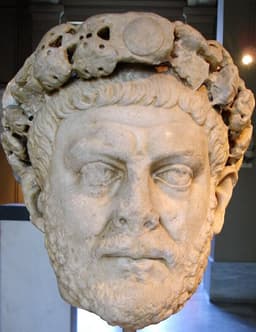
Diocletian
Emperor · Ancient
69.6Total

Julius Caesar
General · Ancient
82.8Total
Basic Information
Born
244
-100
Died
311
-44
Era
Ancient
Ancient
Nationality
Roman Empire
Roman Republic
Occupation
Emperor
General
Civilization
Western
Western
Score Comparison
Military (10%)
65.0
88.0
Political (20%)
82.0
78.0
Influence (20%)
72.0
85.0
Legacy (20%)
55.0
82.0
Leadership (15%)
82.0
80.0
Strategy (15%)
67.2
85.0
TOTAL
69.6
82.8
Diocletian — Complete Timeline
293 AD
Establishment of the TetrarchyReform
Diocletian created the Tetrarchy, dividing the Roman Empire into four administrative regions ruled by two senior emperors (Augusti) and two junior emperors (Caesares). This system aimed to improve governance and defense, and stabilize imperial succession.
TetrarchyReformAdministration
Impact: globalconstructive
Administrative Reorganization of the EmpireReform◆ Major
Diocletian reorganized the Roman provinces into smaller units (dioceses) grouped into four prefectures, separating civilian and military authority. This reform improved tax collection and administration, but also increased bureaucracy.
AdministrationReformProvinces
Impact: globalconstructive
301 AD
Economic Reforms (Edict on Maximum Prices)Reform◆ Major
Diocletian issued the Edict on Maximum Prices, setting price ceilings on over 1,000 goods and services to combat inflation. The edict was largely ineffective and led to black markets, but demonstrated the state's attempt to control the economy.
Economic ReformPrice ControlsInflation
Impact: global
303 AD
Diocletianic Persecution of ChristiansPolitical Action◆ Major
Diocletian issued a series of edicts ordering the persecution of Christians throughout the Roman Empire. Churches were destroyed, scriptures burned, and Christians were executed or forced to sacrifice to Roman gods. This was the last and most severe state-sponsored persecution.
PersecutionChristianityReligion
Impact: globaldestructive
305 AD
Abdication of DiocletianPolitical Action
Diocletian voluntarily abdicated the throne, retiring to his palace in Split (modern Croatia). He forced his co-emperor Maximian to do the same, setting a precedent for orderly succession, though the Tetrarchy soon collapsed after his departure.
AbdicationRetirementTetrarchy
Impact: global
Julius Caesar — Complete Timeline
58 BC
Gallic WarsWar◆ Major
Caesar, as proconsul of Gaul, launched a series of campaigns that conquered all of Gaul (modern France, Belgium, and parts of Switzerland). He fought numerous battles, including against the Helvetii, the Belgae, and the Gallic chieftain Vercingetorix. The wars brought immense wealth and a loyal army to Caesar.
Gallic WarsConquestRoman Expansion
Impact: regional
49 BC
Crossing the RubiconPolitical Action◆ Major
Caesar led Legio XIII across the Rubicon River into Italy, defying the Roman Senate's order to disband his army. This act triggered a civil war against Pompey and the Optimates, ultimately leading to Caesar's dictatorship and the end of the Roman Republic.
Roman Civil WarEnd of RepublicPower Struggle
Impact: global
48 BC
Battle of PharsalusWar◆ Major
Caesar's outnumbered army defeated the larger forces of Pompey the Great at Pharsalus in Greece. Caesar's tactical use of a reserve line to counter Pompey's cavalry charge proved decisive. Pompey fled to Egypt, where he was assassinated, leaving Caesar as the undisputed master of the Roman world.
Roman Civil WarBattleDecisive Victory
Impact: regional
44 BC
Appointment as Dictator for LifePolitical Action◆ Major
The Roman Senate appointed Caesar dictator perpetuo (dictator for life), granting him unprecedented personal power. This move concentrated military, legislative, and judicial authority in one person, effectively ending the Roman Republic's traditional system of checks and balances and alarming many senators.
DictatorshipEnd of RepublicPower Consolidation
Impact: regionaldestructive
Assassination on the Ides of MarchPolitical Action◆ Major
A group of Roman senators, led by Marcus Junius Brutus and Gaius Cassius Longinus, stabbed Caesar to death at a meeting of the Senate in the Theatre of Pompey. The assassination was intended to restore the Republic, but instead triggered another civil war that led to the rise of the Roman Empire.
AssassinationRoman PoliticsEnd of Republic
Impact: globaldestructive
Expert Analysis
diocletian-vs-julius-caesar
# The Two Faces of Roman Power
On a spring morning in 44 BCE, Julius Caesar walked into the Senate chamber, dismissing a warning about his safety with characteristic arrogance. Hours later, he lay bleeding at the foot of Pompey’s statue, stabbed twenty-three times by men he had once called friends. Two centuries later, another emperor—Diocletian—made a very different choice. In 305 CE, he voluntarily stepped down from the throne, retired to his vast palace on the Dalmatian coast, and spent his remaining years tending his vegetable gardens. When later emperors begged him to return, he reportedly replied, "If you could see the cabbages I have planted with my own hands, you would never speak of empire again." These two men, both saviors of Rome in their own ways, illuminate the vast gulf between military glory and political survival.
Origins
Caesar was born into the patrician Julian clan, a family with ancient lineage but dwindling influence. His formative years were spent in the violent twilight of the Roman Republic, where political rivals routinely murdered each other and the old senatorial order was crumbling. He learned early that in Rome, a man's worth was measured by his audacity. His uncle Marius had been a populist general; his father-in-law Cinna a revolutionary. From them, Caesar absorbed the lesson that power came from the army and the people, not the Senate.
Diocletian came from an entirely different world. Born in 244 CE to a freedman's family in Dalmatia, he had no aristocratic pretensions. The Roman Empire he entered was a nightmare of civil war, barbarian invasions, and economic collapse—a "crisis of the third century" that had seen twenty emperors rise and fall in fifty years. Diocletian rose through the ranks of the army not through family connections but through sheer competence. Where Caesar was a peacock, Diocletian was a bull: stubborn, practical, and utterly without glamour.
Rise to Power
Caesar's ascent was a masterpiece of calculated risk. He borrowed fortunes to fund public games, bought allies, and forged the First Triumvirate with Pompey and Crassus. His conquest of Gaul between 58 and 50 BCE was not merely a military campaign—it was a political machine. He built a loyal army that worshipped him, plundered enough gold to bribe the entire Roman elite, and wrote his own bestselling memoirs to control the narrative. When the Senate ordered him to disband his legions, he crossed the Rubicon River into Italy, declaring, "The die is cast." Within five years, he was dictator for life.
Diocletian's rise was less dramatic but no less decisive. He became emperor in 284 CE after his predecessor was murdered, and immediately faced revolts in Britain, Gaul, Egypt, and Syria. His genius was recognizing that one man could no longer rule the sprawling empire. In 293 CE, he established the Tetrarchy—the "rule of four"—dividing the empire into eastern and western halves, each governed by a senior emperor (Augustus) and a junior successor (Caesar). This was not ambition; it was administrative triage.
Leadership & Governance
Caesar governed as a military genius who never fully transitioned to peacetime ruler. His military score of 88 reflects his stunning campaigns—the siege of Alesia, the invasion of Britain, the civil war victories at Pharsalus and Thapsus. But his political score of 78 hints at his fatal flaw: he ruled like a general, not a statesman. He packed the Senate with his supporters, minted coins with his own image, and accepted divine honors. When he refused a crown, it was theater—everyone knew he wanted it. His reforms—the Julian calendar, land redistribution, colonization of veterans—were brilliant, but they came wrapped in autocracy.
Diocletian, by contrast, was a political architect. His political score of 85 reflects his masterful reforms: he reorganized the provinces into twelve dioceses, separated military from civil authority to prevent rebellions, and created a vast bureaucracy to manage the empire. His Edict on Maximum Prices in 301 CE tried to curb inflation, though it failed spectacularly. His military score of 57.4 suggests he was no battlefield commander, but he understood that survival required system-building, not heroics. He doubled the army's size, fortified borders, and created mobile field armies. Most importantly, he solved the succession crisis that had plagued Rome for decades.
Triumph & Tragedy
Caesar's triumph was absolute: he conquered Gaul, defeated his rivals, and remade Rome in his image. His tragedy was that he could not stop. He pardoned his enemies, but they never forgave him. On the Ides of March, 44 BCE, the liberators struck, and the Republic died with him. His adopted heir Octavian would finish what he started, but Caesar himself never saw the empire he created.
Diocletian's triumph was equally profound: he saved an empire that was collapsing. His tragedy was the price of that salvation. The Diocletianic Persecution of Christians, beginning in 303 CE, was the most brutal in Roman history—churches destroyed, scriptures burned, thousands executed. It was a desperate attempt to restore traditional Roman religion as a unifying force, but it failed utterly. Within a generation, Constantine would embrace Christianity. Diocletian's system outlasted his cruelty, but his persecution stained his legacy.
Character & Destiny
Caesar's character was his destiny. He was charismatic, reckless, and insatiably ambitious. He forgave his enemies because he genuinely believed they would love him for it—a miscalculation that cost him his life. He trusted his luck, and luck deserted him on that March morning.
Diocletian was the opposite: cautious, systematic, and deeply suspicious. He surrounded himself with spies, demanded elaborate court ceremonies, and insisted on being addressed as "lord and god." Yet this same paranoia made him wise enough to retire. He knew that power corrupts, and he chose cabbages over crowns. His abdication in 305 CE remains one of the most astonishing acts in history—a man who voluntarily surrendered absolute power.
Legacy
Caesar's legacy is immortal. His name became synonymous with emperor—Kaiser, Czar, Qaysar. His military tactics are still studied, his writings still read, his life still dramatized. He transformed the Republic into an empire, for better and worse. His influence score of 85 and legacy score of 82 capture his enduring grip on the Western imagination.
Diocletian's legacy is quieter but equally profound. His Tetrarchy collapsed after his death, but his administrative reforms lasted for centuries. The division of the empire into east and west, the bureaucratic machinery, the fortified frontiers—these shaped the medieval world. His legacy score of 77.5 underrates his impact, perhaps because he lacked Caesar's flair. He was the plumber who fixed the leaky pipes, not the architect who built the cathedral.
Conclusion
Standing at the ruins of Diocletian's Palace in Split today, one feels the weight of a different kind of greatness. Caesar's Rome is a story of glory and blood; Diocletian's Rome is a story of survival and order. One man reached for the heavens and was struck down; the other planted cabbages and saved an empire. Perhaps the truest measure of a leader is not how they seize power, but how they let it go. Caesar could not, and died a martyr to his ambition. Diocletian could, and died a gardener. In the end, the cabbages may have been the wiser choice.
Rankings
🥇
Julius CaesarLeader
Mil: 88.0Pol: 78.0Inf: 85.0
82.8
🥈
Diocletian
Mil: 65.0Pol: 82.0Inf: 72.0
69.6
+13.2 behind
How This Comparison Works
Algorithm
Each figure is scored on 6 dimensions (0—100 scale) based on structured historical data: Military (10%), Political (20%), Influence (20%), Legacy (20%), Leadership (15%), Strategy (15%). The weighted total produces the final ranking.
Data Sources
Scores are computed from structured sub-indicators in the database. Scale factors adjust for era (Ancient ×0.85, Modern ×1.0) and civilization size (Eastern ×1.05, Other ×0.80) to account for differences in population and military scale.
Maximum 3 Figures
Comparisons are limited to 2—3 figures to ensure readability and statistical meaningfulness.
Error Margins
±5 points per dimension — Sub-scores are derived from historical records with inherent uncertainty. Two figures within 5 points on a dimension should be considered roughly equivalent in that area.
Total Score Accuracy
±3 points overall — The weighted combination of 6 dimensions produces a total score with approximately ±3 points of uncertainty. Differences of less than 3 points are not statistically significant— the figures are effectively tied.
Known Limitations
- Historical records are incomplete and uneven across civilizations
- Figures from oral-tradition societies may be underrepresented
- Occupation labels can misclassify multi-role figures
- Scores measure capability and impact, not moral character
- Quantitative scoring is a comparison tool, not absolute truth
Capability Radar
Military (10%) — Battles & Warfare
Battles
65
95
Win Rate
70
92
Expansion
50
97
Political (20%) — Governance & Reform
Reform
95
90
Diplomacy
80
85
Economy
75
82
Influence (20%) — Cultural & Global Reach
Cultural
60
88
Global
75
94
Legacy (20%) — Historical Impact
Historical
85
95
Longevity
70
96
Leadership (15%) — Power & Stability
Tenure
85
75
Stability
80
60
Strategy (15%) — Tactics & Innovation
Strategy
75
94
Tactics
60
96
Reform
85
88
Similar Comparisons
Comments & Discussion
No comments yet. Be the first to share your thoughts!