Loading...
Claudius vs Diocletian
Diocletian leads by 15.2 pts · 2 figures compared
…
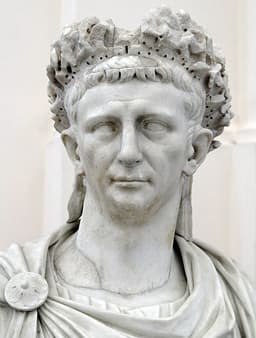
Claudius
Emperor · Ancient
54.4Total
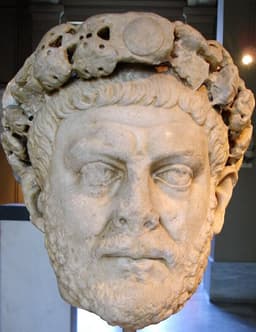
Diocletian
Emperor · Ancient
69.6Total
Basic Information
Born
-10
244
Died
54
311
Era
Ancient
Ancient
Nationality
Roman Empire
Roman Empire
Occupation
Emperor
Emperor
Civilization
Western
Western
Score Comparison
Military (10%)
50.0
65.0
Political (20%)
68.0
82.0
Influence (20%)
54.9
72.0
Legacy (20%)
49.2
55.0
Leadership (15%)
53.2
82.0
Strategy (15%)
51.7
67.2
TOTAL
54.4
69.6
Claudius — Complete Timeline
41 AD
Accession as EmperorPolitical Action◆ Major
After Caligula's assassination, Claudius was found hiding and proclaimed emperor by the Praetorian Guard. The Senate reluctantly accepted him, marking the first time the Guard directly chose an emperor.
SuccessionPraetorian GuardImperial Rule
Impact: global
42 AD
Construction of the Port of OstiaOther◆ Major
Claudius initiated the construction of a new harbor at Ostia to improve Rome's grain supply. The project included a large artificial basin and a lighthouse, facilitating trade and food imports.
InfrastructureGrain SupplyRome
Impact: nationalconstructive
43 AD
Conquest of BritainWar
Claudius ordered the invasion of Britain, sending four legions under Aulus Plautius. He later visited the island to accept the surrender of the British tribes, incorporating southern Britain into the Roman Empire.
ConquestBritainExpansion
Impact: regionalconstructive
48 AD
Expansion of Roman CitizenshipReform◆ Major
Claudius extended Roman citizenship to certain provincial communities, particularly in Gaul. He also admitted Gauls into the Senate, promoting integration of the empire's elites.
CitizenshipIntegrationProvincial Policy
Impact: regionalprogressive
49 AD
Marriage to Agrippina the YoungerPolitical Action◆ Major
Claudius married his niece Agrippina the Younger, who then maneuvered to have her son Nero adopted as Claudius's heir. This marriage led to Claudius's eventual poisoning and Nero's succession.
MarriageSuccessionNero
Impact: nationaldestructive
Diocletian — Complete Timeline
293 AD
Establishment of the TetrarchyReform
Diocletian created the Tetrarchy, dividing the Roman Empire into four administrative regions ruled by two senior emperors (Augusti) and two junior emperors (Caesares). This system aimed to improve governance and defense, and stabilize imperial succession.
TetrarchyReformAdministration
Impact: globalconstructive
Administrative Reorganization of the EmpireReform◆ Major
Diocletian reorganized the Roman provinces into smaller units (dioceses) grouped into four prefectures, separating civilian and military authority. This reform improved tax collection and administration, but also increased bureaucracy.
AdministrationReformProvinces
Impact: globalconstructive
301 AD
Economic Reforms (Edict on Maximum Prices)Reform◆ Major
Diocletian issued the Edict on Maximum Prices, setting price ceilings on over 1,000 goods and services to combat inflation. The edict was largely ineffective and led to black markets, but demonstrated the state's attempt to control the economy.
Economic ReformPrice ControlsInflation
Impact: global
303 AD
Diocletianic Persecution of ChristiansPolitical Action◆ Major
Diocletian issued a series of edicts ordering the persecution of Christians throughout the Roman Empire. Churches were destroyed, scriptures burned, and Christians were executed or forced to sacrifice to Roman gods. This was the last and most severe state-sponsored persecution.
PersecutionChristianityReligion
Impact: globaldestructive
305 AD
Abdication of DiocletianPolitical Action
Diocletian voluntarily abdicated the throne, retiring to his palace in Split (modern Croatia). He forced his co-emperor Maximian to do the same, setting a precedent for orderly succession, though the Tetrarchy soon collapsed after his departure.
AbdicationRetirementTetrarchy
Impact: global
Expert Analysis
Origins
Claudius (Tiberius Claudius Caesar Augustus Germanicus) was born in 10 BCE in Lugdunum, Gaul, into the Julio-Claudian dynasty. His family included Emperor Augustus (great-uncle) and Tiberius (uncle). Claudius suffered from physical disabilities—a limp, stammer, and tremors—which led his family to keep him out of public life. He was educated privately, studying history and law, and wrote several historical works under the guidance of Livy.
Diocletian (Gaius Aurelius Valerius Diocletianus) was born around 244 CE in Salona, Dalmatia (modern Croatia), into a modest family of low social status, possibly a freedman's son. He rose through the military ranks, serving in campaigns in Gaul and along the Danube. His early life was shaped by the chaos of the Third-Century Crisis, with frequent usurpations and barbarian invasions.
Rise to Power
Claudius's rise was accidental. After the assassination of his nephew Caligula in 41 CE, Claudius was found hiding behind a curtain in the palace. The Praetorian Guard proclaimed him emperor, and the Senate reluctantly confirmed him due to lack of alternatives. He was the first emperor to be appointed by the Praetorians, setting a precedent.
Diocletian rose through military merit. He became a commander of the imperial guard and later served as consul. In 284 CE, after the death of Emperor Carus and the murder of his son Numerian, Diocletian was proclaimed emperor by his troops. He defeated Carinus, the other claimant, at the Battle of the Margus in 285 CE, securing sole rule.
Leadership & Governance
Claudius focused on central administration and public works. He extended Roman citizenship to certain provincial communities, notably the Gauls, and admitted Gauls into the Senate. He built the Port of Ostia to improve Rome's grain supply and constructed aqueducts and roads. His governance was pragmatic but often influenced by his wives and freedmen, leading to corruption. Claudius scored 68.0 in political skill, reflecting his administrative reforms.
Diocletian restructured the entire empire. He established the Tetrarchy in 293 CE, dividing rule among two senior Augusti (himself and Maximian) and two junior Caesars (Galerius and Constantius Chlorus). He reorganized provinces into smaller units (dioceses) grouped into four prefectures, separating civilian and military authority. His Edict on Maximum Prices in 301 CE attempted to curb inflation but failed due to black markets. His political score of 82.0 reflects his systematic reforms.
Triumph & Tragedy
Claudius's greatest success was the conquest of Britain in 43 CE, adding a new province to the empire. He personally visited Britain to accept the surrender of native tribes. He also expanded citizenship and improved infrastructure. However, his tragic flaw was his susceptibility to manipulation. His marriage to Agrippina the Younger led to the adoption of Nero, who likely had Claudius poisoned in 54 CE. Claudius's legacy was overshadowed by Nero's tyranny.
Diocletian's triumph was stabilizing the empire after decades of crisis. The Tetrarchy ended civil wars and secured borders. He abdicated voluntarily in 305 CE, retiring to his palace in Split. His tragedy was the Diocletianic Persecution (303-311 CE), which aimed to suppress Christianity but ultimately failed and strengthened the Church. His economic reforms were largely ineffective, and the Tetrarchy collapsed after his abdication.
Character & Destiny
Claudius was intelligent but physically weak, leading others to underestimate him. He was a capable administrator but indecisive, often relying on advisors. His character led to his downfall: his trust in Agrippina allowed her to seize power. Historians like Suetonius portrayed him as a fool, but modern assessments recognize his achievements.
Diocletian was autocratic and methodical, imposing order through strict reforms. He saw himself as a divine ruler, adopting the title 'Jovius' (Jupiter's representative). His character drove him to create a rigid system, but his abdication showed a sense of duty. He scored 82.0 in leadership, reflecting his ability to command and reorganize.
Legacy
Claudius's legacy includes the permanent Romanization of Britain, the expansion of citizenship, and administrative precedents. However, his reign was a prelude to the Julio-Claudian dynasty's end. His scores: Military 50.0, Influence 54.9, Legacy 49.2, Strategy 51.7, Total 54.4.
Diocletian's legacy is profound: the Tetrarchy model influenced later imperial divisions, and his administrative reforms reshaped the empire's structure. The persecution of Christians backfired, but his economic efforts set precedents. His scores: Military 65.0, Influence 72.0, Legacy 55.0, Strategy 67.2, Total 69.6. The score gap of 15.2 points reflects Diocletian's greater impact.
Conclusion
Diocletian had a greater impact on the Roman Empire. His systematic reforms addressed the systemic crises of the third century, while Claudius's achievements were more limited and personal. Diocletian's total score of 69.6 versus Claudius's 54.4 underscores his superior leadership and political acumen. Claudius conquered Britain, but Diocletian saved the empire from collapse.
Rankings
🥇
DiocletianLeader
Mil: 65.0Pol: 82.0Inf: 72.0
69.6
🥈
Claudius
Mil: 50.0Pol: 68.0Inf: 54.9
54.4
+15.2 behind
How This Comparison Works
Algorithm
Each figure is scored on 6 dimensions (0—100 scale) based on structured historical data: Military (10%), Political (20%), Influence (20%), Legacy (20%), Leadership (15%), Strategy (15%). The weighted total produces the final ranking.
Data Sources
Scores are computed from structured sub-indicators in the database. Scale factors adjust for era (Ancient ×0.85, Modern ×1.0) and civilization size (Eastern ×1.05, Other ×0.80) to account for differences in population and military scale.
Maximum 3 Figures
Comparisons are limited to 2—3 figures to ensure readability and statistical meaningfulness.
Error Margins
±5 points per dimension — Sub-scores are derived from historical records with inherent uncertainty. Two figures within 5 points on a dimension should be considered roughly equivalent in that area.
Total Score Accuracy
±3 points overall — The weighted combination of 6 dimensions produces a total score with approximately ±3 points of uncertainty. Differences of less than 3 points are not statistically significant— the figures are effectively tied.
Known Limitations
- Historical records are incomplete and uneven across civilizations
- Figures from oral-tradition societies may be underrepresented
- Occupation labels can misclassify multi-role figures
- Scores measure capability and impact, not moral character
- Quantitative scoring is a comparison tool, not absolute truth
Capability Radar
Military (10%) — Battles & Warfare
Battles
30
65
Win Rate
40
70
Expansion
60
50
Political (20%) — Governance & Reform
Reform
60
95
Diplomacy
55
80
Economy
50
75
Influence (20%) — Cultural & Global Reach
Cultural
45
60
Global
45
75
Legacy (20%) — Historical Impact
Historical
55
85
Longevity
50
70
Leadership (15%) — Power & Stability
Tenure
65
85
Stability
55
80
Strategy (15%) — Tactics & Innovation
Strategy
45
75
Tactics
35
60
Reform
30
85
Similar Comparisons
Comments & Discussion
No comments yet. Be the first to share your thoughts!