Loading...
Diocletian vs Napoleon Bonaparte
Napoleon Bonaparte leads by 1.3 pts · 2 figures compared
…
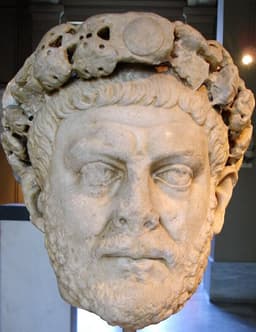
Diocletian
Emperor · Ancient
69.6Total

Napoleon Bonaparte
General · Modern
70.9Total
Basic Information
Born
244
1769
Died
311
1821
Era
Ancient
Modern
Nationality
Roman Empire
France
Occupation
Emperor
General
Civilization
Western
Western
Score Comparison
Military (10%)
65.0
94.0
Political (20%)
82.0
72.0
Influence (20%)
72.0
40.0
Legacy (20%)
55.0
80.0
Leadership (15%)
82.0
78.0
Strategy (15%)
67.2
90.0
TOTAL
69.6
70.9
Diocletian — Complete Timeline
293 AD
Establishment of the TetrarchyReform
Diocletian created the Tetrarchy, dividing the Roman Empire into four administrative regions ruled by two senior emperors (Augusti) and two junior emperors (Caesares). This system aimed to improve governance and defense, and stabilize imperial succession.
TetrarchyReformAdministration
Impact: globalconstructive
Administrative Reorganization of the EmpireReform◆ Major
Diocletian reorganized the Roman provinces into smaller units (dioceses) grouped into four prefectures, separating civilian and military authority. This reform improved tax collection and administration, but also increased bureaucracy.
AdministrationReformProvinces
Impact: globalconstructive
301 AD
Economic Reforms (Edict on Maximum Prices)Reform◆ Major
Diocletian issued the Edict on Maximum Prices, setting price ceilings on over 1,000 goods and services to combat inflation. The edict was largely ineffective and led to black markets, but demonstrated the state's attempt to control the economy.
Economic ReformPrice ControlsInflation
Impact: global
303 AD
Diocletianic Persecution of ChristiansPolitical Action◆ Major
Diocletian issued a series of edicts ordering the persecution of Christians throughout the Roman Empire. Churches were destroyed, scriptures burned, and Christians were executed or forced to sacrifice to Roman gods. This was the last and most severe state-sponsored persecution.
PersecutionChristianityReligion
Impact: globaldestructive
305 AD
Abdication of DiocletianPolitical Action
Diocletian voluntarily abdicated the throne, retiring to his palace in Split (modern Croatia). He forced his co-emperor Maximian to do the same, setting a precedent for orderly succession, though the Tetrarchy soon collapsed after his departure.
AbdicationRetirementTetrarchy
Impact: global
Napoleon Bonaparte — Complete Timeline
1799 AD
Coup of 18 BrumaireOther◆ Major
Napoleon Bonaparte, with support from his brother Lucien and key political figures, overthrew the Directory in a bloodless coup. He established the Consulate with himself as First Consul, effectively becoming the ruler of France. This event ended the French Revolution's most unstable period.
French RevolutionCoupRise to Power
Impact: regional
1804 AD
Promulgation of the Napoleonic CodeOther◆ Major
Napoleon enacted the Civil Code of the French, known as the Napoleonic Code, a comprehensive set of laws that replaced the fragmented feudal legal systems. The code established legal equality, protected property rights, and secularized law. It became the basis for legal systems in many European and world countries.
Legal ReformNapoleonic CodeCivil Law
Impact: globalconstructive
1805 AD
Battle of AusterlitzWar◆ Major
Napoleon's Grande Arm
Napoleonic WarsBattleDecisive Victory
Impact: global
1812 AD
Invasion of RussiaWar◆ Major
Napoleon led the Grande Arm
Napoleonic WarsInvasionDisaster
Impact: globaldestructive
1815 AD
Battle of WaterlooWar◆ Major
Napoleon's French army was defeated by the combined forces of the Duke of Wellington's Anglo-Allied army and Gebhard Leberecht von Bl
Napoleonic WarsBattleFinal Defeat
Impact: globaldestructive
Expert Analysis
diocletian-vs-napoleon-bonaparte
The Emperor Who Would Not Die and the Emperor Who Walked Away
In 305 AD, the most powerful man in the world did something unprecedented: he quit. Diocletian, emperor of Rome, had spent two decades pulling an empire back from the brink of collapse. Then he retired to his fortified palace on the Dalmatian coast, took up gardening, and when former colleagues later begged him to return to save the state from civil war, he reportedly replied that if they could see the cabbages he was growing, they would not ask. Nineteen centuries later, another man of similar ambition—Napoleon Bonaparte—would try the opposite. Exiled once to Elba, he escaped. Exiled again to Saint Helena, he still plotted, still schemed, still could not let go until death took him at fifty-one. Why did one emperor walk away while the other clung to power until it destroyed him? The answer lies not merely in their circumstances, but in the very different worlds that shaped them.
Origins
Diocletian was born in 244 AD to a humble family in Dalmatia, modern-day Croatia. His father was a freedman, perhaps a scribe. The Roman Empire he entered was a place of chaos: fifty years of civil war, barbarian invasions, economic collapse, and emperors who lasted months before the Praetorian Guard or the legions cut them down. Diocletian rose through the military ranks not because of noble birth but because the empire was desperate for competent men. He understood from the ground up that survival depended on systems, not heroes. Napoleon, born in 1769 on the island of Corsica, grew up in a different kind of chaos—the ferment of the French Revolution. His father was a minor noble, but Corsica had only recently been annexed by France, and young Napoleon spoke Italian-accented French. He was an outsider, hungry for acceptance, and the revolution offered a ladder that talent alone could climb. Where Diocletian learned that institutions fail when men are selfish, Napoleon learned that men rise when institutions crumble.
Rise to Power
Diocletian became emperor in 284 AD the old Roman way: his troops proclaimed him after the previous emperor was murdered. He was forty, a seasoned general who had seen enough imperial corpses to know that the job was a death sentence unless you changed the rules. His first act was not to celebrate but to execute the man who had killed his predecessor—not out of loyalty, but to send a message: usurpers would not be tolerated. Napoleon’s rise was faster and more theatrical. At twenty-four, he cleared the streets of royalist rebels with a “whiff of grapeshot.” At thirty, he made himself First Consul. At thirty-five, he crowned himself Emperor in Notre Dame, taking the crown from the Pope’s hands and placing it on his own head. Diocletian’s path was about restoring order; Napoleon’s was about rewriting the script entirely.
Leadership & Governance
Here the two men diverge most sharply. Diocletian’s great creation was the Tetrarchy: a system of four co-emperors, two senior (Augusti) and two junior (Caesars), each governing a quarter of the empire. It was a bureaucratic masterpiece, designed to prevent civil war by making succession automatic. He divided the provinces into smaller units, separated military from civil authority, and fixed prices with the Edict on Maximum Prices in 301 AD—a disastrous attempt to control inflation that shows even geniuses can be wrong. His persecution of Christians from 303 AD was brutal but pragmatic: he saw them as a disloyal faction that threatened the state religion that held the empire together.
Napoleon governed through personality. His Napoleonic Code reformed French law with breathtaking clarity, establishing equality before the law and protecting property rights—but also restoring slavery and concentrating power in his hands. His military genius was real: at Austerlitz in 1805, he destroyed a combined Russian and Austrian army with a feigned retreat that remains a textbook maneuver. But where Diocletian built systems to outlast him, Napoleon built an empire on his own charisma. When he was present, his armies were unbeatable. When he was absent—as in Spain or Russia—they disintegrated.
Triumph & Tragedy
Diocletian’s greatest triumph was his abdication in 305 AD. He forced his co-emperor Maximian to step down with him, then retired to Split, where he built a palace that still stands. He died in 311 AD, probably of natural causes, having seen his Tetrarchy collapse into civil war within years of his departure. But he had given Rome two decades of stability, and his reforms—the division of the empire, the separation of powers—would shape the Byzantine Empire for centuries.
Napoleon’s tragedy is the opposite: he could not stop. After conquering Europe, he invaded Russia in 1812 with 600,000 men. He returned with fewer than 100,000. Exiled to Elba in 1814, he escaped within a year, raised another army, and was finally defeated at Waterloo in 1815. Exiled to Saint Helena, he spent his last six years dictating memoirs, rewriting his own legend, and dying—possibly of stomach cancer, possibly of arsenic poisoning—at fifty-one. His final words were reportedly about the French army.
Character & Destiny
Diocletian was a pragmatist. He understood that power is a tool, not an identity. He built systems because he knew he would not live forever. Napoleon was a romantic. He believed that will could overcome circumstance, that destiny was something you seized. “Impossible,” he once said, “is a word to be found only in the dictionary of fools.” That belief made him unstoppable—until it made him blind. Diocletian saw the limits of power and accepted them. Napoleon saw no limits, and the universe eventually imposed them.
Legacy
Diocletian is remembered as a reformer who saved the Roman Empire from collapse, but also as a persecutor who tried to crush Christianity. His Tetrarchy failed, but his administrative divisions—dioceses, prefectures—became the basis for the medieval church and state. Napoleon is remembered as a military genius and lawgiver who reshaped Europe, but also as a tyrant who caused millions of deaths. His Napoleonic Code influences legal systems from France to Louisiana to Japan. Both men left deep marks, but in opposite ways: Diocletian by building a machine that ran without him, Napoleon by being the machine itself.
Conclusion
Standing in Diocletian’s palace in Split today, you can feel the weight of a man who knew when to stop. Walking the rooms of Napoleon’s final exile in Longwood House on Saint Helena, you feel the weight of a man who could not. The difference is not merely personal; it is historical. Diocletian lived in a world where empires had risen and fallen for centuries, and he knew that survival meant humility before time. Napoleon lived in a world where everything seemed possible, where revolution had shattered the old rules and a Corsican outsider could crown himself emperor. One learned from the past; the other believed he could invent the future. Both were right, and both were wrong—and that is the tragedy of all great men.
Rankings
🥇
Napoleon BonaparteLeader
Mil: 94.0Pol: 72.0Inf: 40.0
70.9
🥈
Diocletian
Mil: 65.0Pol: 82.0Inf: 72.0
69.6
+1.3 behind
How This Comparison Works
Algorithm
Each figure is scored on 6 dimensions (0—100 scale) based on structured historical data: Military (10%), Political (20%), Influence (20%), Legacy (20%), Leadership (15%), Strategy (15%). The weighted total produces the final ranking.
Data Sources
Scores are computed from structured sub-indicators in the database. Scale factors adjust for era (Ancient ×0.85, Modern ×1.0) and civilization size (Eastern ×1.05, Other ×0.80) to account for differences in population and military scale.
Maximum 3 Figures
Comparisons are limited to 2—3 figures to ensure readability and statistical meaningfulness.
Error Margins
±5 points per dimension — Sub-scores are derived from historical records with inherent uncertainty. Two figures within 5 points on a dimension should be considered roughly equivalent in that area.
Total Score Accuracy
±3 points overall — The weighted combination of 6 dimensions produces a total score with approximately ±3 points of uncertainty. Differences of less than 3 points are not statistically significant— the figures are effectively tied.
Known Limitations
- Historical records are incomplete and uneven across civilizations
- Figures from oral-tradition societies may be underrepresented
- Occupation labels can misclassify multi-role figures
- Scores measure capability and impact, not moral character
- Quantitative scoring is a comparison tool, not absolute truth
Capability Radar
Military (10%) — Battles & Warfare
Battles
65
95
Win Rate
70
90
Expansion
50
95
Political (20%) — Governance & Reform
Reform
95
95
Diplomacy
80
80
Economy
75
85
Influence (20%) — Cultural & Global Reach
Cultural
60
85
Global
75
90
Legacy (20%) — Historical Impact
Historical
85
95
Longevity
70
90
Leadership (15%) — Power & Stability
Tenure
85
85
Stability
80
70
Strategy (15%) — Tactics & Innovation
Strategy
75
95
Tactics
60
98
Reform
85
92
Similar Comparisons
Comments & Discussion
No comments yet. Be the first to share your thoughts!