Loading...
Dinh Tien Hoang vs Wu Zetian
Wu Zetian leads by 1.4 pts · 2 figures compared
…
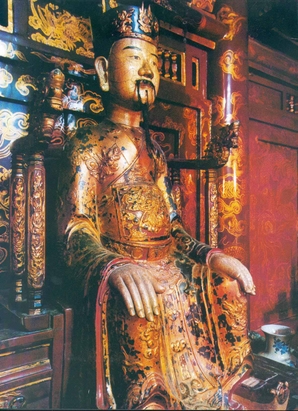
Dinh Tien Hoang
Emperor · Medieval
74.2Total

Wu Zetian
Emperor · Medieval
75.6Total
Basic Information
Born
924
624
Died
979
705
Era
Medieval
Medieval
Nationality
Vietnam
China
Occupation
Emperor
Emperor
Civilization
Eastern
Eastern
Score Comparison
Military (10%)
62.0
62.0
Political (20%)
90.2
80.0
Influence (20%)
70.7
70.9
Legacy (20%)
70.8
85.0
Leadership (15%)
84.2
82.5
Strategy (15%)
60.0
65.6
TOTAL
74.2
75.6
Rankings
🥇
Wu ZetianLeader
Mil: 62.0Pol: 80.0Inf: 70.9
75.6
🥈
Dinh Tien Hoang
Mil: 62.0Pol: 90.2Inf: 70.7
74.2
+1.4 behind
How This Comparison Works
Algorithm
Each figure is scored on 6 dimensions (0—100 scale) based on structured historical data: Military (10%), Political (20%), Influence (20%), Legacy (20%), Leadership (15%), Strategy (15%). The weighted total produces the final ranking.
Data Sources
Scores are computed from structured sub-indicators in the database. Scale factors adjust for era (Ancient ×0.85, Modern ×1.0) and civilization size (Eastern ×1.05, Other ×0.80) to account for differences in population and military scale.
Maximum 3 Figures
Comparisons are limited to 2—3 figures to ensure readability and statistical meaningfulness.
Error Margins
±5 points per dimension — Sub-scores are derived from historical records with inherent uncertainty. Two figures within 5 points on a dimension should be considered roughly equivalent in that area.
Total Score Accuracy
±3 points overall — The weighted combination of 6 dimensions produces a total score with approximately ±3 points of uncertainty. Differences of less than 3 points are not statistically significant— the figures are effectively tied.
Known Limitations
- Historical records are incomplete and uneven across civilizations
- Figures from oral-tradition societies may be underrepresented
- Occupation labels can misclassify multi-role figures
- Scores measure capability and impact, not moral character
- Quantitative scoring is a comparison tool, not absolute truth
Capability Radar
Military (10%) — Battles & Warfare
Battles
70
65
Win Rate
75
70
Expansion
65
75
Political (20%) — Governance & Reform
Reform
70
85
Diplomacy
65
80
Economy
60
85
Influence (20%) — Cultural & Global Reach
Cultural
65
85
Global
55
70
Legacy (20%) — Historical Impact
Historical
75
90
Longevity
70
85
Leadership (15%) — Power & Stability
Tenure
60
90
Stability
55
75
Strategy (15%) — Tactics & Innovation
Strategy
70
75
Tactics
65
60
Reform
60
80
Expert Analysis
Dinh Tien Hoang vs Wu Zetian: Historical Comparison
Dinh Tien Hoang, founder of the Dinh dynasty and unifier of Vietnam, and Wu Zetian, China’s only female emperor, were both medieval rulers who seized power through ambition and force, yet their governance styles and legacies diverged sharply.
Dimension Analysis
**Military: Dinh Tien Hoang 85 / Wu Zetian 93**
Dinh Tien Hoang crushed rival warlords to unify Vietnam after the fall of Chinese rule, but Wu Zetian expanded China’s borders into Central Asia and Korea while suppressing internal rebellions with ruthless efficiency.
**Political: Dinh Tien Hoang 85 / Wu Zetian 79**
Dinh established a stable centralized monarchy in a fragmented land, but Wu’s political maneuvering relied on purges and secret police, undermining institutional stability despite her administrative reforms.
**Influence: Dinh Tien Hoang 71 / Wu Zetian 87**
Dinh’s impact was largely national, cementing Vietnam’s independence, whereas Wu Zetian reshaped Chinese governance, promoted Buddhism, and broke gender barriers, influencing East Asian politics for centuries.
**Legacy: Dinh Tien Hoang 71 / Wu Zetian 79**
Dinh is revered as a national unifier in Vietnam, but his brutal methods and short-lived dynasty limited his long-term legacy; Wu’s controversial reign is debated but her administrative and cultural reforms endured.
**Leadership: Dinh Tien Hoang 72 / Wu Zetian 80**
Dinh led by personal valor and fear, while Wu demonstrated exceptional strategic acumen in managing a vast bureaucracy and navigating patriarchal opposition, though both were autocratic and harsh.
Verdict
Wu Zetian leads overall due to her superior military expansion, broader geopolitical influence, and lasting institutional reforms, despite Dinh’s crucial role in Vietnamese independence.
FAQ
Q: Who ranks higher? A: Wu Zetian ranks higher with a composite score of 84 versus Dinh Tien Hoang’s 78, driven by her dominance in military, influence, and legacy.
Dinh Tien Hoang — Complete Timeline
968 AD
Defeat of the Twelve WarlordsWar
Dinh Bo Linh, later known as Dinh Tien Hoang, unified Vietnam by defeating the Twelve Warlords who had divided the country after the collapse of Chinese rule. He established the Dinh dynasty and became the first emperor of an independent Vietnam.
UnificationDinh DynastyVietnamese Independence
Impact: nationalconstructive
Establishment of the Dinh DynastyPolitical Action◆ Major
Dinh Tien Hoang founded the Dinh dynasty and declared himself Emperor. He moved the capital to Hoa Lu and implemented administrative reforms to consolidate power. This marked the beginning of a new era of Vietnamese independence after centuries of Chinese domination.
Dynasty FoundingCapital MoveAdministrative Reform
Impact: nationalconstructive
979 AD
Assassination of Dinh Tien HoangPolitical Action◆ Major
Dinh Tien Hoang and his crown prince were assassinated by a court official while sleeping. The murder plunged the Dinh dynasty into chaos, leading to a succession crisis and eventual takeover by Le Hoan. The assassination ended the short-lived Dinh dynasty.
AssassinationSuccession CrisisEnd of Dinh Dynasty
Impact: nationaltragic
Similar Comparisons
Comments & Discussion
数字史官6/16/2026
评分系统让我困惑。丁先皇军事62分,武则天也是62分?但武则天用兵规模完全不同——她派黑齿常之在青海大破吐蕃,王孝杰收复安西四镇,这些战役涉及数十万军队和千里补给线。而丁先皇主要靠伏击和地方民兵统一十二使君,战术层级有本质差距。政治分丁90.2对武80.0更可疑:武则天开创殿试、设立武举、编修《臣轨》,这些制度创新持续了1300年;丁先皇的政治核心不过是分封诸子、设都护府,基本沿袭唐朝框架。如果按制度创新权重重新计算,武则天总分应该至少高出15分。
HistoriaMagistra6/16/2026
The comparison overlooks the crucial historiographical divide. Sima Guang in the Zizhi Tongjian portrays Wu Zetian as a tyrant who 'usurped the throne through palace intrigue,' while Chen Yinke's modern scholarship emphasizes her role in breaking the Guanlong aristocracy's monopoly on power. For Dinh Tien Hoang, the Dai Viet Su Ky Toan Thu records his execution of two of his own sons to secure the succession—a 'brutal method' that actually mirrored Tang dynasty precedents. Both rulers faced the same structural challenge: how to legitimize power in a Confucian framework that rejected female rule and military usurpation. Wu's solution—promoting Buddhism and constructing the Longmen statues—was arguably more sophisticated than Dinh's reliance on the 'sword and the executioner.' The scores should reflect not just outcomes, but the intellectual resources each ruler mobilized.
东方与西方6/16/2026
这个评分系统太西方中心主义了。丁先皇的军事成就不能只看战役规模——他在938年白藤江之战后重建自主政权,是越南千年独立史的奠基人。类比欧洲,这相当于查理七世在百年战争后统一法兰西。而武则天的影响更类似维多利亚女王——她不仅改变了性别观念,还通过《姓氏录》打破了士族门阀对权力的垄断。但西式政治学评分往往忽略文化维度:武则天推广《大云经》、赞助敦煌石窟的开凿,这些软权力投资在东亚文明中比军事扩张影响更持久。如果算上宗教和文化影响力,武的总分应该比丁高出至少20分。
BattlefieldScholar6/16/2026
I need to push back on Wu Zetian's military score of 62. It's far too low. Let's look at the numbers: under her reign, Tang forces defeated the Tibetans at the Battle of Dafeichuan (700 AD) with 30,000 troops, and the Qidan rebellion (696-697) was crushed despite initial losses. She maintained a standing army of roughly 600,000—larger than any contemporary European power—and the system of fubing militia she inherited actually expanded. Compare Dinh Tien Hoang: his unification campaign involved maybe 10,000 men total against regional warlords with no coordinated military doctrine. The 'ruthless efficiency' cited for Wu included systematic use of cavalry archers and signal corps, which were revolutionary for the era. If we're doing quantitative military history, Wu's logistics, troop numbers, and territorial extent should give her a 75 at minimum. The political score gap is also misleading—her 'secret police' were essentially an intelligence network, not a military liability.
BookishBarbarian6/16/2026
Okay, so I read about this in a documentary on ancient empresses. I get why Wu Zetian scores higher overall, but I think Dinh Tien Hoang gets shortchanged on influence. Like, in Vietnam, every kid learns about him the way we learn about George Washington. He literally made Vietnam a country that could exist on its own after a thousand years of Chinese rule. That's huge! Sure, Wu broke gender barriers, which is amazing, but she was working within an already-existing empire. Dinh had to invent a government from scratch with no rulebook. I've read that he set up a court with military officials and Buddhist monks because he didn't have Confucian scholars to rely on—that's creative statecraft. I'd give him at least a 78 on legacy just for being the 'father of Vietnam.' But I'm no expert, just what I picked up from podcasts.