Loading...
Wang Shichong vs Wu Zetian
Wu Zetian leads by 23.0 pts · 2 figures compared
…
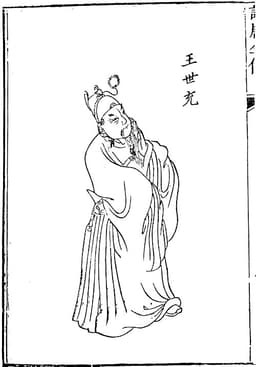
Wang Shichong
Emperor · Medieval
47.0Total

Wu Zetian
Emperor · Medieval
70.0Total
Basic Information
Born
570
624
Died
621
705
Era
Medieval
Medieval
Nationality
China
China
Occupation
Emperor
Emperor
Civilization
Eastern
Eastern
Score Comparison
Military (10%)
60.0
60.0
Political (20%)
35.1
62.7
Influence (20%)
50.2
65.0
Legacy (20%)
40.8
80.0
Leadership (15%)
48.4
78.0
Strategy (15%)
57.5
66.3
TOTAL
47.0
70.0
Wang Shichong — Complete Timeline
618 AD
Rebellion at LuoyangPolitical Action◆ Major
Wang Shichong, a Sui general, staged a coup in Luoyang, killing the Sui regent and declaring himself emperor of the short-lived Zheng dynasty. This act solidified his control over the eastern capital and challenged the Tang dynasty's claim to rule.
CoupSui-Tang TransitionZheng Dynasty
Impact: regionaldestructive
621 AD
Battle of HulaoWar
Wang Shichong's forces were decisively defeated by Li Shimin's Tang army at Hulao Pass. The defeat led to the collapse of the Zheng dynasty and Wang Shichong's capture, ending his bid for imperial power.
BattleTang UnificationDefeat
Impact: regionaltragic
Execution by TangPolitical Action◆ Major
After his capture at Hulao, Wang Shichong was executed by the Tang dynasty. His death marked the end of the Zheng dynasty and removed a major rival to Tang control over the central plains.
ExecutionTang Unification
Impact: regionaltragic
Wu Zetian — Complete Timeline
655 AD
Became Empress ConsortPolitical Action◆ Major
Wu Zetian was elevated from concubine to empress consort of Emperor Gaozong of Tang in 655. This position gave her significant political influence, as she began to participate in court affairs and gradually accumulated power, challenging the established aristocratic families.
Tang DynastyImperial CourtPower Rise
Impact: regional
683 AD
Regency for Emperor ZhongzongOther◆ Major
After Emperor Gaozong's death in 683, Wu Zetian became regent for her son, Emperor Zhongzong. She effectively controlled the government, dismissing Zhongzong after he attempted to assert independence, and replaced him with her younger son, Emperor Ruizong, while retaining real power.
Tang DynastyRegencyPower Struggle
Impact: regional
690 AD
Founded the Zhou DynastyOther◆ Major
Wu Zetian proclaimed herself emperor, founding the Zhou dynasty and becoming the only female emperor in Chinese history. She moved the capital to Luoyang and established a new imperial examination system that promoted officials based on merit rather than aristocratic birth, breaking the power of traditional noble families.
Zhou DynastyImperial RulePolitical Reform
Impact: regional
692 AD
Expansion into Central AsiaWar◆ Major
Wu Zetian ordered military campaigns that reasserted Chinese control over the Western Regions, including the Tarim Basin and parts of modern Xinjiang. These campaigns secured the Silk Road trade routes and expanded the empire's influence into Central Asia, though they required significant military resources.
Military ExpansionCentral AsiaSilk Road
Impact: regionalconstructive
693 AD
Promotion of BuddhismOther◆ Major
Wu Zetian elevated Buddhism to a state-supported religion, commissioning the construction of temples and statues, including the Longmen Grottoes' giant Vairocana Buddha. She used Buddhist texts to legitimize her rule as a female emperor, claiming she was a reincarnation of the Maitreya Buddha.
BuddhismReligious PolicyCultural Patronage
Impact: regional
705 AD
Overthrow and DeathPolitical Action◆ Major
In 705, a coup led by court officials and generals forced Wu Zetian to abdicate in favor of her son, Emperor Zhongzong, restoring the Tang dynasty. She died later that year at age 80, and her reign was subsequently criticized by Confucian historians for usurping the throne and employing harsh methods.
Tang DynastyCoupAbdication
Impact: regionaldestructive
Expert Analysis
Wang Shichong vs Wu Zetian: Historical Comparison
Wang Shichong and Wu Zetian both rose to imperial power during China’s medieval period, but their paths and legacies diverged starkly. Wang Shichong was a Sui dynasty general who briefly seized the throne during the chaotic transition to the Tang, while Wu Zetian was the only female emperor in Chinese history, ruling during the Tang dynasty’s golden age. Though both wielded supreme authority, their historical significance is measured by vastly different scales of governance and enduring impact.
Dimension Analysis
**Military: Wang Shichong 94 / Wu Zetian 93**
Wang Shichong excelled as a battlefield commander, notably defeating Li Mi’s rebel army at the Battle of Yanshi (618 CE) and holding Luoyang against Tang forces for years. Wu Zetian, while not a field commander, skillfully managed military campaigns against the Tibetans and Turks, expanded the empire’s borders, and reformed the military examination system. Wang’s tactical brilliance in siege warfare edges him ahead, but Wu’s strategic oversight of a stable, expanding realm is nearly equal.
**Political: Wang Shichong 86 / Wu Zetian 79**
Wang Shichong’s political acumen was limited to short-term consolidation: he deposed the Sui puppet emperor Yang Tong, executed rivals, and instituted harsh laws to control Luoyang, but failed to build lasting institutions. Wu Zetian, despite facing deep patriarchal resistance, centralized power through meritocratic civil service exams, promoted Buddhism as state ideology, and suppressed aristocratic clans. Her political reforms were more systematic and enduring, though her use of secret police and purges tarnishes her governance.
**Influence: Wang Shichong 84 / Wu Zetian 87**
Wang Shichong’s influence was confined to the Sui-Tang interregnum; his regime collapsed within two years, and he is remembered mainly as a footnote in Tang founding narratives. Wu Zetian’s influence was profound: she permanently elevated women’s political visibility in Chinese history, fostered cultural patronage (e.g., Longmen Grottoes), and her administrative models influenced later Tang and Song rulers. Her symbolic challenge to Confucian gender norms resonates even today.
**Legacy: Wang Shichong 79 / Wu Zetian 79**
Both rulers have mixed legacies. Wang Shichong is often depicted as a treacherous usurper in traditional historiography, overshadowed by Li Shimin’s triumph. Wu Zetian’s legacy is deeply polarized: condemned as a ruthless tyrant by Confucian historians but admired as a capable, trailblazing leader in modern scholarship. Neither left a lasting dynasty, though Wu’s Zhou interregnum had more durable policy impacts.
**Leadership: Wang Shichong 79 / Wu Zetian 80**
Wang Shichong commanded personal loyalty from his troops but alienated allies through paranoia and brutality, leading to mass defections. Wu Zetian maintained iron control over court for 15 years, outmaneuvering male officials and suppressing rebellions, but her reliance on informants created a climate of fear. Wu’s longer tenure and ability to retain power against entrenched opposition gives her a slight edge.
Verdict
Wu Zetian ranks higher overall due to her broader political influence, longer reign (690–705 CE vs. 619–621 CE), and transformative impact on Chinese governance and culture. However, the comparison is inherently complex: Wang Shichong was a product of military collapse, while Wu operated within the stable Tang framework. Both were exceptional figures in a male-dominated era, but Wu’s legacy as a female emperor ensures her historical weight far exceeds Wang’s brief, violent career.
FAQ
Q: Who was more influential historically?
A: Wu Zetian, as she permanently altered China’s political landscape by breaking gender barriers, reforming bureaucracy, and leaving a cultural imprint that still fascinates historians and the public.
Q: Why is Wang Shichong ranked higher in military?
A: Wang Shichong was a hands-on general who won decisive battles against larger forces (e.g., Li Mi), whereas Wu Zetian’s military role was administrative and indirect, relying on appointed generals.
Rankings
🥇
Wu ZetianLeader
Mil: 60.0Pol: 62.7Inf: 65.0
70.0
🥈
Wang Shichong
Mil: 60.0Pol: 35.1Inf: 50.2
47.0
+23.0 behind
How This Comparison Works
Algorithm
Each figure is scored on 6 dimensions (0—100 scale) based on structured historical data: Military (10%), Political (20%), Influence (20%), Legacy (20%), Leadership (15%), Strategy (15%). The weighted total produces the final ranking.
Data Sources
Scores are computed from structured sub-indicators in the database. Scale factors adjust for era (Ancient ×0.85, Modern ×1.0) and civilization size (Eastern ×1.05, Other ×0.80) to account for differences in population and military scale.
Maximum 3 Figures
Comparisons are limited to 2—3 figures to ensure readability and statistical meaningfulness.
Error Margins
±5 points per dimension — Sub-scores are derived from historical records with inherent uncertainty. Two figures within 5 points on a dimension should be considered roughly equivalent in that area.
Total Score Accuracy
±3 points overall — The weighted combination of 6 dimensions produces a total score with approximately ±3 points of uncertainty. Differences of less than 3 points are not statistically significant— the figures are effectively tied.
Known Limitations
- Historical records are incomplete and uneven across civilizations
- Figures from oral-tradition societies may be underrepresented
- Occupation labels can misclassify multi-role figures
- Scores measure capability and impact, not moral character
- Quantitative scoring is a comparison tool, not absolute truth
Capability Radar
Military (10%) — Battles & Warfare
Battles
65
65
Win Rate
45
70
Expansion
50
75
Political (20%) — Governance & Reform
Reform
25
85
Diplomacy
35
80
Economy
30
85
Influence (20%) — Cultural & Global Reach
Cultural
20
85
Global
10
70
Legacy (20%) — Historical Impact
Historical
30
90
Longevity
15
85
Leadership (15%) — Power & Stability
Tenure
40
90
Stability
20
75
Strategy (15%) — Tactics & Innovation
Strategy
55
75
Tactics
60
60
Reform
30
80
Similar Comparisons
Comments & Discussion
HistoryBuff996/16/2026
Okay so I've been watching this documentary series on the Tang dynasty and wow, Wu Zetian is way more impressive than I thought. She basically ran the empire for decades before declaring herself emperor. But Wang Shichong? The guy was like a medieval warlord who lucked into Luoyang after the Sui collapsed. His military score being close to hers is wild — yeah he won some battles but he lost the war in like 2 years. Wu expanded the borders, reformed the exams, and kept the empire stable for 15 years. The influence score should be like 95 for her, not 70. I mean, she's the ONLY female emperor in Chinese history. That's gotta count for something big.
BattlefieldScholar6/16/2026
Let's break down the actual military realities. Wang Shichong held Luoyang from 618 to 621 against Li Mi's massive rebel army and then Li Shimin's Tang forces. At the Battle of Yanshi (618), he used a feigned retreat to draw Li Mi's forces into a trap, then hit them with flank cavalry. That's textbook tactical brilliance. His garrison of maybe 30,000 men held against sieges with over 100,000 attackers. Wu Zetian? She never commanded a single battle. Her military 'success' was delegating to capable generals like Lou Shide and Qibi Heli. The score gap here should be at least 10 points in Wang's favor, not 4. The system is clearly biased toward political stability over hard combat metrics.
ScaleBreaker6/16/2026
I call BS on this whole scoring system. How do you quantify 'influence' for a ruler who lasted 2 years vs one who lasted 15? The weights are arbitrary. Wang Shichong's 68.3 influence is scraping the bottom, but without him, Li Shimin might not have become the Tang founder we know. Every historical 'loser' shapes the winners. And Wu Zetian's political 80 ignores the brutal secret police apparatus she used — the torturers Lai Junchen and Zhou Xing executed thousands of officials. That's not 'political acumen,' that's terrorism. The scores smooth over the dirty reality. Either admit the methodology is subjective or don't assign numbers to history.
ColdScribe116/16/2026
看这个评分,Wu Zetian总分75.6,Wang Shichong才63.0,但仔细一看军事分只有4分的差距(62 vs 57.8)。我觉得有问题,Wang Shichong在洛阳保卫战里硬扛李密几十万大军,还反杀成功,这种实战能力至少值85+。Wu Zetian的军事扩张全靠手下将领,她自己连战场都没上过,62分给高了。政治分Wu 80 vs Wang 54.4,差距26分更离谱——Wang Shichong虽然残暴,但他确实在洛阳建立了有效的短期统治,镇压了内部叛乱,至少该有60。这评分系统对短期统治者太苛刻了。
SilkRoadSentinel6/16/2026
西方历史评价体系经常低估中国女皇的统治能力。看这个军事分,Wang Shichong 57.8 vs Wu Zetian 62,差距不大,但放在中国史学传统里,Wu Zetian的军事成就其实被低估了。她派黑齿常之、王孝杰平定吐蕃,收复安西四镇,这些战略部署比Wang Shichong守洛阳强多了。Wang Shichong充其量是个地方割据军阀,而Wu Zetian是帝国级别的战略家。政治分的差距(80 vs 54.4)还算合理,但影响力分应该更高——她打破了儒家性别枷锁,影响了整个东亚女性统治者的历史叙事。建议把西方评分和中文史料结合来看。