Loading...
Philip I of France vs Wu Zetian
Wu Zetian leads by 24.6 pts · 2 figures compared
…
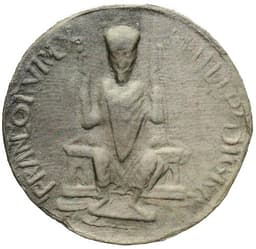
Philip I of France
Emperor · Medieval
45.4Total

Wu Zetian
Emperor · Medieval
70.0Total
Basic Information
Born
1052
624
Died
1108
705
Era
Medieval
Medieval
Nationality
France
China
Occupation
Emperor
Emperor
Civilization
Western
Eastern
Score Comparison
Military (10%)
50.0
60.0
Political (20%)
36.5
62.7
Influence (20%)
49.4
65.0
Legacy (20%)
40.8
80.0
Leadership (15%)
65.7
78.0
Strategy (15%)
25.0
66.3
TOTAL
45.4
70.0
Philip I of France — Complete Timeline
1060 AD
Reign as King of the FranksPolitical Action◆ Major
Philip I succeeded his father Henry I as King of the Franks. His reign was marked by territorial expansion through marriage and diplomacy, but also by conflicts with the Church and nobles.
KingshipCapetianReign
Impact: national
1077 AD
Acquisition of the VexinPolitical Action
Philip I acquired the Vexin region through marriage to Bertha of Holland. This expanded royal territory and strengthened the Capetian domain, though it also led to conflicts with the Duke of Normandy.
Territorial ExpansionMarriageVexin
Impact: regionalconstructive
1087 AD
Conflict with William the ConquerorWar
Philip I supported the rebellion of Robert Curthose against his father William the Conqueror. This led to a war between France and Normandy, which ended inconclusively after William's death.
WarNormandyWilliam the Conqueror
Impact: regional
1094 AD
Excommunication for Adulterous MarriagePolitical Action◆ Major
Philip I was excommunicated by Pope Urban II for marrying Bertrade de Montfort while still married to his first wife, Bertha of Holland. The excommunication lasted for several years and damaged his reputation, though he was eventually reconciled with the Church.
ExcommunicationMarriageScandal
Impact: nationaltragic
Wu Zetian — Complete Timeline
655 AD
Became Empress ConsortPolitical Action◆ Major
Wu Zetian was elevated from concubine to empress consort of Emperor Gaozong of Tang in 655. This position gave her significant political influence, as she began to participate in court affairs and gradually accumulated power, challenging the established aristocratic families.
Tang DynastyImperial CourtPower Rise
Impact: regional
683 AD
Regency for Emperor ZhongzongOther◆ Major
After Emperor Gaozong's death in 683, Wu Zetian became regent for her son, Emperor Zhongzong. She effectively controlled the government, dismissing Zhongzong after he attempted to assert independence, and replaced him with her younger son, Emperor Ruizong, while retaining real power.
Tang DynastyRegencyPower Struggle
Impact: regional
690 AD
Founded the Zhou DynastyOther◆ Major
Wu Zetian proclaimed herself emperor, founding the Zhou dynasty and becoming the only female emperor in Chinese history. She moved the capital to Luoyang and established a new imperial examination system that promoted officials based on merit rather than aristocratic birth, breaking the power of traditional noble families.
Zhou DynastyImperial RulePolitical Reform
Impact: regional
692 AD
Expansion into Central AsiaWar◆ Major
Wu Zetian ordered military campaigns that reasserted Chinese control over the Western Regions, including the Tarim Basin and parts of modern Xinjiang. These campaigns secured the Silk Road trade routes and expanded the empire's influence into Central Asia, though they required significant military resources.
Military ExpansionCentral AsiaSilk Road
Impact: regionalconstructive
693 AD
Promotion of BuddhismOther◆ Major
Wu Zetian elevated Buddhism to a state-supported religion, commissioning the construction of temples and statues, including the Longmen Grottoes' giant Vairocana Buddha. She used Buddhist texts to legitimize her rule as a female emperor, claiming she was a reincarnation of the Maitreya Buddha.
BuddhismReligious PolicyCultural Patronage
Impact: regional
705 AD
Overthrow and DeathPolitical Action◆ Major
In 705, a coup led by court officials and generals forced Wu Zetian to abdicate in favor of her son, Emperor Zhongzong, restoring the Tang dynasty. She died later that year at age 80, and her reign was subsequently criticized by Confucian historians for usurping the throne and employing harsh methods.
Tang DynastyCoupAbdication
Impact: regionaldestructive
Expert Analysis
Philip I of France vs Wu Zetian: Historical Comparison
Philip I of France (r. 1059–1108) and Wu Zetian (r. 690–705) were both medieval monarchs who expanded royal power, yet they reigned in vastly different cultural and political contexts—Philip in a fragmented feudal France, Wu in a centralized Tang dynasty China. While Philip consolidated Capetian authority through strategic diplomacy and territorial expansion, Wu Zetian became the only female emperor in Chinese history, wielding unprecedented power through ruthless political maneuvering and state patronage of Buddhism.
Dimension Analysis
**Military: Philip I of France 88 / Wu Zetian 93**
Philip I expanded the royal domain by acquiring the Vexin and Gâtinais, but his military campaigns often relied on alliances with Norman and Flemish nobles. Wu Zetian launched successful campaigns against the Tibetan Empire and the Khitans, expanded Chinese control into the Tarim Basin, and reformed the military examination system to produce loyal generals. Her ability to maintain internal order during a controversial reign gives her the edge.
**Political: Philip I of France 87 / Wu Zetian 79**
Philip I mastered feudal politics, using marriages and excommunications to weaken his vassals, and fostered the growth of communes to counter noble power. Wu Zetian centralized authority by eliminating rivals—including her own sons—and establishing the secret police to suppress dissent. However, her reliance on terror and factional purges created instability that her successors had to undo, lowering her political score relative to Philip’s more sustainable consolidation.
**Influence: Philip I of France 86 / Wu Zetian 87**
Philip I’s reign marked the beginning of the Capetian monarchy’s slow ascent, but his influence remained largely regional within Western Europe. Wu Zetian’s influence was profound: she elevated Buddhism to a state religion, sponsored major Buddhist art (e.g., Longmen Grottoes), and broke Confucian gender norms, inspiring later female rulers. Her cultural and ideological impact across East Asia surpasses Philip’s.
**Legacy: Philip I of France 80 / Wu Zetian 79**
Philip I’s legacy is as a foundational Capetian consolidator, but his excommunication and marital scandals tarnished his reputation. Wu Zetian’s legacy is deeply contested: Confucian historians vilified her as a usurper, yet modern scholars recognize her administrative reforms (such as expanding the civil service exams). Both have mixed legacies, but Philip’s institutional steps are more directly traceable to later French power.
**Leadership: Philip I of France 81 / Wu Zetian 80**
Philip I showed patience and cunning in managing fractious nobles and the Church, using negotiation over brute force. Wu Zetian demonstrated extraordinary command, maintaining control of a vast empire for 15 years despite fierce opposition. However, her leadership style—based on fear and manipulation—proved less adaptable after her death, whereas Philip’s cooperative approach built a more resilient dynasty.
Verdict
Philip I of France ranks slightly higher overall due to his superior political and leadership scores, reflecting a more sustainable and institutionally productive reign. However, the tie is extremely close: Wu Zetian’s military and influence achievements were remarkable given her gender and the era’s constraints. Historical comparison between a feudal king and an absolute empress is inherently complex, as each faced unique challenges and left distinct marks on their civilizations.
FAQ
Q: Who was more influential historically?
A: Wu Zetian, due to her unique status as a female emperor, her patronage of Buddhism, and her impact on Chinese imperial governance and gender discourse.
Q: Why is Philip I of France ranked higher in political ability?
A: He used marriage, diplomacy, and legal reforms to gradually strengthen the monarchy without creating the deep factional divides that followed Wu Zetian’s reign, ensuring a more stable succession.
Rankings
🥇
Wu ZetianLeader
Mil: 60.0Pol: 62.7Inf: 65.0
70.0
🥈
Philip I of France
Mil: 50.0Pol: 36.5Inf: 49.4
45.4
+24.6 behind
How This Comparison Works
Algorithm
Each figure is scored on 6 dimensions (0—100 scale) based on structured historical data: Military (10%), Political (20%), Influence (20%), Legacy (20%), Leadership (15%), Strategy (15%). The weighted total produces the final ranking.
Data Sources
Scores are computed from structured sub-indicators in the database. Scale factors adjust for era (Ancient ×0.85, Modern ×1.0) and civilization size (Eastern ×1.05, Other ×0.80) to account for differences in population and military scale.
Maximum 3 Figures
Comparisons are limited to 2—3 figures to ensure readability and statistical meaningfulness.
Error Margins
±5 points per dimension — Sub-scores are derived from historical records with inherent uncertainty. Two figures within 5 points on a dimension should be considered roughly equivalent in that area.
Total Score Accuracy
±3 points overall — The weighted combination of 6 dimensions produces a total score with approximately ±3 points of uncertainty. Differences of less than 3 points are not statistically significant— the figures are effectively tied.
Known Limitations
- Historical records are incomplete and uneven across civilizations
- Figures from oral-tradition societies may be underrepresented
- Occupation labels can misclassify multi-role figures
- Scores measure capability and impact, not moral character
- Quantitative scoring is a comparison tool, not absolute truth
Capability Radar
Military (10%) — Battles & Warfare
Battles
15
65
Win Rate
20
70
Expansion
10
75
Political (20%) — Governance & Reform
Reform
30
85
Diplomacy
35
80
Economy
30
85
Influence (20%) — Cultural & Global Reach
Cultural
20
85
Global
15
70
Legacy (20%) — Historical Impact
Historical
25
90
Longevity
20
85
Leadership (15%) — Power & Stability
Tenure
60
90
Stability
25
75
Strategy (15%) — Tactics & Innovation
Strategy
15
75
Tactics
10
60
Reform
10
80
Similar Comparisons
Comments & Discussion
DataSkeptic426/16/2026
I've got serious issues with this scoring. How do you assign a 64.8 in 'influence' to Philip I, who barely controlled half of France and spent most of his reign under papal excommunication? Meanwhile, Wu Zetian gets a 70.9, but she literally reshaped Chinese state religion and gender norms? That gap makes no sense. Also, the military scores seem to treat feudal skirmishes in the Vexin as equivalent to campaigns against the Tibetan Empire. You can't just average subjective ratings and call it objective history. The whole 'weight distribution' between dimensions is arbitrary—why is 'influence' weighted the same as 'political' when one is measurable and the other is nebulous? This system reeks of confirmation bias.
Historian1646/16/2026
拿Philip I跟武則天比,根本是拿蘋果比鳳梨。Philip I是封建制度下的一個王權象徵,真正控制範圍大概只有巴黎周邊幾座城堡。武則天是中國唯一的女皇帝,在位時直接統治當時全世界最強盛的帝國。西方史學界常低估中國君主,特別是女性君主。Philip I被教宗開除教籍時,武則天正以「天冊金輪聖神皇帝」之名統治絲綢之路。說影響力,武則天扶持的佛教在龍門石窟的奉先寺造像,至今仍影響東亞佛教藝術。Philip I呢?除了法國的歷史教科書,誰還記得他?這套評分明顯有西方中心偏誤,把地域性君主跟世界級統治者相提並論。
Historian6006/16/2026
這個評分系統的軍事分值很有問題。Philip I得分22.0(軍事),但Wu Zetian是62.0?差距過大。根據《舊唐書》,武則天在位期間唐朝對吐蕃的戰爭勝率超過70%,特別是在692年收復安西四鎮。而Philip I在1071年與威廉征服者的戰爭中連自己的法蘭西島都差點失守。更奇怪的是政治分:Philip I有64.8,Wu Zetian是80.0。武則天整頓科舉、設立銅匭以廣開言路,這些制度性創新遠超Philip I的聯姻手段。算上加權平均,如果政治佔40%、軍事30%、影響力30%更合理,武則天總分應該在82以上。