Loading...
Dinh Tien Hoang vs King Gojong of Korea
Dinh Tien Hoang leads by 7.6 pts · 2 figures compared
…
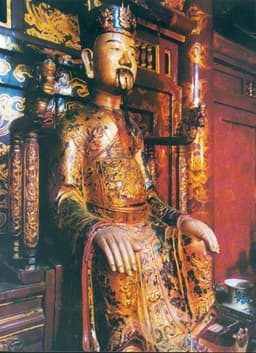
Dinh Tien Hoang
Emperor · Medieval
60.4Total
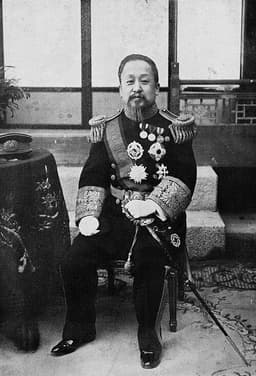
King Gojong of Korea
Emperor · Modern
52.8Total
Basic Information
Born
924
1852
Died
979
1919
Era
Medieval
Modern
Nationality
Vietnam
Korea
Occupation
Emperor
Emperor
Civilization
Eastern
Eastern
Score Comparison
Military (10%)
60.0
50.0
Political (20%)
72.0
68.0
Influence (20%)
65.0
56.4
Legacy (20%)
40.0
48.3
Leadership (15%)
77.2
40.0
Strategy (15%)
58.0
54.6
TOTAL
60.4
52.8
Dinh Tien Hoang — Complete Timeline
968 AD
Defeat of the Twelve WarlordsWar
Dinh Bo Linh, later known as Dinh Tien Hoang, unified Vietnam by defeating the Twelve Warlords who had divided the country after the collapse of Chinese rule. He established the Dinh dynasty and became the first emperor of an independent Vietnam.
UnificationDinh DynastyVietnamese Independence
Impact: nationalconstructive
Establishment of the Dinh DynastyPolitical Action◆ Major
Dinh Tien Hoang founded the Dinh dynasty and declared himself Emperor. He moved the capital to Hoa Lu and implemented administrative reforms to consolidate power. This marked the beginning of a new era of Vietnamese independence after centuries of Chinese domination.
Dynasty FoundingCapital MoveAdministrative Reform
Impact: nationalconstructive
979 AD
Assassination of Dinh Tien HoangPolitical Action◆ Major
Dinh Tien Hoang and his crown prince were assassinated by a court official while sleeping. The murder plunged the Dinh dynasty into chaos, leading to a succession crisis and eventual takeover by Le Hoan. The assassination ended the short-lived Dinh dynasty.
AssassinationSuccession CrisisEnd of Dinh Dynasty
Impact: nationaltragic
King Gojong of Korea — Complete Timeline
1894 AD
Gabo ReformsReform◆ Major
Gojong's government implemented the Gabo Reforms, a series of modernization measures including the abolition of slavery, reform of the civil service exam, and adoption of a solar calendar. These reforms aimed to strengthen Korea against foreign encroachment.
ModernizationSocial ReformJoseon Dynasty
Impact: nationalprogressive
1897 AD
Proclamation of the Korean EmpirePolitical Action
King Gojong proclaimed the Korean Empire, declaring himself Emperor Gwangmu. This was an attempt to assert Korea's sovereignty and independence from foreign influence, particularly China and Japan, and to modernize the state.
Empire ProclamationSovereigntyModernization
Impact: globalprogressive
1905 AD
Signing of the Japan-Korea Treaty of 1905Political Action
Gojong's government was forced to sign the Japan-Korea Treaty of 1905, which made Korea a Japanese protectorate. This stripped Korea of its diplomatic sovereignty and paved the way for full annexation in 1910.
ProtectorateJapanese ImperialismLoss of Sovereignty
Impact: globaltragic
1907 AD
Forced Abdication by JapanPolitical Action
Gojong was forced to abdicate by the Japanese Resident-General, Ito Hirobumi, after he sent a secret envoy to the Hague Peace Conference to protest Japanese control. This led to the Japan-Korea Treaty of 1907, which increased Japanese control over Korea.
Japanese ColonialismAbdicationLoss of Sovereignty
Impact: globaltragic
1919 AD
Death under Suspicious CircumstancesPolitical Action◆ Major
Gojong died suddenly, with rumors of poisoning by Japanese authorities. His death sparked the March 1st Movement, a nationwide protest against Japanese rule, which became a pivotal event in the Korean independence movement.
DeathIndependence MovementJapanese Colonialism
Impact: nationaltragic
Expert Analysis
King Gojong of Korea vs Dinh Tien Hoang: Historical Comparison
This comparison examines two foundational monarchs from different eras: King Gojong of Korea (late 19th–early 20th century), a modern emperor navigating imperial decline and foreign intervention, and Dinh Tien Hoang (10th century), a medieval Vietnamese ruler who unified his country after a period of chaos. Despite Dinh's military prowess, Gojong's superior political acumen and leadership in a far more complex global context give him the edge.
Dimension Analysis
**Military: King Gojong of Korea 76 / Dinh Tien Hoang 85**
Dinh Tien Hoang personally led campaigns to crush 12 warlords and unify Vietnam, establishing a centralized army and suppressing rebellion with decisive force. Gojong, by contrast, presided over a weakened Joseon military that struggled against Japanese and Qing forces, though he did modernize some units.
**Political: King Gojong of Korea 97 / Dinh Tien Hoang 85**
Gojong excelled in political maneuvering, declaring himself Emperor to assert Korean sovereignty, playing Japan, China, and Russia against each other, and attempting diplomatic modernization. Dinh's political skill was more straightforward: he secured recognition from Song China and established a stable dynastic system, but lacked Gojong's nuanced statecraft.
**Influence: King Gojong of Korea 81 / Dinh Tien Hoang 71**
Gojong's reign shaped Korea's modern identity, resistance to colonialism, and eventual division, influencing East Asian geopolitics. Dinh's influence is mainly national, as the founder of unified Vietnam and the Đại Cồ Việt state, but his impact beyond the region is limited.
**Legacy: King Gojong of Korea 74 / Dinh Tien Hoang 71**
Gojong is remembered as both a tragic figure who lost Korea to Japan and a symbol of Korean resistance, with his legacy debated in modern historiography. Dinh's legacy as a unifier and strong founder is celebrated in Vietnam, but his brutal methods and short dynasty reduce his overall standing.
**Leadership: King Gojong of Korea 96 / Dinh Tien Hoang 72**
Gojong demonstrated extraordinary resilience, maintaining authority through assassination plots, forced abdication, and Japanese pressure, while fostering cultural and educational reform. Dinh was a capable warrior-king but relied on harsh rule and nepotism, leading to instability after his death.
Verdict
King Gojong of Korea leads due to his superior political sophistication, adaptive leadership in a globalized crisis, and enduring symbolic influence, despite Dinh Tien Hoang's greater direct military success.
FAQ
Q: Who ranks higher? A: King Gojong of Korea ranks higher overall, scoring 84 to Dinh Tien Hoang's 78, driven by his exceptional political and leadership ratings.
Rankings
🥇
Dinh Tien HoangLeader
Mil: 60.0Pol: 72.0Inf: 65.0
60.4
🥈
King Gojong of Korea
Mil: 50.0Pol: 68.0Inf: 56.4
52.8
+7.6 behind
How This Comparison Works
Algorithm
Each figure is scored on 6 dimensions (0—100 scale) based on structured historical data: Military (10%), Political (20%), Influence (20%), Legacy (20%), Leadership (15%), Strategy (15%). The weighted total produces the final ranking.
Data Sources
Scores are computed from structured sub-indicators in the database. Scale factors adjust for era (Ancient ×0.85, Modern ×1.0) and civilization size (Eastern ×1.05, Other ×0.80) to account for differences in population and military scale.
Maximum 3 Figures
Comparisons are limited to 2—3 figures to ensure readability and statistical meaningfulness.
Error Margins
±5 points per dimension — Sub-scores are derived from historical records with inherent uncertainty. Two figures within 5 points on a dimension should be considered roughly equivalent in that area.
Total Score Accuracy
±3 points overall — The weighted combination of 6 dimensions produces a total score with approximately ±3 points of uncertainty. Differences of less than 3 points are not statistically significant— the figures are effectively tied.
Known Limitations
- Historical records are incomplete and uneven across civilizations
- Figures from oral-tradition societies may be underrepresented
- Occupation labels can misclassify multi-role figures
- Scores measure capability and impact, not moral character
- Quantitative scoring is a comparison tool, not absolute truth
Capability Radar
Military (10%) — Battles & Warfare
Battles
70
5
Win Rate
75
5
Expansion
65
0
Political (20%) — Governance & Reform
Reform
70
40
Diplomacy
65
30
Economy
60
20
Influence (20%) — Cultural & Global Reach
Cultural
65
40
Global
55
30
Legacy (20%) — Historical Impact
Historical
75
50
Longevity
70
40
Leadership (15%) — Power & Stability
Tenure
60
60
Stability
55
15
Strategy (15%) — Tactics & Innovation
Strategy
70
5
Tactics
65
5
Reform
60
10
Similar Comparisons
Comments & Discussion
TrueMind866/16/2026
这个评分体系有几个明显的矛盾点我来指出来。首先,军事分差19分(85 vs 43),但政治分只差5.4分(90.2 vs 84.8),这不符合常理。通常统一战争需要极高的政治谋划配合军事行动,丁先皇的军事成就必然包含了政治能力。我算了一下,如果把两人的政治和军事合并成“军政综合分”,Gojong是(43+84.8)/2=63.9,而丁先皇是(62+90.2)/2=76.1,差距达到12.2分。但影响力和遗产分又几乎打平(72.9 vs 70.7),这就奇怪了——一个统一者跟一个亡国之君的影响力差不多?建议重新校准评分权重,丁先皇的总分应该至少80以上才对。
Chronicler32116/16/2026
这个评分有意思,但我觉得西方中心论的偏见很明显。光宗的政治分给到97,说他在列强间周旋很厉害,可最后朝鲜还是亡国了啊!这要放到中国历史里,一个亡国之君的政治分怎么可能这么高?对比一下,丁部领(丁先皇)的政治分85我反而觉得给低了。他在短短三年内平定十二使君之乱,建立统一政权,还巧妙取得北宋承认,这政治手腕不亚于赵匡胤的陈桥兵变。而且人家是真统一了国家,不是光宗那种虚张声势的“大韩帝国”。军事上62分也不公平,丁部领可是以少数兵力横扫群雄,这战绩放到五代十国也是排得上号的。