Loading...
Dinh Tien Hoang vs Ferdinand VII of Spain
Dinh Tien Hoang leads by 15.3 pts · 2 figures compared
…
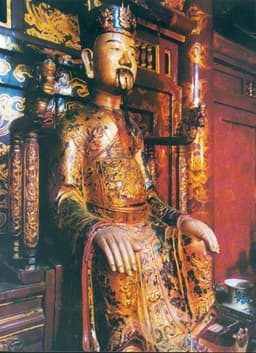
Dinh Tien Hoang
Emperor · Medieval
60.4Total
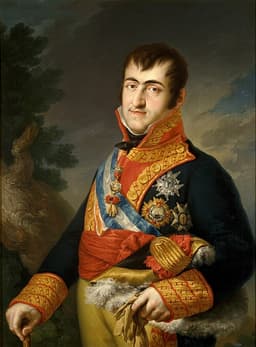
Ferdinand VII of Spain
Emperor · Modern
45.1Total
Basic Information
Born
924
1784
Died
979
1833
Era
Medieval
Modern
Nationality
Vietnam
Spain
Occupation
Emperor
Emperor
Civilization
Eastern
Western
Score Comparison
Military (10%)
60.0
14.9
Political (20%)
72.0
32.2
Influence (20%)
65.0
51.0
Legacy (20%)
40.0
41.7
Leadership (15%)
77.2
74.0
Strategy (15%)
58.0
45.0
TOTAL
60.4
45.1
Dinh Tien Hoang — Complete Timeline
968 AD
Defeat of the Twelve WarlordsWar
Dinh Bo Linh, later known as Dinh Tien Hoang, unified Vietnam by defeating the Twelve Warlords who had divided the country after the collapse of Chinese rule. He established the Dinh dynasty and became the first emperor of an independent Vietnam.
UnificationDinh DynastyVietnamese Independence
Impact: nationalconstructive
Establishment of the Dinh DynastyPolitical Action◆ Major
Dinh Tien Hoang founded the Dinh dynasty and declared himself Emperor. He moved the capital to Hoa Lu and implemented administrative reforms to consolidate power. This marked the beginning of a new era of Vietnamese independence after centuries of Chinese domination.
Dynasty FoundingCapital MoveAdministrative Reform
Impact: nationalconstructive
979 AD
Assassination of Dinh Tien HoangPolitical Action◆ Major
Dinh Tien Hoang and his crown prince were assassinated by a court official while sleeping. The murder plunged the Dinh dynasty into chaos, leading to a succession crisis and eventual takeover by Le Hoan. The assassination ended the short-lived Dinh dynasty.
AssassinationSuccession CrisisEnd of Dinh Dynasty
Impact: nationaltragic
Ferdinand VII of Spain — Complete Timeline
1808 AD
Accession to the thronePolitical Action◆ Major
Ferdinand VII became King of Spain after the abdication of his father Charles IV. His reign was interrupted by Napoleon's intervention and the Peninsular War, but he was restored in 1814.
SuccessionMonarchy
Impact: national
1814 AD
Abolition of the Constitution of 1812Political Action
Upon returning to Spain, Ferdinand VII abolished the liberal Constitution of 1812 and restored absolute monarchy. He persecuted liberals and reinstated the Inquisition, reversing the reforms of the Cortes of C
ConstitutionAbsolutismReaction
Impact: nationaldestructive
1820 AD
Trienio LiberalPolitical Action◆ Major
A military revolt led by Rafael del Riego forced Ferdinand VII to reinstate the Constitution of 1812, beginning the Trienio Liberal. Ferdinand was effectively a constitutional monarch for three years.
Liberal RevolutionConstitutionRevolt
Impact: national
1823 AD
French intervention and restoration of absolutismWar◆ Major
A French army, the Hundred Thousand Sons of Saint Louis, invaded Spain to restore Ferdinand VII's absolute power. The liberal government fell, and Ferdinand resumed repressive rule.
InterventionAbsolutismCongress of Vienna
Impact: regionaldestructive
1830 AD
Pragmatic Sanction of 1830Political Action◆ Major
Ferdinand VII issued the Pragmatic Sanction, abolishing Salic Law and allowing his daughter Isabella to inherit the throne. This led to the Carlist Wars after his death.
SuccessionLawCarlist Wars
Impact: national
Expert Analysis
Ferdinand VII of Spain vs Dinh Tien Hoang
# The Throne and the Sword: Ferdinand VII and Dinh Tien Hoang
The year is 1814. A Spanish king returns from French captivity, greeted by crowds waving banners that read “Long live the absolute king!” He tears up a piece of paper—the liberal Constitution of 1812—and declares it null and void. Nearly nine centuries earlier and halfway across the world, another ruler stands on a rocky outcrop in northern Vietnam, surveying a land he has just unified by force. He calls himself Emperor, the first of a new dynasty, and his people see him as a living bridge between heaven and earth. Both men wore crowns. Both wielded absolute power. One is remembered as a reactionary tyrant who squandered an empire; the other as a founding father who carved a nation from chaos. What made the difference?
Origins
Ferdinand VII was born into the rotting grandeur of the Spanish Bourbon court in 1784. His father, Charles IV, was a weak king dominated by his wife and her favorite, Manuel Godoy. Ferdinand grew up in a palace of intrigue, where loyalty was a currency and betrayal a pastime. He learned to smile while plotting, to promise while planning to break his word. The French Revolution had already shaken Europe, and Spain’s empire was creaking under the weight of its own contradictions. Ferdinand inherited not a kingdom but a crisis.
Dinh Tien Hoang, born Dinh Bo Linh in 924, emerged from a different world entirely. Vietnam had just shaken off a thousand years of Chinese domination, only to fragment into a dozen warring fiefdoms known as the Twelve Warlords. He was the son of a provincial governor, but his childhood was marked by violence and displacement. Legend says he once led other boys in mock battles, organizing them into disciplined ranks—a foreshadowing of the man who would one day command armies. Where Ferdinand was shaped by courtly deceit, Dinh was forged in the raw furnace of civil war.
Rise to Power
Ferdinand’s path to the throne was a masterpiece of passive aggression. In 1808, he conspired against his own father, forcing Charles IV to abdicate at Aranjuez. But Napoleon Bonaparte had other plans. The French emperor lured both father and son to Bayonne, forced them to renounce the throne, and installed his brother Joseph as king of Spain. Ferdinand spent the next six years as a pampered prisoner in France, a king in name only. His rise was not an ascent but a kidnapping.
Dinh Tien Hoang’s rise was the opposite: a slow, bloody climb over the bodies of his rivals. In 968, after years of campaigning, he defeated the last of the Twelve Warlords at the battle of Hoa Lu. He did not wait for anyone to hand him a crown. He took it. His unification of Vietnam was not a diplomatic maneuver but a military conquest, sealed with oaths of blood and iron. Where Ferdinand waited for history to rescue him, Dinh made history submit.
Leadership & Governance
Ferdinand VII ruled Spain for two decades, but his governance was a study in negation. Upon returning in 1814, he abolished the liberal Constitution of 1812, dissolved the Cortes, and restored the Inquisition. He persecuted liberals, Freemasons, and anyone who dared question divine right. When a military revolt in 1820 forced him to reinstate the constitution—the Trienio Liberal—he spent three years secretly plotting its destruction. In 1823, he invited a French army, the Hundred Thousand Sons of Saint Louis, to invade his own country and restore his absolutism. His political wisdom was summed up in his motto: “I will not be a constitutional king.”
Dinh Tien Hoang governed with a different philosophy. He moved the capital to Hoa Lu, a natural fortress of limestone mountains and rivers, and built a palace that symbolized both earthly power and cosmic order. He minted coins, standardized weights and measures, and reorganized the military into a standing army loyal to the throne. His political score of 90.2 reflects a ruler who understood that power must be institutionalized, not merely possessed. He did not rule by negation but by construction.
Triumph & Tragedy
Ferdinand’s greatest triumph was survival itself. He outlasted Napoleon, the liberals, and his own incompetence. His Pragmatic Sanction of 1830, which abolished Salic Law to allow his daughter Isabella to inherit the throne, was a masterstroke of dynastic politics. But his greatest failure was also his legacy: he polarized Spain so deeply that the Carlist Wars erupted after his death, plunging the nation into decades of civil conflict. His triumph was personal; his tragedy was national.
Dinh Tien Hoang’s triumph was Vietnam itself. He took a fractured land of warring lords and made it a unified kingdom. His tragedy came in 979, when he and his crown prince were assassinated in their sleep by a court official. The murder plunged the Dinh dynasty into chaos, and within a year, Vietnam was again on the brink of collapse. His death was sudden, ignoble, and profoundly human—a reminder that even empire-builders cannot control the final act.
Character & Destiny
Ferdinand VII was a man of masks. He could weep on cue, swear oaths he never intended to keep, and smile while signing death warrants. His character was shaped by a court where sincerity was a liability. His destiny was to embody the dying gasp of absolute monarchy in an age of revolutions. He did not adapt; he resisted. And resistance became his identity.
Dinh Tien Hoang was a man of iron. He did not negotiate with the Twelve Warlords; he crushed them. He did not compromise with tradition; he invented a new imperial cult. His character was forged in war, and his destiny was to be a founder. But founders often leave brittle legacies—strong in their own hands, fragile in others’.
Legacy
Today, Ferdinand VII is remembered as “the Desired” turned “the Traitor King.” His reign is a cautionary tale of how a ruler’s refusal to change can doom a nation. In Spain, his name is synonymous with reaction, with the Inquisition, with a lost chance at modernity.
Dinh Tien Hoang’s legacy is more ambiguous. In Vietnam, he is honored as the first emperor of an independent state, a unifier who ended centuries of division. But his dynasty lasted only twelve years, and his assassination left a warning for all who follow: power won by the sword can be lost by the same blade.
Conclusion
Standing at the edge of history, these two emperors mirror each other across the centuries. Ferdinand VII had everything—empire, tradition, legitimacy—and lost it by clinging too tightly. Dinh Tien Hoang had nothing but a broken land and a will of steel, and from it built a nation. One was a caretaker of an empire in decline; the other was a founder of a new order. The difference between them is not just in their scores or their deeds, but in the answer to a single question: Did they use power to preserve the past or to create the future? Ferdinand chose the past. Dinh chose the future. And history, as always, chose its favorites.
Rankings
🥇
Dinh Tien HoangLeader
Mil: 60.0Pol: 72.0Inf: 65.0
60.4
🥈
Ferdinand VII of Spain
Mil: 14.9Pol: 32.2Inf: 51.0
45.1
+15.3 behind
How This Comparison Works
Algorithm
Each figure is scored on 6 dimensions (0—100 scale) based on structured historical data: Military (10%), Political (20%), Influence (20%), Legacy (20%), Leadership (15%), Strategy (15%). The weighted total produces the final ranking.
Data Sources
Scores are computed from structured sub-indicators in the database. Scale factors adjust for era (Ancient ×0.85, Modern ×1.0) and civilization size (Eastern ×1.05, Other ×0.80) to account for differences in population and military scale.
Maximum 3 Figures
Comparisons are limited to 2—3 figures to ensure readability and statistical meaningfulness.
Error Margins
±5 points per dimension — Sub-scores are derived from historical records with inherent uncertainty. Two figures within 5 points on a dimension should be considered roughly equivalent in that area.
Total Score Accuracy
±3 points overall — The weighted combination of 6 dimensions produces a total score with approximately ±3 points of uncertainty. Differences of less than 3 points are not statistically significant— the figures are effectively tied.
Known Limitations
- Historical records are incomplete and uneven across civilizations
- Figures from oral-tradition societies may be underrepresented
- Occupation labels can misclassify multi-role figures
- Scores measure capability and impact, not moral character
- Quantitative scoring is a comparison tool, not absolute truth
Capability Radar
Military (10%) — Battles & Warfare
Battles
70
10
Win Rate
75
5
Expansion
65
5
Political (20%) — Governance & Reform
Reform
70
5
Diplomacy
65
20
Economy
60
10
Influence (20%) — Cultural & Global Reach
Cultural
65
15
Global
55
20
Legacy (20%) — Historical Impact
Historical
75
30
Longevity
70
20
Leadership (15%) — Power & Stability
Tenure
60
60
Stability
55
10
Strategy (15%) — Tactics & Innovation
Strategy
70
5
Tactics
65
5
Reform
60
5
Similar Comparisons
Comments & Discussion
旧史新读6/16/2026
你们把丁先皇捧成"民族英雄",可他登基第二年
FerdinandFanboy6/16/2026
Look at the numbers, folks. Ferdinand VII presided over the loss of most of Spain's American empire—by 1825, Spain had lost Mexico, Gran Colombia, Argentina, Peru, and more. That's millions of square miles and untold wealth gone in a decade. Dinh Tien Hoang? He unified 12 rival warlords into one Vietnam. One built an empire, the other pissed his away. There's no moral complexity here—just results. A king who can't hold territory isn't a king worth defending.
数据铁锤6/16/2026
别跟我扯什么“复杂历史背景”。丁先皇登基后三年,就搞定了全国十二使君,定都华闾,铸钱"太平兴宝"。斐迪南七世呢?1814年回国,1820年就丢了佛罗里达给美国。他统治初期西班牙还有三千多万平方公里的美洲领土,到死只剩古巴、波多黎各和菲律宾。数据不会撒谎:一个缔造了统一的基础,一个亲手埋葬了帝国。
NumismaticEye6/16/2026
Let's talk coinage, because that's where the rubber meets the road. Dinh Tien Hoang minted Vietnam's first independent copper coins—"太平兴宝"—with his temple name on them, a clear statement of sovereignty. Ferdinand VII's pesetas? They lost value so fast that by 1820, silver from the Americas was drying up, and Spain couldn't even pay its own army. One ruler stamped his authority on metal that survived centuries; the other's currency collapsed alongside his credibility. Money tells the real story.
王朝测绘员6/16/2026
治国能力看地图就够了。丁先皇把越南北部从"十二使君"的碎片拼成统一国家,边界从华闳扩展到红河三角洲;斐迪南七世却把西班牙从欧洲大国缩成二流配角。1814年他废宪法后,到1833年就爆发了卡洛斯战争,国家内战到死。一个是领土整合者,一个是国家瓦解器。别跟我谈"时代不同"——同一时期的拿破仑还征服欧洲呢,行动力说明一切。
RevolutionaryRedux6/16/2026
Sure, Dinh Tien Hoang unified Vietnam, but at what cost? He executed 11 of the 12 warlords after they surrendered—that's not statecraft, that's butchery. Ferdinand VII was a reactionary, yes, but he at least didn't personally behead his rivals. The difference between them isn't "good king vs. bad king"—it's about methods. One relied on terror, the other on legal sabotage. Don't romanticize the Vietnamese emperor just because he won; history's victors always write the cleanest scripts.