Loading...
Devlet Bahceli vs Golda Meir
Golda Meir leads by 6.0 pts · 2 figures compared
…

Devlet Bahceli
Politician · Modern
49.8Total
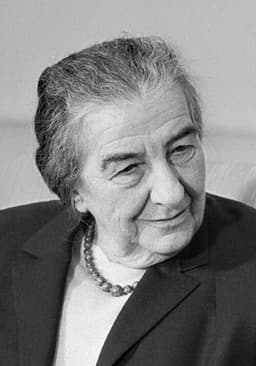
Golda Meir
Politician · Modern
55.8Total
Basic Information
Born
1948
1898
Died
—
1978
Era
Modern
Modern
Nationality
Turkey
Israel
Occupation
Politician
Politician
Civilization
Middle Eastern
Middle Eastern
Score Comparison
Military (10%)
33.6
45.0
Political (20%)
61.3
72.0
Influence (20%)
54.9
55.0
Legacy (20%)
45.0
54.0
Leadership (15%)
53.2
72.0
Strategy (15%)
42.4
25.0
TOTAL
49.8
55.8
Devlet Bahceli — Complete Timeline
1997 AD
Became Leader of the Nationalist Movement Party (MHP)Political Action◆ Major
Devlet Bahceli was elected as the chairman of the MHP on July 6, 1997, following the death of Alparslan Turkes. He transformed the party from a radical nationalist group into a mainstream political force, focusing on Turkish nationalism and secularism.
Party LeadershipNationalism
Impact: national
1999 AD
Entered Coalition Government as Deputy Prime MinisterPolitical Action◆ Major
Bahceli led the MHP into a coalition government with the Democratic Left Party and the Motherland Party in 1999. He served as Deputy Prime Minister until 2002. The coalition was marked by economic reforms and the capture of Abdullah Ocalan.
CoalitionGovernment
Impact: national
2017 AD
Supported the 2017 Constitutional ReferendumPolitical Action◆ Major
Bahceli's MHP supported the AKP's constitutional referendum in 2017, which transformed Turkey from a parliamentary to a presidential system. This alliance was controversial within the MHP and led to internal splits, but it solidified Bahceli's role as a kingmaker.
ReferendumConstitutionAlliance
Impact: national
2018 AD
Formed the People's Alliance with AKPPolitical Action◆ Major
In 2018, Bahceli formed the People's Alliance with President Erdogan's AKP for the general elections. This alliance has dominated Turkish politics, giving Bahceli significant influence despite the MHP's smaller size.
AllianceElectionsPolitics
Impact: national
Golda Meir — Complete Timeline
1969 AD
Appointment as Prime Minister of IsraelPolitical Action◆ Major
Golda Meir became Prime Minister of Israel after the death of Levi Eshkol. She was the first and only woman to hold the office, leading the country during a period of significant tension and conflict in the Middle East.
Prime MinisterFirst womanLeadership
Impact: national
1973 AD
Yom Kippur WarWar
Meir led Israel during the Yom Kippur War, when Egypt and Syria launched a surprise attack on the holiest day of the Jewish calendar. Israel initially suffered heavy losses but eventually repelled the attacks, though the war exposed intelligence failures.
WarSurprise attackIntelligence failure
Impact: regionaltragic
1974 AD
Resignation after the Agranat CommissionPolitical Action◆ Major
Following the Yom Kippur War, the Agranat Commission criticized the government's handling of the conflict. Meir resigned as Prime Minister in 1974, taking responsibility for the failures, though she remained a respected figure in Israeli politics.
ResignationAccountabilityWar aftermath
Impact: nationaltragic
Expert Analysis
Origins
Devlet Bahceli was born on January 1, 1948, in Bahce, Turkey, into a farming family. He studied economics at Ankara University and later became an academic. His political mentor was Alparslan Turkes, the founder of the Nationalist Movement Party (MHP). Bahceli rose through party ranks, becoming chairman after Turkes's death in 1997.
Golda Meir was born on May 3, 1898, in Kyiv, Russian Empire (now Ukraine), into a Jewish family. She emigrated to the United States in 1906 and later moved to Palestine in 1921. Meir worked as a teacher and became active in the labor movement. She was a key figure in the founding of Israel in 1948.
Rise to Power
Bahceli's rise came after inheriting the MHP in 1997 when it was a radical nationalist party. He moderated its image, leading it into government in 1999 as part of a coalition. He served as Deputy Prime Minister from 1999 to 2002. His key turning point was supporting the 2017 constitutional referendum, aligning with President Erdogan's AKP, which transformed Turkey into a presidential system.
Meir's rise was through the Israeli labor movement. She served as Minister of Labor and Foreign Minister before becoming Prime Minister in 1969 after Levi Eshkol's death. She was Israel's first and only female PM, leading the country through the turbulent early 1970s.
Leadership & Governance
Bahceli's leadership style is pragmatic and alliance-driven. He scored 53.2 in leadership and 42.4 in strategy. He transformed the MHP from a radical fringe party into a key coalition partner. His governance approach involved forming the People's Alliance with Erdogan's AKP in 2018, which has dominated Turkish politics. This alliance allowed him to wield influence despite the MHP's smaller size.
Meir's leadership was decisive and hands-on, scoring 72.0 in leadership and 72.0 in political skill. She was known for her strong will and direct communication. However, her strategic score of 25.0 reflects the failures in intelligence during the Yom Kippur War. She governed with a focus on security and diplomacy, but her reliance on military deterrence proved flawed.
Triumph & Tragedy
Bahceli's greatest triumph was his political survival and influence. He kept the MHP relevant for over two decades, scoring 61.3 in political influence. His greatest failure was his inability to broaden the party's appeal beyond nationalist base, limiting its growth. The MHP's electoral support has remained around 10-15%.
Meir's triumph was leading Israel during the Yom Kippur War's initial setbacks to eventual military victory. However, the war's high casualties and intelligence failures were tragedies. The Agranat Commission blamed her government, leading to her resignation in 1974. She also failed to achieve peace with Egypt and Syria.
Character & Destiny
Bahceli is characterized by patience and strategic calculation. He waited for opportunities to align with stronger parties, a trait that earned him the nickname "the silent leader." His destiny was to be a kingmaker rather than a dominant figure. His total score of 49.8 reflects this secondary role.
Meir was known for her stubbornness and maternal image. She often made decisions based on intuition rather than intelligence, which contributed to the Yom Kippur War surprise. Her character led to her downfall, as she refused to accept blame initially. Her total score of 55.8 is higher due to her leadership and political skills.
Legacy
Bahceli's legacy is the transformation of Turkish nationalism into a mainstream political force. He helped Erdogan consolidate power, reshaping Turkey's political system. His alliance model may influence future coalitions. However, his legacy is tied to Erdogan's, limiting his independent impact.
Meir's legacy as Israel's first female PM is iconic. She is remembered for her leadership during war and her role in building the state. However, her failure to prevent the Yom Kippur War tarnishes her reputation. Her strategic missteps are studied as lessons in intelligence and decision-making.
Conclusion
Golda Meir has a higher total score (55.8 vs 49.8) and greater impact on the world stage. She led a nation through existential crises and broke gender barriers. While Bahceli was a skilled political operator, his influence was regional and contingent on alliances. Meir's decisions shaped the Middle East's security landscape. Therefore, Meir had greater historical impact.
Rankings
🥇
Golda MeirLeader
Mil: 45.0Pol: 72.0Inf: 55.0
55.8
🥈
Devlet Bahceli
Mil: 33.6Pol: 61.3Inf: 54.9
49.8
+6.0 behind
How This Comparison Works
Algorithm
Each figure is scored on 6 dimensions (0—100 scale) based on structured historical data: Military (10%), Political (20%), Influence (20%), Legacy (20%), Leadership (15%), Strategy (15%). The weighted total produces the final ranking.
Data Sources
Scores are computed from structured sub-indicators in the database. Scale factors adjust for era (Ancient ×0.85, Modern ×1.0) and civilization size (Eastern ×1.05, Other ×0.80) to account for differences in population and military scale.
Maximum 3 Figures
Comparisons are limited to 2—3 figures to ensure readability and statistical meaningfulness.
Error Margins
±5 points per dimension — Sub-scores are derived from historical records with inherent uncertainty. Two figures within 5 points on a dimension should be considered roughly equivalent in that area.
Total Score Accuracy
±3 points overall — The weighted combination of 6 dimensions produces a total score with approximately ±3 points of uncertainty. Differences of less than 3 points are not statistically significant— the figures are effectively tied.
Known Limitations
- Historical records are incomplete and uneven across civilizations
- Figures from oral-tradition societies may be underrepresented
- Occupation labels can misclassify multi-role figures
- Scores measure capability and impact, not moral character
- Quantitative scoring is a comparison tool, not absolute truth
Capability Radar
Military (10%) — Battles & Warfare
Battles
22
0
Win Rate
24
0
Expansion
25
15
Political (20%) — Governance & Reform
Reform
40
55
Diplomacy
60
70
Economy
30
60
Influence (20%) — Cultural & Global Reach
Cultural
35
55
Global
25
60
Legacy (20%) — Historical Impact
Historical
40
65
Longevity
30
50
Leadership (15%) — Power & Stability
Tenure
55
60
Stability
45
50
Strategy (15%) — Tactics & Innovation
Strategy
31
10
Tactics
31
0
Reform
35
20
Similar Comparisons
Comments & Discussion
No comments yet. Be the first to share your thoughts!