Loading...
Devlet Bahceli vs Saad Hariri
Devlet Bahceli leads by 11.4 pts · 2 figures compared
…

Devlet Bahceli
Politician · Modern
49.8Total
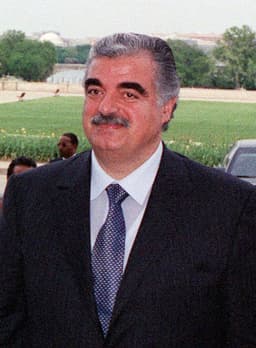
Saad Hariri
Politician · Modern
38.4Total
Basic Information
Born
1948
1970
Died
—
—
Era
Modern
Modern
Nationality
Turkey
Lebanon
Occupation
Politician
Politician
Civilization
Middle Eastern
Middle Eastern
Score Comparison
Military (10%)
33.6
15.3
Political (20%)
61.3
32.2
Influence (20%)
54.9
48.6
Legacy (20%)
45.0
37.5
Leadership (15%)
53.2
41.5
Strategy (15%)
42.4
43.2
TOTAL
49.8
38.4
Devlet Bahceli — Complete Timeline
1997 AD
Became Leader of the Nationalist Movement Party (MHP)Political Action◆ Major
Devlet Bahceli was elected as the chairman of the MHP on July 6, 1997, following the death of Alparslan Turkes. He transformed the party from a radical nationalist group into a mainstream political force, focusing on Turkish nationalism and secularism.
Party LeadershipNationalism
Impact: national
1999 AD
Entered Coalition Government as Deputy Prime MinisterPolitical Action◆ Major
Bahceli led the MHP into a coalition government with the Democratic Left Party and the Motherland Party in 1999. He served as Deputy Prime Minister until 2002. The coalition was marked by economic reforms and the capture of Abdullah Ocalan.
CoalitionGovernment
Impact: national
2017 AD
Supported the 2017 Constitutional ReferendumPolitical Action◆ Major
Bahceli's MHP supported the AKP's constitutional referendum in 2017, which transformed Turkey from a parliamentary to a presidential system. This alliance was controversial within the MHP and led to internal splits, but it solidified Bahceli's role as a kingmaker.
ReferendumConstitutionAlliance
Impact: national
2018 AD
Formed the People's Alliance with AKPPolitical Action◆ Major
In 2018, Bahceli formed the People's Alliance with President Erdogan's AKP for the general elections. This alliance has dominated Turkish politics, giving Bahceli significant influence despite the MHP's smaller size.
AllianceElectionsPolitics
Impact: national
Saad Hariri — Complete Timeline
2009 AD
Elected Prime Minister of LebanonPolitical Action◆ Major
Saad Hariri was elected Prime Minister of Lebanon on November 9, 2009, after his March 14 Alliance won parliamentary elections. He formed a national unity government that included Hezbollah, reflecting Lebanon's complex political landscape.
Prime MinisterElectionCoalition
Impact: national
2011 AD
Resigned as Prime Minister in 2011Political Action◆ Major
Hariri resigned as Prime Minister on January 12, 2011, after Hezbollah and its allies withdrew from his government, collapsing the coalition. The resignation followed tensions over the Special Tribunal for Lebanon investigating his father's assassination.
ResignationHezbollahPolitical Crisis
Impact: nationaldestructive
2016 AD
Returned as Prime Minister in 2016Political Action◆ Major
Saad Hariri was again appointed Prime Minister in December 2016 after a two-year political vacuum. He formed a unity government with Hezbollah and President Michel Aoun, but the government struggled with economic crises and corruption.
Return to PowerUnity GovernmentEconomic Crisis
Impact: national
2017 AD
Resigned from Saudi Arabia in 2017Political Action◆ Major
Hariri announced his resignation as Prime Minister on November 4, 2017, while in Saudi Arabia, sparking allegations that he was forced to resign by Saudi authorities. He later returned to Lebanon and rescinded the resignation after international mediation.
ResignationSaudi ArabiaPolitical Crisis
Impact: regionaldestructive
2022 AD
Stepped down after 2022 electionsPolitical Action
After the 2022 parliamentary elections, Hariri's Future Movement lost significant seats. He announced he would not run for prime minister again and boycotted the political process, citing Hezbollah's dominance and lack of reform.
ElectionBoycottPolitical Withdrawal
Impact: national
Expert Analysis
Origins
Devlet Bahceli was born on January 1, 1948, in Bahçe, Osmaniye, Turkey, into a nationalist family. He studied economics and finance at Istanbul University and later became an academic. His political career began in the Nationalist Movement Party (MHP), founded by Alparslan Türkeş. Saad Hariri was born on April 18, 1970, in Riyadh, Saudi Arabia, to Rafic Hariri, a billionaire businessman and former Lebanese prime minister. Saad studied business administration at Georgetown University and later managed his father's business empire. His entry into politics was propelled by his father's assassination in 2005, which thrust him into the role of political heir.
Rise to Power
Bahceli rose to prominence as the chairman of the MHP on July 6, 1997, after Türkeş's death. He transformed the party from a radical fringe into a key coalition partner. His critical moment came in 1999 when the MHP entered a coalition government with the Democratic Left Party and the Motherland Party, and Bahceli served as Deputy Prime Minister until 2002. Hariri's rise was meteoric: after his father's assassination, he led the March 14 Alliance to victory in the 2005 parliamentary elections, becoming Prime Minister on November 9, 2009. However, his position was fragile, relying on a coalition that included Hezbollah.
Leadership & Governance
Bahceli's leadership is characterized by strategic patience and ideological rigidity. He maintained the MHP's nationalist and secular stance while forging a pragmatic alliance with President Recep Tayyip Erdoğan's AKP. In 2017, he supported the constitutional referendum that shifted Turkey to a presidential system, and in 2018, he formed the People's Alliance with the AKP, giving Erdoğan a parliamentary majority. Bahceli's governance approach was transactional: he traded policy influence for political survival. Hariri, by contrast, led a fractured Lebanon. His tenure was marked by attempts to balance Saudi and Iranian interests, with Hezbollah as a dominant force. He resigned in 2011 after Hezbollah withdrew from his government, and again in 2017 from Saudi Arabia, sparking a diplomatic crisis. Hariri's leadership score of 41.5 reflects his inability to exert decisive control, while Bahceli's 53.2 reflects his role as a kingmaker.
Triumph & Tragedy
Bahceli's greatest triumph was his political longevity: he led the MHP for over two decades, steering it through electoral defeats and maintaining relevance. His alliance with Erdoğan ensured the MHP's influence, and he successfully blocked Kurdish peace processes. His tragedy was that his party's share of the vote declined from 18% in 1999 to around 10% in 2018, as he subordinated the MHP's identity to Erdoğan's agenda. Hariri's triumph was his 2009 election victory, symbolizing the continuation of his father's legacy. His tragedy was his repeated resignation and failure to stabilize Lebanon: he resigned in 2011, 2017, and after the 2022 elections, his Future Movement collapsed. He scored 15.3 in military, reflecting Lebanon's sectarian constraints.
Character & Destiny
Bahceli is a disciplined, cautious nationalist. He avoided personal scandals and maintained a low profile, focusing on organizational control. His decision to support Erdoğan's presidential system was a calculated move to preserve the MHP's relevance, but it also tied his fate to Erdoğan's. Hariri is more cosmopolitan and business-oriented but lacked his father's political acumen. He was seen as indecisive and easily pressured, as evidenced by his enforced resignation in Saudi Arabia. His character—a reluctant politician thrust into leadership—shaped his destiny as a figurehead rather than a strong leader.
Legacy
Bahceli's legacy is the transformation of Turkish nationalism from a fringe ideology to a mainstream force within Erdoğan's coalition. He helped dismantle the parliamentary system and enabled executive dominance. However, his long-term impact is tied to Erdoğan's regime; if the AKP-MHP alliance collapses, his legacy may be seen as opportunistic. Hariri's legacy is more fragile: he represented a political dynasty that failed to adapt to Lebanon's sectarian realities. His withdrawal from politics in 2022 left a vacuum, and his scoring of 37.5 in legacy reflects this ephemeral impact. Bahceli's total score of 49.8 is higher than Hariri's 38.4, reflecting greater political influence and longevity.
Conclusion
Devlet Bahceli had a greater impact than Saad Hariri. Bahceli's strategic alliance with Erdoğan reshaped Turkey's political system, while Hariri's tenure was marked by instability and resignation. Bahceli's political score of 61.3 and leadership score of 53.2 outweigh Hariri's 32.2 and 41.5. Although both operated in challenging environments, Bahceli's ability to remain a kingmaker for over two decades demonstrates superior strategic acumen. Hariri, despite inheriting a powerful brand, failed to consolidate power and left Lebanon more fragmented. Bahceli's influence on Turkey's authoritarian turn is enduring, whereas Hariri's legacy is one of missed opportunities.
Rankings
🥇
Devlet BahceliLeader
Mil: 33.6Pol: 61.3Inf: 54.9
49.8
🥈
Saad Hariri
Mil: 15.3Pol: 32.2Inf: 48.6
38.4
+11.4 behind
How This Comparison Works
Algorithm
Each figure is scored on 6 dimensions (0—100 scale) based on structured historical data: Military (10%), Political (20%), Influence (20%), Legacy (20%), Leadership (15%), Strategy (15%). The weighted total produces the final ranking.
Data Sources
Scores are computed from structured sub-indicators in the database. Scale factors adjust for era (Ancient ×0.85, Modern ×1.0) and civilization size (Eastern ×1.05, Other ×0.80) to account for differences in population and military scale.
Maximum 3 Figures
Comparisons are limited to 2—3 figures to ensure readability and statistical meaningfulness.
Error Margins
±5 points per dimension — Sub-scores are derived from historical records with inherent uncertainty. Two figures within 5 points on a dimension should be considered roughly equivalent in that area.
Total Score Accuracy
±3 points overall — The weighted combination of 6 dimensions produces a total score with approximately ±3 points of uncertainty. Differences of less than 3 points are not statistically significant— the figures are effectively tied.
Known Limitations
- Historical records are incomplete and uneven across civilizations
- Figures from oral-tradition societies may be underrepresented
- Occupation labels can misclassify multi-role figures
- Scores measure capability and impact, not moral character
- Quantitative scoring is a comparison tool, not absolute truth
Capability Radar
Military (10%) — Battles & Warfare
Battles
22
19
Win Rate
24
22
Expansion
25
27
Political (20%) — Governance & Reform
Reform
40
15
Diplomacy
60
30
Economy
30
20
Influence (20%) — Cultural & Global Reach
Cultural
35
10
Global
25
20
Legacy (20%) — Historical Impact
Historical
40
15
Longevity
30
10
Leadership (15%) — Power & Stability
Tenure
55
20
Stability
45
10
Strategy (15%) — Tactics & Innovation
Strategy
31
30
Tactics
31
32
Reform
35
35
Similar Comparisons
Comments & Discussion
No comments yet. Be the first to share your thoughts!