Loading...
Arturo Umberto Illia vs Golda Meir
Golda Meir leads by 12.3 pts · 2 figures compared
…

Arturo Umberto Illia
Politician · Modern
43.5Total
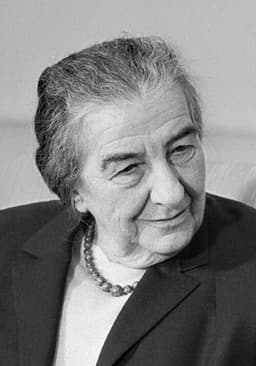
Golda Meir
Politician · Modern
55.8Total
Basic Information
Born
1900
1898
Died
1983
1978
Era
Modern
Modern
Nationality
Argentina
Israel
Occupation
Politician
Politician
Civilization
Western
Middle Eastern
Score Comparison
Military (10%)
48.2
45.0
Political (20%)
43.7
72.0
Influence (20%)
47.9
55.0
Legacy (20%)
36.7
54.0
Leadership (15%)
45.0
72.0
Strategy (15%)
42.4
25.0
TOTAL
43.5
55.8
Arturo Umberto Illia — Complete Timeline
1963 AD
Election as President of ArgentinaPolitical Action◆ Major
Arturo Umberto Illia was elected President of Argentina on July 7, 1963, representing the Uni
ElectionPresidencyArgentina
Impact: national
Annulment of oil contracts with foreign companiesPolitical Action◆ Major
In November 1963, President Illia annulled oil contracts signed with foreign companies under the previous government of Arturo Frondizi. This decision asserted national sovereignty over oil resources but strained relations with foreign investors and the United States.
Oil PolicyNationalismEconomic Policy
Impact: national
1964 AD
Implementation of the Ley de Salario Mínimo, Vital y MóvilReform◆ Major
Illia's government implemented the Ley de Salario M
Labor ReformMinimum WageSocial Policy
Impact: nationalconstructive
1966 AD
Overthrow in the 1966 Argentine coup d'étatPolitical Action◆ Major
On June 28, 1966, President Illia was overthrown in a military coup led by General Juan Carlos Ongan
Coup d'étatMilitary DictatorshipDemocracy
Impact: nationaldestructive
Return to civilian life and political exilePolitical Action
After his overthrow, Illia went into political exile, living quietly in Buenos Aires. He remained a symbol of democratic resistance against the military regime, though he did not actively lead opposition movements. He returned to public life only after the restoration of democracy.
ExileDemocracyResistance
Impact: nationaldestructive
Golda Meir — Complete Timeline
1969 AD
Appointment as Prime Minister of IsraelPolitical Action◆ Major
Golda Meir became Prime Minister of Israel after the death of Levi Eshkol. She was the first and only woman to hold the office, leading the country during a period of significant tension and conflict in the Middle East.
Prime MinisterFirst womanLeadership
Impact: national
1973 AD
Yom Kippur WarWar
Meir led Israel during the Yom Kippur War, when Egypt and Syria launched a surprise attack on the holiest day of the Jewish calendar. Israel initially suffered heavy losses but eventually repelled the attacks, though the war exposed intelligence failures.
WarSurprise attackIntelligence failure
Impact: regionaltragic
1974 AD
Resignation after the Agranat CommissionPolitical Action◆ Major
Following the Yom Kippur War, the Agranat Commission criticized the government's handling of the conflict. Meir resigned as Prime Minister in 1974, taking responsibility for the failures, though she remained a respected figure in Israeli politics.
ResignationAccountabilityWar aftermath
Impact: nationaltragic
Expert Analysis
Origins
Arturo Umberto Illia was born on August 4, 1900, in Pergamino, Argentina, to Italian immigrants. He studied medicine at the University of Buenos Aires, graduating in 1927, and worked as a physician in Cruz del Eje, Córdoba. His early career combined medical practice with local politics, joining the Radical Civic Union (UCR). Golda Meir was born on May 3, 1898, in Kyiv, Russian Empire (now Ukraine), to a Jewish family. She emigrated to the United States in 1906 and later to Palestine in 1921. Meir was educated at a teachers' seminary in Milwaukee and became active in Zionist labor politics, working on a kibbutz and rising through the ranks of Mapai.
Rise to Power
Illia's political ascent was gradual. He served as a provincial legislator and national deputy for the UCR. In 1963, he ran for president as the candidate of the Unión Cívica Radical del Pueblo (UCRP) after the military allowed elections. He won with only 25% of the vote due to Peronist proscription. Meir's rise was more dramatic. She signed Israel's Declaration of Independence in 1948, served as Minister of Labor (1949–1956), Foreign Minister (1956–1966), and became Prime Minister in 1969 after Levi Eshkol's death, winning a leadership contest within the Labor Party.
Leadership & Governance
Illia's governance focused on restoring democratic institutions and economic nationalism. He annulled oil contracts with foreign companies in 1963, arguing they were signed under duress, and implemented a minimum wage law (Ley de Salario Mínimo) in 1964. His style was conciliatory but slow; he sought to reverse the policies of his predecessor without strong political backing. Meir led with a firm, pragmatic approach. She prioritized national security and maintained the Golda Meir administration's policy of territorial compromise. During the Yom Kippur War, she authorized the mobilization of reserves and oversaw Israel's counteroffensive. Her political score of 72.0 reflects her ability to navigate coalition politics, while Illia's political score of 43.7 indicates his struggles with a divided congress.
Triumph & Tragedy
Illia's greatest success was the annulment of oil contracts, which asserted national sovereignty, and the minimum wage law, which improved worker conditions. His greatest failure was his inability to prevent the 1966 coup; his government was perceived as weak, and the military under General Juan Carlos Onganía overthrew him without significant resistance. Meir's triumph was leading Israel through the Yom Kippur War, ultimately achieving a military reversal despite initial setbacks. Her tragedy was the intelligence failure before the war; the Agranat Commission criticized her government, leading to her resignation in 1974. Meir scored 45.0 in military, while Illia scored 48.2, but Meir's leadership score of 72.0 far exceeds Illia's 45.0.
Character & Destiny
Illia was known for his honesty and humility, but also for indecisiveness. He refused to use authoritarian measures to stay in power, believing in democratic process. This character led to his overthrow—he ordered police not to resist the coup. Meir was determined and often blunt, earning the nickname "the only man in the cabinet." Her stubbornness may have contributed to the intelligence failures, as she dismissed warnings about an impending attack. Her character shaped her destiny: she resigned taking responsibility, a rare act of accountability.
Legacy
Illia's legacy is that of a democratic martyr in Argentina. His overthrow is seen as a blow to democracy; his policies were reversed by the military regime. Today, he is remembered as a symbol of constitutional rule, but his concrete achievements were short-lived. Meir's legacy is more enduring. She remains a global icon for women in leadership and is remembered for her role in Israel's survival. Her influence score of 55.0 and legacy score of 54.0 surpass Illia's 36.7. The policies she championed—such as building settlements and maintaining a strong defense—continue to shape Israeli politics.
Conclusion
While Illia was a principled democrat who attempted reform, his impact was limited by his overthrow and the reversal of his policies. Golda Meir, with a total score of 55.8 versus Illia's 43.5, had greater influence on global history. Her leadership during the Yom Kippur War altered the balance of power in the Middle East, and her legacy as a female prime minister broke barriers. Illia's story is a cautionary tale of democratic fragility, but Meir's is one of crisis management and endurance. Therefore, Golda Meir had a more substantial and lasting impact on world events.
Rankings
🥇
Golda MeirLeader
Mil: 45.0Pol: 72.0Inf: 55.0
55.8
🥈
Arturo Umberto Illia
Mil: 48.2Pol: 43.7Inf: 47.9
43.5
+12.3 behind
How This Comparison Works
Algorithm
Each figure is scored on 6 dimensions (0—100 scale) based on structured historical data: Military (10%), Political (20%), Influence (20%), Legacy (20%), Leadership (15%), Strategy (15%). The weighted total produces the final ranking.
Data Sources
Scores are computed from structured sub-indicators in the database. Scale factors adjust for era (Ancient ×0.85, Modern ×1.0) and civilization size (Eastern ×1.05, Other ×0.80) to account for differences in population and military scale.
Maximum 3 Figures
Comparisons are limited to 2—3 figures to ensure readability and statistical meaningfulness.
Error Margins
±5 points per dimension — Sub-scores are derived from historical records with inherent uncertainty. Two figures within 5 points on a dimension should be considered roughly equivalent in that area.
Total Score Accuracy
±3 points overall — The weighted combination of 6 dimensions produces a total score with approximately ±3 points of uncertainty. Differences of less than 3 points are not statistically significant— the figures are effectively tied.
Known Limitations
- Historical records are incomplete and uneven across civilizations
- Figures from oral-tradition societies may be underrepresented
- Occupation labels can misclassify multi-role figures
- Scores measure capability and impact, not moral character
- Quantitative scoring is a comparison tool, not absolute truth
Capability Radar
Military (10%) — Battles & Warfare
Battles
29
0
Win Rate
34
0
Expansion
36
15
Political (20%) — Governance & Reform
Reform
35
55
Diplomacy
40
70
Economy
30
60
Influence (20%) — Cultural & Global Reach
Cultural
15
55
Global
10
60
Legacy (20%) — Historical Impact
Historical
20
65
Longevity
10
50
Leadership (15%) — Power & Stability
Tenure
20
60
Stability
15
50
Strategy (15%) — Tactics & Innovation
Strategy
39
10
Tactics
40
0
Reform
43
20
Similar Comparisons
Comments & Discussion
No comments yet. Be the first to share your thoughts!