Loading...
Desmond Tutu vs Julius Caesar
Julius Caesar leads by 25.4 pts · 2 figures compared
…
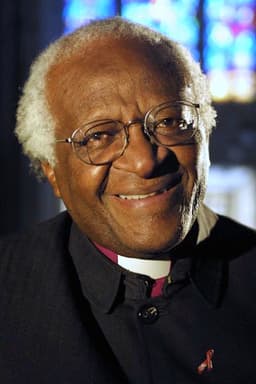
Desmond Tutu
Politician · Modern
57.4Total

Julius Caesar
General · Ancient
82.8Total
Basic Information
Born
1931
-100
Died
—
-44
Era
Modern
Ancient
Nationality
South Africa
Roman Republic
Occupation
Politician
General
Civilization
Other
Western
Score Comparison
Military (10%)
28.3
88.0
Political (20%)
53.8
78.0
Influence (20%)
75.0
85.0
Legacy (20%)
55.0
82.0
Leadership (15%)
68.0
80.0
Strategy (15%)
37.6
85.0
TOTAL
57.4
82.8
Desmond Tutu — Complete Timeline
1984 AD
Awarded the Nobel Peace PrizeCultural◆ Major
Desmond Tutu received the Nobel Peace Prize for his nonviolent opposition to apartheid in South Africa. The award recognized his leadership in the anti-apartheid movement and his role as a moral voice for reconciliation.
Nobel PrizeAnti-ApartheidPeace
Impact: globalconstructive
1986 AD
Appointed Archbishop of Cape TownPolitical Action◆ Major
Tutu became the first black Anglican Archbishop of Cape Town, the highest position in the Anglican Church of Southern Africa. This elevated his platform to advocate against apartheid and for human rights.
Church LeadershipAnti-Apartheid
Impact: nationalconstructive
1989 AD
Led the Defiance Campaign against Pass LawsPolitical Action◆ Major
Tutu led a march in Cape Town protesting the pass laws, which restricted black South Africans' movement. The protest was met with police violence, but it galvanized international opposition to apartheid.
ProtestPass LawsAnti-Apartheid
Impact: nationalconstructive
1995 AD
Chaired the Truth and Reconciliation CommissionPolitical Action
Tutu chaired the Truth and Reconciliation Commission, established by the post-apartheid government to investigate human rights abuses during apartheid. The commission promoted restorative justice and national healing.
Truth CommissionPost-ApartheidReconciliation
Impact: nationalconstructive
Julius Caesar — Complete Timeline
58 BC
Gallic WarsWar◆ Major
Caesar, as proconsul of Gaul, launched a series of campaigns that conquered all of Gaul (modern France, Belgium, and parts of Switzerland). He fought numerous battles, including against the Helvetii, the Belgae, and the Gallic chieftain Vercingetorix. The wars brought immense wealth and a loyal army to Caesar.
Gallic WarsConquestRoman Expansion
Impact: regional
49 BC
Crossing the RubiconPolitical Action◆ Major
Caesar led Legio XIII across the Rubicon River into Italy, defying the Roman Senate's order to disband his army. This act triggered a civil war against Pompey and the Optimates, ultimately leading to Caesar's dictatorship and the end of the Roman Republic.
Roman Civil WarEnd of RepublicPower Struggle
Impact: global
48 BC
Battle of PharsalusWar◆ Major
Caesar's outnumbered army defeated the larger forces of Pompey the Great at Pharsalus in Greece. Caesar's tactical use of a reserve line to counter Pompey's cavalry charge proved decisive. Pompey fled to Egypt, where he was assassinated, leaving Caesar as the undisputed master of the Roman world.
Roman Civil WarBattleDecisive Victory
Impact: regional
44 BC
Appointment as Dictator for LifePolitical Action◆ Major
The Roman Senate appointed Caesar dictator perpetuo (dictator for life), granting him unprecedented personal power. This move concentrated military, legislative, and judicial authority in one person, effectively ending the Roman Republic's traditional system of checks and balances and alarming many senators.
DictatorshipEnd of RepublicPower Consolidation
Impact: regionaldestructive
Assassination on the Ides of MarchPolitical Action◆ Major
A group of Roman senators, led by Marcus Junius Brutus and Gaius Cassius Longinus, stabbed Caesar to death at a meeting of the Senate in the Theatre of Pompey. The assassination was intended to restore the Republic, but instead triggered another civil war that led to the rise of the Roman Empire.
AssassinationRoman PoliticsEnd of Republic
Impact: globaldestructive
Expert Analysis
desmond-tutu-vs-julius-caesar
### The General and the Peacemaker
On the Ides of March, 44 BCE, a dictator lay bleeding on the floor of the Roman Senate, stabbed twenty-three times by men he had once called friends. In 1984, a small, bespectacled Anglican archbishop stood before the world in Oslo, accepting the Nobel Peace Prize for his struggle against an equally entrenched tyranny. Julius Caesar and Desmond Tutu could not have been more different in method or mission. One conquered nations with legions; the other conquered a conscience with words. Yet both faced the same fundamental question: how does a single person bend the arc of history toward their vision of justice? Their answers reveal the chasm between the sword and the cross, between the general who remade the world through blood and the peacemaker who remade it through forgiveness.
### Origins
Born in 100 BCE into a patrician family of declining fortune, Gaius Julius Caesar grew up in a Rome that was already tearing itself apart. The Republic was a cauldron of civil strife, class warfare, and senatorial corruption. Caesar’s aunt had married Gaius Marius, a populist general who had reformed the army and challenged the aristocracy. From childhood, Caesar absorbed the lesson that power came not from ancient lineage alone, but from military glory and the loyalty of soldiers. He was a man of the Forum and the battlefield, trained in rhetoric and ruthless ambition.
Desmond Mpilo Tutu was born in 1931 in Klerksdorp, South Africa, a small mining town. His father was a teacher, his mother a domestic worker. The world Tutu entered was one of legalized racial oppression, where a black child could be arrested for walking on the wrong sidewalk. He contracted polio as a boy and nearly died. Tutu’s early life was shaped not by the grandeur of empire, but by the daily humiliations of apartheid. He wanted to be a doctor, but his family could not afford the tuition. Instead, he became a teacher, then a priest. Where Caesar learned to command armies, Tutu learned to comfort the afflicted.
### Rise to Power
Caesar’s path was forged in debt and danger. He fled Rome to avoid the dictator Sulla’s proscriptions, served as a military tribune in Asia, and was captured by pirates. He famously told his captors that he would return and crucify them—and he did. Back in Rome, he climbed the political ladder: quaestor, aedile, pontifex maximus, praetor. His real breakthrough came in 58 BCE, when he was appointed governor of Gaul. Over the next eight years, he conquered a territory larger than Italy, slaughtering perhaps a million people and enslaving another million. His *Commentaries on the Gallic War* were propaganda masterpieces, turning a brutal campaign into a heroic epic. When the Senate ordered him to disband his army, he crossed the Rubicon River in 49 BCE, igniting a civil war. He defeated his rival Pompey, installed himself as dictator, and never looked back.
Tutu’s rise was quieter but no less determined. After ordination, he studied in England, returning to South Africa in the 1970s as apartheid’s grip tightened. He became Dean of Johannesburg, then Bishop of Lesotho. His voice grew louder, his sermons more pointed. In 1984, he was awarded the Nobel Peace Prize, an international platform that transformed him from a local activist into a global moral authority. Two years later, he became the first black Anglican Archbishop of Cape Town. He did not cross a river with an army; he crossed the world with a message.
### Leadership & Governance
Caesar governed as he conquered: with speed, audacity, and a cold calculation of power. As dictator, he reformed the calendar (giving us the Julian calendar), centralized tax collection, granted citizenship to Gauls and Spaniards, and initiated massive public works. His military genius was absolute—he won battles against superior forces through speed, surprise, and the personal loyalty of his troops. But his political wisdom was flawed. He pardoned his enemies, but he also accumulated unprecedented powers: dictator for life, perpetual tribune, censor. He treated the Senate as a rubber stamp, and his contempt for republican traditions sowed the seeds of his destruction.
Tutu governed through moral suasion. As chair of the Truth and Reconciliation Commission from 1995, he presided over hearings where apartheid’s torturers and their victims sat in the same room. He wept openly, prayed fervently, and insisted on restorative justice over retribution. His strategy was not military but spiritual: he believed that truth-telling could heal a nation. Where Caesar used the sword to enforce order, Tutu used forgiveness to build peace. It was a gamble of a different kind—and it worked.
### Triumph & Tragedy
Caesar’s greatest triumph was his conquest of Gaul, a feat that made Rome the undisputed master of western Europe. His greatest tragedy was his assassination on the Ides of March, 44 BCE. He had been warned by a soothsayer, but he walked into the Senate anyway. His murder did not restore the Republic; it plunged Rome into another civil war, ending with the rise of his adopted heir, Octavian, as the first emperor. Caesar’s triumph became his tragedy: he destroyed the very system he sought to master.
Tutu’s greatest triumph was the end of apartheid. His nonviolent defiance against pass laws in 1989, his unyielding opposition to the regime, and his moral clarity helped create the conditions for Nelson Mandela’s release and the 1994 democratic elections. His greatest tragedy was the slow realization that apartheid’s wounds would not heal easily. The Truth and Reconciliation Commission exposed horrors—children tortured, families destroyed—but economic inequality persisted, and Tutu later expressed bitter disappointment with the ANC’s corruption. He had hoped for a rainbow nation; he got a gray one.
### Character & Destiny
Caesar was a man of supreme confidence, charm, and ruthlessness. He was generous to his soldiers, merciful to defeated enemies, and utterly indifferent to the lives of those who stood in his way. His personality drove him to take risks that no rational general would take—crossing the Rubicon, fighting in the streets of Alexandria, pardoning Brutus. He believed in his own star, and it led him to the top of the world and to the floor of the Senate.
Tutu was a man of infectious laughter, deep humility, and fierce moral courage. He called himself “a little man” and joked about his short stature. But his personality was forged in the furnace of injustice. He could not be bought, silenced, or intimidated. He believed that God was on the side of the oppressed, and that love would eventually conquer hate. His destiny was not to seize power, but to speak truth to it.
### Legacy
Caesar’s legacy is the Roman Empire. His name became synonymous with imperial power: *Kaiser* in German, *Tsar* in Russian. His military tactics are still studied at war colleges. His reforms outlived him by centuries. But he also bequeathed a warning: that the concentration of power in one man, however brilliant, ends in blood.
Tutu’s legacy is the idea that justice and mercy are not opposites. He showed that a nation can confront its past without descending into revenge. The Truth and Reconciliation Commission became a model for post-conflict societies from Rwanda to Canada. His name is synonymous with moral courage, not military might.
### Conclusion
Caesar and Tutu faced the same world—a world of cruelty, oppression, and human suffering. One chose to conquer it; the other chose to heal it. Caesar’s path led to a throne built on bones; Tutu’s led to a peace built on tears. Both changed history, but in opposite directions. Perhaps the deepest difference lies in what they asked of others: Caesar demanded obedience, Tutu demanded hope. In the end, Tutu’s legacy may prove more durable, for while empires crumble and generals are forgotten, the memory of a man who forgave his enemies endures long after the swords have rusted.
Rankings
🥇
Julius CaesarLeader
Mil: 88.0Pol: 78.0Inf: 85.0
82.8
🥈
Desmond Tutu
Mil: 28.3Pol: 53.8Inf: 75.0
57.4
+25.4 behind
How This Comparison Works
Algorithm
Each figure is scored on 6 dimensions (0—100 scale) based on structured historical data: Military (10%), Political (20%), Influence (20%), Legacy (20%), Leadership (15%), Strategy (15%). The weighted total produces the final ranking.
Data Sources
Scores are computed from structured sub-indicators in the database. Scale factors adjust for era (Ancient ×0.85, Modern ×1.0) and civilization size (Eastern ×1.05, Other ×0.80) to account for differences in population and military scale.
Maximum 3 Figures
Comparisons are limited to 2—3 figures to ensure readability and statistical meaningfulness.
Error Margins
±5 points per dimension — Sub-scores are derived from historical records with inherent uncertainty. Two figures within 5 points on a dimension should be considered roughly equivalent in that area.
Total Score Accuracy
±3 points overall — The weighted combination of 6 dimensions produces a total score with approximately ±3 points of uncertainty. Differences of less than 3 points are not statistically significant— the figures are effectively tied.
Known Limitations
- Historical records are incomplete and uneven across civilizations
- Figures from oral-tradition societies may be underrepresented
- Occupation labels can misclassify multi-role figures
- Scores measure capability and impact, not moral character
- Quantitative scoring is a comparison tool, not absolute truth
Capability Radar
Military (10%) — Battles & Warfare
Battles
21
95
Win Rate
22
92
Expansion
28
97
Political (20%) — Governance & Reform
Reform
70
90
Diplomacy
85
85
Economy
20
82
Influence (20%) — Cultural & Global Reach
Cultural
80
88
Global
80
94
Legacy (20%) — Historical Impact
Historical
75
95
Longevity
70
96
Leadership (15%) — Power & Stability
Tenure
30
75
Stability
75
60
Strategy (15%) — Tactics & Innovation
Strategy
32
94
Tactics
36
96
Reform
38
88
Similar Comparisons
Comments & Discussion
TheArchivist6/17/2026
As a data skeptic, I'm calling nonsense on this comparison's premise. You're comparing a man whose documented life spans 66 years with another who lived 55, yet Julius Caesar's historical footprint is infinitely larger. Tutu's Wikipedia article might be longer, but that's modern media bias, not historical substance. The analysis claims Tutu "conquered a conscience with words" - show me the legislation he personally drafted. He was a symbol, not a system-builder. Caesar literally designed Rome's
战术家老李6/17/2026
说实话,我真受不了这种强行类比。凯撒是什么人?他是带着第13军团跨过卢比孔河、跟庞培在法萨卢斯决战的人。图图是个穿法袍拿和平奖的神父。分析说"一人用长剑重塑世界,一人用宽恕重塑世界"——拜托,图图用宽恕重塑了什么?南非黑人的经济地位改善了吗?土地改革到现在都没完成。要比较就公平点,别拿道德优越感来抹杀军事成就。凯撒是实干家,图图是精神领袖,根本不是一个维度的存在。|
LegioXequestrian6/17/2026
As a military historian, this comparison insults my intelligence. Caesar commanded at Alesia, besieging 80,000 Gauls while simultaneously fighting off a 250,000-strong relief army. His tactical genius engineered a ring of fortifications with palisades, ditches, and booby traps that would be studied at West Point for centuries. Tutu's "We Will Not Forget" campaign was admirable, but it was moral suasion against a regime that ultimately negotiated. Caesar didn't negotiate—he annihilated resistance
寒窗书生6/17/2026
我作为古典学背景的人,觉得这个对比最大的问题在于混淆了"影响力"和"变革方式"。凯撒面对的是一个需要强人铁腕来收拾的共和国——元老院腐败,行省管理一团糟,喀提林阴谋刚镇压完。图图面对的是种族隔离制度,那是需要非暴力抵抗和国际舆论施压的道德困境。两个人都用对了工具:凯撒用罗马军团恢复秩序,图图用真理与和解委员会治愈创伤。问题是分析把图图拔得太高,好像道德比军事实用性更强——这完全忽略了不同时代的不同规则。|
南半球的炮灰6/17/2026
我是南非人,从小听我爸讲图图的故事。但说真的,这个分析把图图包装成了"用宽恕重塑世界"的神话,那是在有意忽略妥协的代价。图图领导的上层协商确实结束了隔离制度,但