Loading...
Desiderius vs Toghon Temur
Desiderius leads by 5.0 pts · 2 figures compared
…
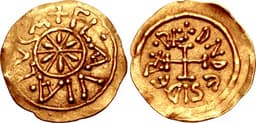
Desiderius
Emperor · Medieval
44.3Total
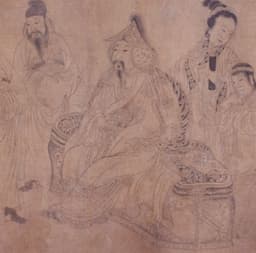
Toghon Temur
Emperor · Medieval
39.3Total
Basic Information
Born
710
1320
Died
786
1370
Era
Medieval
Medieval
Nationality
Lombards
China
Occupation
Emperor
Emperor
Civilization
Western
Eastern
Score Comparison
Military (10%)
45.0
21.2
Political (20%)
35.1
30.7
Influence (20%)
49.4
49.4
Legacy (20%)
40.8
40.0
Leadership (15%)
51.9
41.5
Strategy (15%)
41.7
39.6
TOTAL
44.3
39.3
Desiderius — Complete Timeline
756 AD
Alliance with the PapacyPolitical Action
Desiderius initially allied with Pope Stephen II, supporting the Papacy against the Lombard dukes of Spoleto and Benevento. This alliance helped secure his position as king, but later conflicts with the Papacy led to his downfall.
Papal AllianceLombard KingdomDiplomacy
Impact: regional
772 AD
Conflict with the Papacy over Papal StatesWar◆ Major
Desiderius invaded the Papal States, capturing several cities and threatening Rome. This aggression prompted Pope Adrian I to appeal to Charlemagne for aid, leading to the Frankish invasion of Italy and Desiderius's eventual defeat.
Papal StatesConflictLombard-Frankish War
Impact: regionaldestructive
773 AD
Defeated by Charlemagne at the Siege of PaviaWar
Charlemagne besieged Desiderius in Pavia, the Lombard capital. After a nine-month siege, Desiderius surrendered, ending Lombard independence. He was captured and exiled to a Frankish monastery, marking the end of the Lombard Kingdom.
Lombard KingdomCharlemagneConquest
Impact: regionaltragic
774 AD
Exile to Corbie AbbeyOther
After his surrender, Desiderius was exiled to the Abbey of Corbie in Francia. He spent the remainder of his life there as a monk, dying in obscurity. His exile symbolized the complete subjugation of the Lombards by the Franks.
ExileLombard KingdomEnd of Dynasty
Impact: regionaltragic
Toghon Temur — Complete Timeline
1333 AD
Accession to the Yuan thronePolitical Action◆ Major
Toghon Temur was enthroned as Emperor of the Yuan dynasty at age 13, following the death of his predecessor and the fall of the El Temur regency. His reign would be the last of the Yuan dynasty in China.
Yuan dynastySuccessionLast emperor
Impact: national
1340 AD
Overthrow of Chancellor BayanPolitical Action◆ Major
Toghon Temur, with support from Bayan's nephew Toqto'a, orchestrated a coup that removed the powerful chancellor Bayan from power. This restored imperial authority and reversed Bayan's anti-Chinese policies.
CoupImperial authorityBayan
Impact: nationalconstructive
1351 AD
Outbreak of the Red Turban RebellionWar
Widespread rebellions, known as the Red Turban Rebellion, erupted across southern China against Yuan rule. Toghon Temur's government struggled to suppress the revolts, which were fueled by famine, corruption, and ethnic tensions.
RebellionYuan declineRed Turbans
Impact: nationaltragic
1368 AD
Flight to Shangdu and loss of ChinaWar
As Ming forces under Zhu Yuanzhang approached Dadu (Beijing), Toghon Temur fled north to Shangdu, the Yuan summer capital. This marked the end of Mongol rule over China proper and the beginning of the Northern Yuan dynasty.
Ming conquestYuan collapseFlight
Impact: globaltragic
1370 AD
Death in exileOther◆ Major
Toghon Temur died in Yingchang, a Mongol stronghold in Inner Mongolia, two years after fleeing China. His death left the Northern Yuan dynasty in a weakened state, unable to reclaim the lost territories.
DeathExileNorthern Yuan
Impact: regionaltragic
Expert Analysis
Origins
Desiderius, born circa 710 in Brescia, was a Lombard nobleman who became king of the Lombards in 756. He rose from duke of Tuscany to the throne after the death of King Aistulf. His early life was shaped by Lombard expansion in Italy and the complex relationship with the Papacy. Toghon Temur, born 1320 in Mongolia, was the last emperor of the Yuan dynasty. He was installed at age 13 after a period of regency and factional strife. His upbringing was marked by court intrigue and the declining power of Mongol rule in China.
Rise to Power
Desiderius secured his throne through a combination of diplomacy and military action. He initially allied with Pope Stephen II, helping to secure the Papacy against rival Lombard dukes. This alliance allowed him to consolidate power. However, his later aggression against the Papal States (invading cities like Ravenna and threatening Rome) prompted Pope Adrian I to seek help from Charlemagne. Toghon Temur's rise was more chaotic. He became emperor in 1333 after the overthrow of the powerful chancellor El Temur. His early reign was dominated by the regent Bayan, who ruled harshly. In 1340, Toghon Temur allied with Bayan's nephew Toqto'a to oust Bayan, restoring some imperial authority. But the empire was already weakened by corruption and rebellion.
Leadership & Governance
Desiderius ruled the Lombard kingdom with a focus on territorial expansion and maintaining Lombard independence. His governance style was militaristic, relying on the Lombard nobility. He attempted to exert control over the Papacy by supporting antipopes, but this backfired. His score of 51.9 in leadership reflects his ability to hold power but his failure in strategic diplomacy. Toghon Temur, with a leadership score of 41.5, was a more passive ruler. He delegated much authority to chancellors like Toqto'a, who implemented some reforms, but the emperor's lack of direct control allowed corruption and rebellion to fester. The Red Turban Rebellion (1351-1368) exposed the Yuan's inability to govern effectively.
Triumph & Tragedy
Desiderius's greatest triumph was initially securing the Lombard throne and expanding his realm. He successfully captured several Papal cities. However, his tragedy was the nine-month Siege of Pavia (773-774), where Charlemagne besieged him. Desiderius surrendered, was exiled to Corbie Abbey, and died as a monk. His military score of 45.0 and strategy of 41.7 reflect his inability to counter Charlemagne's superior forces. Toghon Temur's triumph was the overthrow of Bayan, which briefly restored imperial power. But his tragedy was the loss of China. In 1368, as Ming forces approached Dadu (Beijing), he fled to Shangdu, then Yingchang, where he died in 1370. His flight ended Mongol rule in China, reducing the Yuan to the Northern Yuan dynasty. His military score of 21.2 and strategy of 39.6 highlight his failure to suppress rebellions.
Character & Destiny
Desiderius was ambitious and aggressive, but his miscalculation of Charlemagne's response to his Papal aggression sealed his fate. He was decisive but lacked the strategic depth to manage Frankish intervention. Toghon Temur was indecisive and reliant on advisors. His character, marked by a tendency to avoid confrontation, led to his flight rather than a final stand. Historical assessments often view him as a weak ruler who presided over the collapse of Mongol power in China.
Legacy
Desiderius's legacy is that of the last Lombard king. His defeat by Charlemagne ended Lombard independence and integrated Italy into the Carolingian Empire. He is remembered as a footnote in Charlemagne's rise. His legacy score of 40.8 reflects his limited impact. Toghon Temur's legacy is more significant. He is the last Yuan emperor, and his flight marks the transition from Mongol to Ming rule in China. The Northern Yuan dynasty continued in Mongolia, but his reign is seen as a symbol of decline. His legacy score of 49.4 matches Desiderius's influence score, but his impact on Chinese history is greater.
Conclusion
While Desiderius scored higher overall (44.3 vs 39.3), Toghon Temur's reign had a more profound historical impact. Desiderius's defeat was a local event in Italian history, whereas Toghon Temur's loss of China reshaped East Asian geopolitics for centuries. Toghon Temur's failure ended Mongol dominance in China and ushered in the Ming dynasty, a major turning point. Thus, despite lower scores, Toghon Temur's greater influence and legacy make him the more significant figure in world history.
Rankings
🥇
DesideriusLeader
Mil: 45.0Pol: 35.1Inf: 49.4
44.3
🥈
Toghon Temur
Mil: 21.2Pol: 30.7Inf: 49.4
39.3
+5.0 behind
How This Comparison Works
Algorithm
Each figure is scored on 6 dimensions (0—100 scale) based on structured historical data: Military (10%), Political (20%), Influence (20%), Legacy (20%), Leadership (15%), Strategy (15%). The weighted total produces the final ranking.
Data Sources
Scores are computed from structured sub-indicators in the database. Scale factors adjust for era (Ancient ×0.85, Modern ×1.0) and civilization size (Eastern ×1.05, Other ×0.80) to account for differences in population and military scale.
Maximum 3 Figures
Comparisons are limited to 2—3 figures to ensure readability and statistical meaningfulness.
Error Margins
±5 points per dimension — Sub-scores are derived from historical records with inherent uncertainty. Two figures within 5 points on a dimension should be considered roughly equivalent in that area.
Total Score Accuracy
±3 points overall — The weighted combination of 6 dimensions produces a total score with approximately ±3 points of uncertainty. Differences of less than 3 points are not statistically significant— the figures are effectively tied.
Known Limitations
- Historical records are incomplete and uneven across civilizations
- Figures from oral-tradition societies may be underrepresented
- Occupation labels can misclassify multi-role figures
- Scores measure capability and impact, not moral character
- Quantitative scoring is a comparison tool, not absolute truth
Capability Radar
Military (10%) — Battles & Warfare
Battles
30
15
Win Rate
25
10
Expansion
30
5
Political (20%) — Governance & Reform
Reform
30
10
Diplomacy
30
15
Economy
30
10
Influence (20%) — Cultural & Global Reach
Cultural
20
20
Global
15
15
Legacy (20%) — Historical Impact
Historical
25
25
Longevity
20
15
Leadership (15%) — Power & Stability
Tenure
40
40
Stability
25
10
Strategy (15%) — Tactics & Innovation
Strategy
25
10
Tactics
30
10
Reform
20
5
Similar Comparisons
Comments & Discussion
No comments yet. Be the first to share your thoughts!