Loading...
Desiderius vs Yongle Emperor
Yongle Emperor leads by 29.4 pts · 2 figures compared
…
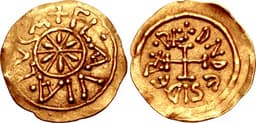
Desiderius
Emperor · Medieval
44.3Total
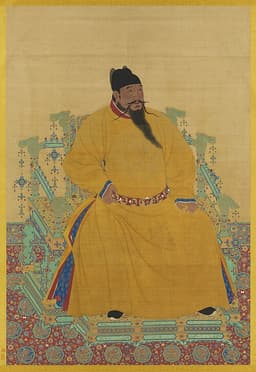
Yongle Emperor
Emperor · Medieval
73.7Total
Basic Information
Born
710
1360
Died
786
1424
Era
Medieval
Medieval
Nationality
Lombards
China
Occupation
Emperor
Emperor
Civilization
Western
Eastern
Score Comparison
Military (10%)
45.0
85.0
Political (20%)
35.1
78.0
Influence (20%)
49.4
75.0
Legacy (20%)
40.8
65.0
Leadership (15%)
51.9
78.0
Strategy (15%)
41.7
68.0
TOTAL
44.3
73.7
Desiderius — Complete Timeline
756 AD
Alliance with the PapacyPolitical Action
Desiderius initially allied with Pope Stephen II, supporting the Papacy against the Lombard dukes of Spoleto and Benevento. This alliance helped secure his position as king, but later conflicts with the Papacy led to his downfall.
Papal AllianceLombard KingdomDiplomacy
Impact: regional
772 AD
Conflict with the Papacy over Papal StatesWar◆ Major
Desiderius invaded the Papal States, capturing several cities and threatening Rome. This aggression prompted Pope Adrian I to appeal to Charlemagne for aid, leading to the Frankish invasion of Italy and Desiderius's eventual defeat.
Papal StatesConflictLombard-Frankish War
Impact: regionaldestructive
773 AD
Defeated by Charlemagne at the Siege of PaviaWar
Charlemagne besieged Desiderius in Pavia, the Lombard capital. After a nine-month siege, Desiderius surrendered, ending Lombard independence. He was captured and exiled to a Frankish monastery, marking the end of the Lombard Kingdom.
Lombard KingdomCharlemagneConquest
Impact: regionaltragic
774 AD
Exile to Corbie AbbeyOther
After his surrender, Desiderius was exiled to the Abbey of Corbie in Francia. He spent the remainder of his life there as a monk, dying in obscurity. His exile symbolized the complete subjugation of the Lombards by the Franks.
ExileLombard KingdomEnd of Dynasty
Impact: regionaltragic
Yongle Emperor — Complete Timeline
1399 AD
Jingnan CampaignWar◆ Major
Zhu Di, Prince of Yan, launched a rebellion against his nephew the Jianwen Emperor. After three years of civil war, Zhu Di captured Nanjing and usurped the throne, becoming the Yongle Emperor.
Civil warUsurpationMing dynasty
Impact: nationaldestructive
1405 AD
Commissioning of the Zheng He voyagesCultural◆ Major
Yongle commissioned Admiral Zheng He to lead a series of maritime expeditions across the Indian Ocean. The treasure fleets visited Southeast Asia, India, the Middle East, and East Africa, projecting Ming power and establishing tributary relations.
Maritime explorationDiplomacyZheng He
Impact: globalconstructive
1407 AD
Conquest of AnnamWar◆ Major
Yongle sent Ming armies to invade Annam (northern Vietnam) after a succession dispute. The Ming annexed the region as the province of Jiaozhi, but faced prolonged resistance from Vietnamese forces.
InvasionVietnamMing expansion
Impact: regionaldestructive
1408 AD
Compilation of the Yongle EncyclopediaCultural◆ Major
Yongle ordered the compilation of the Yongle Encyclopedia, a massive collection of Chinese knowledge. The work comprised over 11,000 volumes and 370 million characters, covering history, philosophy, science, and literature.
EncyclopediaCultural projectScholarship
Impact: globalconstructive
1410 AD
Campaigns against the MongolsWar◆ Major
Yongle personally led five military campaigns into the Mongolian steppe against the remnants of the Yuan dynasty. These expeditions aimed to neutralize the Mongol threat to the northern border and assert Ming dominance.
Military campaignsMongolsBorder security
Impact: regional
1421 AD
Relocation of the capital to BeijingPolitical Action◆ Major
Yongle formally moved the Ming capital from Nanjing to Beijing. He ordered the construction of the Forbidden City and expanded the city's defenses, shifting the political center of China northward.
Capital relocationUrban planningForbidden City
Impact: nationalconstructive
Expert Analysis
Origins
Desiderius, born circa 720, rose from a Lombard noble family in northern Italy. Little is known of his early life before he became duke of Tuscany. He secured the throne in 756 after the death of King Aistulf, with support from the Papacy. His background was rooted in the fragmented Lombard kingdom, which had been a major power in Italy since the 6th century but was increasingly pressured by the Franks and the Papal States.
The Yongle Emperor, born Zhu Di on May 2, 1360, was the fourth son of the Hongwu Emperor, founder of the Ming dynasty. He grew up in the imperial court in Nanjing and was enfeoffed as Prince of Yan at age 10, with his base in Beijing. He received military training and governance experience, overseeing the northern frontier against Mongol remnants. His upbringing was steeped in the Confucian classics and military strategy, preparing him for eventual rule.
Rise to Power
Desiderius became king in 756, after Aistulf's death, with papal endorsement. He initially allied with Pope Stephen II, helping suppress rebellious Lombard dukes. However, his ambitions grew, and by 768 he sought to expand Lombard territory. He invaded the Papal States, capturing cities like Ravenna and threatening Rome. This brought him into conflict with Pope Adrian I, who appealed to Charlemagne for aid. Charlemagne, responding to the papal call, invaded Italy in 773. Desiderius retreated to Pavia, his capital, and withstood a nine-month siege. He surrendered in June 774, ending Lombard rule.
Yongle's rise was through the Jingnan Campaign (1399-1402). After the Hongwu Emperor's death, his grandson the Jianwen Emperor ascended and sought to reduce the power of princely fiefs. Zhu Di, Prince of Yan, rebelled, claiming the emperor was misled by corrupt officials. The civil war lasted three years, with Zhu Di's northern army defeating imperial forces. In 1402, he captured Nanjing; the Jianwen Emperor disappeared (possibly died in a palace fire). Zhu Di took the throne as the Yongle Emperor, meaning "Perpetual Happiness." He purged Jianwen's supporters and consolidated control.
Leadership & Governance
Desiderius ruled as a traditional Lombard monarch, relying on noble support and military force. He attempted to centralize power but faced internal opposition from dukes. His governance was reactionary, focused on territorial expansion rather than administrative reform. He lacked the diplomatic finesse to maintain alliances, alienating both the Papacy and the Franks. His leadership scored 51.9, reflecting moderate effectiveness but ultimate failure.
Yongle was an activist emperor who centralized Ming authority. He moved the capital from Nanjing to Beijing (1403-1420), constructing the Forbidden City and transforming Beijing into a political and military hub. He reorganized the bureaucracy, relying on eunuchs and scholar-officials. He commissioned the Yongle Encyclopedia (1403-1408), a massive 11,000-volume compendium of Chinese knowledge. His political score of 78.0 indicates strong governance. He also conducted the Ming treasure voyages under Zheng He (1405-1433), projecting Chinese power across the Indian Ocean. However, his conquest of Annam (1406-1427) drained resources and led to a protracted guerrilla war.
Triumph & Tragedy
Desiderius's triumph was initially securing the Lombard throne and expanding territory. His tragedy was his defeat by Charlemagne, which ended Lombard independence. He was exiled to Corbie Abbey, where he died as a monk around 786. His score of 44.3 total reflects his limited impact.
Yongle's triumphs include the construction of Beijing, the Zheng He voyages, and the Yongle Encyclopedia. The voyages reached as far as East Africa, establishing tributary relations and showcasing Ming wealth. However, the Annam conquest failed; Ming forces were expelled after 20 years of costly occupation. Also, his usurpation led to the purge of thousands of officials and their families. The treasure voyages were discontinued after his death, seen as wasteful. His legacy score of 65.0 is moderate, as many achievements were later reversed.
Character & Destiny
Desiderius was ambitious but politically short-sighted. He overestimated his military strength and underestimated Charlemagne's resolve. His decision to attack the Papal States was a strategic error, uniting his enemies. He chose to face siege in Pavia rather than seek a negotiated settlement, leading to total defeat. His character was that of a typical early medieval king, focused on immediate gains.
Yongle was ruthless, energetic, and visionary. He was a skilled military commander (military score 85.0) and a shrewd politician. His decision to move the capital to Beijing was strategic, placing the ruler near the northern frontier. However, his paranoia led to harsh purges. His strategy score of 68.0 reflects mixed long-term planning: the voyages and encyclopedia were forward-looking, but the Annam war was a quagmire. His destiny was to expand Ming influence but at great cost.
Legacy
Desiderius's legacy is minimal: he is remembered as the last Lombard king, a footnote in Charlemagne's rise. The Lombards were absorbed into the Frankish realm, and their distinct identity faded. His score of 40.8 in legacy reflects this obscurity.
Yongle's legacy is profound. The Forbidden City remains a symbol of Chinese imperial power. The Yongle Encyclopedia, though mostly lost, was a monumental scholarly work. The Zheng He voyages demonstrated China's naval capability, though they were later abandoned. The move to Beijing shaped China's political geography for centuries. His legacy score of 65.0 is higher, but tempered by the failure in Vietnam and the end of maritime exploration.
Conclusion
Yongle Emperor had a far greater impact than Desiderius, reflected in the score gap of 29.4 points. Desiderius was a minor figure whose defeat marked the end of a kingdom. Yongle transformed China's capital, sponsored exploration, and compiled knowledge. While both faced failures, Yongle's achievements reshaped East Asia, whereas Desiderius's reign was a short-lived episode. Yongle's total score of 73.7 versus Desiderius's 44.3 confirms this. The clear position is that Yongle was the more consequential ruler.
Rankings
🥇
Yongle EmperorLeader
Mil: 85.0Pol: 78.0Inf: 75.0
73.7
🥈
Desiderius
Mil: 45.0Pol: 35.1Inf: 49.4
44.3
+29.4 behind
How This Comparison Works
Algorithm
Each figure is scored on 6 dimensions (0—100 scale) based on structured historical data: Military (10%), Political (20%), Influence (20%), Legacy (20%), Leadership (15%), Strategy (15%). The weighted total produces the final ranking.
Data Sources
Scores are computed from structured sub-indicators in the database. Scale factors adjust for era (Ancient ×0.85, Modern ×1.0) and civilization size (Eastern ×1.05, Other ×0.80) to account for differences in population and military scale.
Maximum 3 Figures
Comparisons are limited to 2—3 figures to ensure readability and statistical meaningfulness.
Error Margins
±5 points per dimension — Sub-scores are derived from historical records with inherent uncertainty. Two figures within 5 points on a dimension should be considered roughly equivalent in that area.
Total Score Accuracy
±3 points overall — The weighted combination of 6 dimensions produces a total score with approximately ±3 points of uncertainty. Differences of less than 3 points are not statistically significant— the figures are effectively tied.
Known Limitations
- Historical records are incomplete and uneven across civilizations
- Figures from oral-tradition societies may be underrepresented
- Occupation labels can misclassify multi-role figures
- Scores measure capability and impact, not moral character
- Quantitative scoring is a comparison tool, not absolute truth
Capability Radar
Military (10%) — Battles & Warfare
Battles
30
85
Win Rate
25
90
Expansion
30
80
Political (20%) — Governance & Reform
Reform
30
90
Diplomacy
30
85
Economy
30
85
Influence (20%) — Cultural & Global Reach
Cultural
20
85
Global
15
75
Legacy (20%) — Historical Impact
Historical
25
85
Longevity
20
80
Leadership (15%) — Power & Stability
Tenure
40
85
Stability
25
80
Strategy (15%) — Tactics & Innovation
Strategy
25
85
Tactics
30
80
Reform
20
75
Similar Comparisons
Comments & Discussion
No comments yet. Be the first to share your thoughts!