Loading...
This comparison has not been analyzed yet.
One-time AI generation (~1 minute). Scores and timeline are already available below.
Desiderius vs Nare Maghann Konate
Desiderius leads by 2.9 pts · 2 figures compared
…
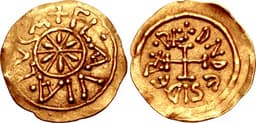
Desiderius
Emperor · Medieval
44.3Total

Nare Maghann Konate
Emperor · Medieval
41.4Total
Basic Information
Born
710
1150
Died
786
1218
Era
Medieval
Medieval
Nationality
Lombards
Mali Empire
Occupation
Emperor
Emperor
Civilization
Western
Other
Score Comparison
Military (10%)
45.0
22.6
Political (20%)
35.1
27.9
Influence (20%)
49.4
53.3
Legacy (20%)
40.8
45.0
Leadership (15%)
51.9
45.0
Strategy (15%)
41.7
36.8
TOTAL
44.3
41.4
Desiderius — Complete Timeline
756 AD
Alliance with the PapacyPolitical Action
Desiderius initially allied with Pope Stephen II, supporting the Papacy against the Lombard dukes of Spoleto and Benevento. This alliance helped secure his position as king, but later conflicts with the Papacy led to his downfall.
Papal AllianceLombard KingdomDiplomacy
Impact: regional
772 AD
Conflict with the Papacy over Papal StatesWar◆ Major
Desiderius invaded the Papal States, capturing several cities and threatening Rome. This aggression prompted Pope Adrian I to appeal to Charlemagne for aid, leading to the Frankish invasion of Italy and Desiderius's eventual defeat.
Papal StatesConflictLombard-Frankish War
Impact: regionaldestructive
773 AD
Defeated by Charlemagne at the Siege of PaviaWar
Charlemagne besieged Desiderius in Pavia, the Lombard capital. After a nine-month siege, Desiderius surrendered, ending Lombard independence. He was captured and exiled to a Frankish monastery, marking the end of the Lombard Kingdom.
Lombard KingdomCharlemagneConquest
Impact: regionaltragic
774 AD
Exile to Corbie AbbeyOther
After his surrender, Desiderius was exiled to the Abbey of Corbie in Francia. He spent the remainder of his life there as a monk, dying in obscurity. His exile symbolized the complete subjugation of the Lombards by the Franks.
ExileLombard KingdomEnd of Dynasty
Impact: regionaltragic
Nare Maghann Konate — Complete Timeline
1190 AD
Became king of the Mandinka peoplePolitical Action◆ Major
Nare Maghann Konate became the king (faama) of the Mandinka people in the region of Kangaba. His rule laid the foundation for the future Mali Empire, though his kingdom faced threats from the Sosso Empire under Soumaoro Kante.
MandinkaKingship
Impact: regional
1217 AD
Fathered Sundiata KeitaOther◆ Major
Konate fathered Sundiata Keita, who would later become the founder of the Mali Empire. According to oral tradition, a prophecy foretold Sundiata's greatness, and Konate ensured his son's survival despite physical disabilities.
SundiataProphecy
Impact: regional
1218 AD
Defeated by Soumaoro KanteWar◆ Major
Konate's kingdom was conquered by Soumaoro Kante, the king of the Sosso Empire. Konate was killed in battle, and his family, including Sundiata, was forced into exile. This event set the stage for Sundiata's later rise.
Sosso EmpireConquest
Impact: regionaltragic
This comparison has not been analyzed yet.
One-time AI generation (~1 minute). Scores and timeline are already available below.
Rankings
🥇
DesideriusLeader
Mil: 45.0Pol: 35.1Inf: 49.4
44.3
🥈
Nare Maghann Konate
Mil: 22.6Pol: 27.9Inf: 53.3
41.4
+2.9 behind
How This Comparison Works
Algorithm
Each figure is scored on 6 dimensions (0—100 scale) based on structured historical data: Military (10%), Political (20%), Influence (20%), Legacy (20%), Leadership (15%), Strategy (15%). The weighted total produces the final ranking.
Data Sources
Scores are computed from structured sub-indicators in the database. Scale factors adjust for era (Ancient ×0.85, Modern ×1.0) and civilization size (Eastern ×1.05, Other ×0.80) to account for differences in population and military scale.
Maximum 3 Figures
Comparisons are limited to 2—3 figures to ensure readability and statistical meaningfulness.
Error Margins
±5 points per dimension — Sub-scores are derived from historical records with inherent uncertainty. Two figures within 5 points on a dimension should be considered roughly equivalent in that area.
Total Score Accuracy
±3 points overall — The weighted combination of 6 dimensions produces a total score with approximately ±3 points of uncertainty. Differences of less than 3 points are not statistically significant— the figures are effectively tied.
Known Limitations
- Historical records are incomplete and uneven across civilizations
- Figures from oral-tradition societies may be underrepresented
- Occupation labels can misclassify multi-role figures
- Scores measure capability and impact, not moral character
- Quantitative scoring is a comparison tool, not absolute truth
Capability Radar
Military (10%) — Battles & Warfare
Battles
30
10
Win Rate
25
10
Expansion
30
15
Political (20%) — Governance & Reform
Reform
30
20
Diplomacy
30
25
Economy
30
20
Influence (20%) — Cultural & Global Reach
Cultural
20
30
Global
15
20
Legacy (20%) — Historical Impact
Historical
25
40
Longevity
20
30
Leadership (15%) — Power & Stability
Tenure
40
30
Stability
25
25
Strategy (15%) — Tactics & Innovation
Strategy
25
10
Tactics
30
10
Reform
20
10
Similar Comparisons
Comments & Discussion
No comments yet. Be the first to share your thoughts!