Loading...
Demetrius I Poliorcetes vs King Wen of Zhou
King Wen of Zhou leads by 0.6 pts · 2 figures compared
…
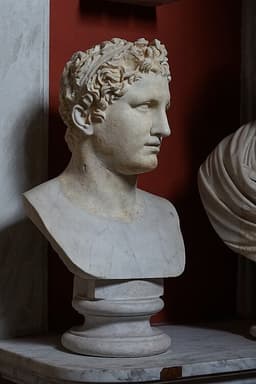
Demetrius I Poliorcetes
Emperor · Ancient
56.9Total
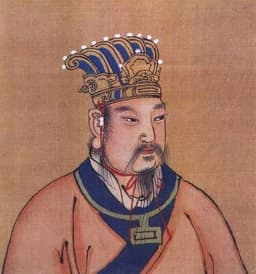
King Wen of Zhou
Emperor · Ancient
57.5Total
Basic Information
Born
-337
-1152
Died
-283
-1056
Era
Ancient
Ancient
Nationality
Macedon
China
Occupation
Emperor
Emperor
Civilization
Western
Eastern
Score Comparison
Military (10%)
67.3
38.3
Political (20%)
48.0
72.0
Influence (20%)
58.0
65.0
Legacy (20%)
50.0
65.0
Leadership (15%)
65.7
40.0
Strategy (15%)
61.2
43.3
TOTAL
56.9
57.5
Demetrius I Poliorcetes — Complete Timeline
306 BC
Battle of Salamis in Cyprus (306 BC)War◆ Major
Demetrius commanded the Macedonian fleet to a decisive victory over Ptolemy I's navy off Salamis, Cyprus. He destroyed or captured much of the Ptolemaic fleet, allowing him to conquer Cyprus and establish a base for his father Antigonus I Monophthalmus.
Naval BattleCyprusAntigonid
Impact: regional
305 BC
Siege of Rhodes (305-304 BC)War◆ Major
Demetrius Poliorcetes besieged the city of Rhodes with massive siege engines, including the Helepolis, a 130-foot siege tower. After a year-long siege, he failed to capture the city and was forced to withdraw, but his innovative siege techniques earned him the epithet 'Poliorcetes' (Besieger of Cities).
SiegeMilitary EngineeringRhodes
Impact: regional
294 BC
Proclaimed King of Macedon (294 BC)Political Action◆ Major
After a period of chaos in Macedon, Demetrius seized the throne and was proclaimed king. He ruled Macedon for seven years, attempting to restore Antigonid power and launch campaigns to reclaim his father's empire in Asia.
KingshipMacedonAntigonid
Impact: regional
285 BC
Capture and Death in Seleucid Captivity (285 BC)Other◆ Major
After being defeated by Lysimachus and Pyrrhus, Demetrius fled to Asia Minor but was captured by Seleucus I. He was held in honorable captivity in Apamea, where he died three years later from illness and excessive drinking, ending his turbulent career.
CaptivityDeathSeleucid
Impact: regionaltragic
King Wen of Zhou — Complete Timeline
1100 BC
Development of Zhou StatePolitical Action◆ Major
King Wen of Zhou expanded the Zhou state's territory and influence in the Wei River valley. He cultivated alliances with neighboring tribes and prepared the foundation for the eventual overthrow of the Shang dynasty, though he died before achieving it.
Zhou DynastyState BuildingPreparation
Impact: regionalconstructive
Imprisonment by King Zhou of ShangPolitical Action
King Wen was imprisoned by the last Shang ruler, King Zhou, at Youli. During his captivity, he is traditionally said to have studied the I Ching (Book of Changes) and expanded its hexagrams. He was later released after his followers paid tribute.
Shang DynastyImprisonmentI Ching
tragic
Expert Analysis
Origins
**Demetrius I Poliorcetes** was born in 336 BC, the son of Antigonus I Monophthalmus, one of Alexander the Great's most powerful successors. Raised in the turbulent world of the Diadochi, Demetrius grew up on campaign, learning siegecraft and naval warfare from his father. He was known for his dashing appearance and charisma, but also for his extravagance and instability.
**King Wen of Zhou**, born around 1152 BC (traditional dates), was the ruler of the Zhou state, a vassal of the Shang dynasty. His name 'Wen' means 'civil,' reflecting his reputation as a sage ruler. He was the son of Ji Jili, a Zhou leader executed by the Shang king Wen Ding. King Wen inherited a small but growing state in the Wei River valley and spent decades building alliances and preparing for a confrontation with the Shang.
Rise to Power
Demetrius first gained fame at the **Battle of Salamis in Cyprus (306 BC)**, where he commanded the Macedonian fleet to a decisive victory over Ptolemy I's navy. He destroyed or captured much of the Ptolemaic fleet, securing control of the eastern Mediterranean. This victory led his father Antigonus to proclaim both of them kings, breaking Alexander's empire into rival monarchies. Demetrius then turned to land campaigns, but his most famous exploit was the **Siege of Rhodes (305-304 BC)**. He besieged the city with massive siege engines, including the Helepolis, a 130-foot siege tower. After a year-long siege, he failed to take the city and was forced to negotiate, earning the nickname 'Poliorcetes' (Besieger of Cities) ironically.
King Wen rose by consolidating power in the Wei River valley. He expanded Zhou territory through diplomacy and warfare, forming alliances with neighboring tribes like the Rong and Di. He also attracted talented advisors, including Jiang Ziya, a legendary strategist. His greatest challenge came when the Shang king Zhou (a tyrant) imprisoned him at Youli. During his captivity, he is said to have studied the I Ching (Book of Changes) and developed the 64 hexagrams. After his release, he continued to build Zhou strength but died before fulfilling his ambition.
Leadership & Governance
Demetrius's leadership was erratic. He scored 65.7 in leadership but only 48.0 in politics. He was a brilliant field commander but a poor administrator. As king of Macedon (294-288 BC), he tried to restore the empire of Alexander by building a massive fleet and army, but his heavy taxation and arrogance alienated his subjects. He once demanded divine honors and was mocked for his extravagance. His governance was marked by short-term military goals rather than sustainable institutions.
King Wen, scoring 72.0 in politics, was a master of statecraft. He focused on building a strong, loyal state through fair laws, land distribution, and cultural patronage. He promoted agriculture and education, and his reputation for virtue attracted many followers. He also reformed the military, creating a disciplined army loyal to the Zhou clan. His leadership style was consultative, relying on a council of elders and advisors like Jiang Ziya.
Triumph & Tragedy
**Demetrius's triumphs** included his naval victory at Salamis (306 BC) and his seizure of the Macedonian throne (294 BC). He also captured Athens and Corinth, restoring the League of Corinth. However, his **tragedies** were many. His failure at Rhodes cost him prestige. His overreach led to a coalition of rivals (Lysimachus, Pyrrhus, Seleucus) that defeated him at the Battle of Ipsus (301 BC), where his father died. After losing his kingdom, he fled to Asia Minor and was captured by Seleucus I, dying in honorable captivity in 285 BC.
**King Wen's triumph** was laying the foundation for the Zhou conquest of Shang. He unified the western tribes and built a state capable of overthrowing the Shang. His **tragedy** was that he never lived to see his victory. He died around 1050 BC, possibly in battle or of illness. His son King Wu completed the conquest two years later, posthumously honoring Wen as the founder of the dynasty.
Character & Destiny
Demetrius was charismatic but impulsive. He scored 61.2 in strategy, indicating tactical skill but lack of long-term planning. He was known for his flamboyance, such as wearing a purple robe and a diadem like a god. His character—pride and overconfidence—led to his downfall. He could not compromise or build lasting alliances.
King Wen, by contrast, was patient and prudent. His score of 43.3 in strategy reflects his focus on political and cultural foundations rather than battlefield tactics. He endured imprisonment without rebellion, using it as a time of learning. His character—wisdom and resilience—shaped his destiny as a revered founder.
Legacy
Demetrius's legacy is mixed. He scored 50.0 in legacy and 58.0 in influence. His siege techniques influenced later engineers, but his empire crumbled immediately. He is remembered as a symbol of the Hellenistic age's instability and ambition. His son Antigonus II Gonatas eventually secured Macedon, but Demetrius's direct impact was short-lived.
King Wen scored 65.0 in legacy and influence. He is revered as a model ruler in Chinese history. The Zhou dynasty lasted 790 years (the longest in Chinese history), and its political philosophy—the Mandate of Heaven—originated with Wen and his successors. His association with the I Ching made him a cultural icon. He is worshipped as a deity in some traditions.
Conclusion
While Demetrius Poliorcetes was a brilliant military commander (military score 67.3 vs. Wen's 38.3), King Wen's political and cultural impact was far greater. Wen's total score of 57.5 edges Demetrius's 56.9, but the gap widens in legacy and influence. Wen founded a dynasty that shaped Chinese civilization for millennia, while Demetrius's achievements were fleeting. The Besieger of Cities failed to build; the Wise King built a foundation that outlasted him. King Wen of Zhou had the greater impact.
Rankings
🥇
King Wen of ZhouLeader
Mil: 38.3Pol: 72.0Inf: 65.0
57.5
🥈
Demetrius I Poliorcetes
Mil: 67.3Pol: 48.0Inf: 58.0
56.9
+0.6 behind
How This Comparison Works
Algorithm
Each figure is scored on 6 dimensions (0—100 scale) based on structured historical data: Military (10%), Political (20%), Influence (20%), Legacy (20%), Leadership (15%), Strategy (15%). The weighted total produces the final ranking.
Data Sources
Scores are computed from structured sub-indicators in the database. Scale factors adjust for era (Ancient ×0.85, Modern ×1.0) and civilization size (Eastern ×1.05, Other ×0.80) to account for differences in population and military scale.
Maximum 3 Figures
Comparisons are limited to 2—3 figures to ensure readability and statistical meaningfulness.
Error Margins
±5 points per dimension — Sub-scores are derived from historical records with inherent uncertainty. Two figures within 5 points on a dimension should be considered roughly equivalent in that area.
Total Score Accuracy
±3 points overall — The weighted combination of 6 dimensions produces a total score with approximately ±3 points of uncertainty. Differences of less than 3 points are not statistically significant— the figures are effectively tied.
Known Limitations
- Historical records are incomplete and uneven across civilizations
- Figures from oral-tradition societies may be underrepresented
- Occupation labels can misclassify multi-role figures
- Scores measure capability and impact, not moral character
- Quantitative scoring is a comparison tool, not absolute truth
Capability Radar
Military (10%) — Battles & Warfare
Battles
75
20
Win Rate
60
25
Expansion
70
45
Political (20%) — Governance & Reform
Reform
40
70
Diplomacy
50
75
Economy
45
60
Influence (20%) — Cultural & Global Reach
Cultural
55
80
Global
55
75
Legacy (20%) — Historical Impact
Historical
60
85
Longevity
50
90
Leadership (15%) — Power & Stability
Tenure
55
50
Stability
30
65
Strategy (15%) — Tactics & Innovation
Strategy
70
40
Tactics
85
30
Reform
50
35
Similar Comparisons
Comments & Discussion
No comments yet. Be the first to share your thoughts!