Loading...
King Wen of Zhou vs Vasudeva I
King Wen of Zhou leads by 3.0 pts · 2 figures compared
…
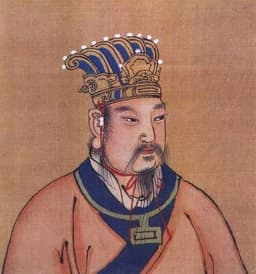
King Wen of Zhou
Emperor · Ancient
57.5Total

Vasudeva I
Emperor · Ancient
54.5Total
Basic Information
Born
-1152
190
Died
-1056
230
Era
Ancient
Ancient
Nationality
China
Kushan Empire
Occupation
Emperor
Emperor
Civilization
Eastern
Indian
Score Comparison
Military (10%)
38.3
67.5
Political (20%)
72.0
68.0
Influence (20%)
65.0
54.1
Legacy (20%)
65.0
44.2
Leadership (15%)
40.0
53.2
Strategy (15%)
43.3
50.0
TOTAL
57.5
54.5
King Wen of Zhou — Complete Timeline
1100 BC
Development of Zhou StatePolitical Action◆ Major
King Wen of Zhou expanded the Zhou state's territory and influence in the Wei River valley. He cultivated alliances with neighboring tribes and prepared the foundation for the eventual overthrow of the Shang dynasty, though he died before achieving it.
Zhou DynastyState BuildingPreparation
Impact: regionalconstructive
Imprisonment by King Zhou of ShangPolitical Action
King Wen was imprisoned by the last Shang ruler, King Zhou, at Youli. During his captivity, he is traditionally said to have studied the I Ching (Book of Changes) and expanded its hexagrams. He was later released after his followers paid tribute.
Shang DynastyImprisonmentI Ching
tragic
Vasudeva I — Complete Timeline
195 AD
Issuance of Gold CoinageCultural
Vasudeva I issued extensive gold coinage, continuing the Kushan tradition of high-quality minting. His coins depict him in various poses, often with a trident or sacrificing at an altar, and they circulated widely across trade routes, indicating economic prosperity.
CoinageEconomyArt
Impact: regionalconstructive
200 AD
Consolidation of the Kushan EmpirePolitical Action◆ Major
Vasudeva I maintained the territorial integrity of the Kushan Empire, which stretched from Central Asia to northern India. He is considered the last great Kushan emperor, ruling from Peshawar and Mathura, and his reign marked the peak of Kushan power before decline.
Kushan EmpireTerritorial ControlStability
Impact: regionalconstructive
210 AD
Patronage of ShaivismCultural◆ Major
Vasudeva I was a Shaivite, and his coins prominently feature the god Shiva and his bull Nandi. This royal patronage helped establish Shaivism as a major sect within Hinduism, influencing religious practices in the Kushan realm.
ReligionShaivismCoinage
Impact: regionalconstructive
Expert Analysis
Origins
King Wen of Zhou (c. 1125–1056 BCE) was born into the Zhou clan, a vassal state of the Shang dynasty in the Wei River valley. His given name was Chang, and he inherited the title of Lord of the West. His father, Jili, had been killed by the Shang king for growing too powerful. Wen was known for his humility and virtue, attracting talented advisors like Lü Shang (Jiang Ziya). He studied the I Ching during his imprisonment, a text that later became foundational to Chinese philosophy.
Vasudeva I (c. 190–230 CE) was the son of Kanishka II and grandson of the great Huvishka, ruling the vast Kushan Empire from Peshawar. The Kushans were of Yuezhi origin, who had migrated from Central Asia. Vasudeva inherited a stable empire but faced pressures from the rising Sasanian Empire in the west. His name, meaning "son of Vasudeva," suggests a Hindu influence, and he became a devout Shaivite.
Rise to Power
King Wen rose to power by expanding the Zhou state through diplomacy and strategic alliances. He subdued neighboring tribes like the Quanrong and cultivated loyalty among smaller states. His military score of 38.3 reflects that his strength lay in political consolidation rather than conquest. However, his growing influence alarmed King Zhou of Shang, who imprisoned him at Youli. Wen's release came after his followers paid tribute, and he returned to continue building the foundation for his son, King Wu, to overthrow the Shang in 1046 BCE.
Vasudeva I ascended the throne around 190 CE, inheriting an empire that stretched from the Aral Sea to the Ganges. His political score of 68.0 indicates effective administration. He maintained the vast territory through a combination of military strength (67.5) and diplomatic marriages. His reign saw no major rebellions, but he faced the growing threat of the Sasanian Empire under Ardashir I, who conquered parts of Bactria by 230 CE. Vasudeva responded by consolidating power in the eastern provinces.
Leadership & Governance
King Wen's leadership style was civil and meritocratic, reflected in his posthumous name "Wen" meaning "civil." He prioritized governance through virtue and ritual, attracting talents like Lü Shang. He expanded agricultural production and implemented fair taxation, strengthening the Zhou economy. His political score of 72.0 underscores his skill in statecraft. Unlike his son Wu, who was a warrior, Wen was a builder of institutions.
Vasudeva I ruled as an absolute monarch, continuing the Kushan tradition of divine kingship. His coins depict him with a halo, claiming descent from gods. He was a patron of Shaivism, minting coins with Shiva and Nandi, which helped spread the cult across his empire. His governance was pragmatic, tolerating Buddhism and other religions. He maintained the silk road trade routes, ensuring economic prosperity. His leadership score of 53.2 reflects a capable but not transformative ruler.
Triumph & Tragedy
King Wen's greatest triumph was laying the groundwork for the Zhou dynasty, which lasted 790 years. He never saw the conquest of Shang, but his policies and alliances made it possible. His study of the I Ching during imprisonment became a cornerstone of Chinese culture. His tragedy was his death before achieving his goal; he was buried with honors by his son.
Vasudeva I's triumph was maintaining the Kushan Empire's integrity during a period of external pressure. His patronage of Shaivism left a lasting religious legacy. However, his tragedy was that after his death, the empire fragmented. The Sasanians seized western territories, and local rulers gained independence. He is the last great Kushan emperor; his successors were weak.
Character & Destiny
King Wen was patient, wise, and strategic. He endured imprisonment without rebellion, choosing to bide his time. His character of virtue and study shaped his destiny: he became a model of the ideal ruler in Chinese tradition. Historians like Sima Qian praised his humility. He scored 40.0 in leadership, but his influence (65.0) and legacy (65.0) reflect his profound impact on Chinese civilization.
Vasudeva I was a capable administrator but lacked the vision of his predecessors. His devotion to Shiva may have alienated some Buddhist subjects. He faced the inevitable decline of the Kushan Empire, which was overextended. His character was conservative, maintaining rather than expanding. His influence (54.1) and legacy (44.2) are lower, as his empire collapsed soon after.
Legacy
King Wen's legacy is immense. He is revered as a founding father of the Zhou dynasty, which established the concept of the Mandate of Heaven. The I Ching, which he studied, became a classic of Chinese philosophy. His emphasis on civil governance influenced Confucianism. He scored 65.0 in legacy, reflecting his enduring cultural impact.
Vasudeva I's legacy is more limited. He is remembered as the last great Kushan ruler, but his empire did not survive. His patronage of Shaivism helped shape Hinduism in North India, but his coins are prized by collectors. His legacy score of 44.2 indicates a lesser impact compared to Wen.
Conclusion
King Wen of Zhou had a greater overall impact than Vasudeva I. His total score of 57.5 edges out Vasudeva's 54.5, but the difference in legacy (65.0 vs 44.2) is decisive. Wen's political and cultural foundations shaped Chinese civilization for millennia, while Vasudeva's empire crumbled within decades. Wen's influence on philosophy and governance is profound; Vasudeva's was significant but ephemeral. Therefore, King Wen of Zhou stands as the more consequential figure in world history.
Rankings
🥇
King Wen of ZhouLeader
Mil: 38.3Pol: 72.0Inf: 65.0
57.5
🥈
Vasudeva I
Mil: 67.5Pol: 68.0Inf: 54.1
54.5
+3.0 behind
How This Comparison Works
Algorithm
Each figure is scored on 6 dimensions (0—100 scale) based on structured historical data: Military (10%), Political (20%), Influence (20%), Legacy (20%), Leadership (15%), Strategy (15%). The weighted total produces the final ranking.
Data Sources
Scores are computed from structured sub-indicators in the database. Scale factors adjust for era (Ancient ×0.85, Modern ×1.0) and civilization size (Eastern ×1.05, Other ×0.80) to account for differences in population and military scale.
Maximum 3 Figures
Comparisons are limited to 2—3 figures to ensure readability and statistical meaningfulness.
Error Margins
±5 points per dimension — Sub-scores are derived from historical records with inherent uncertainty. Two figures within 5 points on a dimension should be considered roughly equivalent in that area.
Total Score Accuracy
±3 points overall — The weighted combination of 6 dimensions produces a total score with approximately ±3 points of uncertainty. Differences of less than 3 points are not statistically significant— the figures are effectively tied.
Known Limitations
- Historical records are incomplete and uneven across civilizations
- Figures from oral-tradition societies may be underrepresented
- Occupation labels can misclassify multi-role figures
- Scores measure capability and impact, not moral character
- Quantitative scoring is a comparison tool, not absolute truth
Capability Radar
Military (10%) — Battles & Warfare
Battles
20
60
Win Rate
25
65
Expansion
45
55
Political (20%) — Governance & Reform
Reform
70
50
Diplomacy
75
55
Economy
60
60
Influence (20%) — Cultural & Global Reach
Cultural
80
50
Global
75
35
Legacy (20%) — Historical Impact
Historical
85
45
Longevity
90
40
Leadership (15%) — Power & Stability
Tenure
50
65
Stability
65
55
Strategy (15%) — Tactics & Innovation
Strategy
40
60
Tactics
30
55
Reform
35
50
Similar Comparisons
Comments & Discussion
No comments yet. Be the first to share your thoughts!