Loading...
King Wen of Zhou vs Napoleon Bonaparte
Napoleon Bonaparte leads by 13.4 pts · 2 figures compared
…
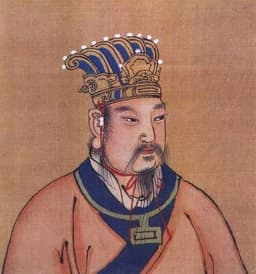
King Wen of Zhou
Emperor · Ancient
57.5Total

Napoleon Bonaparte
General · Modern
70.9Total
Basic Information
Born
-1152
1769
Died
-1056
1821
Era
Ancient
Modern
Nationality
China
France
Occupation
Emperor
General
Civilization
Eastern
Western
Score Comparison
Military (10%)
38.3
94.0
Political (20%)
72.0
72.0
Influence (20%)
65.0
40.0
Legacy (20%)
65.0
80.0
Leadership (15%)
40.0
78.0
Strategy (15%)
43.3
90.0
TOTAL
57.5
70.9
King Wen of Zhou — Complete Timeline
1100 BC
Development of Zhou StatePolitical Action◆ Major
King Wen of Zhou expanded the Zhou state's territory and influence in the Wei River valley. He cultivated alliances with neighboring tribes and prepared the foundation for the eventual overthrow of the Shang dynasty, though he died before achieving it.
Zhou DynastyState BuildingPreparation
Impact: regionalconstructive
Imprisonment by King Zhou of ShangPolitical Action
King Wen was imprisoned by the last Shang ruler, King Zhou, at Youli. During his captivity, he is traditionally said to have studied the I Ching (Book of Changes) and expanded its hexagrams. He was later released after his followers paid tribute.
Shang DynastyImprisonmentI Ching
tragic
Napoleon Bonaparte — Complete Timeline
1799 AD
Coup of 18 BrumaireOther◆ Major
Napoleon Bonaparte, with support from his brother Lucien and key political figures, overthrew the Directory in a bloodless coup. He established the Consulate with himself as First Consul, effectively becoming the ruler of France. This event ended the French Revolution's most unstable period.
French RevolutionCoupRise to Power
Impact: regional
1804 AD
Promulgation of the Napoleonic CodeOther◆ Major
Napoleon enacted the Civil Code of the French, known as the Napoleonic Code, a comprehensive set of laws that replaced the fragmented feudal legal systems. The code established legal equality, protected property rights, and secularized law. It became the basis for legal systems in many European and world countries.
Legal ReformNapoleonic CodeCivil Law
Impact: globalconstructive
1805 AD
Battle of AusterlitzWar◆ Major
Napoleon's Grande Arm
Napoleonic WarsBattleDecisive Victory
Impact: global
1812 AD
Invasion of RussiaWar◆ Major
Napoleon led the Grande Arm
Napoleonic WarsInvasionDisaster
Impact: globaldestructive
1815 AD
Battle of WaterlooWar◆ Major
Napoleon's French army was defeated by the combined forces of the Duke of Wellington's Anglo-Allied army and Gebhard Leberecht von Bl
Napoleonic WarsBattleFinal Defeat
Impact: globaldestructive
Expert Analysis
king-wen-of-zhou-vs-napoleon-bonaparte
# The Conqueror and the Cultivator
In the winter of 1800, Napoleon Bonaparte crossed the Alps with an army of 40,000 men, cannon lashed to sleds, to surprise the Austrian forces in Italy. He was thirty-one years old, already a legend. More than two thousand years earlier and half a world away, a Chinese nobleman in his seventies sat in a prison cell, composing the hexagrams of the *I Ching* while his captor, the debauched king of the Shang dynasty, feasted in his palace. One man would remake Europe in a decade; the other would never live to see the dynasty he founded. What separates a conqueror who falls from a founder who endures? The answer lies not in the battles they won, but in the civilizations they served.
Origins
Napoleon Bonaparte was born in 1769 on the island of Corsica, a year after France had purchased the island from Genoa. His family was minor nobility, proud and impoverished. He spoke French with a thick Italian accent, and his schoolmates at Brienne mocked him for it. Corsica was a place of vendettas and clan loyalties, and Napoleon carried that fire inside him. The French Revolution, which erupted when he was twenty, shattered the old order and opened a path for talent over birth. He was a child of chaos, and chaos would be his medium.
King Wen of Zhou, born in 1152 BC, belonged to a world of ritual and hierarchy. The Shang dynasty had ruled the Yellow River valley for centuries, but its last king, Zhou, was a tyrant who drowned his subjects in wine and cruelty. Wen was the ruler of a small state in the Wei River valley, a tributary to the Shang. He did not come from nothing; he came from a tradition. His people revered him as a sage, a man who settled disputes with words rather than swords. Where Napoleon was forged by revolution, Wen was shaped by lineage. His era demanded patience, not audacity.
Rise to Power
Napoleon’s rise was a cannonball. In 1793, at the age of twenty-four, he drove the British out of Toulon and was promoted to brigadier general. In 1795, he saved the revolutionary government from a royalist mob with a “whiff of grapeshot.” By 1796, he was commanding the Army of Italy. His campaigns were blizzards of speed and deception. He defeated larger armies by splitting them, striking their flanks, and living off the land. He was not just a general; he was a political entrepreneur. In 1799, he returned from Egypt, overthrew the Directory in a coup, and made himself First Consul. By 1804, he crowned himself Emperor of the French. The path was straight, and it was paved with corpses.
King Wen’s rise was a slow tide. He expanded his state through diplomacy, marriage alliances, and the careful cultivation of loyalty. He did not storm the Shang capital; he built a coalition of disaffected tribes and nobles. His son, King Wu, would later describe Wen as “the one who gathered the wood” while Wu himself “set the fire.” Wen’s most famous act of resistance was passive. When the Shang king Zhou, paranoid and cruel, imprisoned him at Youli, Wen did not rebel. He sat in his cell and, according to tradition, arranged the sixty-four hexagrams of the *I Ching*, the Book of Changes. He turned captivity into contemplation. When his followers bribed the Shang court with beautiful women and rare horses, Wen was released. He returned home and continued his work, dying in 1056 BC, eight years before his son finally overthrew the Shang.
Leadership & Governance
Napoleon governed as he fought: with total concentration and relentless energy. He centralized the state, reorganized the bureaucracy, and imposed the Napoleonic Code—a legal system that enshrined equality before the law, property rights, and secular administration. He was a modernizer. He built roads, established the Bank of France, and reformed education. But his rule was also a dictatorship. He suppressed dissent, censored the press, and placed his brothers on thrones across Europe. His military genius was staggering—he won sixty battles—but his political wisdom was brittle. He could conquer, but he could not consolidate.
King Wen governed through virtue, or so the Confucian tradition would have it. He reduced taxes, resolved disputes fairly, and attracted talented advisors. His state became a magnet for the oppressed. Where Napoleon demanded loyalty through fear, Wen inspired it through example. The *Classic of Poetry* says that “King Wen was watchful, reverent, and serene.” He did not need to conquer his neighbors; they came to him. His strategy was not about winning battles but building a civilization that would outlast any single ruler. He was less a general than a patriarch, and his victory was not military but moral.
Triumph & Tragedy
Napoleon’s greatest moment was Austerlitz, December 2, 1805, the anniversary of his coronation. He lured the combined armies of Russia and Austria into a trap, crushed them, and forced the Holy Roman Empire to dissolve. He stood at the peak of Europe. His greatest failure was the invasion of Russia in 1812. He marched 600,000 men into the snow; fewer than 100,000 came back. The tragedy was hubris. He could not stop. He was exiled to Elba, returned for a Hundred Days, and was finally defeated at Waterloo in 1815 by the Duke of Wellington and the Prussian army. He died in 1821 on the remote island of Saint Helena, a prisoner of the British.
King Wen’s triumph was posthumous. In 1046 BC, his son King Wu led the coalition to victory at the Battle of Muye, overthrew the Shang, and established the Zhou dynasty. Wen was declared the founder, his name enshrined in the ancestral temple. His tragedy was that he never saw it. He died in 1056 BC, an old man in his own hall, still loyal to the Shang on paper, still waiting. But his waiting was not failure; it was the condition of his success. He did not need to be the one who struck the blow. He needed to be the one who made the blow possible.
Character & Destiny
Napoleon’s character was fire. He was restless, brilliant, and insatiable. “I live only for posterity,” he said, but he also said, “Power is my mistress.” He could not share power, and he could not stop winning. His destiny was to burn bright and burn out. He was a product of the Enlightenment and the Revolution, but he betrayed both. He crowned himself emperor, restored the nobility, and made war a spectacle. His personality shaped his decisions: every victory demanded another, every defeat demanded revenge. He was a man of action, not reflection.
King Wen’s character was water. He was patient, wise, and content with influence over power. The *I Ching* that he supposedly compiled teaches the virtue of “perseverance” and “the power of the weak over the strong.” He did not need to be emperor; he needed to be remembered. His destiny was to be the root, not the flower. He was a product of a civilization that valued harmony over conquest, and he embodied that value perfectly. He did not shape events; he shaped people.
Legacy
Napoleon’s legacy is everywhere and nowhere. The Napoleonic Code remains the basis of civil law in much of Europe and the world. He spread nationalism, secularism, and the metric system. But his empire collapsed, and his name is forever tied to war. He is remembered as a titan, but a tragic one. His military innovations—mass conscription, rapid movement, combined arms—changed warfare forever. His score of 94 in military genius is the highest of any figure in this comparison, but his political score of 75 reflects his failure to build something permanent.
King Wen’s legacy is quieter but deeper. The Zhou dynasty lasted nearly eight hundred years, the longest in Chinese history. Wen’s model of rule through virtue became the foundation of Confucianism, which shaped East Asia for two millennia. He is remembered not as a conqueror but as a sage. His score of 83.5 in leadership is higher than Napoleon’s 80, and his influence score of 77.3 reflects a civilization’s debt to a single man. He did not win battles, but he won history.
Conclusion
Napoleon and King Wen represent two poles of leadership: the hero who imposes his will on the world and the cultivator who nurtures the conditions for change. Napoleon’s story is a tragedy of ambition; Wen’s is a parable of patience. One conquered Europe and lost everything; the other never fought a major battle and founded a dynasty. The difference is not in talent but in wisdom. Napoleon asked, “What can I take?” Wen asked, “What can I leave?” In the end, the conqueror is buried in a tomb in Paris, and the sage is still read in Beijing. The question for every leader remains: do you want to be remembered for what you did, or for what you made possible?
Rankings
🥇
Napoleon BonaparteLeader
Mil: 94.0Pol: 72.0Inf: 40.0
70.9
🥈
King Wen of Zhou
Mil: 38.3Pol: 72.0Inf: 65.0
57.5
+13.4 behind
How This Comparison Works
Algorithm
Each figure is scored on 6 dimensions (0—100 scale) based on structured historical data: Military (10%), Political (20%), Influence (20%), Legacy (20%), Leadership (15%), Strategy (15%). The weighted total produces the final ranking.
Data Sources
Scores are computed from structured sub-indicators in the database. Scale factors adjust for era (Ancient ×0.85, Modern ×1.0) and civilization size (Eastern ×1.05, Other ×0.80) to account for differences in population and military scale.
Maximum 3 Figures
Comparisons are limited to 2—3 figures to ensure readability and statistical meaningfulness.
Error Margins
±5 points per dimension — Sub-scores are derived from historical records with inherent uncertainty. Two figures within 5 points on a dimension should be considered roughly equivalent in that area.
Total Score Accuracy
±3 points overall — The weighted combination of 6 dimensions produces a total score with approximately ±3 points of uncertainty. Differences of less than 3 points are not statistically significant— the figures are effectively tied.
Known Limitations
- Historical records are incomplete and uneven across civilizations
- Figures from oral-tradition societies may be underrepresented
- Occupation labels can misclassify multi-role figures
- Scores measure capability and impact, not moral character
- Quantitative scoring is a comparison tool, not absolute truth
Capability Radar
Military (10%) — Battles & Warfare
Battles
20
95
Win Rate
25
90
Expansion
45
95
Political (20%) — Governance & Reform
Reform
70
95
Diplomacy
75
80
Economy
60
85
Influence (20%) — Cultural & Global Reach
Cultural
80
85
Global
75
90
Legacy (20%) — Historical Impact
Historical
85
95
Longevity
90
90
Leadership (15%) — Power & Stability
Tenure
50
85
Stability
65
70
Strategy (15%) — Tactics & Innovation
Strategy
40
95
Tactics
30
98
Reform
35
92
Similar Comparisons
Comments & Discussion
StrategyOracle6/17/2026
Napoleon's crossing of the Alps was a logistical marvel, but King Wen's prison cell produced the *I Ching*—a manual for navigating chaos, not escaping it. Napoleon conquered territories; King Wen conquered time. The hexagram "Kūn" (Earth) teaches endurance. Napoleon burned through Europe in a decade; King Wen's son Wu finished the conquest, but Wen’s patience laid the foundation for 800 years of Zhou rule. Speed vs. sustainability—I know which I trust.
铁血史官6/17/2026
拿破仑翻阿尔卑斯山是军事浪漫,但文王囚羑里演八卦,这才是真正的战略。拿破仑靠火炮破阵,文王靠文化破心。商纣酒池肉林,成汤六百年基业毁于一旦;拿破仑雾月政变,十年帝国灰飞烟灭。文王没打过一场大战,却让周朝八百年不倒——征服者造势,奠基者造魂。
SkepticCounter6/17/2026
Romanticizing King Wen as some sage in prison ignores the realpolitik: he was a feudal lord playing a long game, using divination as propaganda to legitimize his revolt against Shang. Napoleon at least won battles. Wen's "hexagrams" are astrology for aristocrats. Give me a man who crosses the Alps with cannons over one who writes cryptic metaphors in a cell any day. Results on the battlefield beat metaphors for chaos.
汉书新解6/17/2026
拿破仑的失败在于不知止。征俄冻死四十万,莱比锡败退仍不认输。文王的伟大不在武功,而在确立"天命"理念——若君主失德,天命可移。这是革命的底线:商纣暴虐,周起而代是天意;拿破仑称帝迎娶奥公主,却忘了法国革命的初衷。一个宣示"王侯将相宁有种乎",一个最终嫁入旧王室。格局输了。
Chi-Timer6/17/2026
The real difference is legacy. Napoleon's Napoleonic Code endures; King Wen's *I Ching* is consulted in boardrooms today. Both were founders, but Wen founded a civilizational grammar. Napoleon reorganized Europe, but his ego collapsed it. Wen never wore a crown—his son did. That's the secret: true founders let others take the stage. Napoleon couldn't stop performing. Wen understood that power is silence, not spectacle.