Loading...
Dayan Khan vs Emperor Daigo
Dayan Khan leads by 5.2 pts · 2 figures compared
…

Dayan Khan
Emperor · Medieval
63.2Total
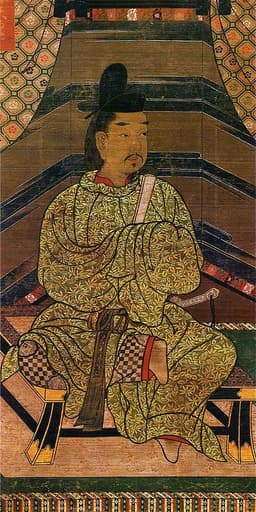
Emperor Daigo
Emperor · Medieval
58.0Total
Basic Information
Born
1464
885
Died
1517
930
Era
Medieval
Medieval
Nationality
Mongolia
Japan
Occupation
Emperor
Emperor
Civilization
Eastern
Eastern
Score Comparison
Military (10%)
61.7
54.1
Political (20%)
72.0
45.0
Influence (20%)
58.3
59.0
Legacy (20%)
58.0
54.0
Leadership (15%)
78.0
72.0
Strategy (15%)
55.0
67.7
TOTAL
63.2
58.0
Dayan Khan — Complete Timeline
1480 AD
Unification of Mongol TribesPolitical Action
Dayan Khan reunified the fragmented Mongol tribes under his rule, ending a period of division. He reestablished the Yuan dynasty's legacy and centralized authority, though his control was often contested.
UnificationMongol TribesCentralization
Impact: regionalconstructive
1500 AD
Reform of Mongol AdministrationReform◆ Major
Dayan Khan implemented administrative reforms, dividing Mongolia into six tumens (military-administrative units). This structure aimed to strengthen control and streamline governance, influencing Mongol organization for generations.
Administrative ReformTumen SystemMongolia
Impact: regionalconstructive
1510 AD
Conflict with the OiratsWar
Dayan Khan fought a series of campaigns against the Oirat Mongols, seeking to subdue them. While he achieved some victories, the Oirats remained a persistent challenge, limiting his unification efforts.
ConflictOiratMongolia
Impact: regional
Emperor Daigo — Complete Timeline
897 AD
Reign as a Strong EmperorPolitical Action◆ Major
Emperor Daigo ruled directly without a Fujiwara regent for much of his reign. He maintained imperial authority and is remembered as a capable ruler. His reign is often idealized as a period of strong imperial rule in the Heian period.
Imperial RuleHeianAuthority
Impact: nationalconstructive
905 AD
Patronage of Poetry and LiteratureCultural◆ Major
Emperor Daigo sponsored the compilation of the 'Kokin Wakashu', the first imperial anthology of Japanese poetry. He commissioned Ki no Tsurayuki and others to collect poems. This anthology set the standard for waka poetry and influenced Japanese literature for centuries.
Kokin WakashuPoetryAnthology
Impact: nationalconstructive
927 AD
Compilation of the EngishikiReform◆ Major
Emperor Daigo ordered the compilation of the Engishiki, a detailed legal code that expanded on the Taiho and Yoro codes. It contained regulations for government administration, ceremonies, and rituals. The Engishiki became a foundational text for Japanese law and Shinto practice.
EngishikiLegal CodeRitsuryo
Impact: nationalconstructive
Expert Analysis
Origins
Dayan Khan was born in 1464 as Batu-Möngke, a descendant of Genghis Khan and Kublai Khan. His early life was marked by the fragmentation of the Mongol tribes into warring factions, with the Oirats and Khorchin vying for dominance. He was raised in the court of Mandukhai Khatun, who later became his wife and regent, and who played a key role in his education and early consolidation of power. Emperor Daigo was born in 885 in Heian-kyō (modern Kyoto), the eldest son of Emperor Uda. His mother was Fujiwara no Onshi, a member of the powerful Fujiwara clan. Daigo was well-educated in Chinese classics and Japanese traditions, and his upbringing positioned him to assert imperial authority against the Fujiwara regents who had dominated earlier reigns.
Rise to Power
Dayan Khan's rise began when he was proclaimed Great Khan in 1479 at age 15, with Mandukhai Khatun as his regent. They launched campaigns to reunify the Mongol tribes, defeating the Oirats in 1480 and the Khorchin in 1483. By 1490, he had consolidated control over most of Mongolia, reestablishing the Yuan dynasty's legacy. Emperor Daigo ascended the throne in 897 at age 12, but unlike many emperors, he was able to rule without a Fujiwara regent after 900. He leveraged his father Uda's precedent of direct rule and appointed capable bureaucrats like Sugawara no Michizane. His key turning point was the suppression of the Fujiwara clan's influence, culminating in the exile of Fujiwara no Tokihira in 909.
Leadership & Governance
Dayan Khan's leadership style was autocratic and military-focused. He divided Mongolia into six tumens (military-administrative units) to centralize control and streamline tax collection. His reforms aimed to strengthen the khan's authority but faced resistance from local chieftains. Dayan Khan scored 78.0 in leadership and 72.0 in political, reflecting his ability to command loyalty. Emperor Daigo, by contrast, governed through legal codification and cultural patronage. He ordered the compilation of the Engishiki (927), a 50-volume legal code that regulated court rituals, administrative procedures, and penal laws. His leadership score of 72.0 and political score of 45.0 show he was effective but constrained by the aristocratic system. Daigo also sponsored the Kokin Wakashu (905), the first imperial poetry anthology, which set standards for Japanese literature.
Triumph & Tragedy
Dayan Khan's greatest triumph was the reunification of the Mongol tribes, ending a century of fragmentation. He also expanded Mongol territory into the Ordos region and secured trade routes. However, his failure to fully subdue the Oirats, who remained a persistent threat, was a major setback. His administrative reforms weakened after his death, leading to renewed division. Emperor Daigo's triumph was the compilation of the Engishiki, which became a foundational legal text in Japan for centuries. His patronage of poetry fostered a cultural renaissance. His tragedy was the exile of Sugawara no Michizane, a loyal minister, due to political intrigue, which later led to a series of natural disasters attributed to Michizane's vengeful spirit. Daigo's reign also saw the beginning of the Fujiwara's resurgence after his death.
Character & Destiny
Dayan Khan was decisive and militaristic, but his reliance on personal charisma meant his achievements were not institutionalized. His character scored 58.0 in legacy, indicating that his empire did not long outlast him. Emperor Daigo was methodical and cultured, but his political score of 45.0 reflects his inability to permanently curb Fujiwara power. Historical assessments view Daigo as a capable but ultimately transitional figure, while Dayan Khan is seen as a brilliant unifier whose reforms were too fragile.
Legacy
Dayan Khan's legacy lies in the revival of Mongol identity and the political structure that later influenced the Mongol revival under the Qing dynasty. His tumen system persisted in modified form. Emperor Daigo's Engishiki was used until the Meiji Restoration, and the Kokin Wakashu defined Japanese poetic aesthetics. Daigo's reign is remembered as a high point of imperial authority before the Fujiwara took full control.
Conclusion
Dayan Khan had a greater overall impact, with a total score of 63.2 compared to Daigo's 58.0. His reunification of the Mongols and administrative reforms created a lasting political entity, even if it fragmented later. Daigo's contributions, while culturally significant, were more confined to Japan and did not fundamentally alter the power structure. Dayan Khan's military (61.7 vs 54.1) and political (72.0 vs 45.0) scores clearly show his greater influence on the course of history.
Rankings
🥇
Dayan KhanLeader
Mil: 61.7Pol: 72.0Inf: 58.3
63.2
🥈
Emperor Daigo
Mil: 54.1Pol: 45.0Inf: 59.0
58.0
+5.2 behind
How This Comparison Works
Algorithm
Each figure is scored on 6 dimensions (0—100 scale) based on structured historical data: Military (10%), Political (20%), Influence (20%), Legacy (20%), Leadership (15%), Strategy (15%). The weighted total produces the final ranking.
Data Sources
Scores are computed from structured sub-indicators in the database. Scale factors adjust for era (Ancient ×0.85, Modern ×1.0) and civilization size (Eastern ×1.05, Other ×0.80) to account for differences in population and military scale.
Maximum 3 Figures
Comparisons are limited to 2—3 figures to ensure readability and statistical meaningfulness.
Error Margins
±5 points per dimension — Sub-scores are derived from historical records with inherent uncertainty. Two figures within 5 points on a dimension should be considered roughly equivalent in that area.
Total Score Accuracy
±3 points overall — The weighted combination of 6 dimensions produces a total score with approximately ±3 points of uncertainty. Differences of less than 3 points are not statistically significant— the figures are effectively tied.
Known Limitations
- Historical records are incomplete and uneven across civilizations
- Figures from oral-tradition societies may be underrepresented
- Occupation labels can misclassify multi-role figures
- Scores measure capability and impact, not moral character
- Quantitative scoring is a comparison tool, not absolute truth
Capability Radar
Military (10%) — Battles & Warfare
Battles
65
45
Win Rate
70
50
Expansion
70
49
Political (20%) — Governance & Reform
Reform
80
65
Diplomacy
70
55
Economy
60
60
Influence (20%) — Cultural & Global Reach
Cultural
60
55
Global
50
30
Legacy (20%) — Historical Impact
Historical
70
60
Longevity
55
55
Leadership (15%) — Power & Stability
Tenure
75
60
Stability
65
65
Strategy (15%) — Tactics & Innovation
Strategy
75
57
Tactics
60
59
Reform
80
59
Similar Comparisons
Comments & Discussion
No comments yet. Be the first to share your thoughts!