Loading...
David Marshall vs Julius Caesar
Julius Caesar leads by 43.1 pts · 2 figures compared
…
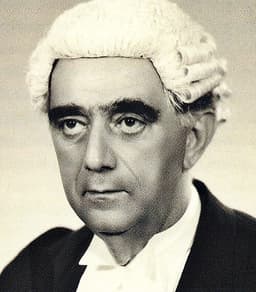
David Marshall
Politician · Modern
39.7Total

Julius Caesar
General · Ancient
82.8Total
Basic Information
Born
1908
-100
Died
1995
-44
Era
Modern
Ancient
Nationality
Singapore
Roman Republic
Occupation
Politician
General
Civilization
Eastern
Western
Score Comparison
Military (10%)
14.4
88.0
Political (20%)
39.4
78.0
Influence (20%)
50.2
85.0
Legacy (20%)
41.7
82.0
Leadership (15%)
45.0
80.0
Strategy (15%)
26.7
85.0
TOTAL
39.7
82.8
David Marshall — Complete Timeline
1955 AD
Appointed First Chief Minister of SingaporePolitical Action◆ Major
David Marshall became the first Chief Minister of Singapore following the 1955 general election. He led a minority government and negotiated with the British for self-governance, but resigned in 1956 after failing to secure full internal self-rule.
Singapore self-governmentConstitutional negotiations
Impact: national
1956 AD
Led the Merdeka Talks in LondonPolitical Action◆ Major
Marshall led a delegation to London to negotiate full internal self-government for Singapore. The talks collapsed when the British refused to grant control over internal security and defense, leading to Marshall's resignation as Chief Minister.
Merdeka talksSelf-government failure
Impact: national
Resigned as Chief MinisterPolitical Action◆ Major
After the failure of the London talks, Marshall resigned as Chief Minister on June 7, 1956. He was succeeded by Lim Yew Hock. Marshall's resignation marked a turning point in Singapore's path to self-government.
ResignationPolitical transition
Impact: national
1957 AD
Founded the Workers' Party of SingaporePolitical Action◆ Major
After leaving office, Marshall founded the Workers' Party, a political party that became a key opposition force in Singapore. He served as its first secretary-general, advocating for social democracy and workers' rights.
Political party foundingOpposition
Impact: nationalconstructive
1978 AD
Appointed Singapore's First Ambassador to FrancePolitical Action
Marshall served as Singapore's first ambassador to France from 1978 to 1980. He also held concurrent accreditation to Spain and Portugal, representing Singapore's diplomatic interests in Europe.
DiplomacyAmbassador
Impact: national
Julius Caesar — Complete Timeline
58 BC
Gallic WarsWar◆ Major
Caesar, as proconsul of Gaul, launched a series of campaigns that conquered all of Gaul (modern France, Belgium, and parts of Switzerland). He fought numerous battles, including against the Helvetii, the Belgae, and the Gallic chieftain Vercingetorix. The wars brought immense wealth and a loyal army to Caesar.
Gallic WarsConquestRoman Expansion
Impact: regional
49 BC
Crossing the RubiconPolitical Action◆ Major
Caesar led Legio XIII across the Rubicon River into Italy, defying the Roman Senate's order to disband his army. This act triggered a civil war against Pompey and the Optimates, ultimately leading to Caesar's dictatorship and the end of the Roman Republic.
Roman Civil WarEnd of RepublicPower Struggle
Impact: global
48 BC
Battle of PharsalusWar◆ Major
Caesar's outnumbered army defeated the larger forces of Pompey the Great at Pharsalus in Greece. Caesar's tactical use of a reserve line to counter Pompey's cavalry charge proved decisive. Pompey fled to Egypt, where he was assassinated, leaving Caesar as the undisputed master of the Roman world.
Roman Civil WarBattleDecisive Victory
Impact: regional
44 BC
Appointment as Dictator for LifePolitical Action◆ Major
The Roman Senate appointed Caesar dictator perpetuo (dictator for life), granting him unprecedented personal power. This move concentrated military, legislative, and judicial authority in one person, effectively ending the Roman Republic's traditional system of checks and balances and alarming many senators.
DictatorshipEnd of RepublicPower Consolidation
Impact: regionaldestructive
Assassination on the Ides of MarchPolitical Action◆ Major
A group of Roman senators, led by Marcus Junius Brutus and Gaius Cassius Longinus, stabbed Caesar to death at a meeting of the Senate in the Theatre of Pompey. The assassination was intended to restore the Republic, but instead triggered another civil war that led to the rise of the Roman Empire.
AssassinationRoman PoliticsEnd of Republic
Impact: globaldestructive
Expert Analysis
david-marshall-vs-julius-caesar
# The Crossing and the Negotiation
On January 10, 49 BCE, a Roman general stood on the banks of a small river in northern Italy. The Rubicon was little more than a stream, but it marked the boundary no Roman commander could legally cross with his army. Julius Caesar paused, knowing that the next step would mean civil war—or supreme power. Nineteen centuries later and half a world away, another man faced his own Rubicon. In the spring of 1956, David Marshall, Singapore’s first Chief Minister, boarded a plane for London. He carried no legions, only a briefcase and the hopes of a tiny island state. He too would cross a line, and he too would find that history rewards those who are willing to break the rules—but punishes those who cannot force the world to accept the new ones.
Origins
Julius Caesar was born into the chaos of the late Roman Republic, a world of aristocratic feuds, street violence, and crumbling institutions. His family, the Julii, claimed descent from the goddess Venus, but they were not among the wealthiest or most powerful. Caesar’s father died when he was sixteen, leaving him to navigate a political system where survival required cunning, debt, and alliances with the right patrons. The Republic rewarded audacity, and Caesar learned early that rules were for ordinary men.
David Marshall was born in 1908 in Singapore, then a British colony. His father was a Jewish immigrant from Baghdad, a merchant who had found modest success in the Straits Settlements. The Marshalls were not among Singapore’s elite either, and David grew up acutely aware of the gap between the British rulers and the Asian subjects. He studied law in London, returned to Singapore, and built a reputation as a brilliant criminal lawyer. Where Caesar learned to command armies, Marshall learned to command juries. Both men understood that power was about persuasion—but Caesar’s persuasion came at the point of a sword, while Marshall’s came through words.
Rise to Power
Caesar’s path to power was a masterclass in leveraging military glory for political gain. He served as governor of Hispania, then formed the First Triumvirate with Pompey and Crassus. The real springboard was Gaul. Between 58 and 50 BCE, Caesar conquered a territory larger than Italy itself, winning battles against hundreds of thousands of warriors. He wrote his own commentaries, shaping the narrative for the Roman public. Every victory made him richer, more popular, and more feared by his rivals in the Senate.
Marshall’s rise was quieter but no less dramatic. In 1955, Singapore held its first general election under a new constitution that allowed limited self-government. Marshall’s Labour Front won a plurality, and at age forty-seven, he became Chief Minister. Unlike Caesar, who seized power through war, Marshall inherited a colonial administration. His authority was conditional, his treasury empty, and his police force still answerable to London. He was a chief minister in name, but the British governor held the real power.
Leadership & Governance
Caesar governed as he conquered: decisively, ruthlessly, and with an eye on posterity. As dictator, he reformed the calendar, granted citizenship to provincials, launched public works projects, and centralized authority. His military genius is beyond dispute—the siege of Alesia, the lightning campaign at Pharsalus, the suppression of Pompey’s forces. But his political wisdom was flawed. He pardoned his enemies, hoping to win their loyalty, but many of them simply waited for a chance to strike. He concentrated power but failed to build lasting institutions, relying instead on his personal aura.
Marshall’s governance was a struggle against constraints. He had to negotiate with the British while managing a restive population, communist agitators, and a coalition government. His greatest achievement was leading the Merdeka Talks in London in 1956, demanding full internal self-government. But the British refused to yield on security and defense matters—they feared Singapore would become a communist base. Marshall, a lawyer trained to argue cases, believed the force of his logic would prevail. He was wrong. The British held all the cards, and when the talks collapsed, Marshall resigned rather than accept a deal he considered dishonorable.
Triumph & Tragedy
Caesar’s greatest triumph was his crossing of the Rubicon. In that single act, he destroyed the old Republic and created the conditions for empire. His tragedy was the Ides of March. On March 15, 44 BCE, a conspiracy of senators stabbed him to death in the Theater of Pompey. He fell at the foot of a statue of his former enemy, bleeding from twenty-three wounds. His last moments—whether he said “Et tu, Brute?” or not—became the stuff of legend.
Marshall’s triumph was his resignation itself. By walking away from power when the British refused to grant self-government, he preserved his integrity and exposed colonial intransigence. His tragedy was that his successor, Lim Yew Hock, achieved what Marshall could not—by cracking down on communists, Lim won the self-government that Marshall had failed to secure. Marshall then founded the Workers’ Party, becoming a persistent opposition voice in a system that increasingly favored the ruling People’s Action Party. He spent his later years as Singapore’s first ambassador to France, a dignified exile from the political stage.
Character & Destiny
Caesar was driven by an insatiable ambition. He believed he was destined for greatness, and he bent the world to that belief. His charm, his ruthlessness, his willingness to take risks—all flowed from a conviction that ordinary rules did not apply to him. That same conviction made him careless in the end. He dismissed the omens, ignored the warnings, and walked into the Senate chamber on the Ides of March as if he were immortal.
Marshall was driven by principle. He was a passionate orator, a man of deep emotions and fiery temper. When the British refused his demands, he could not bring himself to compromise. He believed that honesty and integrity mattered more than political survival. That made him admirable—and ineffective. In the hard game of nation-building, the victors are rarely the most principled. They are the ones who know when to bend.
Legacy
Caesar’s legacy is the Roman Empire. His name became synonymous with imperial authority—“Caesar” evolved into “Kaiser” and “Tsar.” His reforms outlasted him, and the world he created shaped Western civilization for two millennia. He is remembered as a military genius, a political visionary, and a cautionary tale about the price of ambition.
Marshall’s legacy is more modest but no less important. He is remembered as Singapore’s first chief minister, the man who demanded dignity for his people when dignity was not offered. His Workers’ Party became a symbol of democratic opposition in a country that often prioritized stability over dissent. He is not a statue in a square—Singapore has few statues—but his name appears in history books as the man who said no.
Conclusion
Caesar and Marshall never met, never could have met. One commanded legions, the other commanded arguments. One built an empire, the other built a precedent. Yet both men faced the same fundamental question: how far will you go to achieve what you believe is right? Caesar crossed the Rubicon and changed the world. Marshall crossed the Atlantic and changed Singapore’s sense of itself. The general died by the sword, the lawyer died in his bed at age eighty-seven. History, it turns out, has room for both kinds of courage.
Rankings
🥇
Julius CaesarLeader
Mil: 88.0Pol: 78.0Inf: 85.0
82.8
🥈
David Marshall
Mil: 14.4Pol: 39.4Inf: 50.2
39.7
+43.1 behind
How This Comparison Works
Algorithm
Each figure is scored on 6 dimensions (0—100 scale) based on structured historical data: Military (10%), Political (20%), Influence (20%), Legacy (20%), Leadership (15%), Strategy (15%). The weighted total produces the final ranking.
Data Sources
Scores are computed from structured sub-indicators in the database. Scale factors adjust for era (Ancient ×0.85, Modern ×1.0) and civilization size (Eastern ×1.05, Other ×0.80) to account for differences in population and military scale.
Maximum 3 Figures
Comparisons are limited to 2—3 figures to ensure readability and statistical meaningfulness.
Error Margins
±5 points per dimension — Sub-scores are derived from historical records with inherent uncertainty. Two figures within 5 points on a dimension should be considered roughly equivalent in that area.
Total Score Accuracy
±3 points overall — The weighted combination of 6 dimensions produces a total score with approximately ±3 points of uncertainty. Differences of less than 3 points are not statistically significant— the figures are effectively tied.
Known Limitations
- Historical records are incomplete and uneven across civilizations
- Figures from oral-tradition societies may be underrepresented
- Occupation labels can misclassify multi-role figures
- Scores measure capability and impact, not moral character
- Quantitative scoring is a comparison tool, not absolute truth
Capability Radar
Military (10%) — Battles & Warfare
Battles
16
95
Win Rate
15
92
Expansion
20
97
Political (20%) — Governance & Reform
Reform
30
90
Diplomacy
40
85
Economy
20
82
Influence (20%) — Cultural & Global Reach
Cultural
20
88
Global
20
94
Legacy (20%) — Historical Impact
Historical
30
95
Longevity
20
96
Leadership (15%) — Power & Stability
Tenure
15
75
Stability
20
60
Strategy (15%) — Tactics & Innovation
Strategy
23
94
Tactics
28
96
Reform
30
88
Similar Comparisons
Comments & Discussion
No comments yet. Be the first to share your thoughts!