Loading...
David Lloyd George vs Julio Maria Sanguinetti
David Lloyd George leads by 6.2 pts · 2 figures compared
…
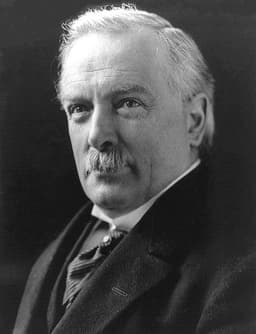
David Lloyd George
Politician · Modern
60.8Total

Julio Maria Sanguinetti
Politician · Modern
54.6Total
Basic Information
Born
1863
1936
Died
1945
—
Era
Modern
Modern
Nationality
United Kingdom
Uruguay
Occupation
Politician
Politician
Civilization
Western
Western
Score Comparison
Military (10%)
50.0
50.0
Political (20%)
82.0
59.3
Influence (20%)
55.0
53.3
Legacy (20%)
55.0
45.8
Leadership (15%)
78.0
78.0
Strategy (15%)
43.1
42.4
TOTAL
60.8
54.6
David Lloyd George — Complete Timeline
1916 AD
Became Prime Minister of the United KingdomPolitical Action◆ Major
Lloyd George succeeded H.H. Asquith as head of a coalition government during World War I. He formed a small War Cabinet to streamline decision-making. His leadership was marked by a more vigorous prosecution of the war effort.
World War ICoalition GovernmentLeadership
Impact: global
1917 AD
Introduced the convoy system to combat U-boatsWar◆ Major
Lloyd George overruled Admiralty opposition and mandated the use of merchant convoys escorted by warships. This dramatically reduced shipping losses to German U-boats, ensuring Britain's supply lines remained open and contributing to Allied victory.
World War INaval WarfareConvoys
Impact: globalconstructive
1918 AD
Passed the Representation of the People Act 1918Reform◆ Major
Lloyd George's government enacted this act, which extended the vote to all men over 21 and women over 30 who met property qualifications. It tripled the electorate and was a major step toward universal suffrage in Britain.
SuffrageDemocracyReform
Impact: nationalprogressive
1919 AD
Played a key role in the Paris Peace Conference and Treaty of VersaillesPolitical Action◆ Major
Lloyd George was one of the 'Big Four' leaders at the Paris Peace Conference. He negotiated the Treaty of Versailles, which imposed heavy reparations and territorial losses on Germany. The treaty's terms were controversial and contributed to future instability.
World War IPeace TreatyVersailles
Impact: global
1922 AD
Resigned as Prime MinisterPolitical Action
Lloyd George resigned after the Conservative Party withdrew from his coalition government, following the Chanak Crisis and allegations of selling honors. His departure ended his wartime coalition and led to a Conservative government under Bonar Law.
ResignationCoalitionPolitics
Impact: national
Julio Maria Sanguinetti — Complete Timeline
1984 AD
Elected President of UruguayPolitical Action
Julio María Sanguinetti was elected president of Uruguay in the 1984 general election, the first democratic election after 11 years of military dictatorship. He took office in 1985, leading the transition to democracy.
DemocratizationElectionTransition
Impact: nationalconstructive
1986 AD
Signed the Ley de CaducidadPolitical Action◆ Major
Sanguinetti signed the Ley de Caducidad (Expiry Law) in December 1986, granting amnesty to military and police officers for human rights abuses committed during the dictatorship. The law was controversial and later challenged in a 1989 referendum.
AmnestyHuman RightsTransitional Justice
Impact: nationaldestructive
1991 AD
Promoted Mercosur FoundingPolitical Action◆ Major
As president, Sanguinetti was a key proponent of the Southern Common Market (Mercosur), signed in 1991 by Uruguay, Argentina, Brazil, and Paraguay. The trade bloc aimed to promote economic integration and reduce tariffs among member states.
Regional IntegrationTrade BlocMercosur
Impact: regionalconstructive
1994 AD
Re-elected PresidentPolitical Action◆ Major
Sanguinetti was re-elected president in the 1994 general election, serving a second term from 1995 to 2000. His second term focused on economic reforms and regional integration.
Re-electionSecond TermColorado Party
Impact: nationalconstructive
Expert Analysis
Origins
David Lloyd George was born on 17 January 1863 in Manchester, England, to a Welsh family. His father died when he was young, and he was raised by his mother and uncle, a shoemaker and Baptist minister. He became a solicitor after studying law, entering politics as a Liberal MP in 1890. His Welsh background and nonconformist faith shaped his radicalism.
Julio Maria Sanguinetti was born on 6 January 1936 in Montevideo, Uruguay, into a middle-class family. He studied law at the University of the Republic, graduating in 1961. He joined the Colorado Party, one of Uruguay's traditional parties, and was elected to the Chamber of Deputies in 1962. His early career was marked by support for democratic institutions.
Rise to Power
Lloyd George rose rapidly as a Liberal reformer. He served as President of the Board of Trade (1905–1908) and Chancellor of the Exchequer (1908–1915), where his "People's Budget" (1909) introduced progressive taxes and welfare measures, sparking a constitutional crisis. During World War I, he became Minister of Munitions in 1915, then Secretary of State for War in 1916. In December 1916, he replaced H.H. Asquith as Prime Minister of a coalition government, forming a small War Cabinet to centralize decision-making.
Sanguinetti's rise was tied to Uruguay's democratic restoration. After the 1973 coup, he opposed the military dictatorship, maintaining a high profile as a journalist and lawyer. In 1982, he helped found the Broad Front coalition but remained in the Colorado Party. In 1984, after negotiations with the military, he was elected president in the first democratic election since 1971, taking office on 1 March 1985. His political score of 59.3 reflects his skill in navigating the transition.
Leadership & Governance
Lloyd George governed as a wartime leader with a decisive, centralized style. He overruled military opposition to introduce the convoy system in 1917, reducing shipping losses from U-boats by over 50% by 1918. He also created the Ministry of National Service to manage conscription. Domestically, his government passed the Representation of the People Act 1918, tripling the electorate to 21 million. However, his coalition relied on Conservatives, limiting Liberal reforms.
Sanguinetti's leadership focused on consolidating democracy. He negotiated with the military to ensure a peaceful transition, signing the Ley de Caducidad in 1986, which granted amnesty for human rights abuses during the dictatorship. This was controversial but prevented a coup. Economically, he pursued liberalization, reducing inflation from 83% in 1985 to 44% in 1989. His second term (1995–2000) saw further reforms and Uruguay's entry into Mercosur in 1991. His leadership score of 78.0 matches Lloyd George's, but his impact was narrower.
Triumph & Tragedy
Lloyd George's greatest triumph was leading Britain to victory in World War I. His convoy system and War Cabinet streamlined war effort. At the Paris Peace Conference, he shaped the Treaty of Versailles, though its harsh terms later contributed to WWII. His tragedy was his post-war decline: the 1918 election gave him a coalition victory, but the Chanak Crisis (1922) and sale of honors scandal led to Conservative withdrawal, forcing his resignation. He never held office again.
Sanguinetti's triumph was restoring democracy in Uruguay after 11 years of dictatorship, earning him the title "Father of Uruguayan Democracy." His second term stabilized the economy and deepened regional integration. His tragedy lies in the Ley de Caducidad, which prevented prosecution of human rights abusers, leaving a legacy of impunity. In 2009, the law was declared unconstitutional, but many victims never saw justice. His political score of 59.3 is lower than Lloyd George's 82.0.
Character & Destiny
Lloyd George was charismatic, pragmatic, and ruthless. He used patronage and coalition politics to maintain power, but his lack of party loyalty alienated Liberals. His strategic score of 43.1 reflects his failure to secure a post-war legacy. Historian A.J.P. Taylor called him "the greatest war leader" but noted his "lack of scruple." His character drove him to innovate but also to overreach.
Sanguinetti was cautious and conciliatory, prioritizing stability over justice. His decision to sign the amnesty law showed a pragmatic willingness to compromise. His strategy score of 42.4 reflects a limited long-term vision beyond democratic consolidation. He avoided confrontation, which preserved peace but left societal wounds unhealed.
Legacy
Lloyd George's legacy is mixed. He is remembered as a great war leader, but the Treaty of Versailles' flaws taint his reputation. The 1918 Representation of the People Act was a landmark for democracy. His total score of 60.8 reflects his influence on 20th-century Britain.
Sanguinetti's legacy is Uruguay's stable democracy. He is credited with ending military rule and integrating Uruguay into Mercosur. However, his amnesty law remains divisive. His total score of 54.6 is lower, reflecting a more localized impact.
Conclusion
David Lloyd George had greater impact on global history. His leadership during World War I and the Paris Peace Conference shaped the 20th century. While Sanguinetti restored democracy in Uruguay, Lloyd George's actions affected millions across Europe and the world. With a total score of 60.8 vs. 54.6, Lloyd George's influence, political skill, and legacy surpass Sanguinetti's. The former altered the course of nations; the latter stabilized one. Therefore, Lloyd George is the more consequential figure.
Rankings
🥇
David Lloyd GeorgeLeader
Mil: 50.0Pol: 82.0Inf: 55.0
60.8
🥈
Julio Maria Sanguinetti
Mil: 50.0Pol: 59.3Inf: 53.3
54.6
+6.2 behind
How This Comparison Works
Algorithm
Each figure is scored on 6 dimensions (0—100 scale) based on structured historical data: Military (10%), Political (20%), Influence (20%), Legacy (20%), Leadership (15%), Strategy (15%). The weighted total produces the final ranking.
Data Sources
Scores are computed from structured sub-indicators in the database. Scale factors adjust for era (Ancient ×0.85, Modern ×1.0) and civilization size (Eastern ×1.05, Other ×0.80) to account for differences in population and military scale.
Maximum 3 Figures
Comparisons are limited to 2—3 figures to ensure readability and statistical meaningfulness.
Error Margins
±5 points per dimension — Sub-scores are derived from historical records with inherent uncertainty. Two figures within 5 points on a dimension should be considered roughly equivalent in that area.
Total Score Accuracy
±3 points overall — The weighted combination of 6 dimensions produces a total score with approximately ±3 points of uncertainty. Differences of less than 3 points are not statistically significant— the figures are effectively tied.
Known Limitations
- Historical records are incomplete and uneven across civilizations
- Figures from oral-tradition societies may be underrepresented
- Occupation labels can misclassify multi-role figures
- Scores measure capability and impact, not moral character
- Quantitative scoring is a comparison tool, not absolute truth
Capability Radar
Military (10%) — Battles & Warfare
Battles
30
28
Win Rate
30
29
Expansion
35
33
Political (20%) — Governance & Reform
Reform
80
65
Diplomacy
85
60
Economy
70
55
Influence (20%) — Cultural & Global Reach
Cultural
55
30
Global
65
30
Legacy (20%) — Historical Impact
Historical
70
40
Longevity
60
35
Leadership (15%) — Power & Stability
Tenure
75
55
Stability
65
70
Strategy (15%) — Tactics & Innovation
Strategy
40
38
Tactics
43
42
Reform
41
43
Similar Comparisons
Comments & Discussion
No comments yet. Be the first to share your thoughts!