Loading...
David Lloyd George vs Marcelo Rebelo de Sousa
David Lloyd George leads by 7.0 pts · 2 figures compared
…
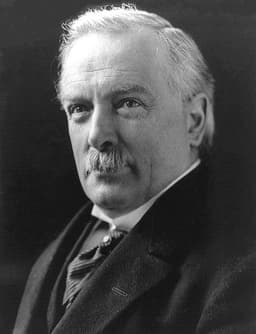
David Lloyd George
Politician · Modern
60.8Total

Marcelo Rebelo de Sousa
Politician · Modern
53.8Total
Basic Information
Born
1863
1948
Died
1945
—
Era
Modern
Modern
Nationality
United Kingdom
Portugal
Occupation
Politician
Politician
Civilization
Western
Western
Score Comparison
Military (10%)
50.0
50.0
Political (20%)
82.0
68.0
Influence (20%)
55.0
53.3
Legacy (20%)
55.0
40.8
Leadership (15%)
78.0
72.0
Strategy (15%)
43.1
42.8
TOTAL
60.8
53.8
David Lloyd George — Complete Timeline
1916 AD
Became Prime Minister of the United KingdomPolitical Action◆ Major
Lloyd George succeeded H.H. Asquith as head of a coalition government during World War I. He formed a small War Cabinet to streamline decision-making. His leadership was marked by a more vigorous prosecution of the war effort.
World War ICoalition GovernmentLeadership
Impact: global
1917 AD
Introduced the convoy system to combat U-boatsWar◆ Major
Lloyd George overruled Admiralty opposition and mandated the use of merchant convoys escorted by warships. This dramatically reduced shipping losses to German U-boats, ensuring Britain's supply lines remained open and contributing to Allied victory.
World War INaval WarfareConvoys
Impact: globalconstructive
1918 AD
Passed the Representation of the People Act 1918Reform◆ Major
Lloyd George's government enacted this act, which extended the vote to all men over 21 and women over 30 who met property qualifications. It tripled the electorate and was a major step toward universal suffrage in Britain.
SuffrageDemocracyReform
Impact: nationalprogressive
1919 AD
Played a key role in the Paris Peace Conference and Treaty of VersaillesPolitical Action◆ Major
Lloyd George was one of the 'Big Four' leaders at the Paris Peace Conference. He negotiated the Treaty of Versailles, which imposed heavy reparations and territorial losses on Germany. The treaty's terms were controversial and contributed to future instability.
World War IPeace TreatyVersailles
Impact: global
1922 AD
Resigned as Prime MinisterPolitical Action
Lloyd George resigned after the Conservative Party withdrew from his coalition government, following the Chanak Crisis and allegations of selling honors. His departure ended his wartime coalition and led to a Conservative government under Bonar Law.
ResignationCoalitionPolitics
Impact: national
Marcelo Rebelo de Sousa — Complete Timeline
2015 AD
Constitutional Role in Government FormationPolitical Action◆ Major
As president-elect, Marcelo Rebelo de Sousa played a key role in forming a government after the 2015 election. He appointed Ant
GovernmentConstitutionDemocracy
Impact: nationalconstructive
2016 AD
Elected President of PortugalPolitical Action◆ Major
Marcelo Rebelo de Sousa won the Portuguese presidential election with 52% of the vote. He succeeded An
ElectionPresidency
Impact: nationalconstructive
2020 AD
COVID-19 Pandemic ResponsePolitical Action◆ Major
Marcelo Rebelo de Sousa used his presidential powers to declare states of emergency during the COVID-19 pandemic. He supported the government's lockdown measures and gave regular addresses to the nation, promoting unity.
PandemicLeadershipCrisis
Impact: nationalconstructive
2021 AD
Re-election as PresidentPolitical Action◆ Major
Marcelo Rebelo de Sousa was re-elected with 60.7% of the vote in the first round. His victory reflected broad public support for his consensual style and handling of the COVID-19 pandemic.
ElectionRe-election
Impact: nationalconstructive
Expert Analysis
Origins
David Lloyd George was born on 17 January 1863 in Manchester, England, to a Welsh family. His father died when he was young, and his mother raised him in Llanystumdwy, Wales. He became a solicitor after passing his law exams in 1884. His early exposure to Welsh nonconformist liberalism shaped his political views.
Marcelo Rebelo de Sousa was born on 12 December 1948 in Lisbon, Portugal. His father was a prominent physician and politician. He studied law at the University of Lisbon, earning a doctorate and becoming a professor of law. His academic background and media presence as a political commentator preceded his presidency.
Rise to Power
Lloyd George entered Parliament in 1890 as a Liberal MP for Caernarvon Boroughs. He gained fame for his opposition to the Boer War and his role in social reforms as Chancellor of the Exchequer, notably the 'People's Budget' of 1909. His rise culminated in becoming Prime Minister in December 1916, replacing H.H. Asquith during the crisis of World War I. He formed a coalition government and a small War Cabinet to streamline decision-making.
Rebelo de Sousa's political career began in the Social Democratic Party (PSD). He served as a member of parliament and as Minister for Parliamentary Affairs in the 1980s. He later became a professor and a popular TV commentator. He ran for president in 2016 and won with 52% of the vote, succeeding Aníbal Cavaco Silva. His consensual style helped him secure re-election in 2021 with 60.7%.
Leadership & Governance
Lloyd George's leadership during World War I was decisive. He introduced the convoy system in 1917 to combat U-boat attacks, overruling Admiralty opposition. This reduced shipping losses significantly. He also centralized war planning through the War Cabinet. Domestically, his government passed the Representation of the People Act 1918, tripling the electorate by giving votes to all men over 21 and women over 30. However, his later governance was marred by corruption allegations, such as the sale of honors.
Rebelo de Sousa's governance is characterized by a non-executive, ceremonial role. He uses his influence to foster consensus. During the COVID-19 pandemic, he declared states of emergency, supporting government lockdowns. He played a key role in government formation in 2015, appointing António Costa as Prime Minister after a political impasse. His leadership score of 72.0 reflects his ability to unify, but his strategic score of 42.8 indicates limited direct power.
Triumph & Tragedy
Lloyd George's greatest triumphs include leading Britain to victory in World War I and enacting significant social reforms. He was a key figure at the Paris Peace Conference, shaping the Treaty of Versailles. His tragedy was his fall from power: the Chanak Crisis of 1922 and corruption scandals led to the Conservative Party withdrawing from the coalition, forcing his resignation. He never held office again. His political score of 82.0 acknowledges his achievements, but his legacy score of 55.0 reflects the mixed judgment of his career.
Rebelo de Sousa's triumph is his high popularity and successful re-election. He has maintained stability during political crises and the pandemic. His tragedy is the limited impact of his office; as a figurehead, he cannot initiate major reforms. His influence score of 53.3 and legacy score of 40.8 reflect his constrained role.
Character & Destiny
Lloyd George was charismatic, pragmatic, and ruthless. He was known as 'the Welsh Wizard' for his oratory and cunning. His willingness to break with tradition enabled wartime efficiency but also led to corruption. His character ultimately caused his downfall as allies distrusted him. Historical assessments note his dynamism but also his lack of principle.
Rebelo de Sousa is affable, media-savvy, and consensus-driven. He uses his communication skills to bridge divides. His character fits a modern presidential role where soft power matters. His destiny is to be a respected but ultimately limited head of state.
Legacy
Lloyd George's legacy includes the modern welfare state foundations and the expanded electorate. His wartime leadership set precedents for prime ministerial power. However, the Treaty of Versailles is often criticized for its harshness. His overall score of 60.8 reflects a significant but flawed legacy.
Rebelo de Sousa's legacy is still forming. He will be remembered for his consensual style and pandemic management. His long-term impact is likely modest compared to Lloyd George, given his constitutional constraints.
Conclusion
David Lloyd George had greater impact than Marcelo Rebelo de Sousa. His political score of 82.0 versus Rebelo de Sousa's 68.0, and total score of 60.8 versus 53.8, reflect his more consequential role. Lloyd George shaped the outcome of a world war and expanded democracy in Britain. Rebelo de Sousa, while effective in a ceremonial role, lacks the transformative power. History judges Lloyd George as a pivotal figure; Rebelo de Sousa as a competent steward.
Rankings
🥇
David Lloyd GeorgeLeader
Mil: 50.0Pol: 82.0Inf: 55.0
60.8
🥈
Marcelo Rebelo de Sousa
Mil: 50.0Pol: 68.0Inf: 53.3
53.8
+7.0 behind
How This Comparison Works
Algorithm
Each figure is scored on 6 dimensions (0—100 scale) based on structured historical data: Military (10%), Political (20%), Influence (20%), Legacy (20%), Leadership (15%), Strategy (15%). The weighted total produces the final ranking.
Data Sources
Scores are computed from structured sub-indicators in the database. Scale factors adjust for era (Ancient ×0.85, Modern ×1.0) and civilization size (Eastern ×1.05, Other ×0.80) to account for differences in population and military scale.
Maximum 3 Figures
Comparisons are limited to 2—3 figures to ensure readability and statistical meaningfulness.
Error Margins
±5 points per dimension — Sub-scores are derived from historical records with inherent uncertainty. Two figures within 5 points on a dimension should be considered roughly equivalent in that area.
Total Score Accuracy
±3 points overall — The weighted combination of 6 dimensions produces a total score with approximately ±3 points of uncertainty. Differences of less than 3 points are not statistically significant— the figures are effectively tied.
Known Limitations
- Historical records are incomplete and uneven across civilizations
- Figures from oral-tradition societies may be underrepresented
- Occupation labels can misclassify multi-role figures
- Scores measure capability and impact, not moral character
- Quantitative scoring is a comparison tool, not absolute truth
Capability Radar
Military (10%) — Battles & Warfare
Battles
30
28
Win Rate
30
32
Expansion
35
35
Political (20%) — Governance & Reform
Reform
80
45
Diplomacy
85
55
Economy
70
50
Influence (20%) — Cultural & Global Reach
Cultural
55
30
Global
65
30
Legacy (20%) — Historical Impact
Historical
70
25
Longevity
60
20
Leadership (15%) — Power & Stability
Tenure
75
60
Stability
65
60
Strategy (15%) — Tactics & Innovation
Strategy
40
39
Tactics
43
39
Reform
41
45
Similar Comparisons
Comments & Discussion
No comments yet. Be the first to share your thoughts!