Loading...
David Lloyd George vs Jose Socrates
David Lloyd George leads by 7.8 pts · 2 figures compared
…
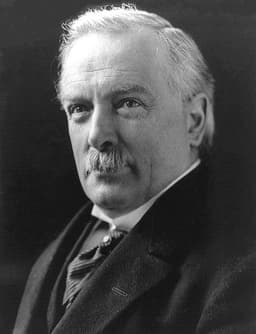
David Lloyd George
Politician · Modern
60.8Total

Jose Socrates
Politician · Modern
53.0Total
Basic Information
Born
1863
1957
Died
1945
—
Era
Modern
Modern
Nationality
United Kingdom
Portugal
Occupation
Politician
Politician
Civilization
Western
Western
Score Comparison
Military (10%)
50.0
49.3
Political (20%)
82.0
68.0
Influence (20%)
55.0
50.2
Legacy (20%)
55.0
39.2
Leadership (15%)
78.0
74.0
Strategy (15%)
43.1
43.7
TOTAL
60.8
53.0
David Lloyd George — Complete Timeline
1916 AD
Became Prime Minister of the United KingdomPolitical Action◆ Major
Lloyd George succeeded H.H. Asquith as head of a coalition government during World War I. He formed a small War Cabinet to streamline decision-making. His leadership was marked by a more vigorous prosecution of the war effort.
World War ICoalition GovernmentLeadership
Impact: global
1917 AD
Introduced the convoy system to combat U-boatsWar◆ Major
Lloyd George overruled Admiralty opposition and mandated the use of merchant convoys escorted by warships. This dramatically reduced shipping losses to German U-boats, ensuring Britain's supply lines remained open and contributing to Allied victory.
World War INaval WarfareConvoys
Impact: globalconstructive
1918 AD
Passed the Representation of the People Act 1918Reform◆ Major
Lloyd George's government enacted this act, which extended the vote to all men over 21 and women over 30 who met property qualifications. It tripled the electorate and was a major step toward universal suffrage in Britain.
SuffrageDemocracyReform
Impact: nationalprogressive
1919 AD
Played a key role in the Paris Peace Conference and Treaty of VersaillesPolitical Action◆ Major
Lloyd George was one of the 'Big Four' leaders at the Paris Peace Conference. He negotiated the Treaty of Versailles, which imposed heavy reparations and territorial losses on Germany. The treaty's terms were controversial and contributed to future instability.
World War IPeace TreatyVersailles
Impact: global
1922 AD
Resigned as Prime MinisterPolitical Action
Lloyd George resigned after the Conservative Party withdrew from his coalition government, following the Chanak Crisis and allegations of selling honors. His departure ended his wartime coalition and led to a Conservative government under Bonar Law.
ResignationCoalitionPolitics
Impact: national
Jose Socrates — Complete Timeline
2005 AD
Implementation of the Technological PlanReform◆ Major
Sócrates launched the 'Technological Plan' (Plano Tecnológico), a set of policies to modernize Portugal's economy through innovation, digitalization, and investment in science and technology.
TechnologyModernizationInnovation
Impact: nationalconstructive
Election as Prime MinisterPolitical Action◆ Major
Sócrates became Prime Minister after the Socialist Party won an absolute majority in the 2005 legislative election. He promised economic modernization and social reform.
ElectionGovernmentSocialist
Impact: nationalconstructive
2007 AD
Legalization of AbortionReform◆ Major
Sócrates's government held a referendum on abortion, leading to the legalization of abortion on request up to 10 weeks of pregnancy. The law was passed despite strong opposition from conservative groups.
Social ReformAbortionReferendum
Impact: nationalprogressive
2011 AD
Resignation amid Austerity CrisisPolitical Action◆ Major
Facing a sovereign debt crisis and the rejection of his austerity package by parliament, S
AusterityCrisisResignation
Impact: nationaltragic
2014 AD
Arrest and Trial for CorruptionPolitical Action◆ Major
Sócrates was arrested on suspicion of corruption, tax fraud, and money laundering. He spent several months in pre-trial detention and was later tried, though the case remained unresolved for years.
CorruptionArrestTrial
Impact: nationaldestructive
Expert Analysis
Origins
David Lloyd George (1863-1945) was born in Manchester, England, to a Welsh family. After his father's death, he was raised by his mother and uncle in Llanystumdwy, Wales. He trained as a solicitor and entered politics as a Liberal, becoming MP for Caernarvon Boroughs in 1890. His background as a Welsh outsider shaped his radicalism and opposition to the landed gentry.
José Sócrates (1957-) was born in Vilar de Maçada, Portugal. He earned a degree in civil engineering from the University of Coimbra and later a master's in economics from the Universidade Nova de Lisboa. He joined the Socialist Party early and held various ministerial roles, including Minister of Environment and Minister of Infrastructure.
Rise to Power
Lloyd George rose through his oratory and opposition to the Boer War. He served as Chancellor of the Exchequer from 1908, introducing the People's Budget (1909) which raised taxes on land and the wealthy, sparking a constitutional crisis. During WWI, he became Minister of Munitions in 1915, then Secretary of State for War in 1916. In December 1916, he replaced H.H. Asquith as Prime Minister, leading a coalition government with a small War Cabinet.
Sócrates became leader of the Socialist Party in 2004. In the 2005 legislative election, his party won an absolute majority, and he became Prime Minister on March 12, 2005. He promised economic modernization and social reforms.
Leadership & Governance
Lloyd George's leadership was decisive and energetic. He centralized war decision-making, creating a War Cabinet that bypassed traditional bureaucracy. He overruled Admiralty opposition to introduce the convoy system, reducing shipping losses by 75%. Domestically, his government passed the Representation of the People Act 1918, tripling the electorate to 21 million. He also introduced the first national health insurance and old-age pensions.
Sócrates focused on modernizing Portugal. His Technological Plan invested in R&D, digital infrastructure, and education. He legalized abortion via referendum in 2007. However, his economic policies faced criticism. During the Eurozone crisis, his austerity measures—including tax hikes and spending cuts—were rejected by parliament, leading to his resignation in 2011. His political score of 68.0 reflects competence but also failure to navigate the crisis.
Triumph & Tragedy
Lloyd George's greatest triumph was leading Britain to victory in WWI. He also expanded the franchise and laid foundations for the welfare state. His tragedy was the Treaty of Versailles: he advocated for moderate reparations but was forced to accept harsh terms by French and British public opinion. He later admitted the treaty would lead to another war. He also faced the Chanak Crisis in 1922, which caused his coalition to collapse, and his later career was marred by allegations of selling honors. His total score of 60.8 reflects high political and leadership scores (82.0 and 78.0) but lower military and strategy (50.0 and 43.1), as he was a civilian leader.
Sócrates's triumph was modernizing Portugal's economy and passing social reforms. His Technological Plan increased Portugal's innovation index. However, his tragedy was the austerity crisis: his failure to secure parliamentary support led to a 78 billion euro bailout. Later, he was arrested in 2014 on charges of corruption, tax fraud, and money laundering, damaging his legacy. His total score of 53.0 is dragged down by a legacy score of 39.2, reflecting the corruption scandal.
Character & Destiny
Lloyd George was charismatic, pragmatic, and ruthless. He was known as the 'Welsh Wizard' for his political cunning. His willingness to break conventions and centralize power was essential during war but alienated allies. His character drove him to achieve great reforms but also led to his downfall after the war, when his coalition crumbled.
Sócrates was technocratic and ambitious. He pursued modernization with conviction but lacked the political skill to build consensus during crisis. His arrest for corruption suggests a flaw in judgment or ethics, which starkly contrasts with Lloyd George's personal probity (despite the honors scandal).
Legacy
Lloyd George is remembered as a great war leader and social reformer. The convoy system saved millions of tons of shipping. The 1918 Act permanently expanded democracy in Britain. His welfare policies influenced the post-war welfare state. However, his Versailles legacy is controversial. He ranks high among British PMs, with a legacy score of 55.0.
Sócrates's legacy is mixed. The Technological Plan left lasting infrastructure, but the bailout and corruption case overshadow his achievements. Portugal's recovery from the crisis was painful, and his reputation is tarnished. His legacy score of 39.2 is the lowest among comparable leaders.
Conclusion
David Lloyd George had greater impact. His leadership during WWI, expansion of suffrage, and welfare reforms shaped modern Britain and the 20th century. Sócrates's reforms were significant but limited to one country and undone by crisis and scandal. Lloyd George's total score of 60.8 versus Sócrates's 53.0 reflects this. While Sócrates achieved modernization, Lloyd George changed the course of history. The verdict is clear: Lloyd George's influence was more profound and enduring.
Rankings
🥇
David Lloyd GeorgeLeader
Mil: 50.0Pol: 82.0Inf: 55.0
60.8
🥈
Jose Socrates
Mil: 49.3Pol: 68.0Inf: 50.2
53.0
+7.8 behind
How This Comparison Works
Algorithm
Each figure is scored on 6 dimensions (0—100 scale) based on structured historical data: Military (10%), Political (20%), Influence (20%), Legacy (20%), Leadership (15%), Strategy (15%). The weighted total produces the final ranking.
Data Sources
Scores are computed from structured sub-indicators in the database. Scale factors adjust for era (Ancient ×0.85, Modern ×1.0) and civilization size (Eastern ×1.05, Other ×0.80) to account for differences in population and military scale.
Maximum 3 Figures
Comparisons are limited to 2—3 figures to ensure readability and statistical meaningfulness.
Error Margins
±5 points per dimension — Sub-scores are derived from historical records with inherent uncertainty. Two figures within 5 points on a dimension should be considered roughly equivalent in that area.
Total Score Accuracy
±3 points overall — The weighted combination of 6 dimensions produces a total score with approximately ±3 points of uncertainty. Differences of less than 3 points are not statistically significant— the figures are effectively tied.
Known Limitations
- Historical records are incomplete and uneven across civilizations
- Figures from oral-tradition societies may be underrepresented
- Occupation labels can misclassify multi-role figures
- Scores measure capability and impact, not moral character
- Quantitative scoring is a comparison tool, not absolute truth
Capability Radar
Military (10%) — Battles & Warfare
Battles
30
31
Win Rate
30
31
Expansion
35
35
Political (20%) — Governance & Reform
Reform
80
45
Diplomacy
85
50
Economy
70
40
Influence (20%) — Cultural & Global Reach
Cultural
55
20
Global
65
20
Legacy (20%) — Historical Impact
Historical
70
20
Longevity
60
15
Leadership (15%) — Power & Stability
Tenure
75
55
Stability
65
35
Strategy (15%) — Tactics & Innovation
Strategy
40
40
Tactics
43
40
Reform
41
46
Similar Comparisons
Comments & Discussion
No comments yet. Be the first to share your thoughts!