Loading...
Date Masamune vs Stanislaw Koniecpolski
Date Masamune leads by 5.6 pts · 2 figures compared
…

Date Masamune
General · Modern
67.1Total
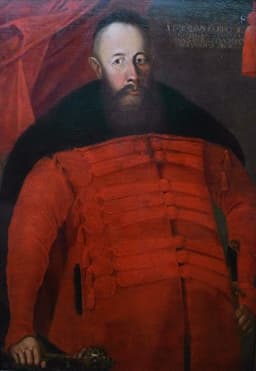
Stanislaw Koniecpolski
General · Modern
61.5Total
Basic Information
Born
1567
1591
Died
1636
1646
Era
Modern
Modern
Nationality
Japan
Poland-Lithuania
Occupation
General
General
Civilization
Eastern
Western
Score Comparison
Military (10%)
67.3
78.0
Political (20%)
70.0
55.0
Influence (20%)
72.0
56.7
Legacy (20%)
52.0
58.0
Leadership (15%)
85.0
62.0
Strategy (15%)
61.2
75.0
TOTAL
67.1
61.5
Date Masamune — Complete Timeline
1588 AD
Battle of KoriyamaWar
Date Masamune besieged Koriyama Castle in Mutsu Province. The castle fell after a fierce battle, further expanding Masamune's territory and demonstrating his military prowess.
Sengoku PeriodSiegeMutsu
Impact: regionalconstructive
1589 AD
Battle of SuriageharaWar◆ Major
Date Masamune defeated the Ashina clan at Suriagehara in Mutsu Province. This victory allowed Masamune to expand his territory and solidify his control over the southern Tohoku region.
Sengoku PeriodBattleTohoku
Impact: regionalconstructive
1590 AD
Submission to Toyotomi HideyoshiPolitical Action◆ Major
Date Masamune submitted to Toyotomi Hideyoshi after the Siege of Odawara. He was allowed to retain his domain but was forced to cede some territory, marking a shift from independent daimyo to vassal.
Sengoku PeriodSubmissionToyotomi
Impact: national
1601 AD
Founding of SendaiPolitical Action
Date Masamune founded the city of Sendai as his new capital. He built Sendai Castle and developed the surrounding area, establishing a prosperous domain that became a major center in northern Japan.
Sengoku PeriodCity FoundingSendai
Impact: regionalconstructive
Stanislaw Koniecpolski — Complete Timeline
1620 AD
Battle of CecoraWar
Koniecpolski participated as a commander in the Polish defeat at Cecora against Ottoman forces. He was captured and held captive in Istanbul for several years. This event shaped his later military strategies against the Ottomans.
Polish-Ottoman WarBattleCaptivity
Impact: regionaltragic
1624 AD
Battle of MartynowWar
Koniecpolski defeated a large Tatar raid at Martynow, killing or capturing thousands of Tatars. This victory secured the southern border of the Polish-Lithuanian Commonwealth and enhanced his reputation as a defender against Tatar incursions.
Tatar RaidsBattleBorder Defense
Impact: regional
1629 AD
Battle of TrzcianaWar◆ Major
Koniecpolski commanded Polish-Lithuanian forces against Swedish troops under Gustavus Adolphus at Trzciana. The battle resulted in a Polish victory, with Gustavus Adolphus nearly captured. This engagement demonstrated Koniecpolski's military skill against a renowned opponent.
Polish-Swedish WarBattleGustavus Adolphus
Impact: regional
1633 AD
Siege of SmolenskWar◆ Major
Koniecpolski led Polish forces to relieve the besieged city of Smolensk during the Smolensk War. His actions forced the Russian army under Mikhail Shein to surrender, securing a Polish victory and confirming the Treaty of Polyanovka.
Smolensk WarSiegeRussia
Impact: regional
Expert Analysis
Origins
Date Masamune was born in 1567 in Yonezawa, Mutsu Province (modern Yamagata Prefecture), the eldest son of Date Terumune. His family, the Date clan, was a powerful samurai house in northern Japan. At age 14, he lost his right eye to smallpox, earning the nickname "One-Eyed Dragon." His mother considered him unfit to lead due to his deformity, leading to familial conflict. Masamune received rigorous training in martial arts and governance, preparing him for leadership.
Stanislaw Koniecpolski was born around 1591 in Koniecpol, Poland-Lithuania, into a noble family with a military tradition. His father, Aleksander Koniecpolski, was a castellan. He studied at the Krakow Academy and gained military experience under Hetman Jan Karol Chodkiewicz. His early exposure to warfare against Tatars and Swedes shaped his tactical acumen.
Rise to Power
Masamune became clan head in 1584 after his father's death. He immediately expanded territory through campaigns against the Ashina and other clans. The Battle of Suriagehara in 1589 was a turning point: Masamune's forces defeated the Ashina, securing control over much of Mutsu. However, his rapid expansion caught the attention of Toyotomi Hideyoshi, the unifier of Japan. In 1590, Masamune submitted to Hideyoshi after the Siege of Odawara, avoiding destruction but losing some lands. He proved his loyalty by participating in Hideyoshi's Korean campaigns (1592-1598).
Koniecpolski rose through the ranks of the Polish-Lithuanian military. He was appointed Field Crown Hetman in 1619 and Grand Crown Hetman in 1632. His key victory came at the Battle of Trzciana in 1629, where he defeated Swedish King Gustavus Adolphus, ending Swedish expansion in Prussia. This victory solidified his reputation as Poland's greatest commander. He also played a crucial role in the Siege of Smolensk (1632-1634), forcing Russian forces to surrender.
Leadership & Governance
Masamune governed his domain, Sendai, with a focus on economic development and cultural patronage. He founded Sendai in 1600, building a castle and promoting trade, agriculture, and industry. He encouraged Christianity initially to gain access to Western firearms and trade, but later persecuted Christians under Tokugawa pressure. His leadership style was pragmatic: he balanced military strength with diplomatic submission to the Tokugawa shogunate, ensuring his clan's survival. He scored 85.0 in leadership, reflecting his ability to maintain power through strategic alliances.
Koniecpolski was a military specialist with less political influence. His leadership score of 62.0 reflects his focus on battlefield command rather than governance. He implemented reforms in the Polish cavalry, emphasizing mobility and firepower. He also built fortresses along the southern border to deter Tatar raids. However, his political power was limited; he never held the office of Grand Hetman until late in his career. His governance was primarily concerned with military administration and defense.
Triumph & Tragedy
Masamune's greatest success was founding Sendai and establishing a prosperous domain that endured for centuries. He also survived the turbulent Sengoku period and emerged as a major daimyo under the Tokugawa. His military score of 67.3 is modest, but his political acumen (70.0) allowed him to thrive. However, his failure to become shogun or expand beyond his region was a limitation. He also faced the tragedy of his son Date Tadamune's early death, which weakened the clan's succession.
Koniecpolski's triumph was the victory at Trzciana, where he wounded Gustavus Adolphus and forced a Swedish retreat. His strategic score of 75.0 indicates his brilliance in planning. He also successfully defended the Commonwealth's borders against Tatars and Russians. His tragedy was the defeat at Cecora in 1620, where he was captured and held for ransom. This humiliation affected his reputation, though he later redeemed himself. He died in 1646 before seeing the full decline of the Commonwealth.
Character & Destiny
Masamune was known for his ruthlessness and ambition. He reportedly killed his own brother to secure succession. His decision to submit to Hideyoshi and later Tokugawa Ieyasu showed his pragmatism. His character shaped his destiny: he chose survival over glory, securing his clan's future but limiting his personal power. Historians note his cultural achievements, such as sponsoring the construction of temples and inviting Jesuit missionaries.
Koniecpolski was a disciplined and strategic commander. He was known for his calmness under pressure and ability to adapt. His character led to consistent military success, but his lack of political ambition meant he never shaped the Commonwealth's destiny beyond the battlefield. He died of natural causes, a rare end for a commander of his era.
Legacy
Masamune's legacy is significant in Japan: he is a cultural icon, featured in novels, games, and television. The city of Sendai remains a major urban center. His influence score of 72.0 reflects his enduring fame. However, his legacy score of 52.0 is lower because his military achievements were regional and he never centralized power.
Koniecpolski is remembered as one of Poland's greatest military commanders. His tactics influenced later Polish warfare. However, his legacy is more obscure internationally compared to Masamune. His legacy score of 58.0 reflects his importance within Polish history but limited global recognition.
Conclusion
Date Masamune had greater overall impact due to his higher total score (67.1 vs 61.5). His combination of military, political, and cultural achievements created a lasting legacy that extends beyond his lifetime. While Koniecpolski was a superior strategist (75.0 vs 61.2), Masamune's leadership (85.0 vs 62.0) and political skills (70.0 vs 55.0) allowed him to build a domain that lasted centuries. In the broader context of history, Masamune's influence on Japanese culture and regional development outweighs Koniecpolski's tactical victories.
Rankings
🥇
Date MasamuneLeader
Mil: 67.3Pol: 70.0Inf: 72.0
67.1
🥈
Stanislaw Koniecpolski
Mil: 78.0Pol: 55.0Inf: 56.7
61.5
+5.6 behind
How This Comparison Works
Algorithm
Each figure is scored on 6 dimensions (0—100 scale) based on structured historical data: Military (10%), Political (20%), Influence (20%), Legacy (20%), Leadership (15%), Strategy (15%). The weighted total produces the final ranking.
Data Sources
Scores are computed from structured sub-indicators in the database. Scale factors adjust for era (Ancient ×0.85, Modern ×1.0) and civilization size (Eastern ×1.05, Other ×0.80) to account for differences in population and military scale.
Maximum 3 Figures
Comparisons are limited to 2—3 figures to ensure readability and statistical meaningfulness.
Error Margins
±5 points per dimension — Sub-scores are derived from historical records with inherent uncertainty. Two figures within 5 points on a dimension should be considered roughly equivalent in that area.
Total Score Accuracy
±3 points overall — The weighted combination of 6 dimensions produces a total score with approximately ±3 points of uncertainty. Differences of less than 3 points are not statistically significant— the figures are effectively tied.
Known Limitations
- Historical records are incomplete and uneven across civilizations
- Figures from oral-tradition societies may be underrepresented
- Occupation labels can misclassify multi-role figures
- Scores measure capability and impact, not moral character
- Quantitative scoring is a comparison tool, not absolute truth
Capability Radar
Military (10%) — Battles & Warfare
Battles
68
85
Win Rate
72
90
Expansion
65
75
Political (20%) — Governance & Reform
Reform
65
60
Diplomacy
72
70
Economy
68
55
Influence (20%) — Cultural & Global Reach
Cultural
60
60
Global
45
55
Legacy (20%) — Historical Impact
Historical
65
65
Longevity
55
50
Leadership (15%) — Power & Stability
Tenure
70
65
Stability
70
60
Strategy (15%) — Tactics & Innovation
Strategy
70
85
Tactics
75
88
Reform
60
70
Similar Comparisons
Comments & Discussion
No comments yet. Be the first to share your thoughts!