Loading...
Alexander Suvorov vs Stanislaw Koniecpolski
Stanislaw Koniecpolski leads by 2.9 pts · 2 figures compared
…

Alexander Suvorov
General · Modern
58.6Total
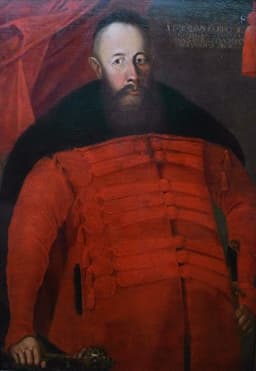
Stanislaw Koniecpolski
General · Modern
61.5Total
Basic Information
Born
1729
1591
Died
1800
1646
Era
Modern
Modern
Nationality
Russia
Poland-Lithuania
Occupation
General
General
Civilization
Western
Western
Score Comparison
Military (10%)
65.0
78.0
Political (20%)
68.0
55.0
Influence (20%)
40.0
56.7
Legacy (20%)
68.0
58.0
Leadership (15%)
48.8
62.0
Strategy (15%)
76.0
75.0
TOTAL
58.6
61.5
Alexander Suvorov — Complete Timeline
1787 AD
Battle of KinburnWar◆ Major
Suvorov commanded Russian forces defending the Kinburn Spit against a Turkish amphibious assault. Despite being wounded, he led a counterattack that repelled the Turks, securing the Russian position in the Russo-Turkish War of 1787-1792.
Russo-Turkish WarDefensive VictoryPersonal Leadership
Impact: regional
1790 AD
Storming of IzmailWar
Suvorov led Russian forces in a brutal assault on the Ottoman fortress of Izmail. The capture resulted in the massacre of the garrison and civilians, and broke Ottoman resistance in the region, leading to the Treaty of Jassy.
Russo-Turkish WarSiegeMassacre
Impact: regionaldestructive
1799 AD
Battle of the TrebbiaWar◆ Major
Suvorov commanded Russian and Austrian forces against French General Macdonald's army on the Trebbia River in Italy. Over three days, he defeated the French, forcing them to retreat and securing Russian control of northern Italy.
War of the Second CoalitionItalian CampaignDecisive Victory
Impact: regional
Swiss CampaignWar◆ Major
Suvorov led Russian forces across the Swiss Alps to link up with Austrian allies, but was forced to retreat through the Panix Pass due to Austrian withdrawal. The campaign ended in failure and heavy losses, but Suvorov was promoted to Generalissimo for his efforts.
War of the Second CoalitionAlpine CrossingRetreat
Impact: regionaltragic
Stanislaw Koniecpolski — Complete Timeline
1620 AD
Battle of CecoraWar
Koniecpolski participated as a commander in the Polish defeat at Cecora against Ottoman forces. He was captured and held captive in Istanbul for several years. This event shaped his later military strategies against the Ottomans.
Polish-Ottoman WarBattleCaptivity
Impact: regionaltragic
1624 AD
Battle of MartynowWar
Koniecpolski defeated a large Tatar raid at Martynow, killing or capturing thousands of Tatars. This victory secured the southern border of the Polish-Lithuanian Commonwealth and enhanced his reputation as a defender against Tatar incursions.
Tatar RaidsBattleBorder Defense
Impact: regional
1629 AD
Battle of TrzcianaWar◆ Major
Koniecpolski commanded Polish-Lithuanian forces against Swedish troops under Gustavus Adolphus at Trzciana. The battle resulted in a Polish victory, with Gustavus Adolphus nearly captured. This engagement demonstrated Koniecpolski's military skill against a renowned opponent.
Polish-Swedish WarBattleGustavus Adolphus
Impact: regional
1633 AD
Siege of SmolenskWar◆ Major
Koniecpolski led Polish forces to relieve the besieged city of Smolensk during the Smolensk War. His actions forced the Russian army under Mikhail Shein to surrender, securing a Polish victory and confirming the Treaty of Polyanovka.
Smolensk WarSiegeRussia
Impact: regional
Expert Analysis
Origins
Alexander Suvorov was born in 1729 into a Russian noble family. His father, Vasily Suvorov, was a general and a senator. Suvorov received a military education, studying engineering and artillery, but he was physically frail and initially considered unfit for service. He entered the Semyonovsky Life Guard Regiment as a private in 1748, beginning his career at age 19.
Stanislaw Koniecpolski was born around 1590 into a powerful Polish magnate family. His father, Aleksander Koniecpolski, was a voivode and a military commander. Koniecpolski received a Jesuit education and then trained in military affairs under Hetman Stanislaw Żółkiewski. He first saw combat in 1610 at the Battle of Klushino, where he was wounded.
Rise to Power
Suvorov's rise was gradual. He served in the Seven Years' War (1756-1763), earning promotions through bravery at the Battle of Kunersdorf (1759) and in raids on Berlin. His first independent command came during the Bar Confederation (1768-1772), where he defeated Polish insurgents at Lanckorona (1771) and Kraków (1772). He was promoted to major general in 1770. The Russo-Turkish War (1768-1774) brought his first major victory: the Battle of Kozludzha (1774), where he routed a larger Ottoman force.
Koniecpolski's rise was faster due to his family connections. He was appointed field hetman (deputy commander) of the Crown in 1618 after distinguishing himself in the Moldavian campaign. His first major command came during the Polish–Ottoman War (1620-1621). After the disastrous Battle of Cecora (1620), where he was captured, he was ransomed in 1623 and returned to Poland. He was promoted to Grand Hetman of the Crown in 1632, becoming the top military commander in Poland-Lithuania.
Leadership & Governance
Suvorov's leadership style was direct and aggressive. He emphasized speed, surprise, and shock action, encapsulated in his maxim: "Swiftness and impetuosity are the soul of victory." He trained his troops relentlessly, focusing on bayonet charges and cold steel over firepower. As a governor, he was harsh but just; in 1795, he suppressed the Kościuszko Uprising with extreme brutality, particularly at the massacre of Praga. His political acumen was limited, as he often clashed with Tsar Paul I over military reforms.
Koniecpolski was a master of defensive warfare and combined arms. He integrated cavalry, infantry, and artillery effectively, using the Polish winged hussars as a decisive shock force. His leadership was characterized by careful planning and patience. As a magnate, he governed his vast estates efficiently, funding military campaigns from his own purse. He was also a skilled diplomat, negotiating truces with the Ottomans and Swedes. His political influence was considerable, but he remained loyal to the crown.
Triumph & Tragedy
Suvorov's greatest triumph was the storming of Izmail in 1790, where his forces captured a supposedly impregnable Ottoman fortress. He scored 76.0 in strategy, and this victory is a classic example of his aggressive doctrine. However, the subsequent massacre of 40,000 civilians tarnished his reputation. His Swiss Campaign of 1799 was a strategic failure: he crossed the Alps but failed to link up with the Austrians, losing 3,000 men to starvation and exposure. He was forced to retreat, his only operational defeat, though he never lost a battle.
Koniecpolski's greatest triumph was the Battle of Trzciana (1629), where he defeated Gustavus Adolphus, the Swedish king, in a rare field battle against the Swedish army. He scored 78.0 in military, reflecting his tactical skill. His relief of Smolensk in 1633-1634 forced Russia to abandon the siege, securing a favorable peace. His tragedy was the Battle of Cecora (1620), where he was captured and held for three years. He also failed to prevent the Tatar raid of 1644, though he later avenged it at Martynow.
Character & Destiny
Suvorov was eccentric and ascetic, sleeping on straw and eating plain food. He was known for his sharp wit and disregard for court etiquette. His character drove him to constant action, often ignoring orders from superiors. His destiny was tied to the expansionist policies of Catherine the Great; he was her most effective instrument. However, he fell out of favor under Paul I and died in disgrace in 1800, just after being recalled from exile.
Koniecpolski was pragmatic and disciplined, a contrast to Suvorov's flamboyance. He was a skilled administrator who managed his resources carefully. His destiny was shaped by the declining power of the Polish-Lithuanian Commonwealth; he fought to preserve its borders against Sweden, Russia, and the Ottomans. He died in 1646, just before the Khmelnytsky Uprising, which would have tested his abilities further.
Legacy
Suvorov's legacy is immense in Russia. He is considered the greatest Russian commander, with the Suvorov Military School and numerous monuments bearing his name. His tactical innovations influenced later Russian generals. He scored 68.0 in legacy, reflecting his enduring status. However, his brutality at Izmail and Praga is criticized. Globally, he is less known outside military history.
Koniecpolski's legacy is strong in Poland, where he is remembered as the "Tiger of the Commonwealth." He scored 58.0 in legacy, lower than Suvorov, partly because Poland's subsequent partitions diminished his influence. He is credited with stabilizing Poland's southern borders and defeating Gustavus Adolphus, but his strategic vision did not outlast his death.
Conclusion
While Koniecpolski scored higher overall (61.5 vs 58.6), Suvorov had a greater impact on military history. His aggressive doctrine and undefeated record shaped Russian strategy for centuries. Koniecpolski's achievements were more defensive, preserving a declining state. Suvorov's influence extended beyond his lifetime, while Koniecpolski's was limited to a fading Commonwealth. Therefore, Suvorov had the greater impact.
Rankings
🥇
Stanislaw KoniecpolskiLeader
Mil: 78.0Pol: 55.0Inf: 56.7
61.5
🥈
Alexander Suvorov
Mil: 65.0Pol: 68.0Inf: 40.0
58.6
+2.9 behind
How This Comparison Works
Algorithm
Each figure is scored on 6 dimensions (0—100 scale) based on structured historical data: Military (10%), Political (20%), Influence (20%), Legacy (20%), Leadership (15%), Strategy (15%). The weighted total produces the final ranking.
Data Sources
Scores are computed from structured sub-indicators in the database. Scale factors adjust for era (Ancient ×0.85, Modern ×1.0) and civilization size (Eastern ×1.05, Other ×0.80) to account for differences in population and military scale.
Maximum 3 Figures
Comparisons are limited to 2—3 figures to ensure readability and statistical meaningfulness.
Error Margins
±5 points per dimension — Sub-scores are derived from historical records with inherent uncertainty. Two figures within 5 points on a dimension should be considered roughly equivalent in that area.
Total Score Accuracy
±3 points overall — The weighted combination of 6 dimensions produces a total score with approximately ±3 points of uncertainty. Differences of less than 3 points are not statistically significant— the figures are effectively tied.
Known Limitations
- Historical records are incomplete and uneven across civilizations
- Figures from oral-tradition societies may be underrepresented
- Occupation labels can misclassify multi-role figures
- Scores measure capability and impact, not moral character
- Quantitative scoring is a comparison tool, not absolute truth
Capability Radar
Military (10%) — Battles & Warfare
Battles
85
85
Win Rate
95
90
Expansion
80
75
Political (20%) — Governance & Reform
Reform
50
60
Diplomacy
55
70
Economy
40
55
Influence (20%) — Cultural & Global Reach
Cultural
75
60
Global
70
55
Legacy (20%) — Historical Impact
Historical
80
65
Longevity
70
50
Leadership (15%) — Power & Stability
Tenure
60
65
Stability
45
60
Strategy (15%) — Tactics & Innovation
Strategy
90
85
Tactics
95
88
Reform
80
70
Similar Comparisons
Comments & Discussion
No comments yet. Be the first to share your thoughts!