Loading...
Dantidurga vs Taejo of Joseon
Taejo of Joseon leads by 11.7 pts · 2 figures compared
…
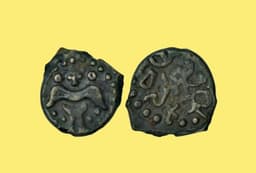
Dantidurga
Emperor · Medieval
58.7Total
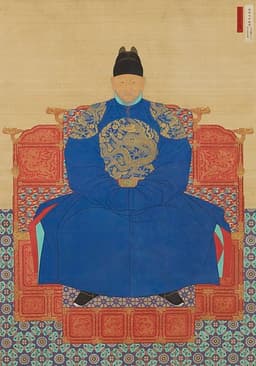
Taejo of Joseon
Emperor · Medieval
70.4Total
Basic Information
Born
735
1335
Died
756
1408
Era
Medieval
Medieval
Nationality
India
Korea
Occupation
Emperor
Emperor
Civilization
Indian
Eastern
Score Comparison
Military (10%)
67.5
74.7
Political (20%)
68.0
65.0
Influence (20%)
56.4
65.0
Legacy (20%)
50.0
80.0
Leadership (15%)
65.7
72.0
Strategy (15%)
52.5
61.2
TOTAL
58.7
70.4
Dantidurga — Complete Timeline
753 AD
Founding of the Rashtrakuta DynastyPolitical Action
Dantidurga overthrew his overlord, the Chalukya king Kirtivarman II, in a coup. He established the Rashtrakuta dynasty as the dominant power in the Deccan, with Manyakheta as his capital. This marked the beginning of a new imperial era.
Impact: regionalconstructive
754 AD
Performance of the Hiranyagarbha RitualCultural
Dantidurga performed the Hiranyagarbha (golden womb) ritual, a Vedic ceremony that symbolically rebirthed him as a Kshatriya. This legitimized his rule by claiming a higher caste status, as the Rashtrakutas were originally of humble origin.
Impact: nationalconstructive
755 AD
Conquest of MalwaWar◆ Major
Dantidurga led a military campaign into Malwa, defeating the Gurjara-Pratihara ruler Nagabhata I. He annexed the region, expanding Rashtrakuta territory northward. This victory established Rashtrakuta influence in central India.
Impact: regionaldestructive
Taejo of Joseon — Complete Timeline
1380 AD
Battle of HwangsanWar
General Yi Seong-gye defeated a Japanese pirate (wokou) force at Hwangsan. This victory enhanced his military reputation and demonstrated his capability as a commander.
WokouGoryeo Military
1388 AD
Wihwado RetreatPolitical Action
General Yi Seong-gye, ordered to invade the Ming dynasty's Liaodong region, turned his army back at Wihwado Island. This act of defiance against the Goryeo court led to a coup that eventually brought him to power.
CoupGoryeo-Ming RelationsPower Shift
Impact: national
1391 AD
Land Reform and the Gwajeon LawReform◆ Major
Taejo implemented the Gwajeon Law, a land reform that redistributed land from the old Goryeo aristocracy to his supporters and the state. This weakened the old elite and strengthened the new Joseon ruling class.
Land ReformSocial ChangeJoseon
Impact: nationalconstructive
1392 AD
Founding of the Joseon DynastyPolitical Action
Yi Seong-gye deposed the last Goryeo king and founded the Joseon dynasty, with its capital at Hanyang (modern Seoul). He established a new ruling class based on Confucian ideology, replacing the Buddhist-influenced Goryeo system.
Joseon DynastyConfucianismKorean History
Impact: regionalconstructive
1394 AD
Promulgation of the Gyeongguk DaejeonReform◆ Major
Taejo of Joseon ordered the compilation of the Gyeongguk Daejeon, a comprehensive legal code that established the administrative and social structure of the Joseon dynasty. This code remained in effect for centuries.
Legal CodeGovernanceConfucianism
Impact: nationalconstructive
Expert Analysis
Taejo of Joseon vs Dantidurga
# The Founder's Gamble: Yi Seong-gye and Dantidurga
On a summer day in 1388, a Korean general stood at a crossroads on Wihwado Island, his army poised to invade China. The order had come from the king himself: march north into the Liaodong region of the mighty Ming dynasty. But Yi Seong-gye looked at his men, at the rains that would turn roads to mud, and made a decision that would echo through centuries. He turned back. In doing so, he set in motion the fall of one dynasty and the birth of another. Three thousand miles away and four centuries earlier, another ambitious commander in the Deccan plateau of India had made a similar gamble. Dantidurga, a feudatory of the Chalukya king, decided one day that he would no longer serve. He would instead seize the throne. Both men founded dynasties. But only one built a nation that endures today.
Origins
Yi Seong-gye was born in 1335 into a world of chaos. The Goryeo dynasty, which had ruled Korea for nearly five centuries, was crumbling under internal corruption, Mongol domination, and relentless Japanese pirate raids along the coast. Yi’s father was a minor official, but the family had deep military roots in the northeastern frontier. From childhood, Yi learned the art of war in a land where survival depended on the sword. He was a product of the frontier—tough, pragmatic, and unburdened by the aristocratic pretensions of the Goryeo court.
Dantidurga emerged from a very different landscape. Born around 735, he was a chief of the Rashtrakuta clan, a group that had served as vassals to the Chalukya dynasty of Badami for generations. The Deccan was a patchwork of competing kingdoms—the Chalukyas in the west, the Pallavas in the south, the Gurjara-Pratiharas in the north. Dantidurga’s world was one of ritual, hierarchy, and Vedic tradition. His path to power required not just military might but also the blessing of the gods.
Rise to Power
Yi Seong-gye’s rise was forged in battle. In 1380, at the Battle of Hwangsan, he crushed a large force of Japanese pirates—wokou—who had been terrorizing the southern coasts. The victory was decisive, and it made him a national hero. The Goryeo court, desperate for a strong general, gave him command of the northern armies. But as his power grew, so did his disillusionment. The king and his ministers were weak, corrupt, and still kowtowing to the fading Mongol Yuan dynasty. When the king ordered Yi to invade Ming China—a suicidal campaign that would have destroyed his army—Yi made his choice. At Wihwado Island in 1388, he turned his army around and marched on the capital instead. It was a coup, but a bloodless one. He did not take the throne immediately. He installed a puppet king, then another, until in 1392 he finally deposed the last Goryeo monarch and declared himself king, taking the temple name Taejo.
Dantidurga’s ascent was quicker and more ritualistic. In 753, he simply overthrew his overlord, the Chalukya king Kirtivarman II, in a palace coup. But he understood that power in India required divine legitimacy. The following year, he performed the Hiranyagarbha ritual—the "golden womb" ceremony—in which he was symbolically reborn as a Kshatriya, a warrior of the highest caste. This act, more than any battle, transformed him from a vassal into a king. Then, in 755, he led a campaign into Malwa, defeating the Gurjara-Pratihara ruler Nagabhata I and annexing the region. Within three years, he had founded the Rashtrakuta dynasty and established its dominance over the Deccan.
Leadership & Governance
Taejo’s leadership was that of a builder. He moved the capital from Kaesong to Hanyang—modern Seoul—a site chosen for its geomantic harmony and strategic defensibility. He implemented the Gwajeon Law in 1391, a sweeping land reform that confiscated estates from the old Goryeo aristocracy and redistributed them to his supporters and to peasant farmers. This broke the economic backbone of the old order and created a new class of loyal officials. He also ordered the compilation of the Gyeongguk Daejeon, a comprehensive legal code that would govern Joseon for five centuries. His governance was Confucian, centralized, and bureaucratic—a state built on paper as much as on steel.
Dantidurga ruled differently. His Rashtrakuta empire was a feudal patchwork, held together by personal loyalty and ritual authority. He did not create a new legal code or redistribute land. Instead, he relied on the existing Chalukya administrative structure, merely replacing the top. His conquest of Malwa was a military raid, not a systematic incorporation. He was a conqueror, not a reformer. His governance was personal, not institutional.
Triumph & Tragedy
Taejo’s greatest triumph was the founding of Joseon itself—a dynasty that would last 505 years, one of the longest in world history. His tragedy came late in life. After abdicating in 1398 in favor of his son, he watched helplessly as his sons fought a bloody succession war. The Prince’s Rebellion saw his own children killing each other for the throne. He died in 1408, a broken man, haunted by the violence he had unleashed.
Dantidurga’s triumph was his swift rise and his establishment of the Rashtrakuta dynasty, which would rule the Deccan for over two centuries. His tragedy was his early death in 756, just three years after his greatest conquest. He never saw his empire fully consolidated. His successors would have to fight to hold what he had won.
Character & Destiny
Taejo was a pragmatist. He turned back at Wihwado not out of cowardice but out of calculation. He understood that loyalty to a failing state was a fool’s game. He was patient—he waited four years after his coup to take the crown. He was a builder, not a destroyer. His personality shaped a dynasty that valued order, education, and stability over glory.
Dantidurga was a gambler. He risked everything on a single coup, then legitimized it with a ritual. He was a warrior-king in the ancient mold—bold, ambitious, and bound by the traditions of his time. His destiny was to be a founder, but not a reformer. He left no new laws, no new capital, no new social order. He left a throne.
Legacy
Taejo’s legacy is Korea itself. The Joseon dynasty shaped Korean identity, language, writing (the creation of Hangul would come under his grandson), and social structure. The Confucian state he built lasted until 1910. Today, Seoul stands where he placed it. His name is revered as the father of the nation.
Dantidurga’s legacy is more modest. The Rashtrakuta dynasty he founded produced great rulers—his nephew Krishna I would build the Kailasa temple at Ellora—but the empire itself was absorbed by later powers. He is remembered as a founder, but not as a transformative figure. His Hiranyagarbha ritual is a footnote, not a foundation.
Conclusion
What drove the difference? Taejo ruled in a land where geography and culture demanded institutional permanence. Korea was a peninsula, bounded by mountains and sea, with a literate Confucian bureaucracy ready to be harnessed. Dantidurga ruled in a Deccan of shifting alliances, where personal lordship and ritual legitimacy mattered more than written law. One built a state; the other built a dynasty. Both were founders, but only one built something that outlasted the memory of its founder. The difference between them is the difference between a nation and an empire—one endures, the other fades.
Rankings
🥇
Taejo of JoseonLeader
Mil: 74.7Pol: 65.0Inf: 65.0
70.4
🥈
Dantidurga
Mil: 67.5Pol: 68.0Inf: 56.4
58.7
+11.7 behind
How This Comparison Works
Algorithm
Each figure is scored on 6 dimensions (0—100 scale) based on structured historical data: Military (10%), Political (20%), Influence (20%), Legacy (20%), Leadership (15%), Strategy (15%). The weighted total produces the final ranking.
Data Sources
Scores are computed from structured sub-indicators in the database. Scale factors adjust for era (Ancient ×0.85, Modern ×1.0) and civilization size (Eastern ×1.05, Other ×0.80) to account for differences in population and military scale.
Maximum 3 Figures
Comparisons are limited to 2—3 figures to ensure readability and statistical meaningfulness.
Error Margins
±5 points per dimension — Sub-scores are derived from historical records with inherent uncertainty. Two figures within 5 points on a dimension should be considered roughly equivalent in that area.
Total Score Accuracy
±3 points overall — The weighted combination of 6 dimensions produces a total score with approximately ±3 points of uncertainty. Differences of less than 3 points are not statistically significant— the figures are effectively tied.
Known Limitations
- Historical records are incomplete and uneven across civilizations
- Figures from oral-tradition societies may be underrepresented
- Occupation labels can misclassify multi-role figures
- Scores measure capability and impact, not moral character
- Quantitative scoring is a comparison tool, not absolute truth
Capability Radar
Military (10%) — Battles & Warfare
Battles
60
75
Win Rate
65
80
Expansion
65
65
Political (20%) — Governance & Reform
Reform
45
85
Diplomacy
55
70
Economy
50
65
Influence (20%) — Cultural & Global Reach
Cultural
40
80
Global
30
60
Legacy (20%) — Historical Impact
Historical
55
85
Longevity
50
80
Leadership (15%) — Power & Stability
Tenure
40
70
Stability
45
75
Strategy (15%) — Tactics & Innovation
Strategy
60
75
Tactics
55
70
Reform
40
60
Similar Comparisons
Comments & Discussion
CrimsonCartographer6/16/2026
Yi Seong-gye’s retreat at Wihwado wasn’t just a military pivot—it was a masterclass in domestic logistics. While Dantidurga’s rebellion relied on swift cavalry raids, Yi understood that preserving his 50,000-man army for Korea’s internal strife was smarter than chasing Ming ghosts. He knew the rain would rot his supply lines; Dantidurga never had that burden. One man saved a nation’s manpower; the other gambled on conquest. History favors the survivor.
数据考据家6/16/2026
拿两个不同世纪的君主硬比,数据上就是个笑话。朝鲜太祖活了73岁(1392-1408),在位仅7年,而丹蒂杜尔迦统治近30年(753-780),领土扩张三倍。寿命长度决定改革深度,Yi那点时间连税制都没理顺就被儿子逼宫了,后者至少建了六座庙宇巩固神权。别被“建国者”光环骗了,地缘背景差异太大。
TiberiusReader6/16/2026
Classics grad here—Dantidurga’s brahmadeya land grants are his real legacy, not some battlefield gambit. While Yi Seong-gye boosted Korean archery and Confucian bureaucracy, Dantidurga rewrote Deccan patronage by rewarding Brahmin priests with tax-free villages, embedding his rule in sacred legitimacy. Compare that to Yi’s secular Neo-Confucian purge—one built temples, the other burned Buddhist texts. Who sounds more lasting?
江南浪子6/16/2026
说Dantidurga没建长久的国家?你查过印度历史吗?753年他攻破马利克德时,那已经是拉什特拉库塔帝国的雏形了,后来延续到982年,两百多年!朝鲜王朝虽长(1392-1910),但Yi Seong-gye的地盘才多大?半岛一隅。而从喀拉拉邦到中央邦都是拉什特拉库塔的影响范围。论战略纵深和文化覆盖,Dantidurga的抉择更狠:他直接吞服宗主,而不是像Yi那样迂回政变。
修正派瘦马6/16/2026
别把Yi Seong-gye神话成“民族救星”了。他的Wihwado退兵本质是军阀夺权的遮羞布,你看他后来怎么对付高丽忠惠王?政变、弑君,跟Dantidurga篡位没什么两样。唯一的区别是,Dantidurga在753年打败Kirtivarman II后,至少没把前朝皇室赶尽杀绝—他保留了Chalukya支系的封地。而朝鲜太祖屠了高丽王室近亲。谁更血腥?数据说话。