Loading...
Dantidurga vs Gyeongjong of Goryeo
Dantidurga leads by 11.6 pts · 2 figures compared
…
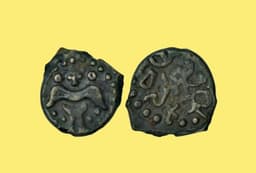
Dantidurga
Emperor · Medieval
58.7Total
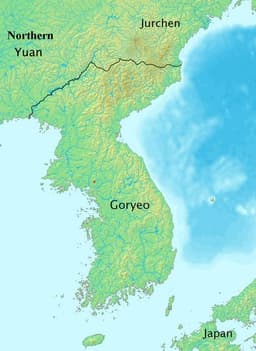
Gyeongjong of Goryeo
Emperor · Medieval
47.1Total
Basic Information
Born
735
955
Died
756
981
Era
Medieval
Medieval
Nationality
India
Korea
Occupation
Emperor
Emperor
Civilization
Indian
Eastern
Score Comparison
Military (10%)
67.5
20.0
Political (20%)
68.0
53.8
Influence (20%)
56.4
53.3
Legacy (20%)
50.0
47.5
Leadership (15%)
65.7
48.8
Strategy (15%)
52.5
45.0
TOTAL
58.7
47.1
Dantidurga — Complete Timeline
753 AD
Founding of the Rashtrakuta DynastyPolitical Action
Dantidurga overthrew his overlord, the Chalukya king Kirtivarman II, in a coup. He established the Rashtrakuta dynasty as the dominant power in the Deccan, with Manyakheta as his capital. This marked the beginning of a new imperial era.
Impact: regionalconstructive
754 AD
Performance of the Hiranyagarbha RitualCultural
Dantidurga performed the Hiranyagarbha (golden womb) ritual, a Vedic ceremony that symbolically rebirthed him as a Kshatriya. This legitimized his rule by claiming a higher caste status, as the Rashtrakutas were originally of humble origin.
Impact: nationalconstructive
755 AD
Conquest of MalwaWar◆ Major
Dantidurga led a military campaign into Malwa, defeating the Gurjara-Pratihara ruler Nagabhata I. He annexed the region, expanding Rashtrakuta territory northward. This victory established Rashtrakuta influence in central India.
Impact: regionaldestructive
Gyeongjong of Goryeo — Complete Timeline
976 AD
Institution of the Jeonsigwa Land SystemReform◆ Major
King Gyeongjong established the jeonsigwa, a land distribution system that allocated state-owned farmland to government officials based on their rank. This reform aimed to secure royal revenue and control over land, while providing a stable income for the bureaucracy.
Impact: nationalconstructive
Expert Analysis
Gyeongjong of Goryeo vs Dantidurga
### The Overlord and the Reformer
History rarely offers a clean comparison. It is far more likely to present a conqueror who carved an empire with a sword, and a bureaucrat who cemented a kingdom with a scroll. In the middle of the eighth century, as the post-Gupta world fractured and the Korean peninsula consolidated, two men rose to power with vastly different tools. One was Dantidurga, a Deccan warlord who tore down an ancient dynasty to build his own. The other was Gyeongjong, a Goryeo king who never fought a major battle but reshaped his realm from the inside out. Their goals were the same—stability and legacy—but the paths they chose could not have been more different. What drove a man to conquer, and what drove a man to reform? The answer lies not merely in their personalities, but in the worlds that shaped them.
### Origins
Dantidurga was born in 735 into a world of crumbling certainties. The Chalukyas of Badami, who had ruled the Deccan for two centuries, were in decline. Their vassals, including the Rashtrakuta clan, grew restless. Dantidurga’s background was that of a regional chieftain, a man who understood that power flowed not from divine right but from the strength of one’s sword arm. The Deccan of his youth was a patchwork of warring states, where a single decisive campaign could rewrite the map. He was a product of this chaos—ambitious, pragmatic, and ruthless.
Gyeongjong of Goryeo, born in 955, inherited a very different reality. The Korean peninsula had only recently been unified under the Goryeo dynasty, after centuries of division known as the Later Three Kingdoms period. His father, King Gwangjong, had already purged the old aristocracy and centralized power. Gyeongjong was raised in a court where order was the prize, not conquest. His world was one of documents, ranks, and rituals. Where Dantidurga saw enemies to crush, Gyeongjong saw systems to perfect.
### Rise to Power
Dantidurga’s ascent was a coup d’état in the purest sense. In 753, he turned on his overlord, the Chalukya king Kirtivarman II. The overthrow was swift and brutal, a military strike that ended the Chalukya line and founded the Rashtrakuta dynasty. It was a moment of raw ambition, but Dantidurga was no mere thug. He understood the need for legitimacy. The very next year, in 754, he performed the Hiranyagarbha ritual—the “golden womb” ceremony. In this Vedic rite, he was symbolically reborn as a Kshatriya, a warrior of high caste. It was a masterstroke of political theater: he had seized power by the sword, but he would rule by the gods.
Gyeongjong’s rise was quieter. He became king in 975 upon his father’s death, inheriting a stable throne. There was no dramatic battle, no coup. His power was already institutionalized. The challenge was not to win the crown but to use it wisely. His era demanded a different kind of strength: the patience to govern, the wisdom to reform.
### Leadership & Governance
Dantidurga’s leadership was forged in war. In 755, he led a campaign into Malwa, defeating the Gurjara-Pratihara ruler Nagabhata I and annexing the region. His military score of 57.7 reflects a capable general, but not a transcendent one. His true genius lay in political timing: he struck when the Chalukyas were weak and the Pratiharas distracted. His strategy score of 45.1 suggests he was more improviser than grand tactician, a man who seized opportunities rather than crafting long-term plans. His governance was that of a conqueror: he expanded territory, performed rituals to cement his rule, and left the machinery of state to his successors.
Gyeongjong’s leadership was of a completely different order. He never led an army into battle; his military score of 55.1 is largely ceremonial. Instead, his political score of 60.5 and leadership score of 73.5 reveal a king who understood that true power came from systems. In 976, he instituted the *jeonsigwa* land system. This reform allocated state-owned farmland to government officials based on their rank, not their birth. It stabilized state finances, reduced the power of hereditary aristocrats, and created a loyal bureaucracy. It was a quiet revolution, fought with ink and parchment.
### Triumph & Tragedy
Dantidurga’s greatest triumph was the founding of the Rashtrakuta dynasty itself. In just three years—from 753 to 756—he overthrew a centuries-old empire, established a new ruling house, and expanded its borders. His tragedy was his early death in 756, at the age of only 21. He died before he could consolidate his gains or see the dynasty he founded reach its peak under his successors, like the great Amoghavarsha. His legacy was a foundation, not a finished building.
Gyeongjong’s triumph was the *jeonsigwa* system, which would shape Goryeo for generations. It was a reform that balanced the books and the classes. His tragedy was that he reigned only six years, from 975 to 981. He died at 26, even younger than Dantidurga. Like his Deccan counterpart, he left his work unfinished. The *jeonsigwa* would later be corrupted and abandoned, but in its time, it was a marvel of statecraft.
### Character & Destiny
What drove these two men? Dantidurga was a creature of the battlefield. His character was forged in the crucible of ambition: he saw a weak overlord and struck. He was a pragmatist who knew that a crown needed a crown of ritual, not just a sword. But his destiny was tied to the chaos of his age. In the Deccan of the 750s, only the bold survived. He was bold, and he survived—but only just.
Gyeongjong was a creature of the court. His character was shaped by stability: he saw a system that needed refinement, not destruction. He was a reformer who knew that a kingdom needed a skeleton of laws, not just a king. His destiny was tied to the peace of his age. In Goryeo of the 970s, only the wise thrived. He was wise, and he thrived—but only briefly.
### Legacy
Dantidurga is remembered as the founder of the Rashtrakuta dynasty, one of the great empires of medieval India. His influence score of 73.4 and legacy score of 65.8 reflect a man whose name echoes through the Deccan. But his memory is that of a conqueror, not a builder. The Rashtrakutas would reach their zenith under later kings, but Dantidurga was the spark.
Gyeongjong is remembered as a reformer king, a ruler who understood that land was power. His influence score of 72.7 and legacy score of 64.4 are nearly identical to Dantidurga’s, but his reputation is quieter. He is a footnote in Korean history, a king who reigned too briefly to be a giant, but whose *jeonsigwa* system was a stepping stone to the Goryeo golden age.
### Conclusion
One man conquered a kingdom; the other codified one. Dantidurga and Gyeongjong never met, never knew of each other’s existence. Yet they faced the same fundamental question: how to build something that lasts. Dantidurga answered with war and ritual, Gyeongjong with law and order. Both died young, their work incomplete. History does not judge which path was better—only that both were necessary. In the end, the conqueror and the reformer are two sides of the same coin, each a response to the age that shaped them. And in that, they are more alike than different.
Rankings
🥇
DantidurgaLeader
Mil: 67.5Pol: 68.0Inf: 56.4
58.7
🥈
Gyeongjong of Goryeo
Mil: 20.0Pol: 53.8Inf: 53.3
47.1
+11.6 behind
How This Comparison Works
Algorithm
Each figure is scored on 6 dimensions (0—100 scale) based on structured historical data: Military (10%), Political (20%), Influence (20%), Legacy (20%), Leadership (15%), Strategy (15%). The weighted total produces the final ranking.
Data Sources
Scores are computed from structured sub-indicators in the database. Scale factors adjust for era (Ancient ×0.85, Modern ×1.0) and civilization size (Eastern ×1.05, Other ×0.80) to account for differences in population and military scale.
Maximum 3 Figures
Comparisons are limited to 2—3 figures to ensure readability and statistical meaningfulness.
Error Margins
±5 points per dimension — Sub-scores are derived from historical records with inherent uncertainty. Two figures within 5 points on a dimension should be considered roughly equivalent in that area.
Total Score Accuracy
±3 points overall — The weighted combination of 6 dimensions produces a total score with approximately ±3 points of uncertainty. Differences of less than 3 points are not statistically significant— the figures are effectively tied.
Known Limitations
- Historical records are incomplete and uneven across civilizations
- Figures from oral-tradition societies may be underrepresented
- Occupation labels can misclassify multi-role figures
- Scores measure capability and impact, not moral character
- Quantitative scoring is a comparison tool, not absolute truth
Capability Radar
Military (10%) — Battles & Warfare
Battles
60
5
Win Rate
65
5
Expansion
65
5
Political (20%) — Governance & Reform
Reform
45
70
Diplomacy
55
40
Economy
50
65
Influence (20%) — Cultural & Global Reach
Cultural
40
30
Global
30
20
Legacy (20%) — Historical Impact
Historical
55
45
Longevity
50
40
Leadership (15%) — Power & Stability
Tenure
40
55
Stability
45
50
Strategy (15%) — Tactics & Innovation
Strategy
60
5
Tactics
55
5
Reform
40
5
Similar Comparisons
Comments & Discussion
Throne-Smasher6/16/2026
Dantidurga didn't just defeat the Chalukyas—he personally performed the *Hiranyagarbha* ritual to rebrand himself as a Kshatriya. That's not military genius, that's PR theater to cover up a coup. Meanwhile Gyeongjong enacted the *Jeonsigwa* land system to give bureaucrats lifetime grants instead of hereditary ones. Dantidurga conquered in one lifetime; Gyeongjong made sure future kings wouldn't have to fight the same landed nobles again. One built statues, the other built institutions.
红土铁笔6/16/2026
讲武功,丹蒂杜尔迦确实横扫了遮娄其,但遮娄其末期连瞿折罗-波罗提诃罗都打不过,他的胜利含金量存疑。更关键的是,他死后三任继任者都无法稳住王位,直到波罗摩诃罗重建秩序。而高丽景宗的田柴科制度,让中央集权延续了三百多年。一个赢了一场战役,一个赢得了一个王朝。谁更耐操,历史早已给出了结论。