Loading...
Danjong of Joseon vs Li Yu
Li Yu leads by 0.7 pts · 2 figures compared
…

Danjong of Joseon
Emperor · Medieval
51.5Total
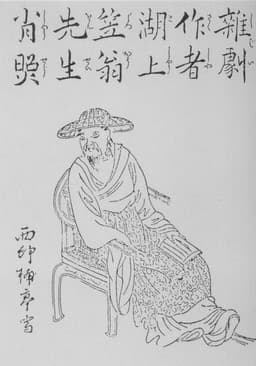
Li Yu
Emperor · Medieval
52.2Total
Basic Information
Born
1441
727
Died
1457
779
Era
Medieval
Medieval
Nationality
Korea
China
Occupation
Emperor
Emperor
Civilization
Eastern
Eastern
Score Comparison
Military (10%)
53.7
20.0
Political (20%)
68.0
68.0
Influence (20%)
52.5
54.9
Legacy (20%)
35.8
50.0
Leadership (15%)
45.0
53.2
Strategy (15%)
71.5
57.5
TOTAL
51.5
52.2
Danjong of Joseon — Complete Timeline
1452 AD
Accession to the thronePolitical Action◆ Major
Danjong became king of Joseon at age 12 following the death of his father, King Munjong. His youth made him vulnerable to power struggles among the court, particularly from his uncle, Grand Prince Suyang (later Sejo).
SuccessionJoseon Dynasty
Impact: national
1455 AD
Deposition by SejoPolitical Action
Danjong was forced to abdicate by his uncle, Grand Prince Suyang, who seized the throne as King Sejo. Danjong was demoted to the rank of prince and placed under house arrest, ending his brief reign.
CoupUsurpationJoseon Dynasty
Impact: nationaltragic
1456 AD
Execution of loyalist ministersPolitical Action◆ Major
Six loyalist ministers (Sayuksin) who plotted to restore Danjong to the throne were discovered and executed by Sejo. The failed plot intensified Sejo's persecution of Danjong's supporters.
PurgeLoyalistsJoseon Dynasty
Impact: nationaltragic
1457 AD
Murder by SejoPolitical Action
Danjong was murdered on Sejo's orders, likely by poisoning or forced suicide, at age 16. His death eliminated the last threat to Sejo's rule and solidified the usurper's hold on the throne.
AssassinationJoseon DynastyUsurpation
Impact: nationaltragic
Li Yu — Complete Timeline
763 AD
Suppression of the An Lushan RebellionWar
Under Li Yu's reign, the An Lushan Rebellion was finally crushed after eight years of war. The rebel state of Yan collapsed, and Tang authority was restored over most of the empire, though the dynasty was permanently weakened.
An Lushan RebellionCivil War EndTang Restoration
Impact: nationalconstructive
Tibetan Invasion of Chang'anWar◆ Major
The Tibetan Empire launched a surprise invasion, capturing the Tang capital Chang'an. Li Yu fled to Shanzhou. The Tibetans installed a puppet emperor before being driven out by Tang forces and Uyghur allies. This exposed Tang military weakness.
Tibetan InvasionCapital LostMilitary Weakness
Impact: nationaldestructive
Rise of the Fanzhen SystemPolitical Action◆ Major
Li Yu granted amnesty to many rebel generals and allowed them to retain control of their provinces as military governors (jiedushi). This created semi-autonomous fanzhen that weakened central authority and led to future rebellions.
FanzhenDecentralizationMilitary Governors
Impact: nationaldestructive
765 AD
Peace Treaty with TibetPolitical Action
Li Yu negotiated a peace treaty with the Tibetan Empire, establishing a border and ending hostilities for a time. The treaty stabilized the western frontier but did not prevent future conflicts.
TibetDiplomacyBorder Treaty
Impact: regionalconstructive
Expert Analysis
Origins
Danjong of Joseon (born 1441) was the only son of King Munjong, who died when Danjong was 12. As a child raised in the palace, he was groomed for rule but lacked the experience to navigate the fierce factionalism among Joseon's elite. His uncle, Grand Prince Suyang (later King Sejo), was an ambitious and ruthless military leader who controlled the court.
Li Yu (born 726) was the eldest son of Emperor Suzong of Tang. He grew up during the An Lushan Rebellion, which began in 755, and was deeply involved in military campaigns from a young age. His father entrusted him with leading troops to recapture the capital Chang'an in 757. Li Yu's early exposure to war and governance shaped his pragmatic, conciliatory approach to ruling.
Rise to Power
Danjong ascended the throne in 1452 at age 12. His reign was immediately dominated by his uncle Suyang, who orchestrated a series of purges against rival officials. In 1453, Suyang staged a coup, executing key ministers like Hwangbo In and Kim Jongseo. Danjong was forced to abdicate in 1455 and was demoted to prince. He was murdered in 1457 at age 16 on Sejo's orders, after a failed plot by loyalists (the Sayuksin) to restore him.
Li Yu became emperor in 762 after his father Suzong's death. By then, the An Lushan Rebellion was in its final stages. Li Yu's rise was marked by military successes: he recaptured Luoyang in 762 with the help of Uyghur allies, and the rebel state of Yan collapsed in 763. However, the rebellion had weakened central authority, and Li Yu faced the challenge of rebuilding imperial prestige.
Leadership & Governance
Danjong's rule was nominal; actual power rested with Sejo. He had no opportunity to implement policies. His brief reign saw the continuation of his father's Confucian bureaucracy, but all decisions were made by Sejo. Danjong's leadership score of 45.0 reflects his inability to command or govern.
Li Yu adopted a pragmatic approach. He granted amnesty to rebel generals and allowed them to retain their provinces as military governors (jiedushi), creating the Fanzhen system. This preserved peace but weakened central control. He also reformed the tax system to recover from the rebellion's devastation. His political score of 68.0 matches Danjong's, but Li Yu's influence (54.9 vs 52.5) and legacy (50.0 vs 35.8) are higher because his decisions shaped Tang for decades.
Triumph & Tragedy
Danjong's greatest triumph was simply surviving his first two years on the throne, but his deposition and murder were his tragedy. He became a symbol of innocent victimhood in Korean history, with his name invoked by later reformers. His legacy score of 35.8 is low due to his lack of achievements.
Li Yu's triumph was ending the An Lushan Rebellion and restoring the Tang dynasty. However, his policy of appeasing rebel generals led to the Fanzhen system, which caused regional instability and eventually contributed to the dynasty's decline. The Tibetan invasion of Chang'an in 763, which forced Li Yu to flee, was a major humiliation. He negotiated a peace treaty in 765, but the empire never fully recovered its former strength.
Character & Destiny
Danjong was a child caught in a power struggle. His character is often portrayed as gentle and scholarly, but he lacked the cunning to outmaneuver Sejo. His fate was sealed by birth: as a young king with a powerful uncle, he was a target. His strategy score of 71.5 may reflect the potential he showed in his short life, but it was unrealized.
Li Yu was pragmatic and resilient. He prioritized stability over ideological purity, which earned him criticism for allowing warlords to flourish. His willingness to negotiate with enemies like the Tibetans showed flexibility. However, his conciliatory nature also meant he failed to assert strong central authority, leading to long-term fragmentation.
Legacy
Danjong is remembered as a tragic figure in Korean history. His story is a cautionary tale about the dangers of court intrigue. The Sayuksin loyalists who died for him became martyrs, and Danjong's name is invoked in discussions of political legitimacy. His historical impact is minimal in terms of policy, but his story endures in Korean culture.
Li Yu's legacy is mixed. He saved the Tang dynasty from collapse, but his compromises created the Fanzhen system that plagued later emperors. The dynasty survived another 150 years after his reign, but central authority never regained its pre-rebellion strength. Historians rate his reign as a period of restoration with significant flaws.
Conclusion
Li Yu had a greater impact than Danjong. While Danjong's story is culturally significant, his actual governance was nonexistent. Li Yu's decisions directly shaped the post-rebellion Tang dynasty, for better or worse. His total score of 52.2 edges out Danjong's 51.5, reflecting his real, albeit imperfect, achievements. In the balance of history, Li Yu restored an empire; Danjong could not even save himself.
Rankings
🥇
Li YuLeader
Mil: 20.0Pol: 68.0Inf: 54.9
52.2
🥈
Danjong of Joseon
Mil: 53.7Pol: 68.0Inf: 52.5
51.5
+0.7 behind
How This Comparison Works
Algorithm
Each figure is scored on 6 dimensions (0—100 scale) based on structured historical data: Military (10%), Political (20%), Influence (20%), Legacy (20%), Leadership (15%), Strategy (15%). The weighted total produces the final ranking.
Data Sources
Scores are computed from structured sub-indicators in the database. Scale factors adjust for era (Ancient ×0.85, Modern ×1.0) and civilization size (Eastern ×1.05, Other ×0.80) to account for differences in population and military scale.
Maximum 3 Figures
Comparisons are limited to 2—3 figures to ensure readability and statistical meaningfulness.
Error Margins
±5 points per dimension — Sub-scores are derived from historical records with inherent uncertainty. Two figures within 5 points on a dimension should be considered roughly equivalent in that area.
Total Score Accuracy
±3 points overall — The weighted combination of 6 dimensions produces a total score with approximately ±3 points of uncertainty. Differences of less than 3 points are not statistically significant— the figures are effectively tied.
Known Limitations
- Historical records are incomplete and uneven across civilizations
- Figures from oral-tradition societies may be underrepresented
- Occupation labels can misclassify multi-role figures
- Scores measure capability and impact, not moral character
- Quantitative scoring is a comparison tool, not absolute truth
Capability Radar
Military (10%) — Battles & Warfare
Battles
45
55
Win Rate
50
50
Expansion
49
20
Political (20%) — Governance & Reform
Reform
0
55
Diplomacy
0
60
Economy
0
50
Influence (20%) — Cultural & Global Reach
Cultural
5
40
Global
0
30
Legacy (20%) — Historical Impact
Historical
10
55
Longevity
5
45
Leadership (15%) — Power & Stability
Tenure
5
65
Stability
0
55
Strategy (15%) — Tactics & Innovation
Strategy
55
60
Tactics
54
45
Reform
61
40
Similar Comparisons
Comments & Discussion
No comments yet. Be the first to share your thoughts!