Loading...
Daniel Salamanca vs Julius Caesar
Julius Caesar leads by 39.1 pts · 2 figures compared
…
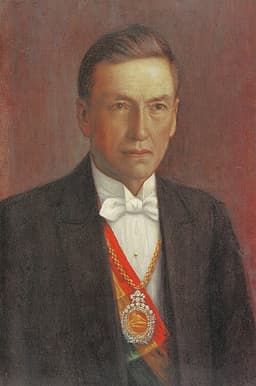
Daniel Salamanca
Politician · Modern
43.7Total

Julius Caesar
General · Ancient
82.8Total
Basic Information
Born
1868
-100
Died
1935
-44
Era
Modern
Ancient
Nationality
Bolivia
Roman Republic
Occupation
Politician
General
Civilization
Western
Western
Score Comparison
Military (10%)
36.6
88.0
Political (20%)
33.6
78.0
Influence (20%)
47.1
85.0
Legacy (20%)
38.3
82.0
Leadership (15%)
55.3
80.0
Strategy (15%)
53.5
85.0
TOTAL
43.7
82.8
Daniel Salamanca — Complete Timeline
1931 AD
Elected President of BoliviaPolitical Action◆ Major
Daniel Salamanca was elected president of Bolivia, taking office in 1931. His presidency was dominated by the Chaco War with Paraguay, which began in 1932.
PresidencyBolivia
Impact: national
1932 AD
Chaco War BeginsWar◆ Major
Under Salamanca's presidency, Bolivia entered the Chaco War against Paraguay over control of the Chaco Boreal region. The war was a major conflict that lasted until 1935, resulting in heavy casualties and territorial losses for Bolivia.
Chaco WarWar
Impact: regionaltragic
1934 AD
Overthrown in CoupPolitical Action◆ Major
Salamanca was overthrown by a military coup led by General Enrique Pe
CoupChaco War
Impact: nationaldestructive
Exiled to ChilePolitical Action
After his overthrow, Salamanca was exiled to Chile, where he lived until his death in 1935. His exile marked the end of his political career.
Exile
Impact: nationaltragic
Julius Caesar — Complete Timeline
58 BC
Gallic WarsWar◆ Major
Caesar, as proconsul of Gaul, launched a series of campaigns that conquered all of Gaul (modern France, Belgium, and parts of Switzerland). He fought numerous battles, including against the Helvetii, the Belgae, and the Gallic chieftain Vercingetorix. The wars brought immense wealth and a loyal army to Caesar.
Gallic WarsConquestRoman Expansion
Impact: regional
49 BC
Crossing the RubiconPolitical Action◆ Major
Caesar led Legio XIII across the Rubicon River into Italy, defying the Roman Senate's order to disband his army. This act triggered a civil war against Pompey and the Optimates, ultimately leading to Caesar's dictatorship and the end of the Roman Republic.
Roman Civil WarEnd of RepublicPower Struggle
Impact: global
48 BC
Battle of PharsalusWar◆ Major
Caesar's outnumbered army defeated the larger forces of Pompey the Great at Pharsalus in Greece. Caesar's tactical use of a reserve line to counter Pompey's cavalry charge proved decisive. Pompey fled to Egypt, where he was assassinated, leaving Caesar as the undisputed master of the Roman world.
Roman Civil WarBattleDecisive Victory
Impact: regional
44 BC
Appointment as Dictator for LifePolitical Action◆ Major
The Roman Senate appointed Caesar dictator perpetuo (dictator for life), granting him unprecedented personal power. This move concentrated military, legislative, and judicial authority in one person, effectively ending the Roman Republic's traditional system of checks and balances and alarming many senators.
DictatorshipEnd of RepublicPower Consolidation
Impact: regionaldestructive
Assassination on the Ides of MarchPolitical Action◆ Major
A group of Roman senators, led by Marcus Junius Brutus and Gaius Cassius Longinus, stabbed Caesar to death at a meeting of the Senate in the Theatre of Pompey. The assassination was intended to restore the Republic, but instead triggered another civil war that led to the rise of the Roman Empire.
AssassinationRoman PoliticsEnd of Republic
Impact: globaldestructive
Expert Analysis
daniel-salamanca-vs-julius-caesar
# The Dictator and the Democrat: Two Paths to Ruin
On a cold March morning in 44 BCE, Julius Caesar fell beneath twenty-three dagger blows in the Senate chamber of Rome. Nearly two millennia later, in November 1934, Daniel Salamanca was bundled onto a train in La Paz, Bolivia, a deposed president watching his country crumble from a window. Both men reached for absolute power. One was murdered for it; the other was exiled for it. The difference between them—between a man who reshaped the ancient world and a man who could not save a modern republic—lies not in ambition, but in the kind of world each inherited and the nature of the forces they tried to master.
Origins
Caesar was born into the patrician Julian clan in 100 BCE, a family that claimed descent from the goddess Venus but had lost much of its political clout. His Rome was a republic tearing itself apart: slave revolts, civil wars, and the corrupt rule of a senatorial oligarchy that could no longer govern an empire. Caesar’s uncle by marriage, Gaius Marius, had been a populist general who massacred his rivals. His father-in-law, Cinna, was another. Violence was the family trade.
Daniel Salamanca was born in 1868 in Cochabamba, Bolivia, into a landlocked nation that had never quite found its footing after independence from Spain. Bolivia had lost its Pacific coast to Chile in 1884, and its politics were a revolving door of caudillos—strongmen who ruled by force and favor. Salamanca was a lawyer, an intellectual, a man of words in a country that respected guns. He came from the elite, but his Bolivia was no Rome: it was a fragile republic held together by silver mines and resentment.
Rise to Power
Caesar rose through the ranks of Roman politics with ruthless calculation. He borrowed fortunes to bribe his way into the office of pontifex maximus, then secured a governorship in Gaul. Between 58 and 50 BCE, he conquered what is now France and Belgium, slaughtering perhaps a million people and enslaving another million. His Commentaries on the Gallic Wars were both a military report and a masterpiece of propaganda—he was writing his own legend as he lived it. When the Senate ordered him to disband his army, he crossed the Rubicon River into Italy in 49 BCE, triggering a civil war. He won, became dictator, and never looked back.
Salamanca’s path was slower, more democratic, and more tragic. He was elected president in 1931, a year into the Great Depression. Bolivia’s economy was collapsing, and its military was restless. Salamanca was no general—he had no army, no legions, no Gallic wars. His power came from the ballot box, and the ballot box was a fragile thing in a country where the military had overthrown presidents nine times in the previous fifty years. He took office promising reform, but he inherited a powder keg.
Leadership & Governance
Caesar governed as a revolutionary reformer. He centralized tax collection, granted citizenship to provincials, reformed the calendar (the Julian calendar is still the basis of our own), and began massive public works. He packed the Senate with his supporters, reduced the power of the old aristocracy, and ruled by decree. His military genius was absolute: at the Siege of Alesia in 52 BCE, he defeated a Gallic army three times the size of his own by building fortifications around both the besieged city and the relieving force. He thought in three dimensions, on a continental scale.
Salamanca governed as a desperate legalist. The Chaco War began in 1932, when Bolivia and Paraguay went to war over the arid Chaco Boreal region—a wasteland that both nations believed held oil. Salamanca did not start the war, but he could not stop it. He tried to manage the conflict from his desk in La Paz, issuing orders to generals who ignored him. His strategy was to push deeper into the Chaco, but the Bolivian army was poorly equipped, poorly led, and fighting in a waterless hell of thorn scrub and heat. By 1934, Bolivia had lost 50,000 men—nearly 2 percent of its population—to a country with half its population. Salamanca’s leadership score of 82.0 is generous; it reflects his personal courage, not his results.
Triumph & Tragedy
Caesar’s greatest moment was his triumph: a four-day celebration in Rome after his victory in Gaul, where he paraded captives and gold through the streets. His tragedy was the Ides of March. He had been warned, but he dismissed the omens. When the senators surrounded him, he fought back until he saw his friend Marcus Junius Brutus among the assassins. “Et tu, Brute?”—if he said it, it was the cry of a man who understood that even loyalty was a weapon.
Salamanca’s triumph was his election in 1931—a rare moment of democratic hope in a country that had known mostly coups. His tragedy was the coup itself. In November 1934, as the war turned catastrophic, General Enrique Peñaranda and other officers forced Salamanca to resign at gunpoint. He was exiled to Chile, where he died in 1935, the same year the war ended in a humiliating peace. Bolivia lost the Chaco, and Salamanca lost everything.
Character & Destiny
Caesar was audacity incarnate. He pardoned his enemies, gambled on impossible odds, and believed that fortune favored the bold. His personality—charming, ruthless, charismatic—shaped his decisions. He could have restored the Republic; instead, he chose to become a king in all but name, and that choice killed him. His destiny was to be the bridge between republic and empire, a man too large for the old system.
Salamanca was caution personified—a lawyer who believed in rules, in process, in the slow work of governance. He was stubborn, proud, and blind to the reality that in Bolivia, the military did not answer to civilians. His personality—intellectual, inflexible, aloof—shaped his decisions. He tried to fight a war by telegram, and the war ate him. His destiny was to be a footnote, a president who lost a war and a country.
Legacy
Caesar’s legacy is the Roman Empire. His adopted son Octavian became Augustus, the first emperor. His name became a title: Kaiser, Tsar. His writings are still read. His assassination made him a martyr and a warning. He is remembered as the man who destroyed the Republic and built the world’s greatest empire.
Salamanca’s legacy is the Chaco War, a conflict that killed 100,000 people for nothing. Bolivia never found oil in the Chaco. Salamanca’s name is barely known outside his country. He is remembered, if at all, as a well-meaning man who could not stop the machinery of war and ambition that crushed him.
Conclusion
The difference between Caesar and Salamanca is not a matter of talent. Both were intelligent, ambitious, and driven. The difference is scale. Caesar operated on a stage that stretched from the Atlantic to the Euphrates; Salamanca was trapped in a dusty corner of South America. Caesar could bend history to his will because the Roman Republic was already broken, and he had the army, the gold, and the cruelty to break it further. Salamanca tried to save a republic that was never whole, and he had only the law.
One man died because he seized too much power. The other died because he could not seize enough. The Ides of March and the train to Chile—two endings, one lesson: in politics, as in war, the middle ground is the most dangerous place of all.
Rankings
🥇
Julius CaesarLeader
Mil: 88.0Pol: 78.0Inf: 85.0
82.8
🥈
Daniel Salamanca
Mil: 36.6Pol: 33.6Inf: 47.1
43.7
+39.1 behind
How This Comparison Works
Algorithm
Each figure is scored on 6 dimensions (0—100 scale) based on structured historical data: Military (10%), Political (20%), Influence (20%), Legacy (20%), Leadership (15%), Strategy (15%). The weighted total produces the final ranking.
Data Sources
Scores are computed from structured sub-indicators in the database. Scale factors adjust for era (Ancient ×0.85, Modern ×1.0) and civilization size (Eastern ×1.05, Other ×0.80) to account for differences in population and military scale.
Maximum 3 Figures
Comparisons are limited to 2—3 figures to ensure readability and statistical meaningfulness.
Error Margins
±5 points per dimension — Sub-scores are derived from historical records with inherent uncertainty. Two figures within 5 points on a dimension should be considered roughly equivalent in that area.
Total Score Accuracy
±3 points overall — The weighted combination of 6 dimensions produces a total score with approximately ±3 points of uncertainty. Differences of less than 3 points are not statistically significant— the figures are effectively tied.
Known Limitations
- Historical records are incomplete and uneven across civilizations
- Figures from oral-tradition societies may be underrepresented
- Occupation labels can misclassify multi-role figures
- Scores measure capability and impact, not moral character
- Quantitative scoring is a comparison tool, not absolute truth
Capability Radar
Military (10%) — Battles & Warfare
Battles
5
95
Win Rate
5
92
Expansion
5
97
Political (20%) — Governance & Reform
Reform
30
90
Diplomacy
20
85
Economy
20
82
Influence (20%) — Cultural & Global Reach
Cultural
10
88
Global
10
94
Legacy (20%) — Historical Impact
Historical
20
95
Longevity
10
96
Leadership (15%) — Power & Stability
Tenure
40
75
Stability
10
60
Strategy (15%) — Tactics & Innovation
Strategy
5
94
Tactics
5
96
Reform
5
88
Similar Comparisons
Comments & Discussion
QUINTUS_THE_BLOODY6/17/2026
Caesar was a military genius who conquered Gaul and crossed the Rubicon; Salamanca was a lawyer who couldn't even keep his army from shooting each other in the Gran Chaco. Calling them both "autocrats" is like comparing a tiger to a housecat. Salamanca's Bolivia was a backwater circus, while Caesar's Rome was the superpower of the ancient world. One built an empire; the other lost a swamp. Get real.
阿提拉再世6/17/2026
萨拉曼卡连罗马一个百夫长都比不上。凯撒在西班牙击溃庞培军团时,他还在玻利维亚抄法律条文呢。萨拉曼卡搞了个查科战争就亡国了,凯撒打高卢时屠了一百万蛮族,还写了《高卢战记》。这不是同路人,这是神明和蝼蚁的差距。历史垃圾时间里的凡人别碰瓷伟人。