Loading...
Dag Hammarskjold vs Julius Caesar
Julius Caesar leads by 22.5 pts · 2 figures compared
…
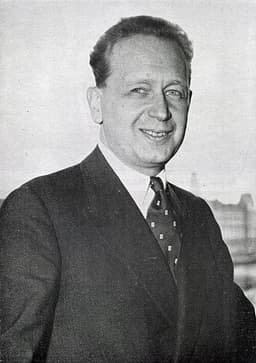
Dag Hammarskjold
Politician · Modern
60.3Total

Julius Caesar
General · Ancient
82.8Total
Basic Information
Born
1905
-100
Died
1961
-44
Era
Modern
Ancient
Nationality
Sweden
Roman Republic
Occupation
Politician
General
Civilization
Western
Western
Score Comparison
Military (10%)
48.4
88.0
Political (20%)
60.0
78.0
Influence (20%)
58.3
85.0
Legacy (20%)
56.0
82.0
Leadership (15%)
79.8
80.0
Strategy (15%)
59.5
85.0
TOTAL
60.3
82.8
Dag Hammarskjold — Complete Timeline
1953 AD
Elected Secretary-General of the United NationsPolitical Action◆ Major
Dag Hammarskj
UN Secretary-GeneralLeadershipPost-War
Impact: globalconstructive
1956 AD
Established the UN Emergency ForcePolitical Action◆ Major
Hammarskjöld created the first UN peacekeeping force, the UN Emergency Force, to supervise the withdrawal of invading forces during the Suez Crisis. This established the precedent for UN peacekeeping operations.
PeacekeepingSuez CrisisUNEF
Impact: globalconstructive
1960 AD
Mediated the Congo CrisisPolitical Action◆ Major
Hammarskjöld deployed UN peacekeepers to the Congo to restore order after independence and prevent secession of Katanga. The mission faced challenges, including the death of Prime Minister Patrice Lumumba and accusations of bias.
CongoPeacekeepingDecolonization
Impact: regional
1961 AD
Killed in a plane crashOther◆ Major
Hammarskjöld died in a plane crash near Ndola, Northern Rhodesia (now Zambia), while en route to negotiate a ceasefire in the Congo. His death remains controversial, with theories of sabotage or assassination.
DeathPlane CrashCongo
Impact: globaltragic
Awarded the Nobel Peace Prize posthumouslyCultural◆ Major
Hammarskjöld was posthumously awarded the Nobel Peace Prize for his efforts to strengthen the UN and resolve international conflicts. He remains the only UN Secretary-General to receive the prize after death.
Nobel PrizePeaceUN
Impact: globalconstructive
Julius Caesar — Complete Timeline
58 BC
Gallic WarsWar◆ Major
Caesar, as proconsul of Gaul, launched a series of campaigns that conquered all of Gaul (modern France, Belgium, and parts of Switzerland). He fought numerous battles, including against the Helvetii, the Belgae, and the Gallic chieftain Vercingetorix. The wars brought immense wealth and a loyal army to Caesar.
Gallic WarsConquestRoman Expansion
Impact: regional
49 BC
Crossing the RubiconPolitical Action◆ Major
Caesar led Legio XIII across the Rubicon River into Italy, defying the Roman Senate's order to disband his army. This act triggered a civil war against Pompey and the Optimates, ultimately leading to Caesar's dictatorship and the end of the Roman Republic.
Roman Civil WarEnd of RepublicPower Struggle
Impact: global
48 BC
Battle of PharsalusWar◆ Major
Caesar's outnumbered army defeated the larger forces of Pompey the Great at Pharsalus in Greece. Caesar's tactical use of a reserve line to counter Pompey's cavalry charge proved decisive. Pompey fled to Egypt, where he was assassinated, leaving Caesar as the undisputed master of the Roman world.
Roman Civil WarBattleDecisive Victory
Impact: regional
44 BC
Appointment as Dictator for LifePolitical Action◆ Major
The Roman Senate appointed Caesar dictator perpetuo (dictator for life), granting him unprecedented personal power. This move concentrated military, legislative, and judicial authority in one person, effectively ending the Roman Republic's traditional system of checks and balances and alarming many senators.
DictatorshipEnd of RepublicPower Consolidation
Impact: regionaldestructive
Assassination on the Ides of MarchPolitical Action◆ Major
A group of Roman senators, led by Marcus Junius Brutus and Gaius Cassius Longinus, stabbed Caesar to death at a meeting of the Senate in the Theatre of Pompey. The assassination was intended to restore the Republic, but instead triggered another civil war that led to the rise of the Roman Empire.
AssassinationRoman PoliticsEnd of Republic
Impact: globaldestructive
Expert Analysis
dag-hammarskjold-vs-julius-caesar
# The General and the Peacemaker
On the Ides of March, 44 BCE, a man who had conquered Gaul and crossed the Rubicon fell beneath the daggers of his fellow senators. Two thousand years later, on a September night in 1961, a Swedish diplomat plunged into the African bush, his plane consumed by flames. One died because he had seized too much power; the other died because he had tried to mediate it. Julius Caesar and Dag Hammarskjöld—one a general who remade the world by force, the other a diplomat who tried to hold it together by consent—stand at opposite poles of leadership. Yet both were driven by the same question: How does one man shape the destiny of millions?
Origins
Caesar was born into the chaos of the late Roman Republic, a world of civil wars, crumbling traditions, and ambitious nobles. His family, the Julii, claimed descent from the goddess Venus, but they were not among the richest or most powerful. Young Caesar learned early that in Rome, glory and survival depended on military success, political alliances, and a willingness to break the rules. The Republic rewarded ambition—and devoured the cautious.
Hammarskjöld came from a very different world. Born in 1905 in Sweden, a small nation that had avoided war for a century, he grew up in the quiet halls of academia and government. His father was Prime Minister of Sweden during World War I, and the household breathed diplomacy, law, and service. Hammarskjöld studied economics and philosophy, and his soul was shaped by a deep, private Christian mysticism. He never led an army. He never needed to. His battlefield was the conference room, his weapons the resolution and the ceasefire.
Rise to Power
Caesar’s path to power was bloody and brilliant. As a young officer, he won the *corona civica* for saving a citizen’s life in battle. He climbed the political ladder—quaestor, aedile, praetor, consul—always borrowing vast sums to fund spectacles that won the people’s love. In 58 BCE, he secured command of Gaul, and over eight years he conquered a territory larger than Italy itself. His Commentaries made him a legend in his own time. But his greatest gamble came in 49 BCE, when he defied the Senate’s order to disband his army and crossed the Rubicon River into Italy. “The die is cast,” he reportedly said. That single act began a civil war that ended the Republic.
Hammarskjöld’s rise was quieter but no less dramatic. In 1953, at just forty-seven, he was elected the second Secretary-General of the United Nations, a position many thought powerless. The UN was young, divided by the Cold War, and overshadowed by its member states. But Hammarskjöld saw something others missed: the charter gave him room to act if he had the courage. He began to build the office into a moral and operational force.
Leadership & Governance
Caesar governed as a conqueror and reformer. As dictator, he centralized power, reformed the calendar (giving us the Julian calendar), granted citizenship to provincials, and launched massive public works. But his rule was never secure. He pardoned his enemies—Brutus and Cassius among them—hoping to win loyalty through mercy. It was a gamble that failed. His leadership was brilliant in war, but in peace, he could not transform his personal authority into a stable system. The Senate remained hostile; the people loved him, but love does not protect against daggers.
Hammarskjöld led through persuasion, precedent, and principle. In 1956, during the Suez Crisis, he created the first UN peacekeeping force—the UN Emergency Force—by inventing a legal basis where none existed. He deployed blue helmets to supervise the withdrawal of invading forces, establishing a model that would be used for decades. His greatest test came in 1960, when the Congo descended into chaos after independence from Belgium. Hammarskjöld deployed peacekeepers to prevent civil war and the secession of the mineral-rich Katanga province. He was accused of overreach by both the Soviet Union and Western powers, but he pressed on, believing that the UN must act when states fail.
Triumph & Tragedy
Caesar’s greatest triumph was his conquest of Gaul, which brought immense wealth and territory to Rome and made him the most powerful man in the Mediterranean. His greatest tragedy was his assassination on the Ides of March, 44 BCE, at the hands of senators he had pardoned. He fell at the foot of a statue of his rival, Pompey, bleeding from twenty-three wounds. The Republic he had tried to save by dominating it died with him, and the Empire rose from his ashes.
Hammarskjöld’s greatest triumph was establishing the UN as a credible force for peace. His greatest tragedy was his death in a plane crash near Ndola, Northern Rhodesia (now Zambia), on September 18, 1961, while en route to negotiate a ceasefire in the Congo. He was posthumously awarded the Nobel Peace Prize for strengthening the UN and resolving international conflicts. The cause of the crash remains disputed—accident or assassination?—but the result is clear: the world lost a man who believed that peace could be built, not just imposed.
Character & Destiny
Caesar was audacious, calculating, and supremely confident. He took risks that would have destroyed lesser men—crossing the Rubicon, pardoning enemies, accepting the title of dictator for life. His personality drove him to seek absolute power, and that same personality blinded him to the hatred he inspired. He once said, “I came, I saw, I conquered.” He never said, “I came, I saw, I listened.”
Hammarskjöld was introspective, disciplined, and deeply principled. He wrote in his private journal, *Markings*, of a “yes to life from within the stillness.” He did not seek power for its own sake, but to serve an institution he believed could save humanity from itself. His character was his destiny: a man who could not be corrupted, but could be broken by the weight of a world that did not share his faith in reason.
Legacy
Caesar’s legacy is immeasurable. His name became synonymous with imperial authority—*Kaiser* and *Tsar* both derive from it. His military campaigns are still studied in war colleges. His reforms laid the foundation for the Roman Empire, which shaped Western civilization for a thousand years. But his legacy is also a warning: that the man who saves the republic may be the one who destroys it.
Hammarskjöld’s legacy is quieter but no less profound. He defined the modern role of the Secretary-General and made peacekeeping a reality. The UN Emergency Force he created became the model for every subsequent mission. His death left a void, but his example—of a leader who served not a nation but humanity—remains a standard for international diplomacy. He once said, “The pursuit of peace and progress cannot end in a few years in either victory or defeat.” He was right.
Conclusion
Two men, two worlds, two kinds of power. Caesar wielded the sword and forged an empire. Hammarskjöld wielded the charter and forged a conscience for the world. One died by the violence he mastered; the other died trying to tame it. Both understood that leadership is not about holding power, but about what you do with it. Caesar asked, “How can I conquer?” Hammarskjöld asked, “How can I serve?” Their answers shaped the ages—and still echo in every decision made by generals and diplomats today.
Rankings
🥇
Julius CaesarLeader
Mil: 88.0Pol: 78.0Inf: 85.0
82.8
🥈
Dag Hammarskjold
Mil: 48.4Pol: 60.0Inf: 58.3
60.3
+22.5 behind
How This Comparison Works
Algorithm
Each figure is scored on 6 dimensions (0—100 scale) based on structured historical data: Military (10%), Political (20%), Influence (20%), Legacy (20%), Leadership (15%), Strategy (15%). The weighted total produces the final ranking.
Data Sources
Scores are computed from structured sub-indicators in the database. Scale factors adjust for era (Ancient ×0.85, Modern ×1.0) and civilization size (Eastern ×1.05, Other ×0.80) to account for differences in population and military scale.
Maximum 3 Figures
Comparisons are limited to 2—3 figures to ensure readability and statistical meaningfulness.
Error Margins
±5 points per dimension — Sub-scores are derived from historical records with inherent uncertainty. Two figures within 5 points on a dimension should be considered roughly equivalent in that area.
Total Score Accuracy
±3 points overall — The weighted combination of 6 dimensions produces a total score with approximately ±3 points of uncertainty. Differences of less than 3 points are not statistically significant— the figures are effectively tied.
Known Limitations
- Historical records are incomplete and uneven across civilizations
- Figures from oral-tradition societies may be underrepresented
- Occupation labels can misclassify multi-role figures
- Scores measure capability and impact, not moral character
- Quantitative scoring is a comparison tool, not absolute truth
Capability Radar
Military (10%) — Battles & Warfare
Battles
30
95
Win Rate
32
92
Expansion
36
97
Political (20%) — Governance & Reform
Reform
70
90
Diplomacy
85
85
Economy
40
82
Influence (20%) — Cultural & Global Reach
Cultural
50
88
Global
70
94
Legacy (20%) — Historical Impact
Historical
65
95
Longevity
55
96
Leadership (15%) — Power & Stability
Tenure
55
75
Stability
75
60
Strategy (15%) — Tactics & Innovation
Strategy
39
94
Tactics
42
96
Reform
45
88
Similar Comparisons
Comments & Discussion
RubiconReaper6/17/2026
Caesar didn't just conquer Gaul—he genocided a million people and enslaved another million. Compare that to Hammarskjöld brokering ceasefires without firing a shot. The real difference isn't tactics; it's body count. One man measured success in provinces pacified, the other in lives preserved. Spare me the "great man" worship for a butcher in a toga.
兵家毒舌6/17/2026
把凯撒和哈马舍尔德放一起比,本身就是对后者的侮辱。一个靠屠戮高卢百万生灵爬上权力巅峰,一个用外交手腕在刚果危机中斡旋和平。你非要问谁更伟大?凯撒留下的是一条血迹斑斑的独裁之路,哈马舍尔德留下的却是联合国这个人类最后的理性堡垒。将军易得,圣人难求。
DataMincer6/17/2026
Problem is, we're comparing an incomplete dataset. We have volumes on Caesar—Plutarch, Suetonius, Caesar's own propaganda—but Hammarskjöld's story is all secondhand speculation. The UN's own crash report was inconclusive. So this whole comparison rests on a false symmetry: one figure is solid historical fact, the other is a glowing legend pieced together from eulogies. Bad methodology.
和平鸽屠夫6/17/2026
说哈马舍尔德是"和平使者"的人怕是忘了他对刚果总理卢蒙巴的背叛。为了所谓的大国平衡,联合国默许了卢蒙巴的被捕和谋杀。而凯撒再残暴,至少不会假装自己是道德楷模。虚伪的和平比公开的暴力更恶心,至少凯撒的刀是明晃晃的,哈马舍尔德的白手套却沾着非洲人的血。