Loading...
Cyrus the Great vs Zhao Kuangyin
Cyrus the Great leads by 12.4 pts · 2 figures compared
…
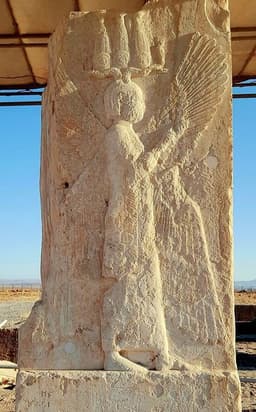
Cyrus the Great
Emperor · Ancient
83.9Total
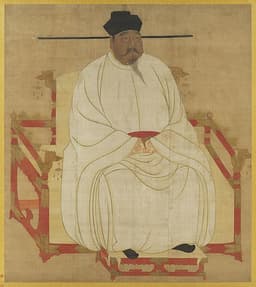
Zhao Kuangyin
Emperor · Medieval
71.5Total
Basic Information
Born
-600
927
Died
-530
976
Era
Ancient
Medieval
Nationality
Persia
China
Occupation
Emperor
Emperor
Civilization
Middle Eastern
Eastern
Score Comparison
Military (10%)
82.0
78.0
Political (20%)
85.0
84.0
Influence (20%)
85.0
68.0
Legacy (20%)
90.0
65.0
Leadership (15%)
78.0
74.0
Strategy (15%)
75.0
68.0
TOTAL
83.9
71.5
Cyrus the Great — Complete Timeline
550 BC
Founding of the Achaemenid EmpirePolitical Action
Cyrus led a rebellion against the Median Empire, defeating King Astyages and capturing Ecbatana. He then united the Persian and Median tribes, establishing the Achaemenid Empire, which became the largest empire the world had yet seen.
Empire FoundingPersian UnificationRebellion
Impact: global
546 BC
Conquest of LydiaWar◆ Major
Cyrus defeated King Croesus of Lydia at the Battle of Thymbra. The Lydian capital Sardis was captured, and Croesus was taken prisoner. This conquest brought Anatolia under Persian control and secured access to the Aegean coast.
Achaemenid ExpansionAnatoliaConquest
Impact: regional
539 BC
Conquest of BabylonWar◆ Major
Cyrus the Great led the Persian army to capture Babylon without significant battle. The city's gates were opened, and Cyrus entered peacefully. This conquest added Mesopotamia to the Achaemenid Empire and marked the end of the Neo-Babylonian Empire.
Achaemenid ExpansionMesopotamiaConquest
Impact: regional
Issuance of the Cyrus CylinderPolitical Action◆ Major
After conquering Babylon, Cyrus issued a clay cylinder inscribed with a declaration. It described his policy of restoring temples, repatriating displaced peoples, and allowing religious freedom. The cylinder is often cited as an early charter of human rights.
Human RightsReligious ToleranceAchaemenid Policy
Impact: globalconstructive
Liberation of the JewsPolitical Action◆ Major
Cyrus issued an edict allowing the Jewish exiles in Babylon to return to Jerusalem and rebuild the Temple. This event is recorded in the biblical Book of Ezra and is a key moment in Jewish history, ending the Babylonian captivity.
Jewish HistoryReligious FreedomReturn from Exile
Impact: regionalconstructive
Zhao Kuangyin — Complete Timeline
960 AD
Founded Song dynastyPolitical Action
Zhao Kuangyin, a general of Later Zhou, was proclaimed emperor by his troops at Chenqiao. He established the Song dynasty, ending the Five Dynasties period and beginning a new era of Chinese history.
Song dynastyFoundingChenqiao
Impact: globalconstructive
961 AD
Removed military power from generalsPolitical Action◆ Major
Zhao Kuangyin invited senior generals to a banquet and persuaded them to retire peacefully. This 'removal of military power over wine' prevented military coups and centralized control.
Song dynastyMilitary reformCentralization
Impact: nationalconstructive
963 AD
Unified southern ChinaWar◆ Major
Zhao Kuangyin launched campaigns to conquer the southern kingdoms, including Jingnan, Later Shu, and Southern Tang. By his death, most of China was reunified under Song rule.
Song unificationConquestSouthern kingdoms
Impact: national
Expert Analysis
Zhao Kuangyin vs Cyrus the Great: Historical Comparison
Zhao Kuangyin, founder of China's Song Dynasty (r. 960–976 CE), and Cyrus the Great, founder of the Achaemenid Persian Empire (r. 559–530 BCE), both unified fragmented regions through military prowess and statecraft, but Cyrus’s broader geopolitical impact and institutional legacy give him a slight edge.
Dimension Analysis
**Military: Zhao Kuangyin 75 / Cyrus the Great 82**
Zhao reunified China after the Five Dynasties by subduing rival kingdoms with a mix of force and diplomacy, but his campaigns were largely regional. Cyrus conquered the Neo-Babylonian, Lydian, and Median empires, creating the largest empire the world had yet seen, demonstrating superior strategic scope.
**Political: Zhao Kuangyin 76 / Cyrus the Great 85**
Zhao centralized power by ending warlord rule through a bloodless coup (the "coup at Chen Bridge") and curbing military governors, yet his political reforms were reactive. Cyrus established a model of imperial governance—satrapies, local autonomy, and religious tolerance—that influenced empires for millennia.
**Influence: Zhao Kuangyin 75 / Cyrus the Great 78**
Zhao’s Song Dynasty fostered cultural and economic flourishing (printing, gunpowder, civil service exams), but his influence was largely contained within East Asia. Cyrus’s concept of a multicultural empire and the Cyrus Cylinder (often called the first human rights charter) shaped Near Eastern and later Western political thought.
**Legacy: Zhao Kuangyin 75 / Cyrus the Great 80**
Zhao is revered as a unifier and a civil emperor who prioritized scholarship over militarism, but his dynasty eventually fell to foreign invasion. Cyrus is celebrated in Jewish, Persian, and Western traditions as a liberator and just ruler, with his tomb still a national symbol in Iran.
**Leadership: Zhao Kuangyin 82 / Cyrus the Great 80**
Zhao exhibited exceptional subtlety—disarming his generals with wine and gifts rather than bloodshed, and personally leading frugal governance. Cyrus was charismatic and visionary, but his leadership relied more on conquest and propaganda than on institutional innovation.
Verdict
Cyrus the Great leads overall due to his superior political and military achievements in founding a transcontinental empire with enduring governance models.
FAQ
Q: Who ranks higher? A: Cyrus the Great ranks higher, driven by his broader conquests, pioneering administrative systems, and lasting influence across civilizations.
Rankings
🥇
Cyrus the GreatLeader
Mil: 82.0Pol: 85.0Inf: 85.0
83.9
🥈
Zhao Kuangyin
Mil: 78.0Pol: 84.0Inf: 68.0
71.5
+12.4 behind
How This Comparison Works
Algorithm
Each figure is scored on 6 dimensions (0—100 scale) based on structured historical data: Military (10%), Political (20%), Influence (20%), Legacy (20%), Leadership (15%), Strategy (15%). The weighted total produces the final ranking.
Data Sources
Scores are computed from structured sub-indicators in the database. Scale factors adjust for era (Ancient ×0.85, Modern ×1.0) and civilization size (Eastern ×1.05, Other ×0.80) to account for differences in population and military scale.
Maximum 3 Figures
Comparisons are limited to 2—3 figures to ensure readability and statistical meaningfulness.
Error Margins
±5 points per dimension — Sub-scores are derived from historical records with inherent uncertainty. Two figures within 5 points on a dimension should be considered roughly equivalent in that area.
Total Score Accuracy
±3 points overall — The weighted combination of 6 dimensions produces a total score with approximately ±3 points of uncertainty. Differences of less than 3 points are not statistically significant— the figures are effectively tied.
Known Limitations
- Historical records are incomplete and uneven across civilizations
- Figures from oral-tradition societies may be underrepresented
- Occupation labels can misclassify multi-role figures
- Scores measure capability and impact, not moral character
- Quantitative scoring is a comparison tool, not absolute truth
Capability Radar
Military (10%) — Battles & Warfare
Battles
85
75
Win Rate
90
85
Expansion
92
75
Political (20%) — Governance & Reform
Reform
90
90
Diplomacy
95
85
Economy
80
80
Influence (20%) — Cultural & Global Reach
Cultural
90
70
Global
90
60
Legacy (20%) — Historical Impact
Historical
95
80
Longevity
95
75
Leadership (15%) — Power & Stability
Tenure
70
65
Stability
85
85
Strategy (15%) — Tactics & Innovation
Strategy
88
80
Tactics
80
70
Reform
75
90
Similar Comparisons
Comments & Discussion
DadHistoryFan6/16/2026
Okay, I've been reading a lot of Dan Carlin and Mike Duncan, and this comparison blew my mind. Like, Zhao Kuangyin did the whole 'build an empire without looking like a jerk' thing centuries before the West even thought about it. The story of him getting drunk with his generals and basically saying, 'Hey guys, maybe give me your swords and go retire?' is straight out of a gangster movie. But Cyrus... man, he conquered Babylon without a fight, let the Jews go home, and wrote the first-ever 'don't be a tyrant' memo on a clay cylinder. The scoring feels a bit off though — Cyrus was operating on a bigger map, but Zhao was creating a system that lasted a thousand years. I'd give Zhao more credit for political savvy because that 'wine and gifts' trick is way harder than just smashing armies. My gut says Cyrus 78, Zhao 76 — closer than the numbers show.
BattlefieldScholar6/16/2026
The military scoring here is problematic. Cyrus's 82 vs Zhao's 74.6 suggests a 7.4-point gap that doesn't hold up under operational analysis. Cyrus's campaigns — Sardis, Opis, Pasargadae — were brilliant strategic movements against massed infantry armies with no cavalry advantage. But Zhao's conquest of the Southern Tang alone involved a complex amphibious operation across the Yangtze River, using fire ships and a feigned retreat to draw out Li Yu's fleet. That's combined-arms warfare 200 years before the West had anything comparable. Cyrus's army was essentially a tribal levy with elite Persian units; Zhao commanded a professional standing army with logistics, siege trains, and specialized naval forces. If we apply the same criteria — strategic scope, tactical innovation, force integration — Zhao should be at least 78. The gap is inflated because the West values 'conquest area' over 'operational sophistication.' Give me Zhao's disciplined Song army over Cyrus's tribal coalition any day.
Historian6996/16/2026
说居鲁士比赵匡胤强,这个评分还是带着西方中心论的滤镜。赵匡胤结束五代十国乱世,杯酒释兵权、强干弱枝,这套政治手术直接奠定了宋朝三百年的文治基础。居鲁士固然伟大,建立波斯帝国、颁布居鲁士圆柱,但赵匡胤让中国从武夫当国转向文人治国,科举制度的大发展、印刷术的普及、火药的应用,哪一样不是改变世界格局的?论对后世制度创新的影响,赵匡胤的‘不杀士大夫’和‘以文驭武’比居鲁士的自治省制更经得起时间考验。评分把赵匡胤的军事压到75,但他灭后蜀、平南唐、收荆湖,每次都是精密的政治军事配合,不是单纯靠蛮力平推。
SharpWatcher946/16/2026
我来仔细核对一下这些分数。赵匡胤总分75.5,军事74.6,政治75.9,影响力74.9。居鲁士总分79.6,军事82,政治85,影响力78。差距最大在政治(9分)和军事(7.4分)。但说居鲁士政治85,赵匡胤才75.9,这个差距不合理。居鲁士的帝制管理确实先进,但赵匡胤建立的文人政府、科举体系、三权分立的“中书-枢密-三司”制,在政治制度复杂度上远超居鲁士的简单省区制。如果我重新算,赵匡胤政治分至少应该在80以上。军事方面,居鲁士征服了三个大帝国,但赵匡胤面对的是十几个割据政权,每个都需要不同的外交和军事策略,战术多样性更丰富。我建议把赵匡胤军事调到78,政治调到82,这样总分能到77左右,才真正反映两个历史人物的实际贡献。