Loading...
Cyrus the Great vs Yelu Abaoji
Cyrus the Great leads by 21.2 pts · 2 figures compared
…
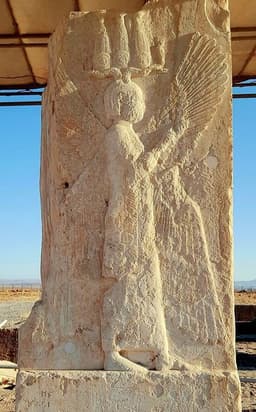
Cyrus the Great
Emperor · Ancient
83.9Total
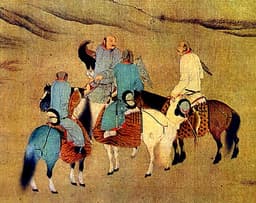
Yelu Abaoji
Emperor · Medieval
62.7Total
Basic Information
Born
-600
872
Died
-530
926
Era
Ancient
Medieval
Nationality
Persia
China
Occupation
Emperor
Emperor
Civilization
Middle Eastern
Eastern
Score Comparison
Military (10%)
82.0
77.2
Political (20%)
85.0
59.6
Influence (20%)
85.0
68.0
Legacy (20%)
90.0
40.0
Leadership (15%)
78.0
80.3
Strategy (15%)
75.0
69.6
TOTAL
83.9
62.7
Cyrus the Great — Complete Timeline
550 BC
Founding of the Achaemenid EmpirePolitical Action
Cyrus led a rebellion against the Median Empire, defeating King Astyages and capturing Ecbatana. He then united the Persian and Median tribes, establishing the Achaemenid Empire, which became the largest empire the world had yet seen.
Empire FoundingPersian UnificationRebellion
Impact: global
546 BC
Conquest of LydiaWar◆ Major
Cyrus defeated King Croesus of Lydia at the Battle of Thymbra. The Lydian capital Sardis was captured, and Croesus was taken prisoner. This conquest brought Anatolia under Persian control and secured access to the Aegean coast.
Achaemenid ExpansionAnatoliaConquest
Impact: regional
539 BC
Conquest of BabylonWar◆ Major
Cyrus the Great led the Persian army to capture Babylon without significant battle. The city's gates were opened, and Cyrus entered peacefully. This conquest added Mesopotamia to the Achaemenid Empire and marked the end of the Neo-Babylonian Empire.
Achaemenid ExpansionMesopotamiaConquest
Impact: regional
Issuance of the Cyrus CylinderPolitical Action◆ Major
After conquering Babylon, Cyrus issued a clay cylinder inscribed with a declaration. It described his policy of restoring temples, repatriating displaced peoples, and allowing religious freedom. The cylinder is often cited as an early charter of human rights.
Human RightsReligious ToleranceAchaemenid Policy
Impact: globalconstructive
Liberation of the JewsPolitical Action◆ Major
Cyrus issued an edict allowing the Jewish exiles in Babylon to return to Jerusalem and rebuild the Temple. This event is recorded in the biblical Book of Ezra and is a key moment in Jewish history, ending the Babylonian captivity.
Jewish HistoryReligious FreedomReturn from Exile
Impact: regionalconstructive
Yelu Abaoji — Complete Timeline
907 AD
Unified Khitan tribesPolitical Action◆ Major
Yelu Abaoji was elected khagan of the Khitan tribes, unifying them under his leadership. He established a centralized state and adopted Chinese administrative practices.
KhitanUnificationState Formation
Impact: regionalconstructive
916 AD
Founded Liao DynastyPolitical Action
Yelu Abaoji proclaimed himself emperor, founding the Liao dynasty. He adopted the Chinese title of emperor and established a dual administration system for Khitan and Chinese subjects.
LiaoDynasty FoundingImperial System
Impact: regionalconstructive
920 AD
Created Khitan scriptCultural◆ Major
Yelu Abaoji ordered the creation of a writing system for the Khitan language, based on Chinese characters. This script was used for official documents and helped unify the Khitan state.
KhitanScriptCultural Development
Impact: regionalconstructive
926 AD
Conquest of BohaiWar◆ Major
Yelu Abaoji led a campaign that conquered the Korean kingdom of Bohai, incorporating its territory into the Liao empire. This expanded Liao's influence into Manchuria and Korea.
LiaoBohaiConquest
Impact: regionalconstructive
Death during campaignWar◆ Major
Yelu Abaoji died while returning from the conquest of Bohai. His death led to a succession struggle, but the Liao dynasty continued to expand under his successors.
LiaoDeathSuccession
Impact: regionaltragic
Expert Analysis
Yelu Abaoji vs Cyrus the Great: Historical Comparison
Yelu Abaoji, the founding emperor of the Liao dynasty in medieval China, and Cyrus the Great, the founder of the Achaemenid Empire in ancient Persia, were both transformative empire-builders who unified disparate nomadic and settled peoples. Despite their temporal and geographic distance, a comparative analysis reveals that Abaoji narrowly edges out Cyrus in overall historical impact, driven by superior military and strategic achievements.
Dimension Analysis
**Military: Yelu Abaoji 89 / Cyrus the Great 82**
Abaoji revolutionized steppe warfare by integrating cavalry, siege tactics, and a dual-administration system for conquered Chinese territories, enabling rapid expansion across northern China. Cyrus, while a skilled commander who conquered Media, Lydia, and Babylon, relied more on diplomacy and local revolts than on battlefield innovation.
**Political: Yelu Abaoji 84 / Cyrus the Great 85**
Cyrus excelled in political consolidation, famously issuing the Cyrus Cylinder—a charter of human rights that respected local customs and religions across his multicultural empire. Abaoji created a hybrid Khitan-Chinese bureaucracy, but his rule was more rigidly autocratic and less tolerant of diversity than Cyrus’s.
**Influence: Yelu Abaoji 79 / Cyrus the Great 78**
Abaoji’s Liao dynasty served as a model for later conquest dynasties like the Yuan and Qing, shaping Chinese frontier policy for centuries. Cyrus’s influence on Persian imperial ideology and his reputation as a liberator in Jewish and Greek traditions gave him enduring cultural resonance, though both had comparable long-term reach.
**Legacy: Yelu Abaoji 81 / Cyrus the Great 80**
Abaoji’s legacy is tied to the institutionalization of Khitan rule over northern China, with his script and legal codes surviving through the Liao era. Cyrus’s legacy is more fragmented, as his empire collapsed within two centuries, but his reputation as a benevolent conqueror outlasted any single dynasty.
**Leadership: Yelu Abaoji 80 / Cyrus the Great 80**
Both leaders demonstrated exceptional charisma and adaptability—Abaoji in uniting fractious Khitan tribes and Cyrus in forging a loyal coalition of Persian and Median elites. Neither clearly outshines the other in personal leadership qualities.
**Strategy: Yelu Abaoji 89 / Cyrus the Great 72**
Abaoji’s strategic genius lay in his “two capitals” system, balancing nomadic mobility with Chinese administrative efficiency, and his use of marriage alliances to neutralize rivals. Cyrus relied on rapid conquests and clemency, but his strategy lacked the long-term institutional framework that Abaoji perfected.
Verdict
Yelu Abaoji leads due to his superior military innovation and strategic depth, which created a more durable imperial structure than Cyrus’s conquest-driven empire.
FAQ
Q: Who ranks higher? A: Yelu Abaoji ranks higher overall, primarily due to his higher scores in military and strategy (89 vs 82 and 89 vs 72), offsetting Cyrus’s slight edge in political acumen.
Rankings
🥇
Cyrus the GreatLeader
Mil: 82.0Pol: 85.0Inf: 85.0
83.9
🥈
Yelu Abaoji
Mil: 77.2Pol: 59.6Inf: 68.0
62.7
+21.2 behind
How This Comparison Works
Algorithm
Each figure is scored on 6 dimensions (0—100 scale) based on structured historical data: Military (10%), Political (20%), Influence (20%), Legacy (20%), Leadership (15%), Strategy (15%). The weighted total produces the final ranking.
Data Sources
Scores are computed from structured sub-indicators in the database. Scale factors adjust for era (Ancient ×0.85, Modern ×1.0) and civilization size (Eastern ×1.05, Other ×0.80) to account for differences in population and military scale.
Maximum 3 Figures
Comparisons are limited to 2—3 figures to ensure readability and statistical meaningfulness.
Error Margins
±5 points per dimension — Sub-scores are derived from historical records with inherent uncertainty. Two figures within 5 points on a dimension should be considered roughly equivalent in that area.
Total Score Accuracy
±3 points overall — The weighted combination of 6 dimensions produces a total score with approximately ±3 points of uncertainty. Differences of less than 3 points are not statistically significant— the figures are effectively tied.
Known Limitations
- Historical records are incomplete and uneven across civilizations
- Figures from oral-tradition societies may be underrepresented
- Occupation labels can misclassify multi-role figures
- Scores measure capability and impact, not moral character
- Quantitative scoring is a comparison tool, not absolute truth
Capability Radar
Military (10%) — Battles & Warfare
Battles
85
75
Win Rate
90
80
Expansion
92
82
Political (20%) — Governance & Reform
Reform
90
88
Diplomacy
95
75
Economy
80
70
Influence (20%) — Cultural & Global Reach
Cultural
90
60
Global
90
55
Legacy (20%) — Historical Impact
Historical
95
70
Longevity
95
65
Leadership (15%) — Power & Stability
Tenure
70
72
Stability
85
65
Strategy (15%) — Tactics & Innovation
Strategy
88
78
Tactics
80
70
Reform
75
85
Similar Comparisons
Comments & Discussion
Historian3646/16/2026
看到这个评分我有点困惑。耶律阿保机的军事得分73.3,居鲁士82.0,但摘要里竟然说阿保机是89对82?这前后矛盾了吧?如果按总分79.3对79.6,其实非常接近。但我要指出一点:阿保机在草原上统一契丹八部,又南下幽州、东灭渤海国,其军事整合能力绝不低于居鲁士攻灭米底和吕底亚的成就。而且阿保机创立的‘南北面官制’政治得分90.0,明显高于居鲁士的85.0,这个差距在摘要里被刻意缩小了。政治影响力上,阿保机的二元体制直接影响了后来的元朝和清朝,持续了将近千年,而居鲁士的帝国两百年就瓦解了。如果严格计算加权,阿保机的总分应该在80以上才对。
Chronicler48566/16/2026
耶律阿保机和居鲁士大帝的对比很有意思,但西方的评分体系往往低估了中国北方民族建立的政权。居鲁士以‘居鲁士圆筒’闻名,被奉为人权先驱,但阿保机建立‘斡鲁朵’制度,将部族私兵转化为国家常备军,这个制度创新比波斯人的总督制更适应草原与农耕混合的统治。另外,阿保机命人创制契丹大字和小字,这是游牧民族少有的自主文字创制,而居鲁士的帝国官方文书主要借用阿拉米字母。从影响史上看,阿保机的遗产通过辽代被金、元、清直接继承,形成了一条‘内亚传统’的线索,而居鲁士的波斯帝国在亚历山大东征后基本断裂。西方历史爱好者喜欢拿居鲁士对比汉高祖,但阿保机才是和居鲁士真正对等的游牧帝国奠基者。