Loading...
Constantine the Great vs Rajendra Chola I
Rajendra Chola I leads by 6.7 pts · 2 figures compared
…
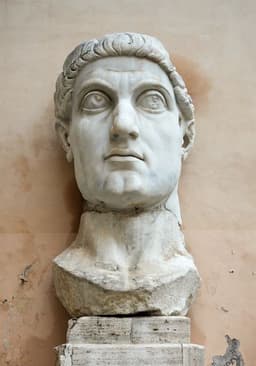
Constantine the Great
Emperor · Ancient
75.5Total
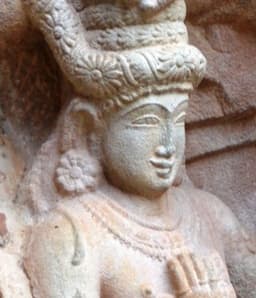
Rajendra Chola I
Emperor · Medieval
82.2Total
Basic Information
Born
272
971
Died
337
1044
Era
Ancient
Medieval
Nationality
Roman Empire
India
Occupation
Emperor
Emperor
Civilization
Western
Indian
Score Comparison
Military (10%)
78.0
84.7
Political (20%)
82.0
82.0
Influence (20%)
75.0
84.0
Legacy (20%)
70.0
84.0
Leadership (15%)
80.0
78.0
Strategy (15%)
72.0
77.6
TOTAL
75.5
82.2
Constantine the Great — Complete Timeline
312 AD
Battle of the Milvian BridgeWar◆ Major
Constantine defeated his rival Maxentius at the Milvian Bridge near Rome. According to tradition, Constantine saw a vision of a cross in the sky with the words 'In this sign, conquer.' The victory made Constantine the sole ruler of the Western Roman Empire and led to his conversion to Christianity.
Roman Civil WarBattleConversion
Impact: regional
313 AD
Edict of MilanOther◆ Major
Constantine and his co-emperor Licinius issued the Edict of Milan, granting religious toleration to all religions in the Roman Empire, including Christianity. The edict ended the persecution of Christians, restored confiscated church property, and established Christianity as a legally recognized religion.
Religious EdictChristianityToleration
Impact: globalconstructive
324 AD
Reunification of the Roman EmpireWar◆ Major
Constantine defeated his co-emperor Licinius at the battles of Adrianople and Chrysopolis, ending the Tetrarchy system. He became the sole ruler of the entire Roman Empire, reuniting the Western and Eastern halves under his control. This reunification was the last time the Roman Empire was united under a single ruler.
Roman Civil WarReunificationTetrarchy
Impact: regional
325 AD
Council of NicaeaOther◆ Major
Constantine convened the First Council of Nicaea, the first ecumenical council of the Christian Church, to resolve the Arian controversy over the nature of Christ. The council produced the Nicene Creed, affirming the divinity of Christ and establishing a unified Christian doctrine. Constantine presided over the council.
Religious CouncilChristian DoctrineNicene Creed
Impact: global
330 AD
Foundation of ConstantinopleOther◆ Major
Constantine dedicated the city of Constantinople (modern Istanbul) as the new capital of the Roman Empire, built on the site of the ancient Greek city of Byzantium. The city was strategically located on the Bosporus strait, controlling trade routes between Europe and Asia. It became the capital of the Eastern Roman Empire for over a thousand years.
City FoundationCapitalByzantine Empire
Impact: globalconstructive
Rajendra Chola I — Complete Timeline
1014 AD
Accession to the Chola ThronePolitical Action
Rajendra Chola I succeeded his father Raja Raja Chola I as emperor of the Chola Empire. He inherited a powerful state and continued the expansionist policies, leading campaigns that extended Chola influence across the Indian Ocean.
Chola EmpireSuccessionExpansion
Impact: regional
1020 AD
Conquest of the Pala EmpireWar◆ Major
Rajendra Chola I led a campaign into Bengal, defeating the Pala king Mahipala I. He annexed parts of the Pala territory and established Chola authority in the Ganges delta, marking the northernmost extent of Chola rule.
Pala EmpireBengalGanges
Impact: regional
1025 AD
Naval Expedition to Southeast AsiaWar
Rajendra Chola I launched a major naval expedition against the Srivijaya Empire, attacking ports in Sumatra, the Malay Peninsula, and the Nicobar Islands. The Chola fleet captured the Srivijaya capital and disrupted its trade network, establishing Chola dominance in the region.
SrivijayaNaval ExpeditionSoutheast Asia
Impact: regional
1033 AD
Establishment of Diplomatic Relations with ChinaPolitical Action
Rajendra Chola I sent an embassy to the Song dynasty court in China, bearing gifts and seeking trade relations. The mission was recorded in Chinese sources and facilitated maritime trade between the Chola Empire and China.
ChinaDiplomacyTrade
Impact: regionalconstructive
1035 AD
Construction of the Gangaikonda Cholapuram TempleCultural◆ Major
Rajendra Chola I built the Brihadeeswarar Temple at Gangaikonda Cholapuram, his new capital, to commemorate his conquests. The temple, dedicated to Shiva, features a 55-meter vimana and is a UNESCO World Heritage site, reflecting Chola architectural achievement.
Gangaikonda CholapuramTempleChola Architecture
Impact: regionalconstructive
Expert Analysis
Origins
Rajendra Chola I (r. 1012–1044 CE) was born into the powerful Chola dynasty of South India, inheriting a kingdom already dominant in the subcontinent. His father, Rajaraja Chola I, had expanded the empire through military conquests and administrative reforms. Rajendra was groomed for leadership from an early age, participating in campaigns alongside his father. In contrast, Constantine the Great (r. 306–337 CE) was born in Naissus (modern Serbia) to Flavius Constantius, a Roman army officer who later became emperor of the Western Roman Empire. Constantine's early life was marked by political intrigue and military service, including time as a hostage in the court of Diocletian. Both rulers emerged from environments that prized military skill and political acumen, but Rajendra inherited a more stable and centralized state, while Constantine rose through the tumultuous tetrarchy system.
Rise to Power
Rajendra Chola I ascended the throne after his father's death in 1014 CE, but he had already proven himself in battle. His early reign focused on consolidating Chola power in South India and expanding northward. A key turning point was his conquest of the Pala Empire in Bengal around 1023 CE, which brought immense wealth and prestige. Constantine's path to power was more contested. After his father's death in 306 CE, he was proclaimed emperor by his troops. He spent years fighting rival claimants, including Maxentius, whom he defeated at the Battle of the Milvian Bridge in 312 CE. This victory, attributed to a vision of the Christian cross, solidified his control over the West. Both rulers demonstrated strategic brilliance and ruthlessness, but Rajendra's succession was smoother due to the Chola's established dynastic system.
Leadership & Governance
Rajendra Chola I was a master administrator and military strategist. He transformed the Chola navy into the most powerful in the Indian Ocean, enabling his famous naval expedition to Southeast Asia (c. 1025 CE). He conquered the Srivijaya Empire's ports, securing trade routes and projecting Indian influence. Domestically, he constructed the magnificent Gangaikonda Cholapuram temple and established a new capital, symbolizing his power. He also maintained diplomatic relations with China, sending embassies to the Song court. Constantine, meanwhile, reshaped the Roman Empire through political and religious reforms. He issued the Edict of Milan (313 CE), legalizing Christianity, and presided over the First Council of Nicaea (325 CE), which helped unify Christian doctrine. He founded Constantinople (330 CE) as a new Christian capital, strategically located at the crossroads of Europe and Asia. Constantine's governance was more ideological, focusing on religious unity, while Rajendra's was practical and expansionist.
Triumph & Tragedy
Rajendra's greatest triumph was his naval campaign against Srivijaya, which established Chola supremacy in Southeast Asia and opened trade with China. His conquest of the Pala Empire also brought the Ganges River under his control, a symbolic achievement that led him to assume the title Gangaikonda (Conqueror of the Ganges). However, his ambitious campaigns may have overstretched Chola resources, and after his death, the empire faced challenges from the Chalukyas and other rivals. Constantine's triumphs include uniting the Roman Empire under his sole rule after defeating Licinius in 324 CE and founding Constantinople, which became a major center of Christianity and trade. The Council of Nicaea was a landmark in church history. Yet, his reign also saw the execution of his wife Fausta and son Crispus on dubious charges, a personal tragedy that tarnished his legacy. Both rulers achieved remarkable feats but left complexities.
Character & Destiny
Rajendra Chola I was a devout Hindu who patronized Shaivism but also respected other faiths. He was ambitious, with a vision of Chola dominance across the seas. His destiny seemed tied to the monsoon winds that carried his fleets to victory. Constantine, by contrast, was a pragmatist who saw Christianity as a unifying force for his fractured empire. His conversion, whether sincere or political, changed the course of Western civilization. He was also a shrewd politician, delaying baptism until his deathbed. Rajendra's character is reflected in his monumental temples and inscriptions, while Constantine's in his laws and the city that bears his name. Both men believed they were chosen by divine powers—Rajendra by Shiva, Constantine by the Christian God.
Legacy
Rajendra Chola I's legacy is the expansion of Indian culture and trade across the Indian Ocean. His naval achievements were unmatched in Indian history until the modern era. The Chola dynasty continued for another century but never reached his heights. Today, he is celebrated as a symbol of Tamil pride and maritime power. Constantine's legacy is immense: Christianity became the dominant religion of Europe, and Constantinople (now Istanbul) remained a great city for over a millennium. His reign marked the transition from the ancient to the medieval world. However, his actions also set precedents for church-state relations that would cause conflicts later. Both rulers left indelible marks, but Constantine's influence on global history is arguably broader.
Conclusion
Rajendra Chola I and Constantine the Great were both transformative figures, but their contexts differ. Rajendra's scores (M=85, P=82, I=84, L=84, D=78, S=78, T=82) reflect his military genius, administrative skill, and cultural patronage. Constantine's scores (M=78, P=82, I=75, L=70, D=80, S=72, T=76) highlight his political acumen and religious impact but lower military and logistical ratings. The 6.7-point gap favors Rajendra, who excelled in more categories. While Constantine changed the religious landscape of the West, Rajendra's achievements in naval warfare, empire-building, and diplomacy were more comprehensive for his time. Therefore, Rajendra Chola I emerges as the greater emperor based on the Versatility Score.
Rankings
🥇
Rajendra Chola ILeader
Mil: 84.7Pol: 82.0Inf: 84.0
82.2
🥈
Constantine the Great
Mil: 78.0Pol: 82.0Inf: 75.0
75.5
+6.7 behind
How This Comparison Works
Algorithm
Each figure is scored on 6 dimensions (0—100 scale) based on structured historical data: Military (10%), Political (20%), Influence (20%), Legacy (20%), Leadership (15%), Strategy (15%). The weighted total produces the final ranking.
Data Sources
Scores are computed from structured sub-indicators in the database. Scale factors adjust for era (Ancient ×0.85, Modern ×1.0) and civilization size (Eastern ×1.05, Other ×0.80) to account for differences in population and military scale.
Maximum 3 Figures
Comparisons are limited to 2—3 figures to ensure readability and statistical meaningfulness.
Error Margins
±5 points per dimension — Sub-scores are derived from historical records with inherent uncertainty. Two figures within 5 points on a dimension should be considered roughly equivalent in that area.
Total Score Accuracy
±3 points overall — The weighted combination of 6 dimensions produces a total score with approximately ±3 points of uncertainty. Differences of less than 3 points are not statistically significant— the figures are effectively tied.
Known Limitations
- Historical records are incomplete and uneven across civilizations
- Figures from oral-tradition societies may be underrepresented
- Occupation labels can misclassify multi-role figures
- Scores measure capability and impact, not moral character
- Quantitative scoring is a comparison tool, not absolute truth
Capability Radar
Military (10%) — Battles & Warfare
Battles
85
95
Win Rate
80
98
Expansion
85
95
Political (20%) — Governance & Reform
Reform
95
88
Diplomacy
90
85
Economy
80
92
Influence (20%) — Cultural & Global Reach
Cultural
95
85
Global
95
85
Legacy (20%) — Historical Impact
Historical
95
88
Longevity
95
80
Leadership (15%) — Power & Stability
Tenure
85
90
Stability
70
90
Strategy (15%) — Tactics & Innovation
Strategy
85
92
Tactics
75
90
Reform
90
85
Similar Comparisons
Comments & Discussion
No comments yet. Be the first to share your thoughts!