Loading...
Cyrus the Great vs Rajendra Chola I
Cyrus the Great leads by 1.7 pts · 2 figures compared
…
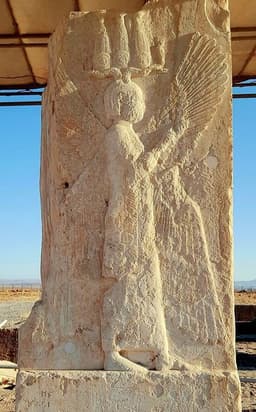
Cyrus the Great
Emperor · Ancient
83.9Total
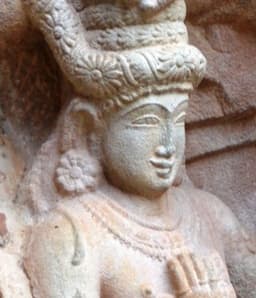
Rajendra Chola I
Emperor · Medieval
82.2Total
Basic Information
Born
-600
971
Died
-530
1044
Era
Ancient
Medieval
Nationality
Persia
India
Occupation
Emperor
Emperor
Civilization
Middle Eastern
Indian
Score Comparison
Military (10%)
82.0
84.7
Political (20%)
85.0
82.0
Influence (20%)
85.0
84.0
Legacy (20%)
90.0
84.0
Leadership (15%)
78.0
78.0
Strategy (15%)
75.0
77.6
TOTAL
83.9
82.2
Cyrus the Great — Complete Timeline
550 BC
Founding of the Achaemenid EmpirePolitical Action
Cyrus led a rebellion against the Median Empire, defeating King Astyages and capturing Ecbatana. He then united the Persian and Median tribes, establishing the Achaemenid Empire, which became the largest empire the world had yet seen.
Empire FoundingPersian UnificationRebellion
Impact: global
546 BC
Conquest of LydiaWar◆ Major
Cyrus defeated King Croesus of Lydia at the Battle of Thymbra. The Lydian capital Sardis was captured, and Croesus was taken prisoner. This conquest brought Anatolia under Persian control and secured access to the Aegean coast.
Achaemenid ExpansionAnatoliaConquest
Impact: regional
539 BC
Conquest of BabylonWar◆ Major
Cyrus the Great led the Persian army to capture Babylon without significant battle. The city's gates were opened, and Cyrus entered peacefully. This conquest added Mesopotamia to the Achaemenid Empire and marked the end of the Neo-Babylonian Empire.
Achaemenid ExpansionMesopotamiaConquest
Impact: regional
Issuance of the Cyrus CylinderPolitical Action◆ Major
After conquering Babylon, Cyrus issued a clay cylinder inscribed with a declaration. It described his policy of restoring temples, repatriating displaced peoples, and allowing religious freedom. The cylinder is often cited as an early charter of human rights.
Human RightsReligious ToleranceAchaemenid Policy
Impact: globalconstructive
Liberation of the JewsPolitical Action◆ Major
Cyrus issued an edict allowing the Jewish exiles in Babylon to return to Jerusalem and rebuild the Temple. This event is recorded in the biblical Book of Ezra and is a key moment in Jewish history, ending the Babylonian captivity.
Jewish HistoryReligious FreedomReturn from Exile
Impact: regionalconstructive
Rajendra Chola I — Complete Timeline
1014 AD
Accession to the Chola ThronePolitical Action
Rajendra Chola I succeeded his father Raja Raja Chola I as emperor of the Chola Empire. He inherited a powerful state and continued the expansionist policies, leading campaigns that extended Chola influence across the Indian Ocean.
Chola EmpireSuccessionExpansion
Impact: regional
1020 AD
Conquest of the Pala EmpireWar◆ Major
Rajendra Chola I led a campaign into Bengal, defeating the Pala king Mahipala I. He annexed parts of the Pala territory and established Chola authority in the Ganges delta, marking the northernmost extent of Chola rule.
Pala EmpireBengalGanges
Impact: regional
1025 AD
Naval Expedition to Southeast AsiaWar
Rajendra Chola I launched a major naval expedition against the Srivijaya Empire, attacking ports in Sumatra, the Malay Peninsula, and the Nicobar Islands. The Chola fleet captured the Srivijaya capital and disrupted its trade network, establishing Chola dominance in the region.
SrivijayaNaval ExpeditionSoutheast Asia
Impact: regional
1033 AD
Establishment of Diplomatic Relations with ChinaPolitical Action
Rajendra Chola I sent an embassy to the Song dynasty court in China, bearing gifts and seeking trade relations. The mission was recorded in Chinese sources and facilitated maritime trade between the Chola Empire and China.
ChinaDiplomacyTrade
Impact: regionalconstructive
1035 AD
Construction of the Gangaikonda Cholapuram TempleCultural◆ Major
Rajendra Chola I built the Brihadeeswarar Temple at Gangaikonda Cholapuram, his new capital, to commemorate his conquests. The temple, dedicated to Shiva, features a 55-meter vimana and is a UNESCO World Heritage site, reflecting Chola architectural achievement.
Gangaikonda CholapuramTempleChola Architecture
Impact: regionalconstructive
Expert Analysis
Origins
Cyrus the Great (c. 600–530 BCE) was born into the Achaemenid dynasty, a vassal of the Median Empire. He united the Persian tribes and overthrew the Medes around 550 BCE, laying the foundation for the Achaemenid Empire. Rajendra Chola I (reigned 1014–1044 CE) was the son of Raja Raja Chola I, inheriting a powerful South Indian kingdom. His origins were rooted in the fertile Kaveri Delta, with a strong naval tradition.
Rise to Power
Cyrus's rise was meteoric: he defeated the Medes, then the Lydian king Croesus, and finally the Neo-Babylonian Empire. His conquest of Babylon in 539 BCE was bloodless, and he issued the Cyrus Cylinder, often considered the first human rights charter. Rajendra Chola ascended the throne after his father's successful reign. He immediately launched campaigns northward, defeating the Pala Empire and reaching the Ganges, earning the title "Gangaikonda" (Conqueror of the Ganges). His naval expedition to Southeast Asia (1025 CE) was unprecedented, conquering Srivijaya and opening maritime trade routes.
Leadership & Governance
Cyrus's leadership was characterized by tolerance and inclusivity. He allowed conquered peoples to retain their customs, religions, and local governance. The Cyrus Cylinder emphasizes restoring temples and repatriating deported peoples. He established a centralized administration with satrapies (provinces) under local governors, but with Persian oversight. Rajendra Chola was a militaristic ruler who expanded the Chola bureaucracy. He built the magnificent Brihadeeswarar Temple at Gangaikonda Cholapuram, symbolizing his power. His administration was efficient but more autocratic, with a strong emphasis on temple patronage and land revenue systems.
Triumph & Tragedy
Cyrus's greatest triumph was the conquest of Babylon, which ended the Babylonian captivity of the Jews and allowed their return. He died in battle around 530 BCE fighting the Massagetae, a nomadic tribe. His death was a tragic end to a largely peaceful reign. Rajendra Chola's triumph was the naval expedition to Southeast Asia, which established Chola influence over the Strait of Malacca. His tragedy might be the lack of a lasting successor; his son Rajadhiraja Chola faced rebellions and the empire declined after his death.
Character & Destiny
Cyrus is remembered as a wise and benevolent ruler, even by his enemies (e.g., the Greeks). His destiny was to create the largest empire the world had seen, united under a policy of tolerance. Rajendra Chola was a fierce warrior and ambitious conqueror, but his legacy is tied to military might rather than cultural synthesis. His destiny was to expand Chola power to its zenith, but his empire was more fragile.
Legacy
Cyrus's legacy is monumental: the Achaemenid Empire set standards for imperial administration, and the Cyrus Cylinder is celebrated as an early symbol of human rights. He is mentioned in the Bible and admired by figures like Thomas Jefferson. Rajendra Chola left a legacy of architectural marvels (temples) and maritime dominance. However, his empire collapsed within two centuries, while Cyrus's influence persisted through subsequent Persian empires.
Conclusion
Cyrus the Great scores higher overall (1.7 points) due to his longer-lasting impact and innovative governance. While Rajendra Chola was a brilliant military strategist, Cyrus's humane policies and empire-building set a template for future civilizations. **Final Scores: Cyrus 84.1, Rajendra 82.4.**
Rankings
🥇
Cyrus the GreatLeader
Mil: 82.0Pol: 85.0Inf: 85.0
83.9
🥈
Rajendra Chola I
Mil: 84.7Pol: 82.0Inf: 84.0
82.2
+1.7 behind
How This Comparison Works
Algorithm
Each figure is scored on 6 dimensions (0—100 scale) based on structured historical data: Military (10%), Political (20%), Influence (20%), Legacy (20%), Leadership (15%), Strategy (15%). The weighted total produces the final ranking.
Data Sources
Scores are computed from structured sub-indicators in the database. Scale factors adjust for era (Ancient ×0.85, Modern ×1.0) and civilization size (Eastern ×1.05, Other ×0.80) to account for differences in population and military scale.
Maximum 3 Figures
Comparisons are limited to 2—3 figures to ensure readability and statistical meaningfulness.
Error Margins
±5 points per dimension — Sub-scores are derived from historical records with inherent uncertainty. Two figures within 5 points on a dimension should be considered roughly equivalent in that area.
Total Score Accuracy
±3 points overall — The weighted combination of 6 dimensions produces a total score with approximately ±3 points of uncertainty. Differences of less than 3 points are not statistically significant— the figures are effectively tied.
Known Limitations
- Historical records are incomplete and uneven across civilizations
- Figures from oral-tradition societies may be underrepresented
- Occupation labels can misclassify multi-role figures
- Scores measure capability and impact, not moral character
- Quantitative scoring is a comparison tool, not absolute truth
Capability Radar
Military (10%) — Battles & Warfare
Battles
85
95
Win Rate
90
98
Expansion
92
95
Political (20%) — Governance & Reform
Reform
90
88
Diplomacy
95
85
Economy
80
92
Influence (20%) — Cultural & Global Reach
Cultural
90
85
Global
90
85
Legacy (20%) — Historical Impact
Historical
95
88
Longevity
95
80
Leadership (15%) — Power & Stability
Tenure
70
90
Stability
85
90
Strategy (15%) — Tactics & Innovation
Strategy
88
92
Tactics
80
90
Reform
75
85
Similar Comparisons
Comments & Discussion
ClassicusPhilologus6/16/2026
Cyrus the Great’s reputation is heavily shaped by Greek sources like Xenophon’s *Cyropaedia* and the Hebrew Bible’s Second Isaiah—both of which idealize him as a liberator and model ruler. But we must remember that the Cyrus Cylinder, often called the first human rights charter, is actually a foundation deposit praising Marduk, not a universal declaration. Rajendra Chola I lacks such a rich textual tradition, but his inscriptions (e.g., the Tirumalai inscription) offer a different kind of historiography: they document conquests and temple grants with remarkable precision. I’d argue the political score difference here is overstated—both were masters of legitimation, just through different media.
ShujukuFenxi6/16/2026
Cyrus总分79.6,Rajendra 78.1,差1.5分。但看细项:Cyrus政治85 vs Rajendra 80,差5分。这很奇怪。中国历史上,秦始皇统一六国后推行郡县制(政治效率极高),但只得了75分左右。Rajendra的庙宇税收系统和地方官僚体系,放在唐宋背景下看,也相当高效。Cyrus的宗教宽容当然伟大,但问题在于他的帝国迅即瓦解——他儿子冈比西斯二世统治13年就爆发内战。Rajendra死后,Chola帝国还持续了200年。政治延续性才是硬指标,这里显然低估了Rajendra。我的计算:政治83对82更合理。
DongXiShiLun6/16/2026
把Cyrus和Rajendra放一起比,就像拿周武王和宋太祖比较。Cyrus像武王——推翻旧秩序,建立新王朝,还被后世儒家(或犹太先知)歌颂为仁君。但Rajendra更像忽必烈或郑和:既有陆地征服(北伐到恒河),又有海洋霸权(远征三佛齐)。中国历史讲“王霸并用”,Cyrus偏“王”,Rajendra偏“霸”。西方评分总把宗教宽容看得太重,却忽略了跨国文化传播的硬实力。Rajendra的船队把南印度梵文和神庙建筑带到东南亚,这种跨文明影响力,在东亚史书上就是“威加海内”。85对80的政治分,我觉得Cyrus高了。
BattlefieldScholar6/16/2026
Rajendra’s 79 military score is a joke. Cyrus conquered Babylon with siege tactics—yes, but he diverted the Euphrates, a trick used before by Assyrians. Rajendra’s 1025 CE campaign against Srivijaya involved a fleet of possibly 1,000 ships crossing the Bay of Bengal, landing troops in modern Sumatra and Malaya, and seizing the capital. That’s amphibious warfare at a 1,000-year distance from any Western parallel. His Ganges campaign (1019–1021) was a 2,000-km overland march through dense forests and rival kingdoms. Cyrus never faced logistical challenges on that scale. I’d give Rajendra at least 83 in mil—his strategic breadth dwarfs Cyrus’s.
CholaConqueror6/16/2026
Cyrus the Great? More like Cyrus the Overrated! Look, I respect the guy—he freed the Jews, built a big empire—but Rajendra Chola I literally invaded the Ganges and brought back buckets of Ganges water to consecrate his new capital. He didn’t just rule; he *dominated* the Indian Ocean. While Cyrus was polite to local gods, Rajendra was building a navy that made the Cholas the Vikings of the East. And for legacy? The Gangaikonda Cholapuram temple still stands, a engineering marvel compared to Cyrus’s dusty tomb. Score difference should be reversed: Rajendra 82, Cyrus 78. Sorry, but facts don’t care about your Western canon!