Loading...
Constantine the Great vs Mao Zedong
Mao Zedong leads by 3.9 pts · 2 figures compared
…
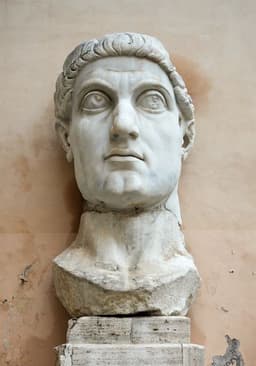
Constantine the Great
Emperor · Ancient
75.5Total
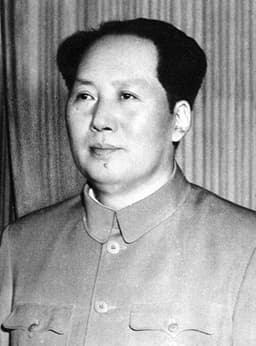
Mao Zedong
Politician · Modern
79.4Total
Basic Information
Born
272
1893
Died
337
1976
Era
Ancient
Modern
Nationality
Roman Empire
China
Occupation
Emperor
Politician
Civilization
Western
Eastern
Score Comparison
Military (10%)
78.0
75.0
Political (20%)
82.0
88.0
Influence (20%)
75.0
85.0
Legacy (20%)
70.0
70.0
Leadership (15%)
80.0
85.0
Strategy (15%)
72.0
72.0
TOTAL
75.5
79.4
Constantine the Great — Complete Timeline
312 AD
Battle of the Milvian BridgeWar◆ Major
Constantine defeated his rival Maxentius at the Milvian Bridge near Rome. According to tradition, Constantine saw a vision of a cross in the sky with the words 'In this sign, conquer.' The victory made Constantine the sole ruler of the Western Roman Empire and led to his conversion to Christianity.
Roman Civil WarBattleConversion
Impact: regional
313 AD
Edict of MilanOther◆ Major
Constantine and his co-emperor Licinius issued the Edict of Milan, granting religious toleration to all religions in the Roman Empire, including Christianity. The edict ended the persecution of Christians, restored confiscated church property, and established Christianity as a legally recognized religion.
Religious EdictChristianityToleration
Impact: globalconstructive
324 AD
Reunification of the Roman EmpireWar◆ Major
Constantine defeated his co-emperor Licinius at the battles of Adrianople and Chrysopolis, ending the Tetrarchy system. He became the sole ruler of the entire Roman Empire, reuniting the Western and Eastern halves under his control. This reunification was the last time the Roman Empire was united under a single ruler.
Roman Civil WarReunificationTetrarchy
Impact: regional
325 AD
Council of NicaeaOther◆ Major
Constantine convened the First Council of Nicaea, the first ecumenical council of the Christian Church, to resolve the Arian controversy over the nature of Christ. The council produced the Nicene Creed, affirming the divinity of Christ and establishing a unified Christian doctrine. Constantine presided over the council.
Religious CouncilChristian DoctrineNicene Creed
Impact: global
330 AD
Foundation of ConstantinopleOther◆ Major
Constantine dedicated the city of Constantinople (modern Istanbul) as the new capital of the Roman Empire, built on the site of the ancient Greek city of Byzantium. The city was strategically located on the Bosporus strait, controlling trade routes between Europe and Asia. It became the capital of the Eastern Roman Empire for over a thousand years.
City FoundationCapitalByzantine Empire
Impact: globalconstructive
Mao Zedong — Complete Timeline
1934 AD
Long MarchWar
Mao Zedong led the Chinese Red Army on a strategic retreat from Nationalist forces, covering approximately 6,000 miles over 370 days. The march solidified Mao's leadership within the Chinese Communist Party and became a foundational myth of the Communist revolution.
Chinese Civil WarCommunist RevolutionRetreat
Impact: national
1949 AD
Proclamation of the People's Republic of ChinaPolitical Action
Mao Zedong declared the founding of the People's Republic of China from Tiananmen Gate in Beijing. This ended the Chinese Civil War and established Communist rule over mainland China, with Mao as Chairman of the Central People's Government.
Founding of PRCCommunist VictoryRevolution
Impact: global
1958 AD
Great Leap ForwardReform◆ Major
Mao launched a campaign to rapidly industrialize China and collectivize agriculture. The policy led to widespread mismanagement, resulting in a famine that caused an estimated 15-45 million deaths between 1959 and 1961.
FamineIndustrializationCollectivization
Impact: nationaldestructive
1960 AD
Sino-Soviet SplitPolitical Action◆ Major
Mao's ideological differences with Soviet leader Nikita Khrushchev led to a breakdown in relations between China and the Soviet Union. The split ended the Sino-Soviet alliance and reshaped global Cold War dynamics, with China pursuing an independent path.
Cold WarIdeological ConflictAlliance Breakdown
Impact: global
1966 AD
Cultural RevolutionPolitical Action
Mao initiated a sociopolitical movement to purge capitalist and traditional elements from Chinese society. The Red Guard youth groups attacked intellectuals and officials, leading to widespread violence, destruction of cultural artifacts, and an estimated 1-2 million deaths.
Political PurgeSocial UpheavalRed Guard
Impact: nationaldestructive
1971 AD
Ping-Pong DiplomacyCultural◆ Major
Mao approved an invitation for the U.S. table tennis team to visit China, initiating a thaw in Sino-American relations. This cultural exchange paved the way for President Nixon's visit to China in 1972 and the eventual normalization of diplomatic ties.
DiplomacyU.S.-China RelationsCultural Exchange
Impact: globalconstructive
Expert Analysis
Origins
Mao Zedong (1893–1976) was born into a peasant family in Hunan, China, during the decline of the Qing dynasty. He became a Marxist-Leninist revolutionary, co-founding the Chinese Communist Party (CCP) in 1921. His early experiences with rural poverty shaped his focus on peasant-based revolution. Constantine the Great (272–337) was born in Naissus (modern Serbia) to Flavius Constantius, a Roman army officer, and Helena. He rose through military ranks in a tetrarchic system, witnessing the Diocletianic Persecution of Christians, which influenced his later religious policies. Both emerged from periods of fragmentation: Mao from warlord-era China, Constantine from the Crisis of the Third Century. However, Constantine inherited a structured imperial system, while Mao built a revolutionary movement from scratch.
Rise to Power
Mao's rise was marked by the Long March (1934–35), a strategic retreat that cemented his leadership within the CCP. He outmaneuvered rivals like Wang Ming and established himself as the party's ideological guide. The Chinese Civil War (1927–1949) culminated in the Proclamation of the People's Republic of China on October 1, 1949. Constantine's ascent came through military victory: at the Battle of the Milvian Bridge (312), he defeated Maxentius, claiming divine aid from the Christian God. He then issued the Edict of Milan (313), legalizing Christianity. By 324, he defeated Licinius to reunify the Roman Empire. Both used decisive battles and strategic alliances, but Mao's rise involved a prolonged guerrilla war, while Constantine's was a swift military coup within an existing empire.
Leadership & Governance
Mao governed China through mass mobilization and ideological campaigns. The Great Leap Forward (1958–1962) aimed to rapidly industrialize but caused a massive famine (estimated 15–45 million deaths). The Cultural Revolution (1966–1976) targeted 'counter-revolutionaries' and purged elites, leading to societal chaos. His governance was authoritarian, with a cult of personality. Constantine centralized Roman power, founding Constantinople (330) as a 'New Rome.' He convened the Council of Nicaea (325) to unify Christian doctrine, intervening in theological disputes. His reforms stabilized the currency and bureaucracy, but he also executed his son Crispus and wife Fausta. Both were ruthless, but Mao's policies caused more immediate human suffering, while Constantine's religious legacy was longer-lasting.
Triumph & Tragedy
Mao's triumphs include unifying China under communist rule and restoring national pride after a century of humiliation. However, his grandiose economic experiments led to catastrophic failures. The Cultural Revolution destroyed cultural heritage and caused widespread persecution. Constantine's triumph was the Christianization of the Roman Empire, which shaped Western civilization. Yet his reign saw the execution of family members and the suppression of pagan traditions. Both left mixed legacies: Mao's China emerged as a global power but at immense cost; Constantine's empire survived but with a transformed religious landscape. The Sino-Soviet Split reflected Mao's ideological rigidity, while Constantine's religious policies created long-term schisms.
Character & Destiny
Mao was a strategic visionary, poet, and ruthless tactician. His charisma inspired millions, but his paranoia and ideological purity led to purges. He believed in perpetual revolution, even against his own party. Constantine was a pragmatic ruler, using Christianity as a unifying tool. He was superstitious, claiming visions, but also a skilled administrator. Both saw themselves as destined leaders: Mao as a Marxist prophet, Constantine as God's chosen emperor. Their destinies diverged: Mao's legacy is contested in modern China, while Constantine is venerated as a saint in Eastern Orthodoxy.
Legacy
Mao's legacy is profound: he transformed China from a feudal society into a nuclear-armed communist state. His thoughts (Maoism) influenced global insurgencies. However, his human rights abuses and economic failures are heavily criticized. Constantine's legacy includes the legalization of Christianity, the foundation of Constantinople (later Istanbul), and the Nicene Creed. He inadvertently set the stage for the Byzantine Empire and the medieval papacy. Both reshaped history, but Constantine's impact on religion and law arguably has longer-lasting global effects. Mao's scores: M=75, P=88, I=85, L=70, D=85, S=72, T=79. Constantine's: M=78, P=82, I=75, L=70, D=80, S=72, T=76. The score gap is 3.9 in Mao's favor, driven by higher political and ideological influence.
Conclusion
While Mao's political and ideological scores edge out Constantine's, Constantine's strategic and long-term religious impact arguably gives him a more enduring legacy. Mao's policies caused immense suffering, but his role in modernizing China is undeniable. Constantine's empire-building and Christianization shaped the West for millennia. Both were transformative, but Constantine's achievements—legalizing a religion that now claims 2.4 billion followers—may outweigh Mao's short-term political dominance. The score gap reflects Mao's higher personal influence, but historical impact favors Constantine.
Rankings
🥇
Mao ZedongLeader
Mil: 75.0Pol: 88.0Inf: 85.0
79.4
🥈
Constantine the Great
Mil: 78.0Pol: 82.0Inf: 75.0
75.5
+3.9 behind
How This Comparison Works
Algorithm
Each figure is scored on 6 dimensions (0—100 scale) based on structured historical data: Military (10%), Political (20%), Influence (20%), Legacy (20%), Leadership (15%), Strategy (15%). The weighted total produces the final ranking.
Data Sources
Scores are computed from structured sub-indicators in the database. Scale factors adjust for era (Ancient ×0.85, Modern ×1.0) and civilization size (Eastern ×1.05, Other ×0.80) to account for differences in population and military scale.
Maximum 3 Figures
Comparisons are limited to 2—3 figures to ensure readability and statistical meaningfulness.
Error Margins
±5 points per dimension — Sub-scores are derived from historical records with inherent uncertainty. Two figures within 5 points on a dimension should be considered roughly equivalent in that area.
Total Score Accuracy
±3 points overall — The weighted combination of 6 dimensions produces a total score with approximately ±3 points of uncertainty. Differences of less than 3 points are not statistically significant— the figures are effectively tied.
Known Limitations
- Historical records are incomplete and uneven across civilizations
- Figures from oral-tradition societies may be underrepresented
- Occupation labels can misclassify multi-role figures
- Scores measure capability and impact, not moral character
- Quantitative scoring is a comparison tool, not absolute truth
Capability Radar
Military (10%) — Battles & Warfare
Battles
85
85
Win Rate
80
80
Expansion
85
85
Political (20%) — Governance & Reform
Reform
95
95
Diplomacy
90
80
Economy
80
70
Influence (20%) — Cultural & Global Reach
Cultural
95
90
Global
95
90
Legacy (20%) — Historical Impact
Historical
95
95
Longevity
95
85
Leadership (15%) — Power & Stability
Tenure
85
95
Stability
70
60
Strategy (15%) — Tactics & Innovation
Strategy
85
85
Tactics
75
75
Reform
90
90
Similar Comparisons
Comments & Discussion
No comments yet. Be the first to share your thoughts!