Loading...
Constans II vs Qin Er Shi
Constans II leads by 11.1 pts · 2 figures compared
…
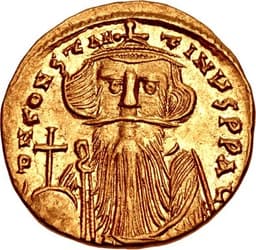
Constans II
Emperor · Ancient
55.2Total
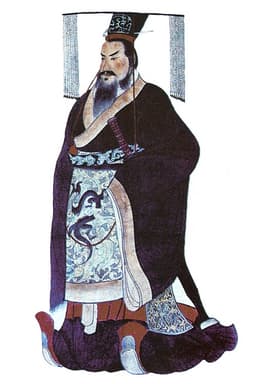
Qin Er Shi
Emperor · Ancient
44.1Total
Basic Information
Born
-630
-229
Died
—
-207
Era
Ancient
Ancient
Nationality
Byzantine Empire
China
Occupation
Emperor
Emperor
Civilization
Western
Eastern
Score Comparison
Military (10%)
55.0
20.2
Political (20%)
68.0
68.0
Influence (20%)
51.0
42.4
Legacy (20%)
44.2
35.0
Leadership (15%)
65.0
43.6
Strategy (15%)
60.0
60.0
TOTAL
55.2
44.1
Constans II — Complete Timeline
648 AD
Issued the Typos of ConstansPolitical Action
Constans II issued the Typos, an edict that forbade discussion of the Monothelite controversy. The edict aimed to end religious strife but was condemned by the Papacy and failed to restore unity.
Religious PolicyChurch ControversyByzantine Empire
Impact: regional
663 AD
Visited RomePolitical Action◆ Major
Constans II became the last Byzantine emperor to visit Rome. He was received by Pope Vitalian and spent twelve days in the city, stripping it of many bronze ornaments and statues to be sent to Constantinople.
Imperial VisitRomeByzantine Empire
Impact: regional
668 AD
Murdered in SyracusePolitical Action◆ Major
While residing in Syracuse, Sicily, Constans II was assassinated in his bath by a chamberlain. His death was part of a conspiracy, and his son Constantine IV succeeded him after suppressing the usurper Mezezius.
AssassinationByzantine EmpireSuccession Crisis
Impact: nationaltragic
674 AD
Defended Constantinople against the Arab siegeWar◆ Major
Constans II's son, Constantine IV, was actually the emperor during the first Arab siege of Constantinople. Constans II himself faced Arab raids but did not command the defense of the capital during the major siege.
Arab-Byzantine WarsSiegeByzantine Empire
Impact: regional
Qin Er Shi — Complete Timeline
210 BC
Accession as Second EmperorPolitical Action◆ Major
After Qin Shi Huang's death, Zhao Gao and Li Si forged a decree to force the crown prince Fusu to commit suicide and installed Huhai as Qin Er Shi. This illegitimate succession undermined the dynasty's legitimacy and placed an incompetent ruler on the throne.
SuccessionPalace IntrigueZhao Gao
Impact: nationaldestructive
209 BC
Outbreak of Dazexiang UprisingWar
Chen Sheng and Wu Guang led a rebellion of conscripted farmers at Dazexiang, sparking widespread revolts across the Qin empire. Qin Er Shi's harsh policies and heavy taxation had created widespread discontent, and the uprising quickly spread, leading to the dynasty's collapse.
RebellionQin CollapseChen Sheng
Impact: nationaldestructive
208 BC
Execution of Li SiPolitical Action◆ Major
Zhao Gao falsely accused Chancellor Li Si of treason. Qin Er Shi ordered Li Si's execution by the Five Pains method, along with his entire family. This removed the last capable administrator from the Qin court, accelerating the dynasty's decline.
ExecutionPolitical PurgeZhao Gao
Impact: nationaldestructive
207 BC
Death at the Hands of Zhao GaoPolitical Action◆ Major
Zhao Gao, fearing Qin Er Shi's anger over military defeats, staged a coup and forced the emperor to commit suicide. Zhao Gao then installed Ziying as the new king. This event marked the effective end of Qin rule, as Ziying surrendered to Liu Bang shortly after.
CoupDeathZhao Gao
Impact: nationaltragic
Expert Analysis
Origins
Constans II was born in 630 CE in Constantinople, the son of Emperor Heraclius Constantine (Constantine III) and his wife Gregoria. He was of Armenian and Greek descent. His grandfather, Heraclius, had famously defeated the Persians. Constans II was raised in the imperial palace and was named co-emperor in 641 when his father died, though a regency initially governed. Qin Er Shi, born Huhai in 229 BCE, was the 18th son of Qin Shi Huang, the first emperor of China. His mother was a concubine. He was not groomed for rule; his father favored his older brother Fusu. Huhai was known as a pleasure-seeking youth, receiving a limited education in governance. His rise was engineered by the eunuch Zhao Gao, who saw him as a puppet.
Rise to Power
Constans II became sole emperor in 641 after a chaotic succession following his father's death. His uncle, Heraclonas, was deposed, and Constans was crowned at age 11. He quickly faced the Arab expansion, which had already taken Syria and Egypt. In 647, he led a campaign against the Slavs in the Balkans. His key turning point was the First Arab Siege of Constantinople (674-678), but that was actually under his son Constantine IV; Constans II himself fought Arab raids in the 650s. He also dealt with the Lombards in Italy. Qin Er Shi's rise was purely conspiratorial. After Qin Shi Huang's death in 210 BCE, Zhao Gao and Li Si forged a decree ordering Fusu to commit suicide and installed Huhai as Qin Er Shi. He was crowned in 210 BCE at age 19. His rule was immediately illegitimate, and he relied entirely on Zhao Gao.
Leadership & Governance
Constans II was an active emperor who moved the capital temporarily to Syracuse in Sicily (663) to better defend against Arab attacks. He issued the Typos (648), an edict forbidding debate on the Monothelite controversy, attempting to impose religious unity. This failed, alienating both sides. He also reorganized the Byzantine military into themes, strengthening provincial defenses. His political score is 68.0, reflecting his administrative efforts. In contrast, Qin Er Shi's governance was disastrous. He followed Zhao Gao's advice to enforce harsh laws, executing officials and nobles. He increased labor on the Great Wall and other projects, ignoring the suffering of peasants. His political score is also 68.0, but that reflects the structure inherited from his father, not his own actions. He dismissed capable ministers like Li Si and allowed Zhao Gao to control the court.
Triumph & Tragedy
Constans II's triumphs include holding the Byzantine Empire together against Arab and Slavic pressures. He successfully defended Constantinople's walls during the Arab siege? Actually, that siege was after his death, but he did repel Arab raids in the 650s. He also visited Rome in 663, the last emperor to do so, though he looted many ancient buildings. His tragedy: he was assassinated in his bath in Syracuse in 668 by a chamberlain, after becoming unpopular due to his religious policies and heavy taxation. He died in exile from his capital. Qin Er Shi's triumph is nonexistent; his reign was a series of failures. The Dazexiang Uprising (209 BCE) under Chen Sheng and Wu Guang exposed the dynasty's fragility. His tragedy: he executed Li Si in 208 BCE on false charges, losing his most capable advisor. He was then forced to commit suicide by Zhao Gao in 207 BCE after a coup. The Qin dynasty collapsed within three years of his death.
Character & Destiny
Constans II was pragmatic but unpopular. He tried to centralize power and impose religious peace, but his heavy-handed methods bred resentment. His move to Syracuse showed a willingness to adapt, but his murder reflected his failure to secure loyalty. Qin Er Shi was weak and easily manipulated. He indulged in pleasures and ignored state affairs. His character—indecisive and cruel—made him a puppet. His destiny was sealed by Zhao Gao's ambition. Historical assessments: Constans II scored 65.0 in leadership, while Qin Er Shi scored 43.6, reflecting their abilities.
Legacy
Constans II's legacy is mixed. He preserved the Byzantine Empire during a critical period, and his military reforms influenced later emperors. However, his religious edicts deepened divisions. He is remembered as the last emperor to visit Rome. His total score is 55.2. Qin Er Shi's legacy is uniformly negative. He is blamed for the rapid fall of the Qin dynasty, which lasted only 15 years. His name is synonymous with misrule. His legacy score is 35.0. The Qin dynasty's institutions, like the centralized bureaucracy, endured, but his personal legacy is null.
Conclusion
Between Constans II and Qin Er Shi, Constans II had greater impact. He scored 55.2 overall to Qin Er Shi's 44.1. While neither was exceptional, Constans II at least maintained an empire; Qin Er Shi destroyed one. Constans II's military (55.0) and leadership (65.0) were superior. Qin Er Shi's legacy is one of failure. Thus, Constans II is the more significant historical figure.
Rankings
🥇
Constans IILeader
Mil: 55.0Pol: 68.0Inf: 51.0
55.2
🥈
Qin Er Shi
Mil: 20.2Pol: 68.0Inf: 42.4
44.1
+11.1 behind
How This Comparison Works
Algorithm
Each figure is scored on 6 dimensions (0—100 scale) based on structured historical data: Military (10%), Political (20%), Influence (20%), Legacy (20%), Leadership (15%), Strategy (15%). The weighted total produces the final ranking.
Data Sources
Scores are computed from structured sub-indicators in the database. Scale factors adjust for era (Ancient ×0.85, Modern ×1.0) and civilization size (Eastern ×1.05, Other ×0.80) to account for differences in population and military scale.
Maximum 3 Figures
Comparisons are limited to 2—3 figures to ensure readability and statistical meaningfulness.
Error Margins
±5 points per dimension — Sub-scores are derived from historical records with inherent uncertainty. Two figures within 5 points on a dimension should be considered roughly equivalent in that area.
Total Score Accuracy
±3 points overall — The weighted combination of 6 dimensions produces a total score with approximately ±3 points of uncertainty. Differences of less than 3 points are not statistically significant— the figures are effectively tied.
Known Limitations
- Historical records are incomplete and uneven across civilizations
- Figures from oral-tradition societies may be underrepresented
- Occupation labels can misclassify multi-role figures
- Scores measure capability and impact, not moral character
- Quantitative scoring is a comparison tool, not absolute truth
Capability Radar
Military (10%) — Battles & Warfare
Battles
55
33
Win Rate
50
37
Expansion
30
37
Political (20%) — Governance & Reform
Reform
55
0
Diplomacy
50
0
Economy
45
0
Influence (20%) — Cultural & Global Reach
Cultural
40
5
Global
25
5
Legacy (20%) — Historical Impact
Historical
45
15
Longevity
30
5
Leadership (15%) — Power & Stability
Tenure
65
3
Stability
35
0
Strategy (15%) — Tactics & Innovation
Strategy
50
41
Tactics
45
48
Reform
40
48
Similar Comparisons
Comments & Discussion
No comments yet. Be the first to share your thoughts!