Loading...
Conrad II vs Marwan II
Conrad II leads by 8.5 pts · 2 figures compared
…

Conrad II
Emperor · Medieval
58.8Total
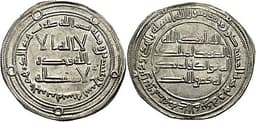
Marwan II
Emperor · Medieval
50.3Total
Basic Information
Born
990
688
Died
1039
750
Era
Medieval
Medieval
Nationality
Holy Roman Empire
Umayyad Caliphate
Occupation
Emperor
Emperor
Civilization
Western
Middle Eastern
Score Comparison
Military (10%)
47.5
70.0
Political (20%)
72.0
40.8
Influence (20%)
55.7
53.3
Legacy (20%)
50.0
44.2
Leadership (15%)
72.0
48.4
Strategy (15%)
60.0
55.0
TOTAL
58.8
50.3
Conrad II — Complete Timeline
1024 AD
Election as King of GermanyPolitical Action◆ Major
Following the death of Henry II without heirs, Conrad II was elected King of Germany in 1024, becoming the first ruler of the Salian dynasty. His election ended the Ottonian line and established a new royal house.
SuccessionSalian Dynasty
Impact: regional
1027 AD
Coronation as Holy Roman EmperorPolitical Action◆ Major
Pope John XIX crowned Conrad II Holy Roman Emperor in Rome on March 26, 1027. The coronation solidified Salian imperial authority and included the participation of kings from Burgundy and Italy.
CoronationImperial Authority
Impact: regionalconstructive
1032 AD
Acquisition of the Kingdom of BurgundyPolitical Action◆ Major
Upon the death of King Rudolf III of Burgundy in 1032, Conrad II claimed the Kingdom of Burgundy through a treaty of succession. He was crowned King of Burgundy in 1033, expanding the Empire's territory into the Rh
Territorial ExpansionBurgundy
Impact: regionalconstructive
1037 AD
Promulgation of the Constitutio de feudisReform◆ Major
Conrad II issued the Constitutio de feudis in 1037, which made fiefs hereditary for lesser nobles in Italy. This legal reform strengthened the position of the lower nobility and stabilized feudal relationships in the kingdom of Italy.
Legal ReformFeudalism
Impact: regionalconstructive
Marwan II — Complete Timeline
744 AD
Accession as CaliphPolitical Action◆ Major
Marwan II became the last Umayyad caliph after a period of civil war and succession disputes. He was a military commander who seized power amid the weakening of the dynasty.
SuccessionCaliphateCivil War
Impact: global
750 AD
Battle of the ZabWar
Marwan II's army was decisively defeated by the Abbasid forces at the Battle of the Zab in Iraq. This battle ended Umayyad rule and led to the establishment of the Abbasid Caliphate.
BattleDefeatAbbasid Revolution
Impact: global
Death in EgyptWar◆ Major
After the Battle of the Zab, Marwan II fled to Egypt where he was captured and killed by Abbasid forces. His death marked the end of the Umayyad Caliphate, though a surviving prince founded a dynasty in Spain.
DeathUmayyadEnd of Dynasty
Impact: globaltragic
Expert Analysis
Origins
Conrad II (c. 990–1039) was born into the Salian noble family in the Duchy of Franconia. His father was Count Henry of Speyer, and his mother was Adelaide of Metz, of the prominent Wetterau family. Conrad received a typical noble education focused on military and administrative skills. He became Duke of Franconia after his father's death and later inherited lands in Worms and Speyer. His early career involved supporting Emperor Henry II, but his lack of direct royal lineage made his eventual kingship a testament to his political acumen.
Marwan II (c. 688–750) was born into the Umayyad dynasty, the son of Marwan I, a former caliph. He grew up during the height of Umayyad power, receiving military training and governance experience. He served as governor of Armenia and Azerbaijan, where he gained a reputation as a capable commander. His early life was marked by the shifting fortunes of the Umayyad clan, including periods of exile and conflict with rival factions.
Rise to Power
Conrad II's rise began after the death of Emperor Henry II in 1024, who left no heirs. Conrad, as a distant relative, was elected King of Germany on September 4, 1024, by a majority of princes at Kamba, despite opposition from some nobles. He moved quickly to consolidate power, securing recognition from the Italian nobility and traveling to Rome. On March 26, 1027, Pope John XIX crowned him Holy Roman Emperor. His political maneuvering, including alliances with the church and lesser nobles, solidified his position.
Marwan II rose to power during the Umayyad Caliphate's decline. After the death of Caliph Hisham in 743, a series of short-lived caliphs and civil wars erupted. Marwan, then governor of Armenia, marched on Damascus and forced Caliph Ibrahim to abdicate in 744, proclaiming himself caliph. His military background helped him suppress revolts in Syria and Iraq, but his rule was contested by rival Umayyad factions and growing Abbasid propaganda.
Leadership & Governance
Conrad II's leadership was characterized by legal reforms and territorial expansion. He issued the Constitutio de feudis in 1037, which made fiefs hereditary for lesser nobles in Italy, strengthening their loyalty and centralizing control. He also acquired the Kingdom of Burgundy in 1032 through a treaty with the childless King Rudolf III, expanding imperial territory. His governance style emphasized cooperation with the church and nobility, avoiding major conflicts. He scored 72.0 in political and 72.0 in leadership, reflecting his diplomatic and administrative skills.
Marwan II's leadership was heavily military-focused. He moved the capital to Harran in northern Mesopotamia to better coordinate campaigns against the Abbasids. He attempted to reform the army by relying on Syrian and Jaziran troops, but his harsh measures alienated many. His political score of 40.8 indicates his struggle to maintain unity. He failed to address the underlying grievances of non-Arab Muslims (mawali) and the Abbasid propaganda that exploited them.
Triumph & Tragedy
Conrad II's greatest triumph was the acquisition of Burgundy, expanding the empire without major warfare. His Constitutio de feudis was a lasting legal reform that influenced feudal structures. His greatest failure was the limited success in Italy, where he faced rebellions from Milan and other cities, though he managed to suppress them. He died in 1039 during a campaign in Italy, leaving a stable realm.
Marwan II's triumph was his initial military success in suppressing revolts and briefly stabilizing the caliphate. He defeated the Kharijite rebellion and secured the borders. His tragedy was the decisive defeat at the Battle of the Zab in 750, where his army was routed by Abbasid forces. He fled to Egypt, where he was captured and killed. His death marked the end of the Umayyad Caliphate, and his score of 44.2 in legacy reflects the short-lived nature of his rule.
Character & Destiny
Conrad II was pragmatic and diplomatic, known for his patience and ability to build consensus. His character shaped a destiny of steady expansion and institutional reform. He avoided unnecessary wars, focusing on legal and territorial gains. Historical assessments credit him with founding the Salian dynasty's power.
Marwan II was a skilled military commander but inflexible politically. His reliance on force alienated potential allies. His character led to a destiny of failure; his inability to adapt to political realities cost him the caliphate. Historians note his competence as a general but his lack of political subtlety.
Legacy
Conrad II's legacy is the consolidation of the Salian dynasty and the expansion of the Holy Roman Empire. His legal reforms influenced medieval governance. The acquisition of Burgundy added a key territory. He is remembered as a capable ruler who strengthened imperial institutions. His total score of 58.8 reflects moderate but solid impact.
Marwan II's legacy is largely negative as the last Umayyad caliph. His defeat allowed the Abbasid Revolution to succeed, shifting the center of Islamic power eastward. He is often seen as a symbol of Umayyad decline. His military efforts, though notable, failed to save the dynasty. His total score of 50.3 places him lower in historical impact.
Conclusion
Conrad II had greater impact than Marwan II. His political score of 72.0 and leadership of 72.0 outpace Marwan's 40.8 and 48.4. Conrad's conquest of Burgundy and legal reforms had lasting effects on European feudalism, while Marwan's brief rule only delayed the inevitable Abbasid takeover. Conrad's legacy endured through the Salian dynasty, whereas Marwan's ended in defeat. Conrad II's total score of 58.8 versus 50.3 underscores his superior historical significance.
Rankings
🥇
Conrad IILeader
Mil: 47.5Pol: 72.0Inf: 55.7
58.8
🥈
Marwan II
Mil: 70.0Pol: 40.8Inf: 53.3
50.3
+8.5 behind
How This Comparison Works
Algorithm
Each figure is scored on 6 dimensions (0—100 scale) based on structured historical data: Military (10%), Political (20%), Influence (20%), Legacy (20%), Leadership (15%), Strategy (15%). The weighted total produces the final ranking.
Data Sources
Scores are computed from structured sub-indicators in the database. Scale factors adjust for era (Ancient ×0.85, Modern ×1.0) and civilization size (Eastern ×1.05, Other ×0.80) to account for differences in population and military scale.
Maximum 3 Figures
Comparisons are limited to 2—3 figures to ensure readability and statistical meaningfulness.
Error Margins
±5 points per dimension — Sub-scores are derived from historical records with inherent uncertainty. Two figures within 5 points on a dimension should be considered roughly equivalent in that area.
Total Score Accuracy
±3 points overall — The weighted combination of 6 dimensions produces a total score with approximately ±3 points of uncertainty. Differences of less than 3 points are not statistically significant— the figures are effectively tied.
Known Limitations
- Historical records are incomplete and uneven across civilizations
- Figures from oral-tradition societies may be underrepresented
- Occupation labels can misclassify multi-role figures
- Scores measure capability and impact, not moral character
- Quantitative scoring is a comparison tool, not absolute truth
Capability Radar
Military (10%) — Battles & Warfare
Battles
45
75
Win Rate
50
60
Expansion
60
50
Political (20%) — Governance & Reform
Reform
65
45
Diplomacy
75
35
Economy
60
30
Influence (20%) — Cultural & Global Reach
Cultural
40
30
Global
35
30
Legacy (20%) — Historical Impact
Historical
55
40
Longevity
50
25
Leadership (15%) — Power & Stability
Tenure
70
40
Stability
70
20
Strategy (15%) — Tactics & Innovation
Strategy
55
65
Tactics
40
70
Reform
30
55
Similar Comparisons
Comments & Discussion
No comments yet. Be the first to share your thoughts!