Loading...
Conrad II vs Qasim Khan of Kazan
Conrad II leads by 17.7 pts · 2 figures compared
…
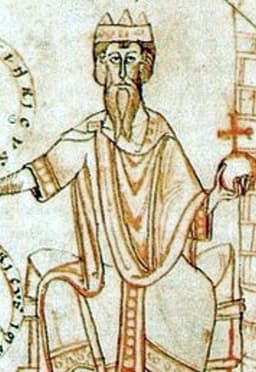
Conrad II
Emperor · Medieval
58.8Total

Qasim Khan of Kazan
Emperor · Medieval
41.1Total
Basic Information
Born
990
1445
Died
1039
1521
Era
Medieval
Medieval
Nationality
Holy Roman Empire
Khanate of Kazan
Occupation
Emperor
Emperor
Civilization
Western
Eastern
Score Comparison
Military (10%)
47.5
55.0
Political (20%)
72.0
26.4
Influence (20%)
55.7
46.3
Legacy (20%)
50.0
35.8
Leadership (15%)
72.0
45.0
Strategy (15%)
60.0
43.7
TOTAL
58.8
41.1
Conrad II — Complete Timeline
1024 AD
Election as King of GermanyPolitical Action◆ Major
Following the death of Henry II without heirs, Conrad II was elected King of Germany in 1024, becoming the first ruler of the Salian dynasty. His election ended the Ottonian line and established a new royal house.
SuccessionSalian Dynasty
Impact: regional
1027 AD
Coronation as Holy Roman EmperorPolitical Action◆ Major
Pope John XIX crowned Conrad II Holy Roman Emperor in Rome on March 26, 1027. The coronation solidified Salian imperial authority and included the participation of kings from Burgundy and Italy.
CoronationImperial Authority
Impact: regionalconstructive
1032 AD
Acquisition of the Kingdom of BurgundyPolitical Action◆ Major
Upon the death of King Rudolf III of Burgundy in 1032, Conrad II claimed the Kingdom of Burgundy through a treaty of succession. He was crowned King of Burgundy in 1033, expanding the Empire's territory into the Rh
Territorial ExpansionBurgundy
Impact: regionalconstructive
1037 AD
Promulgation of the Constitutio de feudisReform◆ Major
Conrad II issued the Constitutio de feudis in 1037, which made fiefs hereditary for lesser nobles in Italy. This legal reform strengthened the position of the lower nobility and stabilized feudal relationships in the kingdom of Italy.
Legal ReformFeudalism
Impact: regionalconstructive
Qasim Khan of Kazan — Complete Timeline
1445 AD
Conquest of MoscowWar◆ Major
Qasim Khan led a Kazan army that briefly captured Moscow during the Muscovite Civil War. This raid demonstrated Kazan's military power and forced Grand Prince Vasily II to pay tribute, though the occupation was short-lived.
ConquestMoscowMuscovy
Impact: regional
1452 AD
Establishment of the Qasim KhanatePolitical Action◆ Major
Qasim Khan was granted the town of Gorodets (later renamed Qasim) by Vasily II as a vassal state. This created the Qasim Khanate, a buffer state between Muscovy and the Kazan Khanate, which lasted until the 17th century.
State FormationQasim KhanateMuscovy
Impact: regionalconstructive
1460 AD
Raid on RyazanWar
Qasim Khan led a raid on the Principality of Ryazan, a Muscovite ally. This attack was part of ongoing conflicts between Kazan and Muscovy, resulting in the capture of booty and prisoners.
RaidRyazanConflict
destructive
Expert Analysis
Origins
Conrad II, born around 990, was the son of Count Henry of Speyer and Adelheid of Alsace. He belonged to the Salian Frankish nobility, but his early life was marked by obscurity; little is known before his election. His father died young, and Conrad was raised under the guardianship of his uncle, Bishop Adalbert of Worms. He married Gisela of Swabia, a politically advantageous union that connected him to the Ottonian dynasty.
Qasim Khan, whose birth date is uncertain (likely early 15th century), was a descendant of Genghis Khan through the Golden Horde. He emerged as a military leader among the Tatar forces during the fragmentation of the Golden Horde. He was the son of Ulugh Muhammad, the Khan of Kazan, and belonged to the House of Borjigin. His early life involved tribal warfare and the struggle for control over the Volga region.
Rise to Power
Conrad II rose to power in 1024 after the death of Emperor Henry II, who left no heir. The German princes elected Conrad as King of Germany in September 1024, preferring him over other candidates due to his perceived moderation and political skill. He was crowned at Mainz, but faced opposition from his cousin, Conrad the Younger. By 1026, he secured his position and marched to Italy, where Pope John XIX crowned him Holy Roman Emperor on March 26, 1027. This coronation included the participation of kings from Burgundy and Italy, signaling his broad authority.
Qasim Khan rose to prominence during the Muscovite Civil War (1425–1453). In 1445, he led a Kazan army that captured Moscow for a brief period, forcing Grand Prince Vasily II to pay tribute. This victory demonstrated his military prowess. However, internal conflicts in Kazan led him to seek refuge in Muscovy. Vasily II granted him the town of Gorodets on the Oka River, which became the Qasim Khanate, a vassal state. This move allowed Qasim to rule semi-independently while serving as a buffer between Muscovy and the Tatar khanates.
Leadership & Governance
Conrad II's leadership focused on consolidating imperial authority and legal reforms. He issued the Constitutio de feudis in 1037, which made fiefs hereditary for lesser nobles in Italy, strengthening their position against powerful lords and increasing imperial control. He also asserted dominance over the Church, appointing bishops and using them as administrative tools. His acquisition of Burgundy in 1032 through a succession treaty expanded the empire without war, showcasing his diplomatic skill. Politically, he scored 72.0, reflecting his effective governance.
Qasim Khan's governance was typical of a Tatar khan: he relied on military force and tribute. As a vassal of Muscovy, his political autonomy was limited. He engaged in raids against Ryazan and other principalities, scoring 55.0 in military but only 26.4 in political due to his subordinate role. The Qasim Khanate he established was a small state that persisted for over 200 years, but his personal rule was short and less transformative.
Triumph & Tragedy
Conrad II's greatest triumph was the peaceful acquisition of Burgundy, adding a vast territory to the Holy Roman Empire without conflict. His legal reform, the Constitutio de feudis, had lasting impact on feudal law. However, his reign saw no major military victories; his military score of 47.5 reflects limited success in campaigns. He failed to fully subdue the powerful dukes of Saxony and Lorraine, and his Italian policy faced resistance from the Lombard cities.
Qasim Khan's triumph was the capture of Moscow in 1445, a stunning raid that forced Vasily II to pay tribute and recognize Kazan's power. However, his tragedy was the loss of his position in Kazan due to internal strife, forcing him into vassalage. His legacy score of 35.8 indicates limited long-term impact; the Qasim Khanate survived but remained a minor player.
Character & Destiny
Conrad II was pragmatic and calculating, using marriage alliances and legal reforms to strengthen his rule. He avoided unnecessary wars and focused on administration. His destiny was shaped by his ability to seize opportunities, like the Burgundian succession. He died in 1039, having established the Salian dynasty firmly.
Qasim Khan was a warrior leader, bold but politically naive. His military success could not secure lasting power. He accepted vassal status, which limited his independence. His character reflected the turbulent steppe politics where alliances shifted rapidly.
Legacy
Conrad II's legacy includes the Salian dynasty's strengthening of imperial authority and the Constitutio de feudis, which influenced European feudal law. He is remembered as a consolidator rather than an expander. His influence score of 55.7 reflects moderate long-term impact.
Qasim Khan's legacy is the Qasim Khanate, a vassal state that served as a buffer between Muscovy and the Tatars. The khanate existed until the 17th century, but Qasim himself is a minor figure in Russian history. His influence score is 46.3.
Conclusion
Conrad II had a greater impact than Qasim Khan. With a total score of 58.8 against 41.1, Conrad's political and legal reforms shaped medieval Europe, while Qasim's brief conquest of Moscow was a local event. Conrad's acquisition of Burgundy and the Constitutio de feudis had lasting institutional effects, whereas Qasim's influence was confined to a short-lived vassal state. Conrad II's governance and diplomacy outshine Qasim's military raids in historical significance.
Rankings
🥇
Conrad IILeader
Mil: 47.5Pol: 72.0Inf: 55.7
58.8
🥈
Qasim Khan of Kazan
Mil: 55.0Pol: 26.4Inf: 46.3
41.1
+17.7 behind
How This Comparison Works
Algorithm
Each figure is scored on 6 dimensions (0—100 scale) based on structured historical data: Military (10%), Political (20%), Influence (20%), Legacy (20%), Leadership (15%), Strategy (15%). The weighted total produces the final ranking.
Data Sources
Scores are computed from structured sub-indicators in the database. Scale factors adjust for era (Ancient ×0.85, Modern ×1.0) and civilization size (Eastern ×1.05, Other ×0.80) to account for differences in population and military scale.
Maximum 3 Figures
Comparisons are limited to 2—3 figures to ensure readability and statistical meaningfulness.
Error Margins
±5 points per dimension — Sub-scores are derived from historical records with inherent uncertainty. Two figures within 5 points on a dimension should be considered roughly equivalent in that area.
Total Score Accuracy
±3 points overall — The weighted combination of 6 dimensions produces a total score with approximately ±3 points of uncertainty. Differences of less than 3 points are not statistically significant— the figures are effectively tied.
Known Limitations
- Historical records are incomplete and uneven across civilizations
- Figures from oral-tradition societies may be underrepresented
- Occupation labels can misclassify multi-role figures
- Scores measure capability and impact, not moral character
- Quantitative scoring is a comparison tool, not absolute truth
Capability Radar
Military (10%) — Battles & Warfare
Battles
45
30
Win Rate
50
35
Expansion
60
25
Political (20%) — Governance & Reform
Reform
65
10
Diplomacy
75
15
Economy
60
10
Influence (20%) — Cultural & Global Reach
Cultural
40
10
Global
35
5
Legacy (20%) — Historical Impact
Historical
55
15
Longevity
50
10
Leadership (15%) — Power & Stability
Tenure
70
20
Stability
70
15
Strategy (15%) — Tactics & Innovation
Strategy
55
20
Tactics
40
25
Reform
30
10
Similar Comparisons
Comments & Discussion
No comments yet. Be the first to share your thoughts!