Loading...
Conrad II vs Li Longji
Conrad II leads by 4.6 pts · 2 figures compared
…
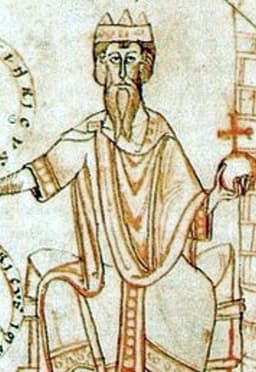
Conrad II
Emperor · Medieval
58.8Total
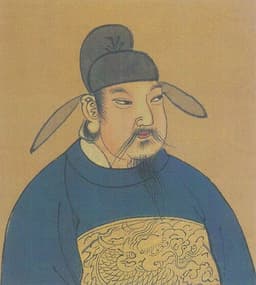
Li Longji
Emperor · Medieval
54.2Total
Basic Information
Born
990
685
Died
1039
762
Era
Medieval
Medieval
Nationality
Holy Roman Empire
China
Occupation
Emperor
Emperor
Civilization
Western
Eastern
Score Comparison
Military (10%)
47.5
61.7
Political (20%)
72.0
82.0
Influence (20%)
55.7
40.0
Legacy (20%)
50.0
40.0
Leadership (15%)
72.0
68.0
Strategy (15%)
60.0
55.0
TOTAL
58.8
54.2
Conrad II — Complete Timeline
1024 AD
Election as King of GermanyPolitical Action◆ Major
Following the death of Henry II without heirs, Conrad II was elected King of Germany in 1024, becoming the first ruler of the Salian dynasty. His election ended the Ottonian line and established a new royal house.
SuccessionSalian Dynasty
Impact: regional
1027 AD
Coronation as Holy Roman EmperorPolitical Action◆ Major
Pope John XIX crowned Conrad II Holy Roman Emperor in Rome on March 26, 1027. The coronation solidified Salian imperial authority and included the participation of kings from Burgundy and Italy.
CoronationImperial Authority
Impact: regionalconstructive
1032 AD
Acquisition of the Kingdom of BurgundyPolitical Action◆ Major
Upon the death of King Rudolf III of Burgundy in 1032, Conrad II claimed the Kingdom of Burgundy through a treaty of succession. He was crowned King of Burgundy in 1033, expanding the Empire's territory into the Rh
Territorial ExpansionBurgundy
Impact: regionalconstructive
1037 AD
Promulgation of the Constitutio de feudisReform◆ Major
Conrad II issued the Constitutio de feudis in 1037, which made fiefs hereditary for lesser nobles in Italy. This legal reform strengthened the position of the lower nobility and stabilized feudal relationships in the kingdom of Italy.
Legal ReformFeudalism
Impact: regionalconstructive
Li Longji — Complete Timeline
713 AD
Kaiyuan era reformsReform◆ Major
Emperor Xuanzong implemented administrative, fiscal, and military reforms during the Kaiyuan era. These reforms reduced corruption, improved tax collection, and strengthened the Tang state, leading to a golden age.
Tang dynastyReformGolden age
Impact: nationalconstructive
755 AD
An Lushan Rebellion beganWar
General An Lushan rebelled in the northeast, capturing Luoyang and Chang'an. Xuanzong fled to Sichuan, and the rebellion devastated the Tang empire, causing millions of deaths and permanent decline.
Tang dynastyRebellionAn Lushan
Impact: globaltragic
756 AD
Abdicated after Mawei Station incidentPolitical Action◆ Major
During the flight to Sichuan, Xuanzong's guards mutinied at Mawei Station, forcing him to order the death of his favorite consort Yang Guifei. Xuanzong abdicated to his son Suzong shortly after.
Tang dynastyAbdicationYang Guifei
Impact: nationaltragic
Expert Analysis
Origins
Conrad II (c. 990–1039) was born into the Salian Frankish noble family, the son of Count Henry of Speyer and Adelaide of Alsace. His early life was marked by the death of his father when Conrad was an infant, leaving him to be raised by his mother and uncle. He received a typical noble education focused on military and administrative skills. He became Duke of Carinthia in 1011 but was deposed by Emperor Henry II in 1012, leading to a period of political marginalization until Henry II's death.
Li Longji (685–762) was born into the Tang imperial family as the third son of Emperor Ruizong. His early life was shaped by the tumultuous politics of the Wu Zetian era; he was raised in seclusion to protect him from the Empress Dowager's purges. He received a comprehensive Confucian education and was appointed Prince of Chufei in 710. His formative experience was the coup of 710, when he and his aunt Princess Taiping overthrew Empress Wei, leading to his father's restoration and his own appointment as crown prince.
Rise to Power
Conrad II's rise began with the death of Emperor Henry II in 1024. As Henry II had no direct heirs, a royal assembly at Kamba elected Conrad as King of Germany on September 8, 1024, largely due to his Salian lineage and the support of Archbishop Aribo of Mainz. He was crowned at Mainz Cathedral. In 1026, he led a campaign to Italy to assert his authority, and on March 26, 1027, Pope John XIX crowned him Holy Roman Emperor in Rome. His acquisition of the Kingdom of Burgundy in 1032, through a treaty with the childless King Rudolf III, expanded imperial territory significantly.
Li Longji's rise was more dramatic. In 710, he led a coup with his aunt Princess Taiping against Empress Wei, who had poisoned his father Emperor Zhongzong. After the coup, his father Ruizong was restored, but Li Longji was named crown prince. In 712, Ruizong abdicated in his favor, and Li Longji became Emperor Xuanzong. He quickly consolidated power by eliminating Princess Taiping's faction in 713, ending the period of female regency. He initiated the Kaiyuan era (713–741), which became known as a golden age.
Leadership & Governance
Conrad II's governance focused on strengthening imperial authority and legal uniformity. He issued the Constitutio de feudis in 1037, which made fiefs hereditary for lesser nobles in Italy, binding them directly to the emperor and weakening the power of great dukes. He also supported the Church as a counterbalance to secular nobles, appointing loyal bishops. His leadership style was pragmatic: he negotiated with the nobility rather than confront them directly, as seen in his handling of the Burgundian succession.
Li Longji's leadership during the Kaiyuan era was characterized by administrative reforms. He appointed capable chancellors like Yao Chong and Song Jing, who reduced corruption, reorganized the tax system, and improved the civil service examination. He also reformed the military by establishing professional frontier armies under regional commanders. However, his later years saw a decline: he became increasingly reliant on his favorite consort Yang Guifei and her relative Yang Guozhong, while neglecting governance. This led to corruption and the appointment of General An Lushan, who later rebelled.
Triumph & Tragedy
Conrad II's greatest triumph was the acquisition of Burgundy, which expanded the empire without war. The Constitutio de feudis was a lasting legal achievement that influenced feudal law. His establishment of the Salian dynasty ensured a stable succession. His greatest failure was his inability to fully control the Italian nobility, leading to ongoing conflict in the south. He died in 1039 of gout, leaving a relatively stable empire.
Li Longji's triumph was the Kaiyuan golden age, with a prosperous economy, cultural flourishing (poetry, art, music), and a strong central government. The Tang empire reached its territorial peak. His tragedy was the An Lushan Rebellion (755–763), which resulted from his late-life negligence. The rebellion killed millions, devastated the empire, and forced him to flee. At Mawei Station in 756, his own guards mutinied, forcing him to order the death of Yang Guifei. He abdicated soon after and died in exile in 762, his legacy tarnished.
Character & Destiny
Conrad II was known for his patience and political acumen. He scored 72.0 in political skill, reflecting his ability to navigate complex feudal relationships. His character was pragmatic: he used legal reforms rather than military force to consolidate power. His destiny was to found a dynasty that lasted until 1125.
Li Longji scored 82.0 in political skill, but his character was a study in contrasts: early in his reign he was diligent and reform-minded, later he became pleasure-seeking and detached. Historians note his overconfidence in appointing An Lushan, which led to disaster. His destiny was to preside over both the peak and the ruin of the Tang dynasty, a classic arc of hubris and fall.
Legacy
Conrad II's legacy is legal and dynastic: the Constitutio de feudis influenced the development of feudalism in Italy and Germany. The Salian dynasty continued under his son Henry III, who further strengthened imperial power. He is remembered as a consolidator rather than a conqueror, with a moderate legacy score of 50.0.
Li Longji's legacy is more complex: the Kaiyuan era is celebrated as a cultural golden age, influencing Chinese literature and art. However, the An Lushan Rebellion weakened the Tang permanently, leading to its eventual collapse. He is often blamed for the rebellion's severity. His influence score of 40.0 reflects this mixed legacy.
Conclusion
While Li Longji presided over a more brilliant cultural peak, his catastrophic failure in the An Lushan Rebellion undid much of his early work. Conrad II's more modest but stable achievements—acquiring Burgundy and reforming feudal law—had a more enduring positive impact on the Holy Roman Empire. Conrad II's total score of 58.8 surpasses Li Longji's 54.2, reflecting greater overall effectiveness. In a historical comparison, Conrad II emerges as the more successful ruler because he avoided a devastating collapse and left a stronger institutional legacy.
Rankings
🥇
Conrad IILeader
Mil: 47.5Pol: 72.0Inf: 55.7
58.8
🥈
Li Longji
Mil: 61.7Pol: 82.0Inf: 40.0
54.2
+4.6 behind
How This Comparison Works
Algorithm
Each figure is scored on 6 dimensions (0—100 scale) based on structured historical data: Military (10%), Political (20%), Influence (20%), Legacy (20%), Leadership (15%), Strategy (15%). The weighted total produces the final ranking.
Data Sources
Scores are computed from structured sub-indicators in the database. Scale factors adjust for era (Ancient ×0.85, Modern ×1.0) and civilization size (Eastern ×1.05, Other ×0.80) to account for differences in population and military scale.
Maximum 3 Figures
Comparisons are limited to 2—3 figures to ensure readability and statistical meaningfulness.
Error Margins
±5 points per dimension — Sub-scores are derived from historical records with inherent uncertainty. Two figures within 5 points on a dimension should be considered roughly equivalent in that area.
Total Score Accuracy
±3 points overall — The weighted combination of 6 dimensions produces a total score with approximately ±3 points of uncertainty. Differences of less than 3 points are not statistically significant— the figures are effectively tied.
Known Limitations
- Historical records are incomplete and uneven across civilizations
- Figures from oral-tradition societies may be underrepresented
- Occupation labels can misclassify multi-role figures
- Scores measure capability and impact, not moral character
- Quantitative scoring is a comparison tool, not absolute truth
Capability Radar
Military (10%) — Battles & Warfare
Battles
45
65
Win Rate
50
60
Expansion
60
80
Political (20%) — Governance & Reform
Reform
65
90
Diplomacy
75
80
Economy
60
95
Influence (20%) — Cultural & Global Reach
Cultural
40
90
Global
35
75
Legacy (20%) — Historical Impact
Historical
55
85
Longevity
50
70
Leadership (15%) — Power & Stability
Tenure
70
85
Stability
70
40
Strategy (15%) — Tactics & Innovation
Strategy
55
70
Tactics
40
55
Reform
30
75
Similar Comparisons
Comments & Discussion
No comments yet. Be the first to share your thoughts!