Loading...
Conrad II vs Liu Zhiyuan
Conrad II leads by 17.4 pts · 2 figures compared
…
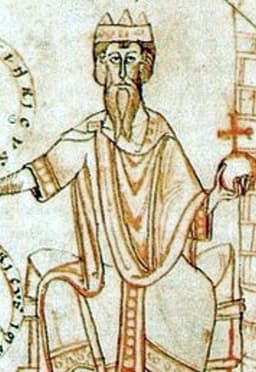
Conrad II
Emperor · Medieval
58.8Total
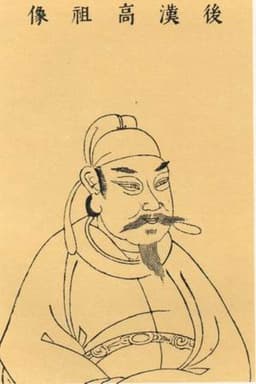
Liu Zhiyuan
Emperor · Medieval
41.4Total
Basic Information
Born
990
895
Died
1039
948
Era
Medieval
Medieval
Nationality
Holy Roman Empire
China
Occupation
Emperor
Emperor
Civilization
Western
Eastern
Score Comparison
Military (10%)
47.5
46.7
Political (20%)
72.0
29.3
Influence (20%)
55.7
46.3
Legacy (20%)
50.0
38.3
Leadership (15%)
72.0
34.6
Strategy (15%)
60.0
60.0
TOTAL
58.8
41.4
Conrad II — Complete Timeline
1024 AD
Election as King of GermanyPolitical Action◆ Major
Following the death of Henry II without heirs, Conrad II was elected King of Germany in 1024, becoming the first ruler of the Salian dynasty. His election ended the Ottonian line and established a new royal house.
SuccessionSalian Dynasty
Impact: regional
1027 AD
Coronation as Holy Roman EmperorPolitical Action◆ Major
Pope John XIX crowned Conrad II Holy Roman Emperor in Rome on March 26, 1027. The coronation solidified Salian imperial authority and included the participation of kings from Burgundy and Italy.
CoronationImperial Authority
Impact: regionalconstructive
1032 AD
Acquisition of the Kingdom of BurgundyPolitical Action◆ Major
Upon the death of King Rudolf III of Burgundy in 1032, Conrad II claimed the Kingdom of Burgundy through a treaty of succession. He was crowned King of Burgundy in 1033, expanding the Empire's territory into the Rh
Territorial ExpansionBurgundy
Impact: regionalconstructive
1037 AD
Promulgation of the Constitutio de feudisReform◆ Major
Conrad II issued the Constitutio de feudis in 1037, which made fiefs hereditary for lesser nobles in Italy. This legal reform strengthened the position of the lower nobility and stabilized feudal relationships in the kingdom of Italy.
Legal ReformFeudalism
Impact: regionalconstructive
Liu Zhiyuan — Complete Timeline
947 AD
Founded the Later Han DynastyPolitical Action
Liu Zhiyuan, a Shatuo Turk military governor, declared himself emperor of the Later Han dynasty after the fall of the Later Jin dynasty to the Khitan Liao dynasty. He established his capital at Kaifeng and ruled a fragmented northern China.
Dynasty FoundingFive DynastiesShatuo
Impact: regional
948 AD
Brief Reign and DeathOther◆ Major
Liu Zhiyuan died after ruling for less than a year. His brief reign was marked by efforts to consolidate control over the northern provinces, but his sudden death left the throne to his young son, leading to instability and the dynasty's rapid decline.
DeathShort ReignInstability
Impact: regional
Expert Analysis
Origins
Conrad II (c. 990–1039) was born into the Salian noble family in the Duchy of Franconia, part of the Holy Roman Empire. His father, Henry of Speyer, died early, and Conrad was raised by his uncle, Bishop Burchard of Worms. He received a military and administrative education typical for medieval German nobility. Conrad's early career was as a count and military commander, gaining experience in the complex feudal politics of the Empire.
Liu Zhiyuan (895–948) was a Shatuo Turk, part of a Turkic group that had settled in northern China. He served as a military officer under the Later Jin dynasty, rising through the ranks due to his martial skills. His early life was marked by the chaotic Five Dynasties and Ten Kingdoms period, where loyalty shifted frequently. Liu's background was purely military, without formal education in governance.
Rise to Power
Conrad II's rise began after the death of Emperor Henry II in 1024, who left no direct heir. The German princes elected Conrad as King of Germany on September 4, 1024, at Kamba, despite opposition from other candidates. He secured his position by leveraging alliances with the Church and minor nobles. In 1026, he marched to Italy to suppress rebellions and was crowned Holy Roman Emperor by Pope John XIX on March 26, 1027. His acquisition of the Kingdom of Burgundy in 1032 through a treaty with the childless King Rudolf III further expanded his realm.
Liu Zhiyuan's rise was more abrupt. In 947, after the Later Jin dynasty fell to the Khitan-led Liao dynasty, Liu, serving as a military governor in Taiyuan, declared himself emperor of the Later Han dynasty. He quickly consolidated power in the northern provinces, exploiting the Liao's withdrawal. His reign, however, lasted only about eleven months from his proclamation to his death in 948, making his rise a brief but pivotal moment in the Five Dynasties period.
Leadership & Governance
Conrad II's leadership scored 72.0 in the political domain. He strengthened the monarchy by asserting authority over the German dukes and Italian nobles. His most significant reform was the Constitutio de feudis (1037), which made smaller fiefs hereditary for knights and lower nobility in Italy, reducing the power of great lords and tying lesser nobles directly to the crown. He also supported the Church as a counterbalance to secular princes, appointing loyal bishops.
Liu Zhiyuan's leadership scored 34.6, reflecting his brief reign. He focused on military consolidation, suppressing rival warlords and securing the borders against the Liao. He lacked time to implement administrative reforms. His governance was characterized by harsh military rule, typical of the period, with no lasting legal or institutional changes.
Triumph & Tragedy
Conrad II's triumphs include the expansion of the Empire through the acquisition of Burgundy, the stabilization of imperial authority after the childless Henry II, and the legal reform of fiefs. His greatest failure was the unfinished pacification of Italy; rebellions in Milan and other cities required repeated campaigns. He also failed to secure a smooth succession for his son Henry III, though Henry eventually succeeded.
Liu Zhiyuan's triumph was founding the Later Han dynasty, one of the five short-lived dynasties of the period, and preventing the complete takeover of northern China by the Khitan. His tragedy was his extremely short reign, which prevented any lasting achievements. His dynasty fell within four years after his death, and his son was overthrown by a coup, marking the dynasty as one of the shortest in Chinese history.
Character & Destiny
Conrad II was pragmatic and politically astute, scoring 72.0 in leadership. He was known for his patience and ability to forge coalitions. His character shaped his destiny: his legal reforms and territorial acquisitions laid the foundation for the Salian dynasty's power. However, his reliance on church allies later led to conflicts with the papacy under his successors.
Liu Zhiyuan was a capable military commander but lacked political vision. His score of 29.3 in political acumen reflects his inability to establish a stable regime. His destiny was cut short by illness, but even had he lived longer, the volatile environment of the Five Dynasties made long-term rule unlikely. His character was typical of the era's warlords: ruthless and opportunistic.
Legacy
Conrad II's legacy is significant in European history. The Constitutio de feudis influenced the development of feudalism in Italy. His acquisition of Burgundy integrated the region into the Holy Roman Empire for centuries. He scored 50.0 in legacy, reflecting a moderate but enduring impact. The Salian dynasty continued through his son Henry III, who further strengthened imperial power.
Liu Zhiyuan's legacy is minimal. The Later Han dynasty was ephemeral, and his reign left no institutions or reforms. He scored 38.3 in legacy, and his main historical role is as a placeholder in the Five Dynasties sequence. The Shatuo Turk influence in northern China waned after his dynasty's fall.
Conclusion
Conrad II had a greater impact on history than Liu Zhiyuan. With a total score of 58.8 versus Liu's 41.4, the gap of 17.4 points reflects Conrad's more enduring contributions: legal reform, territorial expansion, and dynastic foundation. Liu's brief rule was a footnote in a chaotic period, while Conrad's reign shaped medieval Germany and Italy. Conrad II is the more significant figure by a clear margin.
Rankings
🥇
Conrad IILeader
Mil: 47.5Pol: 72.0Inf: 55.7
58.8
🥈
Liu Zhiyuan
Mil: 46.7Pol: 29.3Inf: 46.3
41.4
+17.4 behind
How This Comparison Works
Algorithm
Each figure is scored on 6 dimensions (0—100 scale) based on structured historical data: Military (10%), Political (20%), Influence (20%), Legacy (20%), Leadership (15%), Strategy (15%). The weighted total produces the final ranking.
Data Sources
Scores are computed from structured sub-indicators in the database. Scale factors adjust for era (Ancient ×0.85, Modern ×1.0) and civilization size (Eastern ×1.05, Other ×0.80) to account for differences in population and military scale.
Maximum 3 Figures
Comparisons are limited to 2—3 figures to ensure readability and statistical meaningfulness.
Error Margins
±5 points per dimension — Sub-scores are derived from historical records with inherent uncertainty. Two figures within 5 points on a dimension should be considered roughly equivalent in that area.
Total Score Accuracy
±3 points overall — The weighted combination of 6 dimensions produces a total score with approximately ±3 points of uncertainty. Differences of less than 3 points are not statistically significant— the figures are effectively tied.
Known Limitations
- Historical records are incomplete and uneven across civilizations
- Figures from oral-tradition societies may be underrepresented
- Occupation labels can misclassify multi-role figures
- Scores measure capability and impact, not moral character
- Quantitative scoring is a comparison tool, not absolute truth
Capability Radar
Military (10%) — Battles & Warfare
Battles
45
30
Win Rate
50
35
Expansion
60
30
Political (20%) — Governance & Reform
Reform
65
20
Diplomacy
75
30
Economy
60
20
Influence (20%) — Cultural & Global Reach
Cultural
40
10
Global
35
5
Legacy (20%) — Historical Impact
Historical
55
20
Longevity
50
10
Leadership (15%) — Power & Stability
Tenure
70
25
Stability
70
15
Strategy (15%) — Tactics & Innovation
Strategy
55
35
Tactics
40
40
Reform
30
20
Similar Comparisons
Comments & Discussion
No comments yet. Be the first to share your thoughts!