Loading...
Henry VIII vs Liu Zhiyuan
Henry VIII leads by 18.8 pts · 2 figures compared
…

Henry VIII
Emperor · Medieval
60.2Total
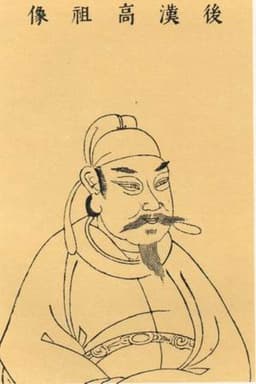
Liu Zhiyuan
Emperor · Medieval
41.4Total
Basic Information
Born
1491
895
Died
1547
948
Era
Medieval
Medieval
Nationality
England
China
Occupation
Emperor
Emperor
Civilization
Western
Eastern
Score Comparison
Military (10%)
55.0
46.7
Political (20%)
72.0
29.3
Influence (20%)
65.0
46.3
Legacy (20%)
40.0
38.3
Leadership (15%)
78.0
34.6
Strategy (15%)
60.0
60.0
TOTAL
60.2
41.4
Henry VIII — Complete Timeline
1513 AD
Battle of the SpursWar
Henry VIII led English forces to victory against the French at the Battle of the Spurs in northern France. The battle was part of the War of the League of Cambrai and resulted in the capture of several French nobles, boosting Henry's military reputation.
WarFranceMilitary Campaign
Impact: regional
1533 AD
Marriage to Catherine of Aragon AnnulledPolitical Action◆ Major
Thomas Cranmer, Archbishop of Canterbury, annulled Henry VIII's marriage to Catherine of Aragon. This act defied Pope Clement VII and led to England's break from the Catholic Church, as Henry sought a male heir with Anne Boleyn.
MarriageReformationPapal Authority
Impact: national
1534 AD
Act of Supremacy PassedPolitical Action
Henry VIII secured passage of the Act of Supremacy, declaring himself Supreme Head of the Church of England. This formalized the break from the Roman Catholic Church, following the Pope's refusal to annul his marriage to Catherine of Aragon.
ReformationChurch of EnglandRoyal Supremacy
Impact: national
1536 AD
Dissolution of the MonasteriesPolitical Action◆ Major
Henry VIII ordered the dissolution of monasteries in England, Wales, and Ireland. The Crown seized monastic lands and wealth, redistributing them to loyal nobles and enriching the treasury, while destroying a major pillar of Catholic influence.
ReformationLand ReformReligious Change
Impact: nationaldestructive
Execution of Anne BoleynPolitical Action◆ Major
Henry VIII had his second wife, Anne Boleyn, executed on charges of treason, adultery, and incest. Her death removed a political rival and allowed Henry to marry Jane Seymour, but it also demonstrated his ruthless consolidation of power.
MarriageExecutionCourt Politics
Impact: nationaltragic
Liu Zhiyuan — Complete Timeline
947 AD
Founded the Later Han DynastyPolitical Action
Liu Zhiyuan, a Shatuo Turk military governor, declared himself emperor of the Later Han dynasty after the fall of the Later Jin dynasty to the Khitan Liao dynasty. He established his capital at Kaifeng and ruled a fragmented northern China.
Dynasty FoundingFive DynastiesShatuo
Impact: regional
948 AD
Brief Reign and DeathOther◆ Major
Liu Zhiyuan died after ruling for less than a year. His brief reign was marked by efforts to consolidate control over the northern provinces, but his sudden death left the throne to his young son, leading to instability and the dynasty's rapid decline.
DeathShort ReignInstability
Impact: regional
Expert Analysis
Origins
Henry VIII (1491–1547) was the second son of Henry VII and Elizabeth of York. He received a humanist education under scholars like John Skelton and was groomed for the church before his older brother Arthur's death in 1502 made him heir. He ascended the throne in 1509, marrying Catherine of Aragon, his brother's widow, to maintain the Spanish alliance.
Liu Zhiyuan (895–948) was a Shatuo Turk military governor under the Later Jin dynasty. His early life is obscure, but he rose through the ranks of the Shatuo military aristocracy. He served as a commander under Emperor Gaozu of Later Jin, gaining control of the strategic Hedong region (modern Shanxi). Unlike Henry, Liu came from a frontier warrior tradition, with no formal education in governance.
Rise to Power
Henry VIII's early reign saw him rely on Cardinal Wolsey, who managed foreign policy and domestic affairs. The turning point came in 1527 when Henry sought an annulment from Catherine of Aragon to marry Anne Boleyn. Pope Clement VII's refusal led to the Act of Supremacy in 1534, declaring Henry Supreme Head of the Church of England. This break with Rome allowed him to annul his marriage and centralize power.
Liu Zhiyuan rose by exploiting the chaos of the Five Dynasties period. When the Later Jin fell to the Khitan Liao dynasty in 947, Liu refused to submit and declared himself emperor of the Later Han. He positioned himself as a defender of Chinese interests against the Khitan, but his base was limited to northern provinces. His rise was swift but fragile, as he lacked the broad support that Henry commanded.
Leadership & Governance
Henry VIII's governance was marked by the ruthless centralization of power. He executed Thomas More and John Fisher for opposing the Act of Supremacy. He dissolved monasteries (1536–1541), seizing their wealth and redistributing land to loyal nobles. This created a new landed elite dependent on the crown. Henry's political score of 72.0 reflects his ability to transform England's religious and political landscape, though his military score of 55.0 shows limited success in France.
Liu Zhiyuan's rule lasted less than a year. He attempted to consolidate control by appointing trusted generals and suppressing rivals. However, he lacked the institutional machinery to implement lasting reforms. His political score of 29.3 indicates a failure to establish stable governance. He died suddenly in 948, leaving a succession crisis that led to the Later Han's collapse by 950.
Triumph & Tragedy
Henry VIII's greatest triumph was the establishment of the Church of England, which ended papal authority and created a national church. His dissolution of monasteries funded the crown and weakened the church's political power. However, his obsession with a male heir led to six marriages, two divorces, and two executions of wives (Anne Boleyn and Catherine Howard). His reign also saw economic strain from wars and inflation.
Liu Zhiyuan's triumph was founding the Later Han dynasty, but his tragedy was its ephemeral nature. He died before implementing any significant policies. His brief reign is a footnote in Chinese history, overshadowed by the more stable Song dynasty that followed. His military score of 46.7 reflects his limited campaigns against the Khitan.
Character & Destiny
Henry VIII was intelligent, charismatic, and increasingly paranoid. His early reign was moderate, but after the break with Rome, he became tyrannical, executing opponents without trial. His character drove his quest for a male heir, which shaped England's religious destiny. His leadership score of 78.0 reflects his ability to dominate his court, but his legacy score of 40.0 is lowered by the instability he created.
Liu Zhiyuan was a pragmatic warrior who seized opportunity but lacked the vision for long-term rule. His character was suited for military command, not state-building. He died naturally, but his dynasty collapsed quickly due to his failure to secure succession. His strategy score of 60.0 is decent, but his overall impact was minimal.
Legacy
Henry VIII's legacy is profound: the Church of England, the English Reformation, and the consolidation of royal power. His reign set the stage for Elizabeth I's golden age. The dissolution of monasteries accelerated the shift to a market economy. However, his religious changes sparked centuries of conflict between Catholics and Protestants.
Liu Zhiyuan's legacy is negligible. The Later Han was one of the shortest dynasties in Chinese history, lasting only three years. His reign had no lasting impact on Chinese institutions or culture. He is remembered only as a minor figure in the Five Dynasties period.
Conclusion
Henry VIII had a far greater impact on world history than Liu Zhiyuan. Henry's total score of 60.2 versus Liu's 41.4 reflects this. Henry transformed England's religious and political identity, while Liu's brief rule left no lasting mark. Henry's actions influenced the development of Protestantism and the modern nation-state, whereas Liu's dynasty vanished without trace. In the balance of historical significance, Henry VIII is a titan; Liu Zhiyuan is a footnote.
Rankings
🥇
Henry VIIILeader
Mil: 55.0Pol: 72.0Inf: 65.0
60.2
🥈
Liu Zhiyuan
Mil: 46.7Pol: 29.3Inf: 46.3
41.4
+18.8 behind
How This Comparison Works
Algorithm
Each figure is scored on 6 dimensions (0—100 scale) based on structured historical data: Military (10%), Political (20%), Influence (20%), Legacy (20%), Leadership (15%), Strategy (15%). The weighted total produces the final ranking.
Data Sources
Scores are computed from structured sub-indicators in the database. Scale factors adjust for era (Ancient ×0.85, Modern ×1.0) and civilization size (Eastern ×1.05, Other ×0.80) to account for differences in population and military scale.
Maximum 3 Figures
Comparisons are limited to 2—3 figures to ensure readability and statistical meaningfulness.
Error Margins
±5 points per dimension — Sub-scores are derived from historical records with inherent uncertainty. Two figures within 5 points on a dimension should be considered roughly equivalent in that area.
Total Score Accuracy
±3 points overall — The weighted combination of 6 dimensions produces a total score with approximately ±3 points of uncertainty. Differences of less than 3 points are not statistically significant— the figures are effectively tied.
Known Limitations
- Historical records are incomplete and uneven across civilizations
- Figures from oral-tradition societies may be underrepresented
- Occupation labels can misclassify multi-role figures
- Scores measure capability and impact, not moral character
- Quantitative scoring is a comparison tool, not absolute truth
Capability Radar
Military (10%) — Battles & Warfare
Battles
35
30
Win Rate
40
35
Expansion
25
30
Political (20%) — Governance & Reform
Reform
90
20
Diplomacy
70
30
Economy
65
20
Influence (20%) — Cultural & Global Reach
Cultural
80
10
Global
75
5
Legacy (20%) — Historical Impact
Historical
85
20
Longevity
80
10
Leadership (15%) — Power & Stability
Tenure
85
25
Stability
55
15
Strategy (15%) — Tactics & Innovation
Strategy
45
35
Tactics
30
40
Reform
60
20
Similar Comparisons
Comments & Discussion
No comments yet. Be the first to share your thoughts!