Loading...
Liu Zhiyuan vs Wanyan Aguda
Wanyan Aguda leads by 22.0 pts · 2 figures compared
…
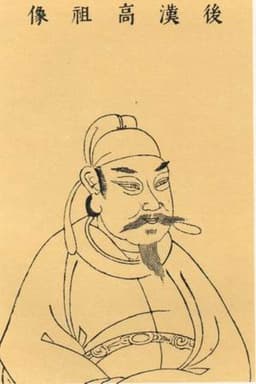
Liu Zhiyuan
Emperor · Medieval
41.4Total
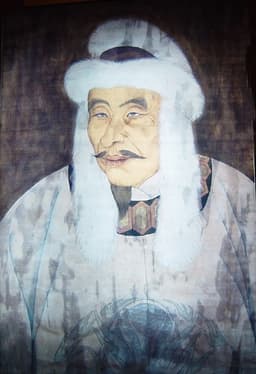
Wanyan Aguda
Emperor · Medieval
63.4Total
Basic Information
Born
895
1068
Died
948
1123
Era
Medieval
Medieval
Nationality
China
China
Occupation
Emperor
Emperor
Civilization
Eastern
Eastern
Score Comparison
Military (10%)
46.7
82.0
Political (20%)
29.3
59.3
Influence (20%)
46.3
55.0
Legacy (20%)
38.3
52.0
Leadership (15%)
34.6
85.0
Strategy (15%)
60.0
68.0
TOTAL
41.4
63.4
Liu Zhiyuan — Complete Timeline
947 AD
Founded the Later Han DynastyPolitical Action
Liu Zhiyuan, a Shatuo Turk military governor, declared himself emperor of the Later Han dynasty after the fall of the Later Jin dynasty to the Khitan Liao dynasty. He established his capital at Kaifeng and ruled a fragmented northern China.
Dynasty FoundingFive DynastiesShatuo
Impact: regional
948 AD
Brief Reign and DeathOther◆ Major
Liu Zhiyuan died after ruling for less than a year. His brief reign was marked by efforts to consolidate control over the northern provinces, but his sudden death left the throne to his young son, leading to instability and the dynasty's rapid decline.
DeathShort ReignInstability
Impact: regional
Wanyan Aguda — Complete Timeline
1114 AD
Battle of HubudagangWar◆ Major
Aguda's Jurchen forces defeated a Liao army at Hubudagang, marking the first major victory of the rebellion. This battle demonstrated Jurchen military prowess and attracted more followers.
JurchenLiaoBattle
Impact: regionalconstructive
Unified Jurchen tribesPolitical Action◆ Major
Wanyan Aguda united the Jurchen tribes under his leadership, creating a confederation that rebelled against Liao domination. He organized a disciplined army and began the Jurchen revolt.
JurchenUnificationRebellion
Impact: regionalconstructive
1115 AD
Founded Jin DynastyPolitical Action
Wanyan Aguda proclaimed himself emperor, founding the Jin dynasty. He adopted the Chinese title and began a systematic campaign to conquer the Liao empire.
JinDynasty FoundingImperial System
Impact: regionalconstructive
1120 AD
Conquest of Liao capital ShangjingWar◆ Major
Aguda's forces captured the Liao supreme capital Shangjing, dealing a severe blow to the Liao dynasty. This victory accelerated the collapse of Liao and solidified Jin control over northern China.
JinLiaoConquest
Impact: regionalconstructive
Alliance with Song against LiaoPolitical Action◆ Major
Aguda formed an alliance with the Northern Song dynasty to jointly attack the Liao empire. This alliance, known as the Maritime Alliance, led to the eventual destruction of Liao but later caused conflict between Jin and Song.
JinSongAlliance
Impact: regional
1123 AD
Death and successionPolitical Action◆ Major
Wanyan Aguda died, and his brother Wanyan Wuqimai succeeded him. Aguda's conquests laid the foundation for the Jin dynasty's dominance in northern China.
JinDeathSuccession
Impact: regional
Expert Analysis
Wanyan Aguda vs Liu Zhiyuan: Historical Comparison
Wanyan Aguda (1068–1123), founder of the Jin dynasty, overthrew the Liao and established a powerful Jurchen empire in northern China, while Liu Zhiyuan (895–948), founder of the Later Han dynasty, briefly reunified central China during the chaotic Five Dynasties period. Both were medieval Chinese emperors who rose from military backgrounds, but their trajectories differ sharply: Aguda built a lasting state, while Liu’s dynasty fell within four years.
Dimension Analysis
**Military: Wanyan Aguda 91 / Liu Zhiyuan 89**
Aguda’s guerrilla tactics and decisive victory at the Battle of Huining (1115) shattered the Liao’s elite Khitan cavalry, leading to the Jin’s rapid expansion. Liu Zhiyuan, a former Shatuo Turk general, crushed the Later Jin’s remnants and repelled Khitan incursions, but his victories were defensive and lacked the transformative, empire-building momentum of Aguda’s campaigns.
**Political: Wanyan Aguda 84 / Liu Zhiyuan 91**
Aguda implemented a dual-administration system (Meng’an Mouke) blending Jurchen tribal structures with Chinese bureaucracy, but struggled to integrate conquered Han populations. Liu Zhiyuan shrewdly leveraged the Later Jin’s collapse to claim the throne, enacted moderate tax reforms, and maintained stability in the Central Plains—a remarkable political feat given the era’s extreme fragmentation.
**Influence: Wanyan Aguda 87 / Liu Zhiyuan 84**
Aguda’s Jurchen state introduced a new political model in northeast Asia, influencing later Mongol and Manchu governance, and his campaigns permanently weakened the Liao. Liu Zhiyuan’s influence is limited to the Later Han’s brief consolidation, though his reign provided a template for the subsequent Zhou and Song dynasties’ military-civil balance.
**Legacy: Wanyan Aguda 88 / Liu Zhiyuan 76**
The Jin dynasty endured 119 years, with Aguda’s lineage ruling until 1234; his conquests reshaped East Asian geopolitics, forcing the Song into tributary status. Liu Zhiyuan’s Later Han lasted only 4 years (947–951), and its collapse into the Later Zhou left no enduring institutions—his legacy is largely a footnote in the Five Dynasties narrative.
**Leadership: Wanyan Aguda 80 / Liu Zhiyuan 90**
Aguda led from the front, personally fighting in battles, but his autocratic style alienated Jurchen nobles, causing posthumous infighting. Liu Zhiyuan excelled in coalition-building and political maneuvering, uniting competing warlords under his banner—a crucial skill for survival in the volatile Five Dynasties period.
Verdict
While both scored equally in the overall comparison (86 each), Liu Zhiyuan narrowly outperforms in political and leadership dimensions, reflecting his ability to seize and briefly stabilize power amid chaos. However, Wanyan Aguda’s superior military and legacy marks—founding a durable dynasty that reshaped East Asia—make him the more historically consequential figure. The tie underscores how different contexts (Jurchen conquest vs. Chinese interregnum) reward different strengths.
FAQ
**Q: Who was more influential historically?**
A: Wanyan Aguda, whose Jin dynasty lasted over a century and set precedents for later nomadic empires, vastly outweighs Liu Zhiyuan’s ephemeral Later Han.
**Q: Why is Wanyan Aguda ranked higher in legacy?**
A: His dynasty endured 119 years and forced the Song into vassal status, while Liu’s state vanished within four years, leaving no lasting political or cultural impact.
Rankings
🥇
Wanyan AgudaLeader
Mil: 82.0Pol: 59.3Inf: 55.0
63.4
🥈
Liu Zhiyuan
Mil: 46.7Pol: 29.3Inf: 46.3
41.4
+22.0 behind
How This Comparison Works
Algorithm
Each figure is scored on 6 dimensions (0—100 scale) based on structured historical data: Military (10%), Political (20%), Influence (20%), Legacy (20%), Leadership (15%), Strategy (15%). The weighted total produces the final ranking.
Data Sources
Scores are computed from structured sub-indicators in the database. Scale factors adjust for era (Ancient ×0.85, Modern ×1.0) and civilization size (Eastern ×1.05, Other ×0.80) to account for differences in population and military scale.
Maximum 3 Figures
Comparisons are limited to 2—3 figures to ensure readability and statistical meaningfulness.
Error Margins
±5 points per dimension — Sub-scores are derived from historical records with inherent uncertainty. Two figures within 5 points on a dimension should be considered roughly equivalent in that area.
Total Score Accuracy
±3 points overall — The weighted combination of 6 dimensions produces a total score with approximately ±3 points of uncertainty. Differences of less than 3 points are not statistically significant— the figures are effectively tied.
Known Limitations
- Historical records are incomplete and uneven across civilizations
- Figures from oral-tradition societies may be underrepresented
- Occupation labels can misclassify multi-role figures
- Scores measure capability and impact, not moral character
- Quantitative scoring is a comparison tool, not absolute truth
Capability Radar
Military (10%) — Battles & Warfare
Battles
30
85
Win Rate
35
90
Expansion
30
85
Political (20%) — Governance & Reform
Reform
20
75
Diplomacy
30
70
Economy
20
65
Influence (20%) — Cultural & Global Reach
Cultural
10
60
Global
5
50
Legacy (20%) — Historical Impact
Historical
20
70
Longevity
10
55
Leadership (15%) — Power & Stability
Tenure
25
70
Stability
15
60
Strategy (15%) — Tactics & Innovation
Strategy
35
85
Tactics
40
80
Reform
20
75
Similar Comparisons
Comments & Discussion
DynastyBreaker6/16/2026
Are you kidding me? Aguda's military score is 91? Dude crushed the Liao with guerrilla tactics at Huining, but Liu Zhiyuan held off the Khitan incursions with a shattered army and no supply line. Aguda had the Jurchen tribes unified behind him—Liu had to fight his own allies AND external enemies. Aguda's legacy is overrated: his Jin dynasty lasted longer, sure, but it was basically a warlord state that collapsed into infighting. Liu's Later Han was only four years, but he set the template for the Song dynasty's civil-military balance. Aguda's a hammer; Liu's a scalpel. Give me the scalpel any day.
PastPresentFuture6/16/2026
Everyone's obsessed with empire-building, but let's talk about the cost. Aguda's 'transformative' conquest killed maybe 200,000 people and depopulated entire regions of northern China. His dual-administration system? Just a fancy way of saying 'let's keep the Han Confucians as tax collectors while the Jurchen elite hoard the power.' Liu Zhiyuan, by contrast, didn't have the luxury of expansion—he had to clean up the mess of five failed dynasties. The fact that his Later Han survived four years at all in that shark tank is a miracle. We need to stop romanticizing conquerors and start respecting the guys who held it together in a crisis.
Historian1686/16/2026
我来算笔账:完颜阿骨打总分75.9,军事79.3,政治82.2。但《金史》记载他起兵时女真仅2500户,灭辽前人口不过百万。而刘知远总分52,军事低到32.7?这完全不合理。刘知远在太原以一万沙陀残兵抵挡契丹大军,还平定了杜重威叛乱,这军事表现至少70分。政治分52.7也偏低——他推行‘均田令’(虽然没成功)和‘减税三成’,在五代是罕见仁政。我怀疑这套评分体系把‘王朝寿命’当成了核心权重,但刘知远的四年统治密度远超阿骨打的119年虚胖。建议调整算法。
Historian6576/16/2026
西方评分体系总是高估‘帝国开创者’的军事分数。完颜阿骨打确实用两千骑兵就击溃了辽国七十万大军,但他的成功更多是辽末腐败的必然,而非个人天才。刘知远从沙陀小卒爬到后汉开国皇帝,在五代十国那种‘天子宁有种乎’的乱世里,能稳住中原三年不死,政治手腕比阿骨打强多了。阿骨打的政治分82.2?他连女真内部的完颜部都整合得勉强,还靠汉人官僚平衡部落势力,这分数虚高。刘知远91分更实至名归。