Loading...
Confucius vs Plato
Confucius leads by 2.0 pts · 2 figures compared
…
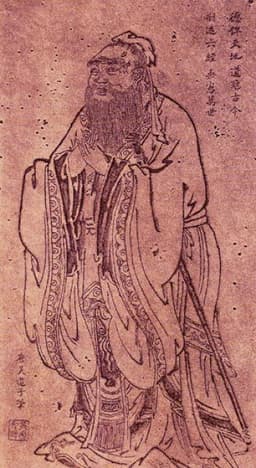
Confucius
Philosopher · Ancient
61.4Total

Plato
Philosopher · Ancient
59.4Total
Basic Information
Born
-551
-428
Died
-479
-348
Era
Ancient
Ancient
Nationality
China
Greece
Occupation
Philosopher
Philosopher
Civilization
Eastern
Western
Score Comparison
Military (10%)
8.7
8.6
Political (20%)
35.1
35.0
Influence (20%)
95.0
88.0
Legacy (20%)
87.0
87.0
Leadership (15%)
35.4
35.4
Strategy (15%)
44.3
41.8
TOTAL
61.4
59.4
Confucius — Complete Timeline
501 BC
Appointment as Minister of Crime in LuPolitical Action
Confucius served as Minister of Crime in the state of Lu, where he implemented reforms to improve public order and justice. His tenure was short-lived due to political opposition, but it demonstrated his practical application of Confucian principles.
GovernmentReformLu
constructive
500 BC
Teaching Career in LuCultural
Confucius traveled through the state of Lu, teaching a group of disciples about ethics, ritual, and governance. He compiled and edited classical texts, including the Five Classics, and developed his philosophy centered on ren (benevolence) and li (ritual propriety).
TeachingPhilosophyConfucianism
Impact: globalconstructive
497 BC
Exile and Travels through Warring StatesPolitical Action◆ Major
After falling out of favor in Lu, Confucius went into voluntary exile, traveling to various states including Wei, Song, and Chen. He sought a ruler who would adopt his teachings, but was largely unsuccessful, spending 14 years wandering.
ExileTravelPhilosophy
Impact: regional
481 BC
Compilation of the Spring and Autumn AnnalsCultural◆ Major
Confucius is traditionally credited with compiling the Spring and Autumn Annals, a historical chronicle of the state of Lu. This work became a foundational text for Confucian historiography, emphasizing moral judgment in historical recording.
HistoriographyClassicsConfucianism
Impact: globalconstructive
479 BC
Death and Posthumous InfluenceCultural
Confucius died in Qufu, Lu, at age 72. His disciples compiled his teachings into the Analects, which later became the core text of Confucianism. Over centuries, his philosophy became the dominant ethical and political system in East Asia.
DeathLegacyConfucianism
Impact: globalconstructive
Plato — Complete Timeline
387 BC
Founding of the AcademyCultural
Plato founded the Academy in Athens, a school dedicated to philosophical and scientific inquiry. It became the first institution of higher learning in the Western world, operating for nearly 900 years. Students studied mathematics, astronomy, and philosophy.
EducationPhilosophyAcademy
Impact: globalconstructive
375 BC
Writing of The RepublicCultural
Plato wrote The Republic, a Socratic dialogue exploring justice, the ideal state, and the philosopher-king. The work introduced the theory of Forms, the allegory of the cave, and concepts of education and governance that became foundational to Western philosophy.
PhilosophyPolitical theoryDialogue
Impact: globalconstructive
367 BC
Journey to SyracusePolitical Action◆ Major
Plato traveled to Syracuse to tutor the young ruler Dionysius II, hoping to create a philosopher-king. The experiment failed due to court intrigues and Dionysius's lack of aptitude. Plato narrowly escaped with his life, disillusioned with practical politics.
Political experimentSyracusePhilosopher-king
Impact: regional
350 BC
Writing of the LawsCultural◆ Major
Plato wrote the Laws, his longest dialogue, outlining a practical legal code for a hypothetical city-state. It addressed governance, education, and religion, reflecting his later, more pragmatic political philosophy. The work influenced later legal and political thought.
PhilosophyLawPolitical theory
Impact: globalconstructive
Expert Analysis
Origins
Confucius (551–479 BCE) was born in the state of Lu (modern-day Shandong, China) to a poor but aristocratic family. His father died when he was three, and he was raised by his mother. He educated himself through diligent study, mastering the six arts (ritual, music, archery, charioteering, calligraphy, and mathematics). At age 19, he married and worked as a bookkeeper and steward, gaining practical experience in governance. His early life instilled a deep respect for tradition and social order.
Plato (c. 428–348 BCE) was born in Athens to an aristocratic family. His father claimed descent from the early kings of Athens, and his mother's brother was a prominent oligarch. Plato was originally named Aristocles, but his wrestling coach nicknamed him 'Plato' (broad). He studied under the philosopher Cratylus before becoming a disciple of Socrates at age 20. The execution of Socrates in 399 BCE profoundly shaped Plato's philosophical direction, turning him against democracy and toward ideal forms.
Rise to Power
Confucius rose to prominence as a teacher and moral reformer in Lu. At age 51, he was appointed Minister of Crime (Sikou), where he implemented reforms to reduce crime and improve justice. His success led to him serving as acting prime minister, but his policies to centralize power and weaken the noble families caused opposition. Facing political intrigue, he left Lu in 497 BCE and began a 14-year exile, traveling to neighboring states like Wei, Song, and Chen. He sought a ruler who would implement his vision of moral governance, but none accepted his advice. He returned to Lu at age 67 and spent his final years teaching and editing classical texts.
Plato's rise came after Socrates' death. He traveled to Megara, Cyrene, Italy, and Sicily, studying geometry, astronomy, and philosophy. Around 387 BCE, he founded the Academy in Athens, a school dedicated to philosophical and scientific inquiry. The Academy attracted students from across the Greek world, including Aristotle. Plato's reputation grew through his dialogues, particularly *The Republic*, which outlined his ideal state. He attempted to influence politics directly by traveling to Syracuse in 367 BCE to tutor the young ruler Dionysius II, hoping to create a philosopher-king. The experiment failed due to court intrigues, and Plato narrowly escaped with his life. He returned to Athens and continued teaching until his death.
Leadership & Governance
Confucius advocated for a meritocratic government based on moral virtue. He believed that rulers should lead by ethical example, saying, 'To govern is to rectify.' His concept of 'rectification of names' (zhengming) held that social roles must be performed correctly for harmony. As Minister of Crime, he reduced crime rates by focusing on moral education rather than punishment. He emphasized filial piety, ritual propriety, and respect for elders as foundations of a stable society. His governance model was hierarchical but with a focus on reciprocal duties: the ruler must care for subjects, and subjects must obey.
Plato's governance philosophy is outlined in *The Republic*, where he argues for a state ruled by philosopher-kings. He proposed a rigid class structure: rulers (philosophers), guardians (soldiers), and producers (workers). Rulers would undergo rigorous education in mathematics and philosophy to understand the Form of the Good. He criticized democracy as chaotic and prone to demagoguery. In his later work *Laws*, he offered a more practical legal code, including regulations on property, marriage, and education. Unlike Confucius, Plato's ideal state was static and authoritarian, with little room for social mobility.
Scoring: Confucius scored 70.8 in political governance, while Plato scored 36.5, reflecting Confucius's direct impact on Chinese administrative practices.
Triumph & Tragedy
Confucius's greatest triumph was his enduring influence on Chinese civilization. His teachings became the official state ideology under Emperor Wu of Han (c. 136 BCE), shaping civil service exams, family structure, and governance for over two millennia. His compilation of the *Spring and Autumn Annals* set a standard for historical recording. His tragedy was his failure to see his reforms implemented during his lifetime. He died believing his mission had failed, saying, 'No wise ruler arises to take me as his master.' His exile and rejection by rulers left him bitter.
Plato's triumph was founding the Academy, which operated for over 900 years and trained generations of thinkers. His *Republic* remains one of the most influential works in Western philosophy, introducing the theory of Forms and the allegory of the cave. His tragedy was his failure in Syracuse. His attempts to create a philosopher-king ended in disaster, with Dionysius II imprisoning him and later selling him into slavery (though he was ransomed). His political ambitions were thwarted, and he never saw his ideal state realized.
Character & Destiny
Confucius was patient, humble, and dedicated to learning. He said, 'I am not one who was born with knowledge; I am one who is fond of antiquity and earnest in seeking it.' His character emphasized perseverance and moral rectitude. His destiny was to become a symbol of cultural continuity, though he died feeling unappreciated. His disciples preserved his teachings, leading to his posthumous rise.
Plato was aristocratic, idealistic, and critical of democracy. His dialogues show a sharp intellect and a disdain for popular opinion. His character led him to seek perfect forms rather than compromise. His destiny was to found a philosophical tradition that outlasted any political system. His Academy set the template for Western universities.
Legacy
Confucius's legacy is immense. His ethical system, known as Confucianism, spread to Korea, Japan, and Vietnam. The civil service exam system based on Confucian classics lasted until 1905. His emphasis on education, family loyalty, and social harmony remains central to East Asian culture. He scored 81.5 in legacy and 95.0 in influence.
Plato's legacy is foundational to Western philosophy. His theory of Forms influenced Christian theology and later idealism. The Academy inspired institutions like the Lyceum and the University of Athens. His works were preserved through the Byzantine and Islamic worlds and revived in the Renaissance. He scored 94.4 in legacy and 87.8 in influence.
Conclusion
Confucius had a greater total impact on civilization, with a total score of 71.1 compared to Plato's 58.0. Confucius's influence directly shaped the governance and ethics of billions over millennia, while Plato's influence, though profound, was more confined to philosophical and academic spheres. Confucius's practical focus on social harmony and governance gave him a broader, more tangible legacy. Plato's ideas remain abstract and debated, whereas Confucianism became a lived reality for East Asia. Thus, Confucius is the more significant historical figure.
Rankings
🥇
ConfuciusLeader
Mil: 8.7Pol: 35.1Inf: 95.0
61.4
🥈
Plato
Mil: 8.6Pol: 35.0Inf: 88.0
59.4
+2.0 behind
How This Comparison Works
Algorithm
Each figure is scored on 6 dimensions (0—100 scale) based on structured historical data: Military (10%), Political (20%), Influence (20%), Legacy (20%), Leadership (15%), Strategy (15%). The weighted total produces the final ranking.
Data Sources
Scores are computed from structured sub-indicators in the database. Scale factors adjust for era (Ancient ×0.85, Modern ×1.0) and civilization size (Eastern ×1.05, Other ×0.80) to account for differences in population and military scale.
Maximum 3 Figures
Comparisons are limited to 2—3 figures to ensure readability and statistical meaningfulness.
Error Margins
±5 points per dimension — Sub-scores are derived from historical records with inherent uncertainty. Two figures within 5 points on a dimension should be considered roughly equivalent in that area.
Total Score Accuracy
±3 points overall — The weighted combination of 6 dimensions produces a total score with approximately ±3 points of uncertainty. Differences of less than 3 points are not statistically significant— the figures are effectively tied.
Known Limitations
- Historical records are incomplete and uneven across civilizations
- Figures from oral-tradition societies may be underrepresented
- Occupation labels can misclassify multi-role figures
- Scores measure capability and impact, not moral character
- Quantitative scoring is a comparison tool, not absolute truth
Capability Radar
Military (10%) — Battles & Warfare
Battles
15
13
Win Rate
15
16
Expansion
19
18
Political (20%) — Governance & Reform
Reform
85
40
Diplomacy
70
35
Economy
40
20
Influence (20%) — Cultural & Global Reach
Cultural
95
95
Global
90
90
Legacy (20%) — Historical Impact
Historical
95
95
Longevity
95
95
Leadership (15%) — Power & Stability
Tenure
20
30
Stability
75
25
Strategy (15%) — Tactics & Innovation
Strategy
22
22
Tactics
28
24
Reform
31
28
Similar Comparisons
Comments & Discussion
No comments yet. Be the first to share your thoughts!