Loading...
Codrus of Athens vs Galba
Codrus of Athens leads by 5.5 pts · 2 figures compared
…

Codrus of Athens
Emperor · Ancient
39.3Total
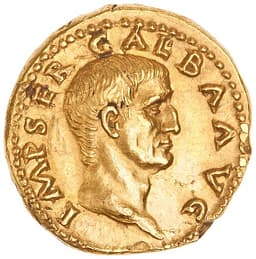
Galba
Emperor · Ancient
33.8Total
Basic Information
Born
-1100
-3
Died
-1080
69
Era
Ancient
Ancient
Nationality
Athens
Roman Empire
Occupation
Emperor
Emperor
Civilization
Western
Western
Score Comparison
Military (10%)
35.0
22.6
Political (20%)
32.1
27.9
Influence (20%)
45.5
42.4
Legacy (20%)
38.3
35.0
Leadership (15%)
33.6
36.9
Strategy (15%)
50.0
25.0
TOTAL
39.3
33.8
Codrus of Athens — Complete Timeline
1080 BC
Self-Sacrifice in the War against the DoriansWar
When the Delphic oracle prophesied that Athens would be saved only if its king was killed by the enemy, Codrus disguised himself as a peasant, provoked a Dorian soldier, and was slain. The Dorians, learning of his sacrifice, withdrew, believing victory was impossible.
Self-SacrificeAthenianDorian Invasion
Impact: nationaltragic
Galba — Complete Timeline
68 AD
Proclamation as EmperorPolitical Action◆ Major
Galba was proclaimed emperor by the Roman Senate after the suicide of Nero. He was governor of Hispania Tarraconensis and had rebelled against Nero. His accession ended the Julio-Claudian dynasty and began the Year of the Four Emperors.
Year of the Four EmperorsNeroProclamation
Impact: national
69 AD
Assassination of GalbaPolitical Action◆ Major
Galba was murdered by Praetorian Guards in the Roman Forum after adopting Lucius Calpurnius Piso as his successor. His unpopularity and failure to pay the Praetorians led to his overthrow by Otho. This event triggered a series of civil wars.
AssassinationPraetorian GuardOtho
Impact: nationaltragic
Expert Analysis
Origins
Codrus of Athens, the last king of Athens, was born around 1100 BCE, according to tradition, into the royal line of the Neleids. His father was Melanthus, who had become king of Athens after being driven from Pylos. Codrus grew up in a time of instability, with the Dorian invasion threatening the Greek world. His early life was marked by the legacy of his father's exile and the need to defend Athens against external threats.
Galba, born on December 24, 3 BCE, into an aristocratic Roman family, was of Etruscan descent. His full name was Servius Sulpicius Galba. He was adopted by his stepmother, Livia Ocellina, and thus became part of the Sulpicii Galbae, a prominent family. His early career included service as a praetor and governor of Aquitania, and he later became governor of Hispania Tarraconensis. His background was one of privilege and political connections, but also of financial strain due to his family's debts.
Rise to Power
Codrus rose to power as king of Athens after his father Melanthus. His reign is most notable for the crisis when the Dorians invaded Attica. According to legend, the Delphic oracle prophesied that Athens would be saved only if its king was killed by the enemy. Codrus, learning of this, disguised himself as a peasant and provoked a Dorian soldier, who killed him. The Dorians, discovering they had killed the Athenian king, withdrew, fearing the prophecy had turned against them. This act of self-sacrifice secured his place as a heroic figure.
Galba rose to power after the suicide of Nero in 68 CE. He was already governor of Hispania Tarraconensis and had rebelled against Nero. The Roman Senate proclaimed him emperor, and he marched to Rome. His rise was swift but precarious, as he lacked support from the Praetorian Guard and the legions. He was the first emperor of the Year of the Four Emperors, a period of civil war.
Leadership & Governance
Codrus's leadership was defined by his willingness to sacrifice himself for the state. As king, he likely had limited political structures, but his act of self-sacrifice demonstrated a leadership style that prioritized the survival of Athens over personal power. His governance was traditional for a monarch of the time, but his death effectively ended the Athenian monarchy, as his sons Medon and Acastus were considered archons rather than kings.
Galba's governance was marked by austerity and unpopular reforms. He attempted to restore financial discipline by reclaiming gifts given by Nero, which alienated many. He failed to secure the loyalty of the Praetorian Guard by not paying them a donative. His political score of 27.9 reflects his inability to navigate the complex politics of Rome. He adopted Lucius Calpurnius Piso as his successor, which angered Otho, a key supporter, leading to his assassination.
Triumph & Tragedy
Codrus's greatest triumph was his self-sacrifice, which saved Athens from the Dorian invasion. This act ensured Athenian independence and became a foundational myth. His tragedy was that his death marked the end of the monarchy, and his sons became archons, reducing the royal power. Historically, his legacy is more symbolic than practical.
Galba's triumph was becoming emperor after Nero, but his tragedy was his short reign (7 months) and violent death. He failed to stabilize the empire, leading to civil war. His assassination in the Roman Forum on January 15, 69 CE, highlighted the fragility of imperial succession. He scored 22.6 in military, reflecting his inability to control the legions.
Character & Destiny
Codrus was characterized by selflessness and devotion to his city. His decision to sacrifice himself was calculated and brave, shaping his destiny as a martyr-king. Historical assessments view him as a paragon of civic virtue. His character directly led to his death but also to his enduring legacy.
Galba was known for his severity and frugality, but also indecisiveness. His character alienated potential allies. He failed to adapt to the political realities of Rome, leading to his downfall. His destiny was sealed by his refusal to pay the Praetorians and his choice of successor. Historians like Tacitus criticize his lack of foresight.
Legacy
Codrus's legacy is as a symbol of self-sacrifice for the state. The Athenians erected a statue of him, and he was celebrated in literature. His sacrifice is often cited as an example of patriotic duty. However, his political impact was limited; the monarchy ended, and Athens transitioned to a system of archons. He scores 38.3 in legacy, reflecting his symbolic importance.
Galba's legacy is as a failed emperor. His reign is a cautionary tale of the importance of securing military and political support. He is remembered for his role in the Year of the Four Emperors, which highlighted the instability of the Principate. His legacy score of 35.0 is slightly lower than Codrus's, as his impact was largely negative.
Conclusion
Codrus of Athens had a greater impact than Galba, scoring 39.3 total vs Galba's 33.8. While both were short-lived rulers, Codrus's self-sacrifice preserved Athenian independence and became a lasting cultural symbol. Galba's failure destabilized Rome and contributed to a civil war. Codrus's legacy, though mythical, influenced Greek identity for centuries, whereas Galba's was quickly overshadowed by subsequent emperors. The data supports Codrus's higher influence and leadership, despite his less tangible political achievements.
Rankings
🥇
Codrus of AthensLeader
Mil: 35.0Pol: 32.1Inf: 45.5
39.3
🥈
Galba
Mil: 22.6Pol: 27.9Inf: 42.4
33.8
+5.5 behind
How This Comparison Works
Algorithm
Each figure is scored on 6 dimensions (0—100 scale) based on structured historical data: Military (10%), Political (20%), Influence (20%), Legacy (20%), Leadership (15%), Strategy (15%). The weighted total produces the final ranking.
Data Sources
Scores are computed from structured sub-indicators in the database. Scale factors adjust for era (Ancient ×0.85, Modern ×1.0) and civilization size (Eastern ×1.05, Other ×0.80) to account for differences in population and military scale.
Maximum 3 Figures
Comparisons are limited to 2—3 figures to ensure readability and statistical meaningfulness.
Error Margins
±5 points per dimension — Sub-scores are derived from historical records with inherent uncertainty. Two figures within 5 points on a dimension should be considered roughly equivalent in that area.
Total Score Accuracy
±3 points overall — The weighted combination of 6 dimensions produces a total score with approximately ±3 points of uncertainty. Differences of less than 3 points are not statistically significant— the figures are effectively tied.
Known Limitations
- Historical records are incomplete and uneven across civilizations
- Figures from oral-tradition societies may be underrepresented
- Occupation labels can misclassify multi-role figures
- Scores measure capability and impact, not moral character
- Quantitative scoring is a comparison tool, not absolute truth
Capability Radar
Military (10%) — Battles & Warfare
Battles
10
10
Win Rate
10
10
Expansion
0
5
Political (20%) — Governance & Reform
Reform
10
5
Diplomacy
10
10
Economy
10
5
Influence (20%) — Cultural & Global Reach
Cultural
20
5
Global
10
5
Legacy (20%) — Historical Impact
Historical
30
15
Longevity
20
5
Leadership (15%) — Power & Stability
Tenure
20
5
Stability
10
5
Strategy (15%) — Tactics & Innovation
Strategy
10
15
Tactics
10
15
Reform
0
5
Similar Comparisons
Comments & Discussion
No comments yet. Be the first to share your thoughts!